BENT KNEE REVERSE CRUNCH
Lower Abdominal Control and Core Stability
Primary Muscles
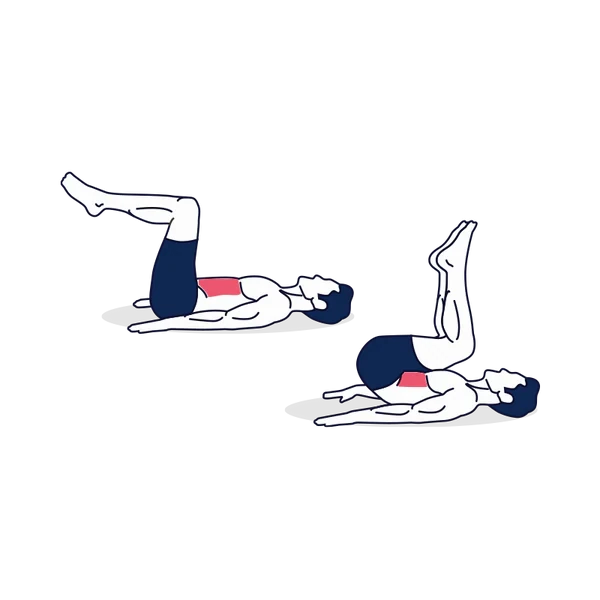
Exercise Description
Lie on your back, bend knees at 90 degrees. Engage the core and lift the hips off the floor by curling the knees toward the chest. Lower slowly with control, keeping the lower back anchored. Repeat.
How To Perform
Lie on your back with arms by your sides or hands lightly on the floor for balance.
Bend your knees to about 90 degrees with feet off the floor and shins parallel to the ground.
Brace your core and initiate the movement by curling your pelvis, bringing your knees toward your chest.
Lift the hips just off the floor without swinging the legs; avoid using momentum.
Lower back down slowly with control, keeping the lower back pressed into the mat.
Expert Tips
Move with control - Prioritize slow, deliberate reps to maximize abdominal engagement and protect the lower back.
Avoid momentum - Do not swing your legs. Initiate the lift by curling the pelvis to engage the abs.
Keep lower back anchored - Gently press the lower back into the mat to reduce strain and improve activation.
Progress wisely - Add ankle weights or increase time under tension only after mastering clean form.
Common Mistakes
Using momentum - Swinging the legs reduces core activation and increases stress on the hips and back.
Arching the lower back - Letting the lumbar spine lift off the mat shifts tension away from the abs.
Rushing the eccentric - Dropping the hips too quickly limits muscle engagement and control.
Holding your breath - Breathe rhythmically: exhale as you curl up, inhale as you lower.
Info – Bent Knee Reverse Crunch
The Bent Knee Reverse Crunch is excellent for emphasizing the lower abdominals. Move slowly and deliberately to fully engage the core. Avoid swinging the legs or using momentum, and keep your lower back in gentle contact with the mat throughout.
Beginners can start with fewer reps and build up as strength improves. Advanced lifters may add ankle weights or longer pauses at peak contraction. Prioritize form over quantity to minimize injury risk.
Equipment Required
No equipment needed.