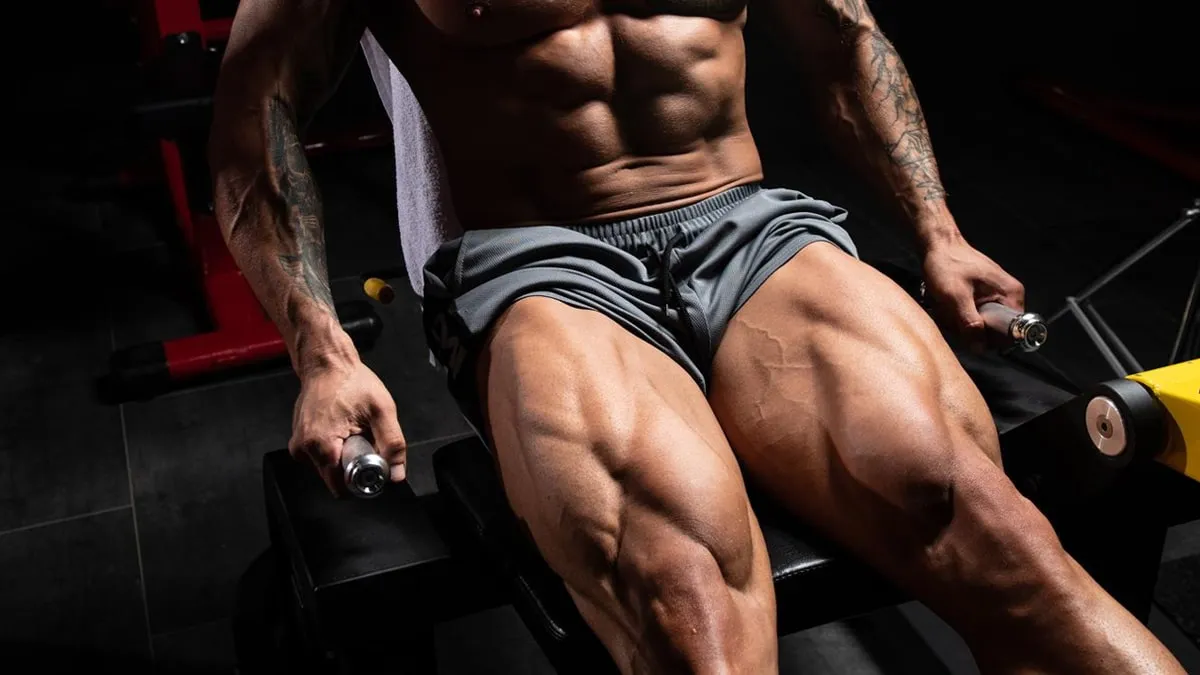

The quadriceps (or "quads/quad") are the large four-headed muscles on the front of your thigh. They power knee extension (straightening the leg) and also assist in hip flexion (raising the thigh). Because they are among the most powerful muscles in the body, strong quads improve performance in sports and daily tasks (like climbing stairs) while also stabilizing the knee joint. To build big, strong quads, you need a mix of heavy compound lifts and targeted isolation moves, using proper form and sufficient training volume.
Compound (Multi-Joint) Quad Exercises
Compound exercises involve multiple joints and muscle groups, allowing you to lift heavy loads and stimulate overall leg growth. Here are top quad-focused compound moves:
Barbell Back Squat
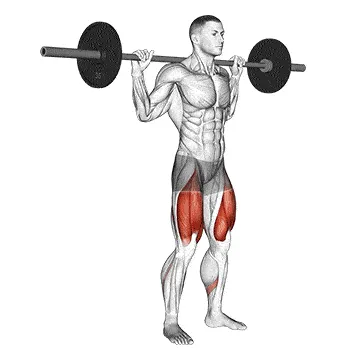
Often called the "king of leg exercises, or the best quad exercise" the back squat trains all four quad muscles (rectus femoris, vastus lateralis/medialis/intermedius) along with glutes and hamstrings. Research shows squatting to full depth produces significant growth in all quad heads. Focus on driving knees forward (while keeping feet flat) to load the quads. In short, squats maximize mechanical tension on the thighs under heavy loads.
Barbell Front Squat (or Goblet Squat)
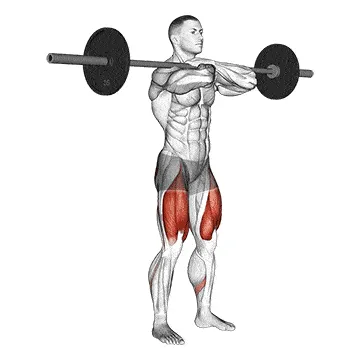
Front squats position the barbell (or dumbbell) in front of your shoulders, forcing a more upright torso. This biomechanical shift biases the quads more than a low-bar back squat. Studies suggest front squats are at least as effective for muscle building as back squats, with less shear on the spine and knees. For beginners, goblet squats (holding a dumbbell at chest height) train similar muscles with easier form.
Hack Squat (Machine)
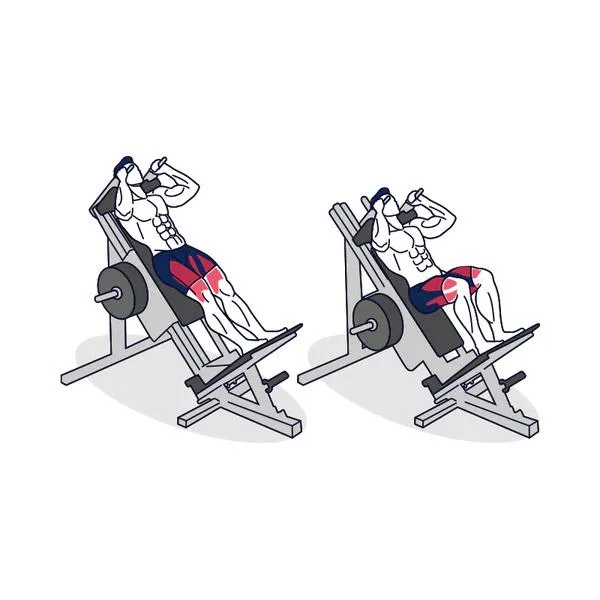
The hack-squat machine is a sled that supports your back and keeps you upright. Because your torso is fixed, all the effort comes from the quads. Hack squats are praised as a "brilliant quad builder": they let you load weight safely without demanding core stabilization. Placing your feet lower on the platform further emphasizes the quads over the glutes. In practice, adjust stance width (wider for inner quads, narrower for outer quads) and guard against excessive lower-back rounding (the "butt wink") at the bottom of the movement.
Leg Press
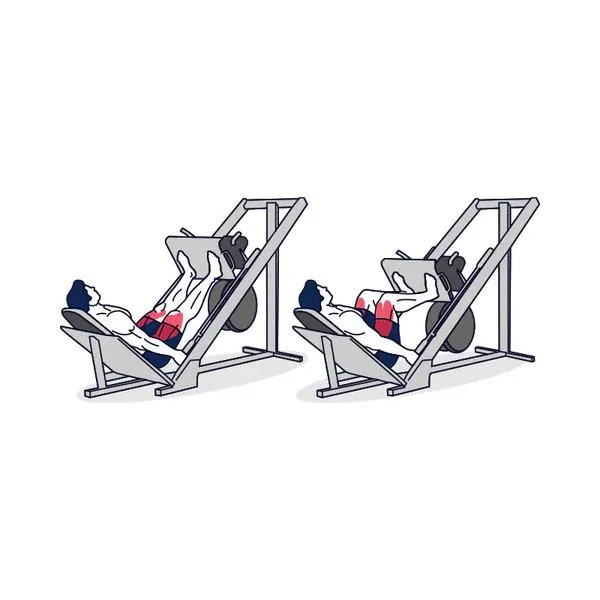
The leg press machine mimics a squat movement with back support, letting you focus purely on your legs. It works glutes, hamstrings, and especially quads. Using a low foot placement on the sled shifts the load to the quads. Leg presses allow very heavy loading (and single-leg variations) without taxing the spine, making them excellent for piling on quad volume. In fact, loading the leg press heavily can directly translate to "big quads" as long as form is maintained.
Lunges (Weighted or Bodyweight)
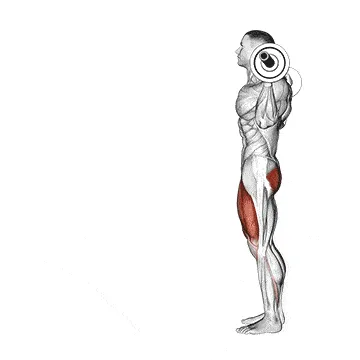
Traditional lunges train quads, glutes and hams, but you can emphasize your quads by tweaking your setup. For example, elevating the front heel (by placing it on a small plate or ramp) increases knee flexion and forces the quads to work harder. Keep your chest up and drive the front knee forward over the toes on each step or split-squat lunge. To build size, load lunges with dumbbells or a barbell once bodyweight lunges feel easy.
Bulgarian Split Squat
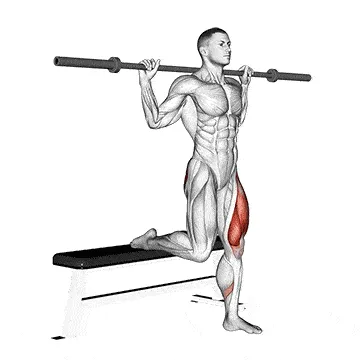
This single-leg squat variation (rear foot elevated) is a quad powerhouse when done correctly. The exercise hits quads, glutes and hams, but taking a shorter stance and staying upright shifts the emphasis to the quads. Key cues: keep the front foot closer to your body, drive the front knee straight over the toes, and avoid leaning forward. A slight elevation of the front heel (plate or wedge under front foot) increases knee range of motion and further loads the quads. Once balanced, hold dumbbells or a barbell to add resistance.
Dumbbell Goblet Squat (Beginner-Friendly)
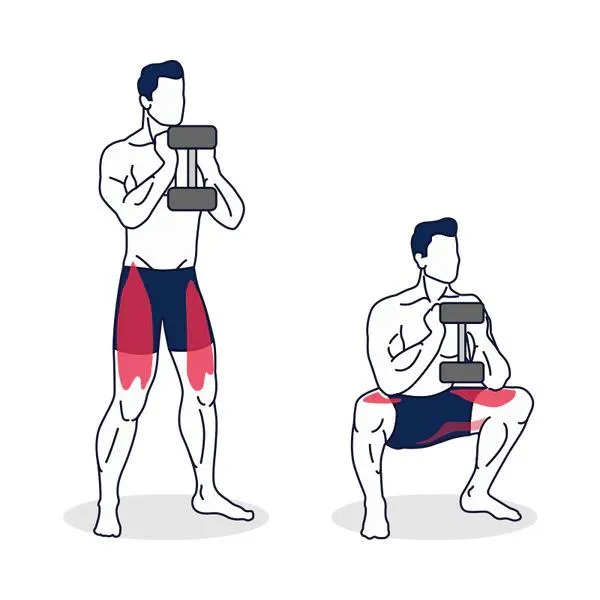
For people new to barbell squats, goblet squats (holding a dumbbell or kettlebell at chest height) teach the squat pattern with an upright posture. Although you can't load it as heavy, a goblet squat still uses all quad muscles and helps build good technique and flexibility. It's great for higher-rep work and improving core stability while targeting the quads.
Jump Squats (Plyometric)
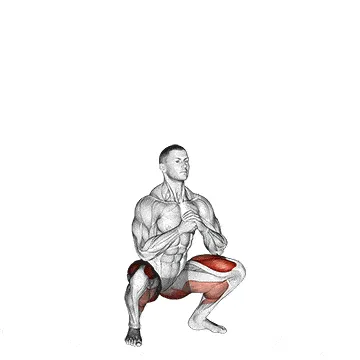
Explosive squat jumps can be included as advanced supplemental work. They train fast-twitch fibers in the quads and improve power/endurance, but they are less effective for muscle gain than weighted exercises. Use jump squats sparingly as a finisher or conditioning drill rather than a primary mass-builder.
Unilateral and Bodyweight Quad Exercises
Training one leg at a time can correct imbalances and increase quad activation per side. Good choices include:
Walking or Stationary Lunges
As above, adding forward stepping lunges into a movement flow keeps tension on the quads (especially with elevated front heel) while also improving balance.
Bulgarian Split Squat
This is excellent unilateral exercise in any quad workout. Maybe one of the best quad exercises.
Bodyweight Squats & Variations
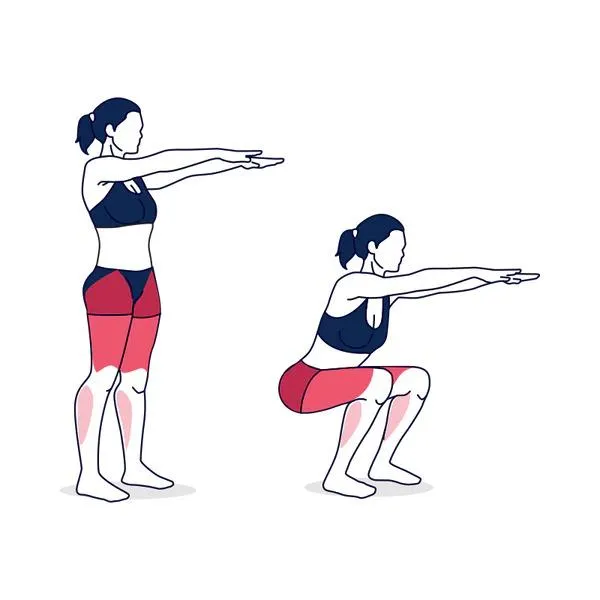
Even simple squats and lunge movements have value. For example, wall sits hold the quads under constant tension isometrically. Knee Tuck Jumps or squat pulses (small up-down movements) at the bottom of a squat create extra burn in the quads. These exercises won't replace heavy lifting, but are accessible ways to add volume or to activate the quads as a warm-up.
Sissy Squat (Advanced)
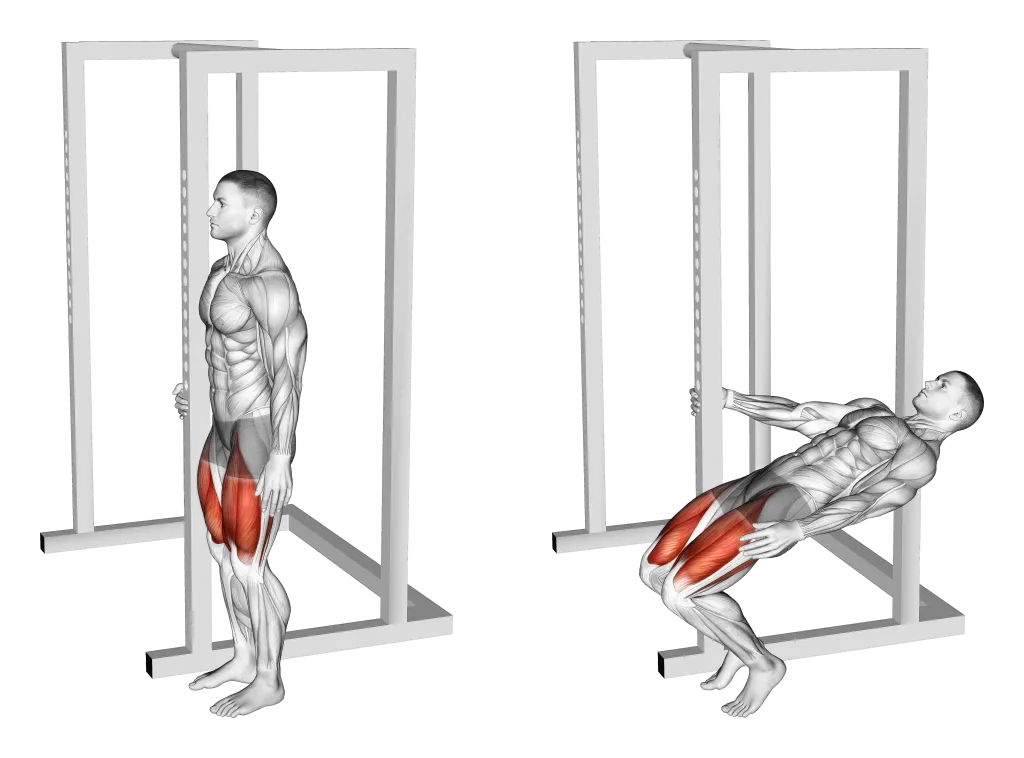
A challenging bodyweight move that isolates the quads. The sissy squat involves balancing on your toes and leaning the knees forward as far as possible. When done correctly, the hips stay behind and virtually all the load is on the quads. (In other words, you "drive your knees fully over your toes," putting full tension on the quadriceps.) This move is advanced and hard on the knees, so beginners can learn it with band assistance. Only attempt weighted sissy squats after mastering the bodyweight version, as it truly maxes out quad involvement.
Isolation Quad Exercise
Leg Extension (Machine)
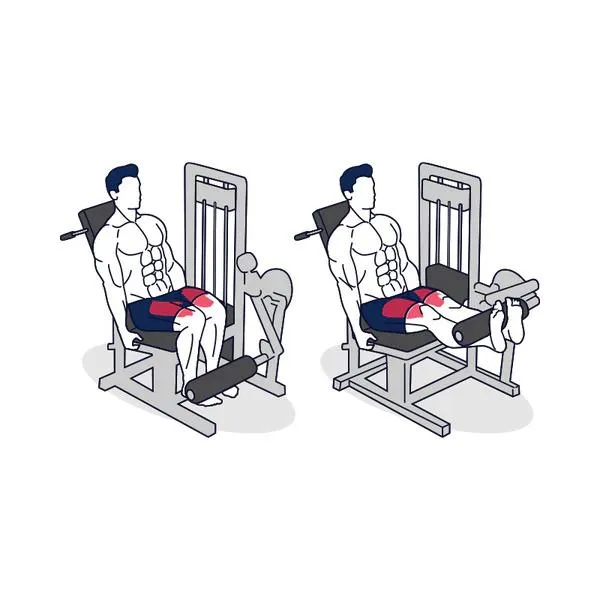
The leg extension is the king of quad isolation moves. With your hips fixed, only the knee joint moves, so the quads do all the work. It is unmatched for creating a massive quad pump and fully engaging all four heads of the muscle.
Leg extensions are often used as "finishers" in a leg workout: they allow you to fatigue the quads at the end when you're too tired for heavy squats. Because the machine supports your body, you can do high-rep or even single-leg sets with less systemic fatigue, adding more volume safely.
Other Isolation Variations
Exercises like the reverse Nordic curl (kneeling quad stretch with bodyweight) and single-leg knee extensions also hit the quads in a highly focused way. These are more niche, but can be useful if you lack a machine or want extra emphasis on the rectus femoris head (which crosses the hip).
Training Tips for Quads
Prioritize Depth and Range of Motion
For squat-type moves, going down to at least parallel (or deeper if mobility allows) recruits the quads more fully. As one expert notes, "as far as hypertrophy is concerned, the deeper you can get, the better" for leg press and squat movements. Deeper knee bend means more quad stretch and tension on each rep.
Use Sufficient Volume and Frequency
Research shows hitting each muscle about twice per week is ideal for growth. Aim for at least 10 sets per week for your quads (for example, 4–5 sets in each of two workouts) to maximize gains. Plan your program so that you can train quads hard twice weekly (e.g. Monday and Thursday), allowing 48–72 hours of recovery between leg sessions.
Lift Heavy When Possible
Building big quads requires progressive overload. Focus on moving challenging weights with good form, even as you advance to heavier loads. Compound quad exercises (squats, presses, hack squats) should be done earlier in your workout while you're freshest so you can handle heavy loads safely. Research suggests machine and free-weight leg exercises produce similar muscle gains, so choose what you can load most effectively.
Mind-Muscle Connection
Wherever possible, concentrate on driving the movement with your quads. For example, when squatting or lunging, consciously push through the mid-foot and keep your knees tracking over your toes. During leg extensions, squeeze the quad hard at the top of the movement. Quality of contraction matters for growth, so control each rep rather than using momentum.
Foot Placement Adjustments
On machines (leg press, hack squat), small tweaks in foot placement can target different quad regions. A lower foot placement on the leg press or hack squat emphasizes quads over glutes. A narrower stance loads the vastus lateralis (outer quad) more, while a wider stance can hit the inner quads. Experiment with stance and foot height to see what maximally fatigues your quads.
Use Both Bilateral and Unilateral Movements
Combining two-leg (squats, leg press) and single-leg (lunges, split squats) exercises ensures balanced development and eliminates strength imbalances. Single-leg work also tends to increase core stability and can lead to greater quad activation per leg.
Stretch and Recover
The quads can get tight from heavy training. Incorporate dynamic warm-ups (like bodyweight squats or lunges) before heavy sets and static quad stretches after workouts. Adequate recovery (sleep, nutrition, hydration) is crucial since the quads are a large muscle group that can take time to heal.
By focusing on some of the exercises above, with proper technique, ample weight, and enough sets, you'll thoroughly stimulate your quadriceps. Heavy squatting variations (back/front/hack) provide the big, heavy lifts, while leg press and split squats add volume under safe conditions. Isolation moves like leg extensions round out the session by fully fatiguing the quads. This science-backed approach to quad training ensures strength and muscle gains, making your thighs stronger and more defined over time.