Mobility guide
How to Loosen Tight Hamstrings
Five simple stretches, how long to hold them, and when to do them.
Tight hamstrings make bending, hinging and sitting feel stiff. Here are the five stretches I use, the hold times that work, and a short routine you can do most days.


To loosen tight hamstrings, stretch them gently most days and strengthen them a few times a week. Hold each static stretch for 20–30 seconds, two to three rounds per leg, at mild tension, never pain. Hinge from the hips with a long spine. Use leg swings before training and longer holds after.
Key takeaways
- Stretch most days. Consistency matters more than how hard you pull.
- Hold each stretch 20–30 seconds, two to three rounds per leg, at a mild pull.
- Hinge from the hips with a long spine. Rounding your back stretches your back, not your hamstrings.
- Do dynamic moves like leg swings before training. Static holds after training or on their own.
- Pair stretching with strength work through a full range. Do not stretch a fresh hamstring strain.
- If you kick, hamstring range sets how high and how cleanly your round kicks and teeps come up.
- Muscles
- Hamstrings (calves in some stretches)
- Equipment
- None. A towel or strap and a chair help
- Difficulty
- Beginner
- Dose
- 20–30 s × 2–3 rounds per leg, most days
The cause
Why do hamstrings get tight?
Your hamstrings are the three muscles on the back of your thigh. They run from your pelvis to just below your knee, so they work at both joints: they straighten your hip and bend your knee.
Long hours of sitting keep them in a shortened position. Little movement through a full range is the most common reason they feel tight. For some people the tight feeling is also the muscle being weak at long lengths, so it guards when you reach for your toes.
Tight hamstrings limit how far you can hinge forward with a flat back. That can make bending, deadlifting and even sitting tall feel stiff, and it pushes the movement into your lower back instead.
Timing
When should you stretch your hamstrings?
- 01
Before training: move, don't hold
Use dynamic moves that take the hamstrings through their range without long holds. Do 10 leg swings per side (front to back, holding a wall) and 10 gentle high kicks while walking.
- 02
After training, or any time: hold
Static stretches work best when you are warm, after a session, or as their own short routine at home or at work.
- 03
How often
At least three days a week. Daily is better if you can. Short and often beats one long session a week.
Step by step
5 stretches for tight hamstrings
Stretch 1
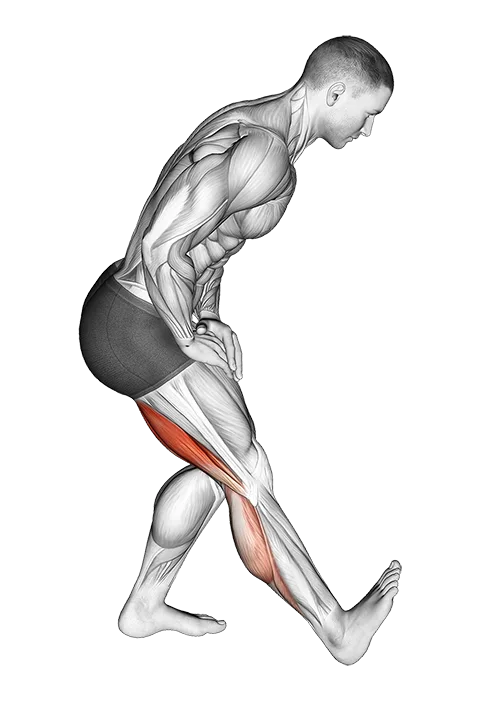
Standing hamstring stretch
- 01
Heel forward
Stand tall and place one heel slightly in front of you, toes up, knee soft.
- 02
Hips back
Put your hands on your hips and push your hips back as if closing a car door with your backside.
- 03
Lean from the hips
Lean forward from the hips until you feel a pull behind the front thigh.
Hold 20–30 seconds per leg, 2–3 rounds.
Cue Keep your chest long and your back flat.
Mistake Reaching for your toes and rounding your back.
Stretch 2
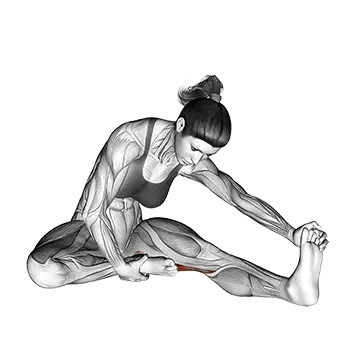
Seated hamstring stretch
- 01
Set your legs
Sit on the floor with one leg straight and the other foot against the inside of the straight thigh.
- 02
Lean forward
Sit tall, then lean forward from the hips toward the straight leg.
- 03
Rest your hands
Rest your hands on your shin or a towel around your foot. Stop at a mild pull.
Hold 30 seconds per side, 2–3 rounds.
Cue Lead with your chest, not your head.
Mistake Locking the knee hard. A tiny bend is fine.
Stretch 3
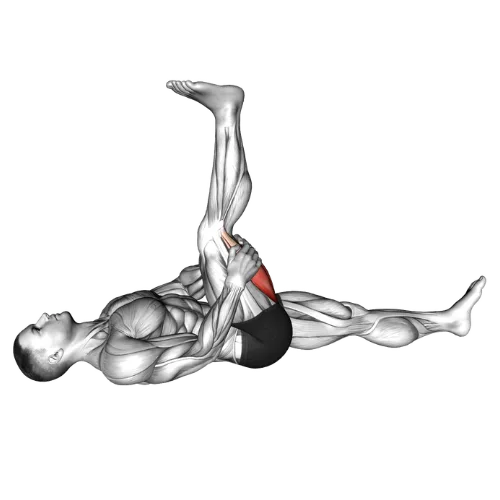
Lying hamstring stretch (supine)
- 01
Lie flat
Lie on your back with both legs straight.
- 02
Raise one leg
Loop a towel or strap around one foot and raise that leg toward the ceiling.
- 03
Keep a soft knee
Keep a slight bend in the knee and the other leg flat on the floor.
Hold 20–30 seconds per leg, 2–3 rounds.
Cue Pull the leg in with your arms, keep your lower back on the floor.
Mistake Lifting your hips off the floor to get the leg higher.
Start here This is the easiest option on the lower back, so start here if bending forward bothers you.
Stretch 4
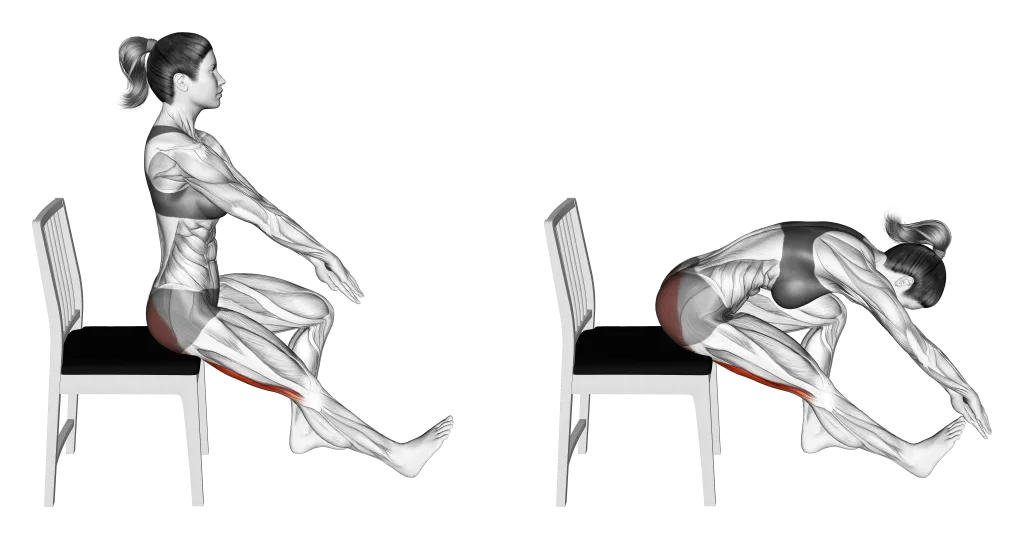
Chair hamstring stretch
- 01
Sit on the edge
Sit on the front edge of a chair.
- 02
Straighten one leg
Straighten one leg in front of you with the heel on the floor, toes up.
- 03
Lean from the hips
Sit tall and lean forward from the hips.
Hold 20–30 seconds per side, 2–3 rounds.
Cue Keep your spine long, as if someone is pulling your head up.
Mistake Slumping. A slump turns this into a back stretch.
At a desk The easiest one to do at a desk.
Stretch 5
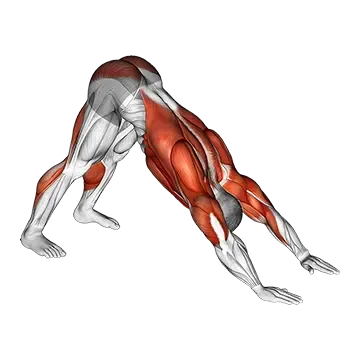
Downward dog
- 01
Hands and knees
Start on hands and knees.
- 02
Hips up and back
Tuck your toes, lift your hips up and back into an upside-down V.
- 03
Straighten your legs
Straighten your legs as far as is comfortable and let your heels sink toward the floor.
Hold 20–30 seconds, 2–3 rounds. Pedal your feet if you want to work one leg at a time.
Cue Push the floor away and send your hips high.
Mistake Forcing straight legs with a rounded back. Bend the knees and keep the back long.
Also Stretches your calves.
Six minutes
A simple daily hamstring routine
About six minutes. Do it most days, after training or on its own.
| Move | Dose |
|---|---|
| 1. Leg swings | 10 per side |
| 2. Lying hamstring stretch | 30 s per leg × 2 |
| 3. Seated hamstring stretch | 30 s per leg × 2 |
| 4. Downward dog | 30 s × 2 |
Swap the seated stretch for the chair stretch at work. You should feel a steady pull behind the thigh. If it turns into sharp pain, tingling or numbness, ease off and stop.
Get it right
Common stretching mistakes
Do
- Hinge from the hips with a long spine.
- Hold each stretch 20–30 seconds, two to three rounds per leg, at a mild pull.
- Ease into the stretch and hold it still.
- Breathe slowly. You will usually relax a little further on each exhale.
- Pair stretching with strength work through a full range.
Don't
- Rounding your back. Hinge from the hips. If you have to round to reach, bend your knees.
- Bouncing. Ease into the stretch and hold it still.
- Pulling into pain. A mild pull is the goal. Stop if you feel sharp pain, tingling or numbness down the leg.
- Holding your breath. Breathe slowly. You will usually relax a little further on each exhale.
- Only stretching. Hamstrings that are weak at long lengths keep feeling tight. Strength work fixes what stretching alone cannot.
Strength work
Should you stretch or strengthen tight hamstrings?
Both. Stretching gives you range. Strength work teaches the muscle to control that range, so it stops guarding.
In my coaching, the lifters who complain most about tight hamstrings often never load them through a full range. Two strength moves fix most of that: a hip hinge such as the good morning, and a leg curl such as the lying leg curl. Start light, move slowly and own the bottom position.
For the full list, with sets and reps, see the best hamstring exercises. If your glutes are weak, your hamstrings often pick up the slack, so the glute exercises guide is worth a look too.
Combat sports
Hamstring flexibility for fighters
If you train Muay Thai, kickboxing or MMA, hamstring range shows up in every kick. A high round kick and a long teep both need the kicking leg to rise with a fairly straight knee, and that lengthens the hamstrings. When they are tight, the kick stops lower, or you lean back and round your spine to get the height. Range on its own is not enough. You also need strength at that length, so the leg stays under control through the whole kick.
Fit the work around your skill training. For how this fits a full week, see strength and conditioning for fighters. For the sport itself, see the Muay Thai guide.
When
Before pads or sparring, use leg swings and walking high kicks, not long holds. Keep the static routine for after the session, in the evening or on rest days.
Strength
Put strength work such as the good morning on an easier day, or several hours away from hard sparring.
How much
Use fewer sets and stop 1–3 reps short of failure, and cut that volume in the last weeks before a fight.
FAQ
Common questions about tight hamstrings
How long does it take to loosen tight hamstrings?
It varies from person to person. Most people feel a little looser straight after a session, but that wears off. Lasting change comes from stretching most days and strengthening the hamstrings for several weeks. Track one simple test, such as how far you can reach in the seated stretch with a flat back, and compare every couple of weeks rather than every day.
How often should I stretch my hamstrings?
Aim for at least three days a week, and daily if you can. Hold each stretch for 20–30 seconds and repeat it two to three times per leg. Short sessions done often work better than one long session at the weekend. A six-minute routine after training or in the evening is enough for most people.
Can tight hamstrings cause lower back pain?
Tight hamstrings can limit how your pelvis moves when you bend forward, which pushes more of the movement into your lower back. That can add strain. Back pain has many possible causes, though, so loose hamstrings will not fix every case. If your back pain is sharp, lasts, or runs down your leg, see a doctor or physiotherapist before you stretch or train through it.
Why are my hamstrings always tight even though I stretch?
Stretching alone often is not enough. Weak hamstrings or glutes, long hours of sitting, and little full-range movement keep the feeling coming back. Add strength work through a full range, such as hip hinges and leg curls, and take short movement breaks if you sit all day. If the tightness comes with tingling or numbness, get it checked.
Should I stretch a pulled hamstring?
Not right away. Stretching a fresh strain can make it worse. Rest it, keep moving gently within what is pain-free, and let it start to heal. Once walking and light movement feel normal, add gentle, pain-free stretches and light strength work. If the pain is severe, you heard a pop, or there is a lot of bruising, see a doctor or physiotherapist.
Is it better to stretch hamstrings before or after a workout?
Use both, in different ways. Before a workout, do dynamic moves such as leg swings and walking high kicks to warm the muscles without long holds. After the workout, when you are warm, do your static holds of 20–30 seconds. You can also do the static routine on its own on rest days or at your desk.
Is hamstring flexibility important for Muay Thai?
Yes. Looser hamstrings let the kicking leg rise higher with a straighter knee, which helps head-height round kicks and a longer teep. Pair stretching with strength at long lengths, such as good mornings and leg curls, so you can control the range you gain. Use leg swings before training and save the long static holds for after the session.
Bottom line
Final thoughts
Consistency matters more than intensity. Stretch often, stay below the point of pain, and add strength work. Most people loosen up gradually, not in one session.
HermQ programs
Train your legs with a plan.
Want the strength side planned for you? Every HermQ bodybuilding program is included in one monthly subscription.
60-day money-back guarantee.
Train Muay Thai or MMA? Combat Performance is a one-time $29 with lifetime access. The complete combat S&C system. Explosive power, fight conditioning, movement quality, and resilience for Muay Thai, MMA, and striking.
Get Instant Access – $29