GOOD MORNING
Hip Hinge Strength and Posterior Chain Control
Primary Muscles
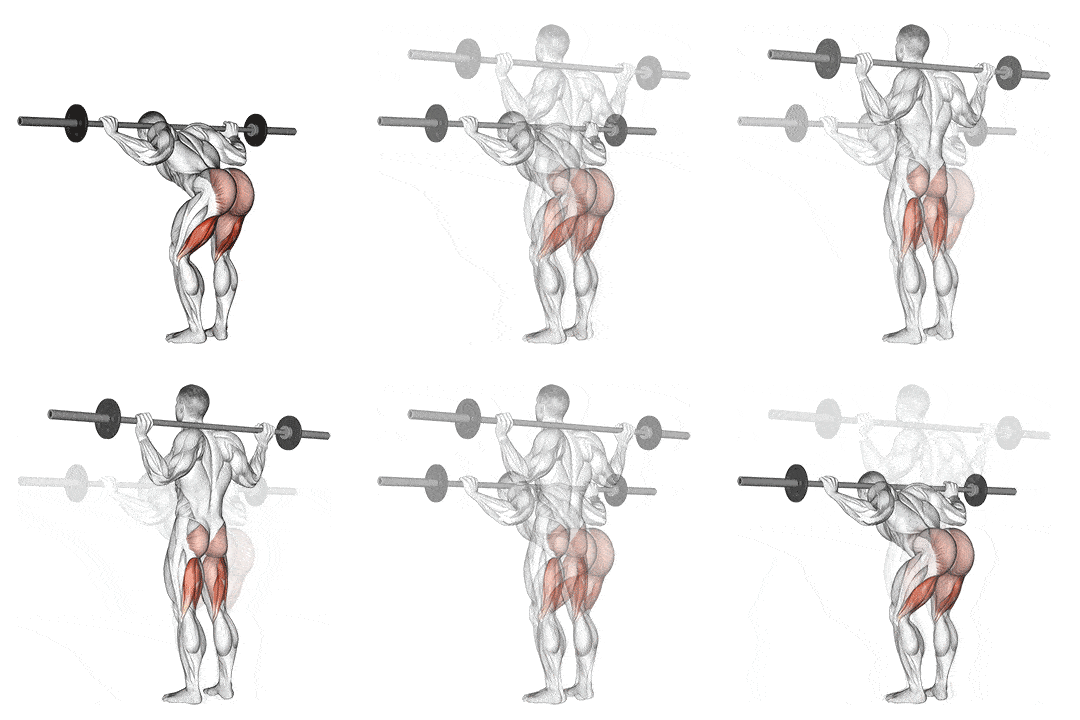
Exercise Description
Stand tall with feet hip-width apart. Hinge at the hips while keeping a neutral spine and slight knee bend. Lower your torso until you feel a strong stretch in the hamstrings, then engage your core and glutes to return to standing under control.
How To Perform
Stand tall with your feet hip-width apart and brace your core.
Push your hips back to initiate a hip hinge while keeping your back straight and chest proud.
Maintain a slight bend in the knees and keep shins vertical as the torso lowers.
Lower until you feel a controlled stretch in the hamstrings, without rounding the lower back.
Drive the hips forward, squeeze the glutes, and return to the upright position.
Expert Tips
Keep a neutral spine - Avoid arching or rounding. Think long neck, ribs down, and hips back to load the posterior chain.
Control the range - Only hinge as far as you can while maintaining tension and alignment; depth improves with mobility.
Distribute pressure through midfoot - Keep heels and big toes connected to the floor to stay balanced and stable.
Progress gradually - Begin with bodyweight; add tempo or light load only after perfecting the pattern.
Common Mistakes
Arching or rounding the back - This shifts stress to the spine and reduces hamstring and glute engagement.
Letting knees cave in - Maintain knee alignment over midfoot to protect the knees and hips.
Bending at the knees instead of hinging - Keep the movement primarily at the hips with only a soft knee bend.
Using momentum - Move with control to maintain tension and improve strength safely.
Info – Good Morning
When performing Good Morning, focus on maintaining proper form to prevent injury. Common mistakes include arching the back and letting the knees cave in. Engage your core and keep your spine neutral. Adjust the exercise by changing resistance or range of motion for your fitness level. Beginners can start with body weight, while advanced users can add weights for increased intensity. Benefits include improved strength, balance, and coordination. Consider variations like single-leg or tempo changes. Always warm up beforehand and listen to your body to avoid overexertion.
Equipment Required
No equipment needed.