DONKEY KICKS
Glute Activation and Core Stability
Primary Muscles
Exercise Description
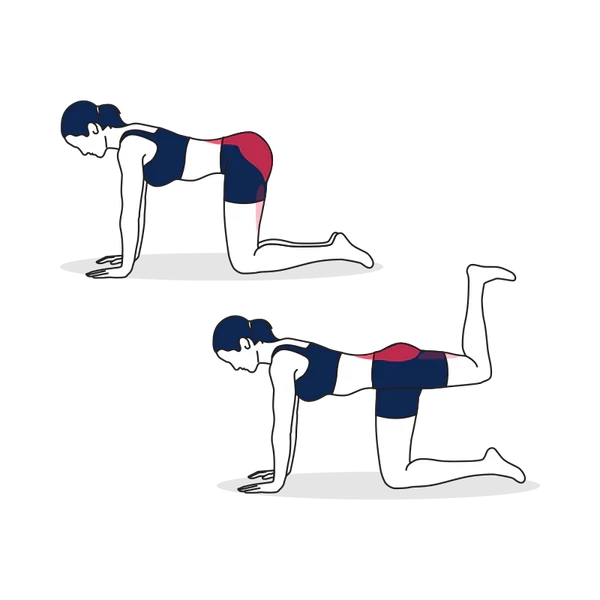
Start on all fours with a straight back. Lift one leg with the knee bent and press your foot toward the ceiling. Lower with control and repeat while keeping the core engaged and hips steady.
How To Perform
Start on all fours with hands under shoulders and knees under hips; keep your back straight and core braced.
Lift one leg by driving the heel toward the ceiling while keeping the knee bent at roughly 90 degrees.
Pause briefly at the top without arching your lower back or rotating the hips.
Lower the leg under control to the starting position and repeat for reps before switching sides.
Maintain core engagement throughout to stabilize the pelvis and protect the lower back.
Expert Tips
Keep your core engaged - A braced core prevents lower-back arching and keeps the focus on the glutes.
Avoid swinging the leg - Use controlled reps to maximize muscle engagement and reduce strain.
Hips square to the floor - Limit rotation to keep tension on the target muscles and protect your spine.
Progress with ankle weights - When bodyweight sets feel easy, add light ankle weights for additional resistance.
Common Mistakes
Swinging the leg too high - Overextending can cause lumbar strain and takes tension off the glutes.
Arching the lower back - Keep ribs down and pelvis neutral to avoid shifting the work away from the glutes.
Using momentum - Fast, jerky reps reduce time under tension and control.
Info – Donkey Kicks
Donkey kicks target the glutes and improve core stability. Keep your core engaged and avoid arching your back. A common mistake is swinging the leg too high, which can strain the lower back. Use controlled movements and focus on full muscle engagement. Beginners should move slowly to groove proper form, while advanced trainees can add ankle weights for increased resistance. Incorporate donkey kicks into a balanced lower body routine and always warm up beforehand.
Equipment Required
No equipment needed.