SQUAT SIT TO REACH
Lower Body Strength and Mobility
Primary Muscles
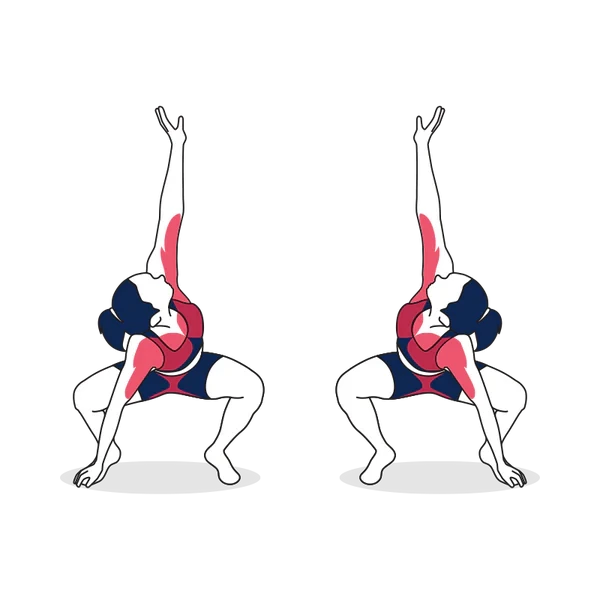
Exercise Description
Stand with feet shoulder-width apart. Lower into a squat, keeping knees behind toes. Reach arms forward, then stand up, extending arms overhead. Repeat smoothly.
How To Perform
Stand tall with your feet shoulder-width apart and toes slightly turned out for comfort.
Engage your core and initiate the squat by pushing your hips back while bending at the knees, keeping your chest up and heels grounded.
As you descend, keep your knees tracking over your toes (do not let them cave inward) and reach your arms forward for balance.
Drive through your heels to stand back up while simultaneously extending your arms overhead into a full reach.
Return the arms to your sides and repeat with smooth, controlled tempo.
Expert Tips
Keep knees aligned - Prevent valgus collapse by tracking knees in line with toes throughout the squat.
Maintain chest up - Keep the torso proud to avoid rounding the back and to protect the spine.
Engage the core - Brace lightly from the start to improve stability and balance.
Scale smartly - Use a chair for assistance if needed; add a light dumbbell as you progress.
Common Mistakes
Knees caving inward - Allows stress on the knees and reduces glute activation; keep knees tracking over toes.
Heels lifting off the floor - Shifts load to the knees and toes; keep weight centered over mid-foot and heel.
Collapsing the chest - Rounding forward strains the lower back; keep the chest up and spine neutral.
Rushing the movement - Using momentum reduces control and effectiveness; move with a steady, controlled pace.
Info – Squat Sit to Reach
To maximize benefits from the Squat Sit to Reach, keep knees from caving inward and maintain a proud chest to reduce back strain. Engage your core for stability. Beginners can use a chair for support; advanced lifters may add a light dumbbell for increased resistance.
This movement builds lower body strength, flexibility, and balance. Use dynamic warm-ups to enhance range of motion, and progress gradually—prioritize quality over quantity.
Equipment Required
Chair, light dumbbell (optional).