Exercise guide
Best Glute Exercises
Ten moves for all three glute muscles, with form, sets, reps and two workouts
Your glutes extend, open and steady the hip. These ten exercises cover all three jobs, ranked, with the sets and reps I use and two workouts you can run this week.

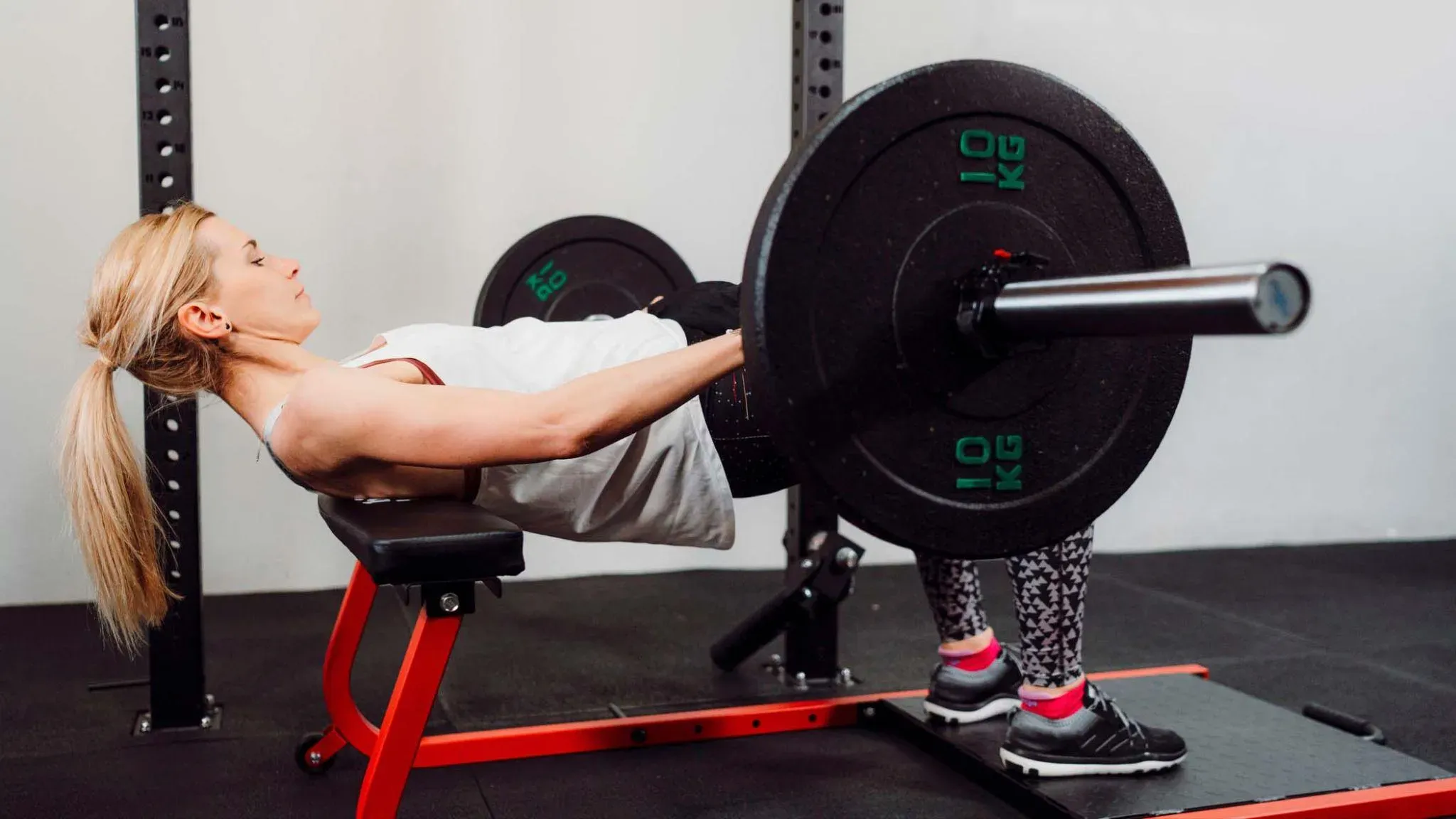
The best glute exercises are the barbell hip thrust, the Bulgarian split squat and the Romanian deadlift, backed up by squats, lunges and step-ups. Add one hip abduction move for the side glutes. Train glutes two to three times a week, with 3–4 hard sets of 6–15 reps per exercise.
Key takeaways
- The glutes have three muscles: maximus, medius and minimus. Train hip extension and hip abduction.
- Hip thrusts, split squats and Romanian deadlifts give you the most load per rep.
- Single-leg moves fix left-right differences and hit the glutes hard with light weights.
- Use 6–12 reps on heavy moves and 12–20 on bands and small-muscle work.
- Squeeze at the top and control the way down. If you only feel your lower back or quads, fix the setup first.
- Fighters get the most from single-leg and side-glute work, because every kick is thrown from one standing leg.
Anatomy
What muscles make up the glutes?
Your glutes are three muscles. The gluteus maximus is the big one. It extends your hip, which is what drives you up from a squat, a lunge or a hip thrust. The gluteus medius and minimus sit on the side of the hip. They move your leg out to the side and keep your pelvis level when you stand on one leg.
Strong glutes help you sprint, jump, climb stairs and lift with your hips instead of your lower back. Long hours of sitting leave them under-used, so most people need to train them on purpose.
A good glute plan covers both jobs: heavy hip extension for the maximus, and lighter side work for the medius and minimus.
At a glance
Quick list
| Exercise | Main glute focus | Equipment | Difficulty | Sets & reps |
|---|---|---|---|---|
| 1. Barbell hip thrust | Maximus | Barbell, bench | Intermediate | 3–4 × 8–12 |
| 2. Bulgarian split squat | Maximus | Dumbbells, bench | Intermediate | 3 × 8–12 per leg |
| 3. Romanian deadlift | Maximus (with hamstrings) | Barbell or dumbbells | Intermediate | 3–4 × 6–10 |
| 4. Back squat | Maximus (with quads) | Barbell, rack | Intermediate | 3–4 × 6–10 |
| 5. Reverse or walking lunge | Maximus | Dumbbells or bodyweight | Beginner | 3 × 10–12 per leg |
| 6. Step-up | Maximus | Box, dumbbells | Beginner | 3 × 8–12 per leg |
| 7. Glute bridge | Maximus | Bodyweight or weight | Beginner | 3 × 12–20 |
| 8. Hip abduction (band walk or machine) | Medius, minimus | Band or machine | Beginner | 2–3 × 15–20 |
| 9. Glute kickback | Maximus | Cable or bodyweight | Beginner | 2–3 × 12–15 per leg |
| 10. Clamshell and fire hydrant | Medius, minimus | Band or bodyweight | Beginner | 2 × 15–20 per side |
Tap an exercise to jump to it.
The ranking
10 best glute exercises
Ranked by how much load they put through the glutes and how easy they are to progress.
-
01
Best for: heavy glute loading at the top of the movement
Barbell hip thrust
The best way to load the glutes heavily at the top of the movement, where they are fully shortened.
- Sit on the floor with your upper back against a bench and a padded bar across your hips.
- Plant your feet flat, about hip-width, so your shins are vertical at the top.
- Drive through your heels and lift your hips until your body is flat from knees to shoulders.
- Pause and squeeze, then lower under control.
Key cue Chin tucked, ribs down, eyes forward.
Common mistake: arching the lower back to get higher.
Sets & reps: 3–4 × 8–12, 2 minutes rest.
Exercise page: barbell hip thrust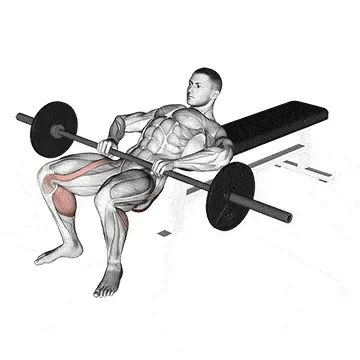
-
02
Best for: glutes and quads, one leg at a time
Bulgarian split squat
A hard single-leg move. It works the glutes and quads and shows up any difference between sides.
- Stand a long stride in front of a bench and rest the top of your back foot on it.
- Lower straight down until your back knee is close to the floor.
- Push through the whole front foot to stand.
Key cue For glutes, lean your torso slightly forward and take a slightly longer stride.
Common mistake: pushing off the back foot. It is there for balance.
Sets & reps: 3 × 8–12 per leg.
Exercise page: Bulgarian split squat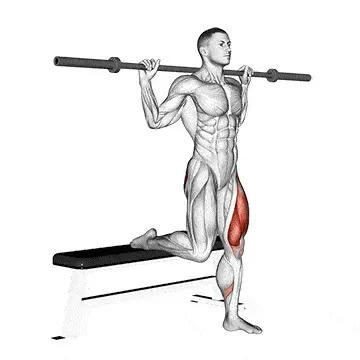
-
03
Best for: glutes and hamstrings in a long, stretched position
Romanian deadlift
Deadlift variations build the whole posterior chain. The Romanian deadlift loads the glutes and hamstrings in a long, stretched position.
- Hold a bar or dumbbells at your thighs, knees soft.
- Push your hips back and lower the weight down your thighs with a flat back.
- Stop when you feel a strong stretch behind your thighs, then drive your hips forward.
Key cue Finish by squeezing your glutes, not by leaning back.
Common mistake: bending the knees more as you lower.
Sets & reps: 3–4 × 6–10.
For more hinge options, see the best hamstring exercises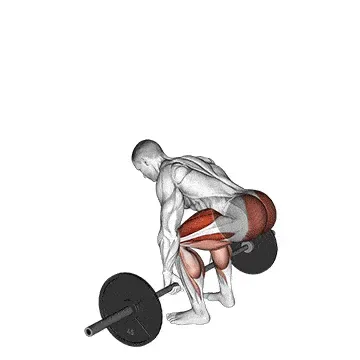
-
04
Best for: the whole lower body, with deep squats for more glute work
Back squat
A foundation lift for the whole lower body. Squatting deeper puts more work on the glutes.
- Bar on your upper back, feet about shoulder-width, toes slightly out.
- Brace, then sit down between your heels until your hips are at or below knee height, if you can keep a flat back.
- Drive up through your whole foot.
Key cue Knees track over your toes.
Common mistake: cutting depth short.
Sets & reps: 3–4 × 6–10.
Full technique and variations in squat benefits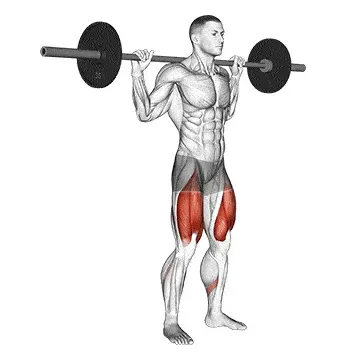
-
05
Best for: glute work with a long stride
Lunges (reverse or walking)
Reverse and walking lunges both suit glute work.
- Stand tall with dumbbells at your sides.
- Step back (reverse) or forward (walking) into a long stride.
- Lower until both knees are close to 90 degrees.
- Drive through the front heel to stand or step through.
Key cue A longer stride and a slight forward lean bias the glutes.
Common mistake: short, choppy steps that turn it into a quad move.
Sets & reps: 3 × 10–12 per leg.
Exercise page: lunge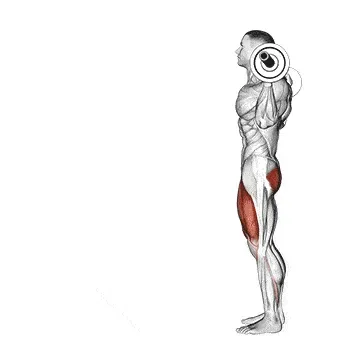
-
06
Best for: simple single-leg loading that is easy on the back
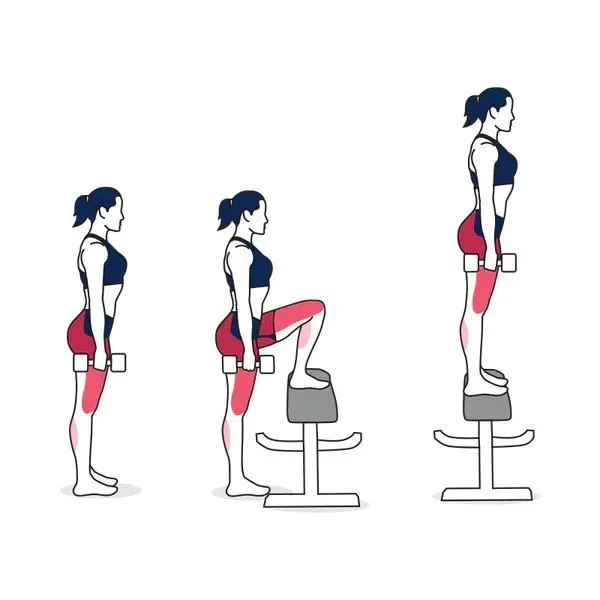
Step-up
Works the glute and quad of the leading leg. Simple to load and easy on the back.
- Stand facing a box around knee height with dumbbells at your sides.
- Place one whole foot on the box.
- Drive through that heel to stand on the box, without pushing off the floor leg.
- Step down slowly with the same leg.
Key cue Lean forward slightly and push through the heel on the box.
Common mistake: bouncing off the back foot.
Sets & reps: 3 × 8–12 per leg.
-
07
Best for: learning to feel your glutes
Glute bridge
The best place to learn to feel your glutes. Can be loaded once you own it.
- Lie on your back, knees bent, feet flat and close to your glutes.
- Push through your heels and lift your hips until your body is straight from knees to shoulders.
- Squeeze at the top for a second, then lower.
Key cue Tuck your ribs down so your glutes, not your back, finish the rep.
Common mistake: feet too far away, which shifts the work to the hamstrings.
Sets & reps: 3 × 12–20. Add a weight across the hips or go to one leg.
Exercise page: glute bridge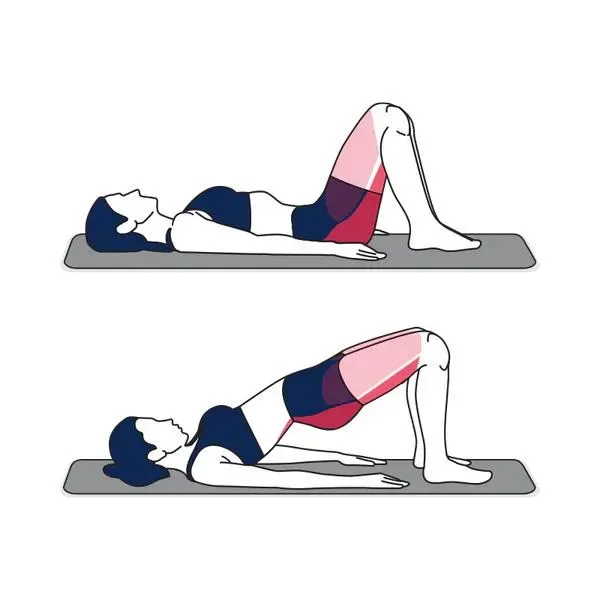
-
08
Best for: the gluteus medius and minimus
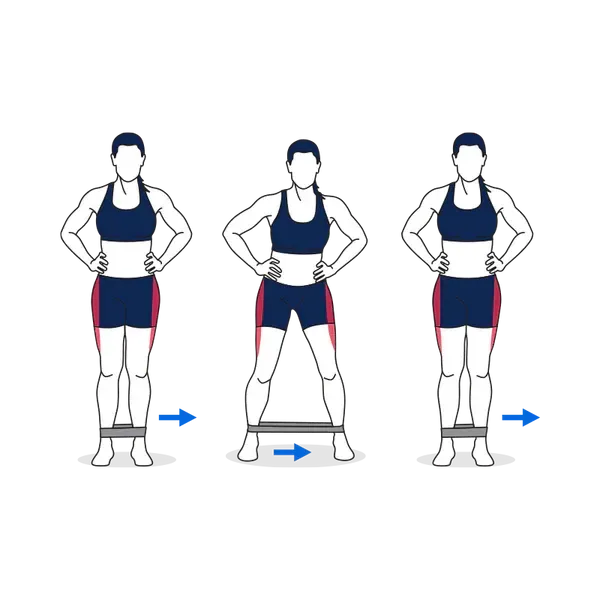
Hip abduction (lateral band walks or machine)
Targets the gluteus medius and minimus for hip stability.
- Band walks: band above your knees or around your ankles, quarter squat, step sideways keeping tension. 2–3 × 15–20 steps each way.
- Machine: sit tall, push your knees out, pause, return slowly. 2–3 × 15–20.
Key cue Keep your toes pointing forward.
Common mistake: rocking your torso side to side.
-
09
Best for: isolating the gluteus maximus as a finisher
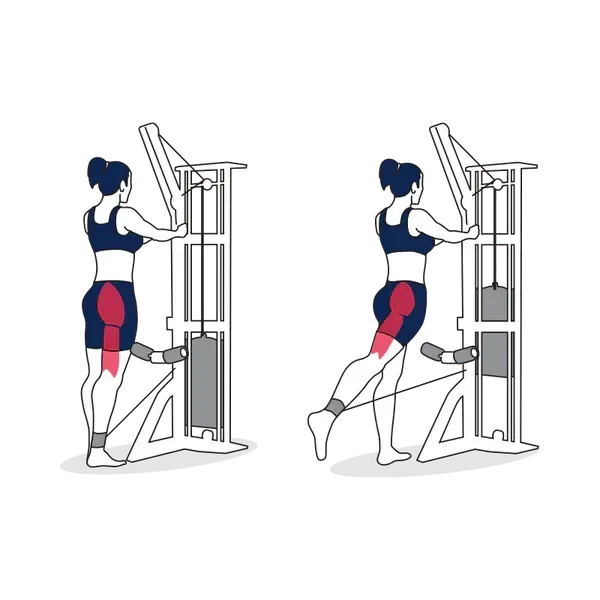
Glute kickback (donkey kick)
Isolates the gluteus maximus and works well as a finisher.
- On all fours (or at a cable with an ankle strap), keep one knee bent at 90 degrees.
- Push that heel up toward the ceiling until your thigh is in line with your body.
- Pause, then lower without letting your back arch.
Key cue Move from the hip, not the lower back.
Common mistake: swinging the leg high with an arched back.
Sets & reps: 2–3 × 12–15 per leg.
-
10
Best for: side-glute work with no equipment
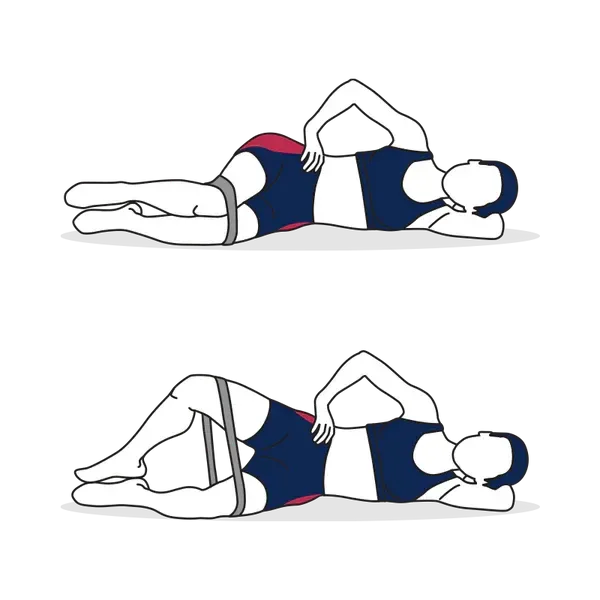
Clamshells and fire hydrants
Two bodyweight moves for the gluteus medius and minimus.
- Clamshells. Lie on your side with knees bent and feet together. Lift the top knee without letting your hips roll back. Pause, then lower.
- Fire hydrants. From all fours, lift one bent leg out to the side to hip height, keeping your hips level. Pause, then lower.
Key cue Keep your hips still. Only the working leg moves.
Sets & reps: 2 × 15–20 per side. Add a band above the knees once bodyweight is easy.
Put it together
Glute workouts for the gym and at home
Do one of these two to three times a week, with a day between. Take heavy sets to one or two reps short of failure. When you reach the top of the rep range on every set, add weight or reps.
Gym glute workout
| Exercise | Sets × reps | Rest |
|---|---|---|
| Barbell hip thrust | 4 × 8–12 | 2 min |
| Bulgarian split squat | 3 × 8–12 per leg | 90 s |
| Romanian deadlift | 3 × 8–10 | 2 min |
| Hip abduction machine | 2 × 15–20 | 60 s |
Home glute workout (bodyweight or bands)
| Exercise | Sets × reps | Rest |
|---|---|---|
| Single-leg glute bridge | 3 × 12–15 per leg | 60 s |
| Reverse lunge | 3 × 12 per leg | 60 s |
| Step-up (chair or stairs) | 3 × 10–12 per leg | 60 s |
| Lateral band walk | 2 × 20 steps each way | 45 s |
| Clamshell | 2 × 20 per side | 30 s |
For fighters
Glute exercises for fighters
If you train Muay Thai, MMA or kickboxing, your glutes do two jobs in a fight. The gluteus maximus extends and turns the hip, which helps drive power from the floor into punches, knees and kicks, and into the push of a takedown. The side glutes hold your pelvis level on one leg. Every round kick and teep in Muay Thai is thrown from a single standing leg, so a stable hip there helps you stay balanced and recover your stance.
That makes single-leg and side-glute work more useful than chasing a bigger hip thrust. For the rest of your week, see strength and conditioning for fighters.
Best picks
Bulgarian split squats, step-ups and band walks are good picks.
When
Lift on easier days, or several hours before or after hard sparring or pad work.
How much
Do two or three sets per move, stop 1–3 reps short of failure, and cut the volume in the last weeks before a fight.
What to avoid
Common glute training mistakes
- 01
Feeling it only in your lower back
On thrusts and bridges, tuck your ribs and stop when your body is flat, not arched.
- 02
Too little range
Half squats and short lunges move work away from the glutes.
- 03
Only doing band work
Bands are a finisher. The glutes grow from heavy hip extension.
- 04
Never adding load
Track your weights and reps and beat them a little over time.
- 05
Skipping one-leg work
Split squats and step-ups catch the side that is lagging.
Questions
Glute exercise FAQ
What is the best exercise for glutes?
For most people it is the barbell hip thrust, because it lets you load the glutes heavily and is easy to progress. It works best alongside a single-leg move such as the Bulgarian split squat and a hinge such as the Romanian deadlift. Those three together cover the glutes at short and long lengths. Add a hip abduction move for the side glutes.
How often should I train glutes?
Two to three times a week works well for most people. Spread your hard sets across those days instead of doing everything in one long session. Leave at least a day between sessions that use heavy hip thrusts, split squats or Romanian deadlifts. Light band work can go on more days if you want it, but it does not replace the heavy moves.
Are squats enough to grow your glutes?
Squats work the glutes, especially when you squat deep, but they are shared with the quads. Most people get better glute results when they add a hip thrust or glute bridge, a single-leg move such as split squats or step-ups, and some side-glute work. Keep squatting for overall leg strength and treat the other moves as the glute focus.
Can you build glutes at home without weights?
Yes, at first. Single-leg glute bridges, reverse lunges, step-ups and band walks are enough to build strength when you are new. Over time your glutes need more load to keep growing, so add a backpack with weight, slow the lowering phase, do more reps or move to single-leg versions. A pair of dumbbells or a loop band goes a long way at home.
Why don't I feel my glutes when I train?
Usually it is the setup. On hip thrusts and bridges, check your feet are not too far forward and that you tuck your ribs instead of arching. On lunges and split squats, take a longer stride and lean forward slightly. Slow down, pause at the top, and start each session with a set of glute bridges to feel the muscle working first.
Hip thrust or squat: which is better for glutes?
They do different jobs, so most people should do both. The hip thrust loads the glutes hardest at the top, when your hips are fully extended. The squat loads them hardest at the bottom, in a deep position, and also trains your quads. If glute growth is the main goal and you can only pick one, start with the hip thrust and keep some squats or split squats in your week.
Are glute exercises good for Muay Thai and MMA?
Yes. The glutes help drive the hip in punches, kicks and takedowns, and the side glutes keep you steady on your standing leg when you kick. Fighters do well with single-leg moves such as Bulgarian split squats and step-ups, plus band walks. Keep it to two or three sets per move and train on easier days so it does not take away from sparring.
The method
Final thoughts
Pick one heavy hip-extension move, one single-leg move and one side-glute move. Train them two to three times a week and add a little weight or a rep when you can. That is the whole method.
Glute Training
Train your glutes with a plan.
Want a glute plan laid out for you? The Glute Training program is part of the HermQ bodybuilding subscription.
Training glutes for the ring or the cage? Combat Performance is a one-time $29 with lifetime access.
The complete combat S&C system. Explosive power, fight conditioning, movement quality, and resilience for Muay Thai, MMA, and striking.
Get Instant Access – $29