FIRE HYDRANTS
Hip Abductor Strength and Core Stability
Primary Muscles
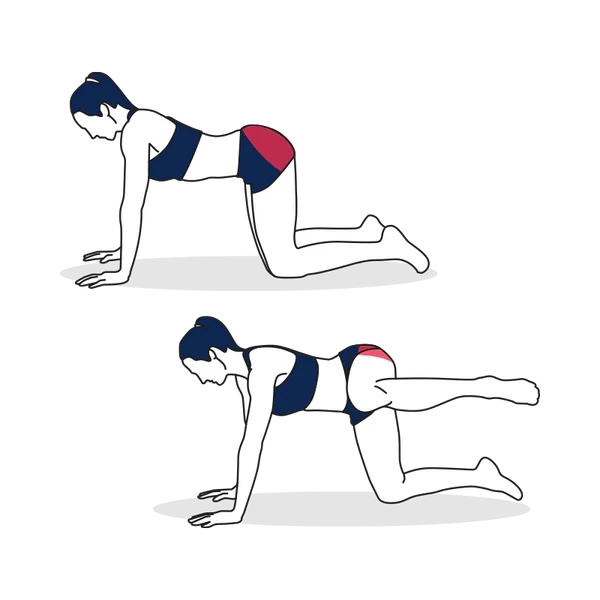
Exercise Description
Start on all fours with a neutral spine. Keeping your knee bent, lift one leg out to the side while engaging your core and keeping hips square. Lower under control, repeat for reps, then switch sides.
How To Perform
Begin on all fours with hands under shoulders and knees under hips. Keep your back straight and core engaged.
Without rotating your pelvis, lift one leg out to the side with the knee bent at about 90 degrees.
Pause briefly at the top while maintaining a neutral spine and square hips.
Lower the leg back down under control without shifting your torso.
Repeat for the desired reps, then switch legs.
Expert Tips
Keep hips square and core braced - Prevent pelvic rotation by tightening your abs and keeping a neutral spine throughout.
Control the range - Avoid lifting the leg too high; prioritize glute engagement over range of motion.
Move deliberately - Use slow, controlled reps to increase time under tension and activation.
Progress with resistance - Add ankle weights or a light mini-band above the knees when ready.
Common Mistakes
Arching the lower back - Losing core tension shifts stress to the lumbar spine and reduces glute activation.
Pelvic rotation - Twisting the hips to lift higher reduces the effectiveness of the exercise.
Lifting too high - Going past your controlled range can cause compensations and strain.
Using momentum - Swinging the leg reduces time under tension and muscle engagement.
Info – Fire Hydrants
Fire Hydrants primarily target the glutes and hip abductors while challenging core stability. Keep your core engaged and your back neutral to avoid compensations. Don’t lift the leg excessively high; prioritize control and alignment.
For progression, add ankle weights or a light resistance band. This movement works well in warm-ups or as part of a lower body routine to enhance hip mobility and reduce injury risk.
Equipment Required
No equipment needed.