DUMBBELL BENT OVER ROWS
Upper-Back Thickness Builder
Primary Muscles
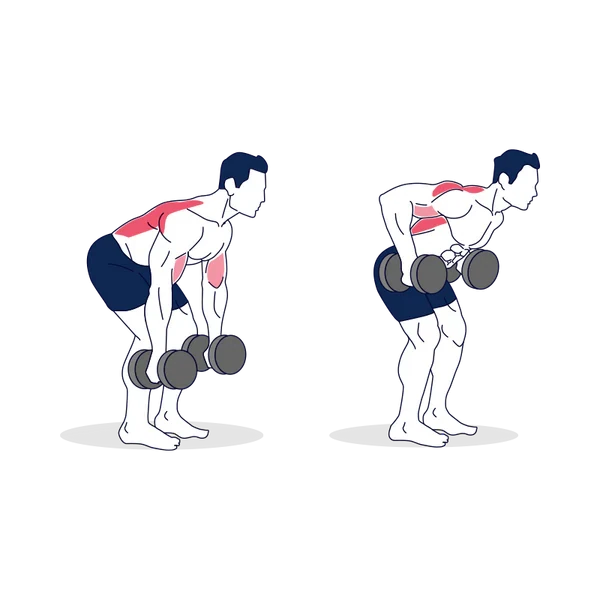
Exercise Description
Stand with feet shoulder-width apart, hinge at the hips with a flat back, and hold dumbbells at arm’s length. Pull the weights toward your waist with elbows close to your body, then lower them under control while keeping your core braced and spine neutral.
How To Perform
Stand with feet shoulder-width apart and a slight bend in the knees. Hinge at the hips until your torso is roughly 45° to the floor, maintaining a flat back and braced core.
Hold a dumbbell in each hand with arms extended toward the floor and shoulders pulled back and down.
Row the dumbbells toward your waist by driving elbows back close to your sides. Squeeze your shoulder blades together at the top.
Lower the weights under control to full arm extension without rounding your back. Reset your brace and repeat.
Expert Tips
Control every rep - Avoid using momentum. Move the weight smoothly with a brief squeeze at the top for better back engagement.
Keep a neutral spine - Do not round the back. Hinge at the hips, keep chest open, and maintain a slight arch through the movement.
Brace the core - A firm brace stabilizes the torso and protects the lower back, especially as weights increase.
Elbows track close - Keep elbows near your sides to target lats and mid-back rather than flaring out excessively.
Choose the right load - Use a weight that lets you maintain posture and tempo. Good form with lighter weight beats sloppy heavy reps.
Common Mistakes
Rounding the back - Losing spinal alignment increases injury risk and reduces back engagement.
Using momentum - Swinging the torso or jerking the weights shifts the load away from the back muscles.
Flaring the elbows wide - This often turns the movement into a rear-delt/upper-trap shrug and reduces lat activation.
Letting the shoulders roll forward - Keep shoulders packed (down and back) to protect the shoulder joint and load the back properly.
Info – Dumbbell Bent Over Rows
Dumbbell Bent Over Rows target the upper and middle back with help from the biceps and rear delts. Keep your back flat, core braced, and move the weights with control—avoid using momentum or rounding the spine. Choose a load that lets you maintain posture and technique from first to last rep. Beginners can start lighter and progress steadily; advanced lifters can use tempo or single-arm variations for increased challenge.
Equipment Required
Dumbbells