SEATED BARBELL WRIST CURL
Forearm Flexor Strength and Control
Primary Muscles
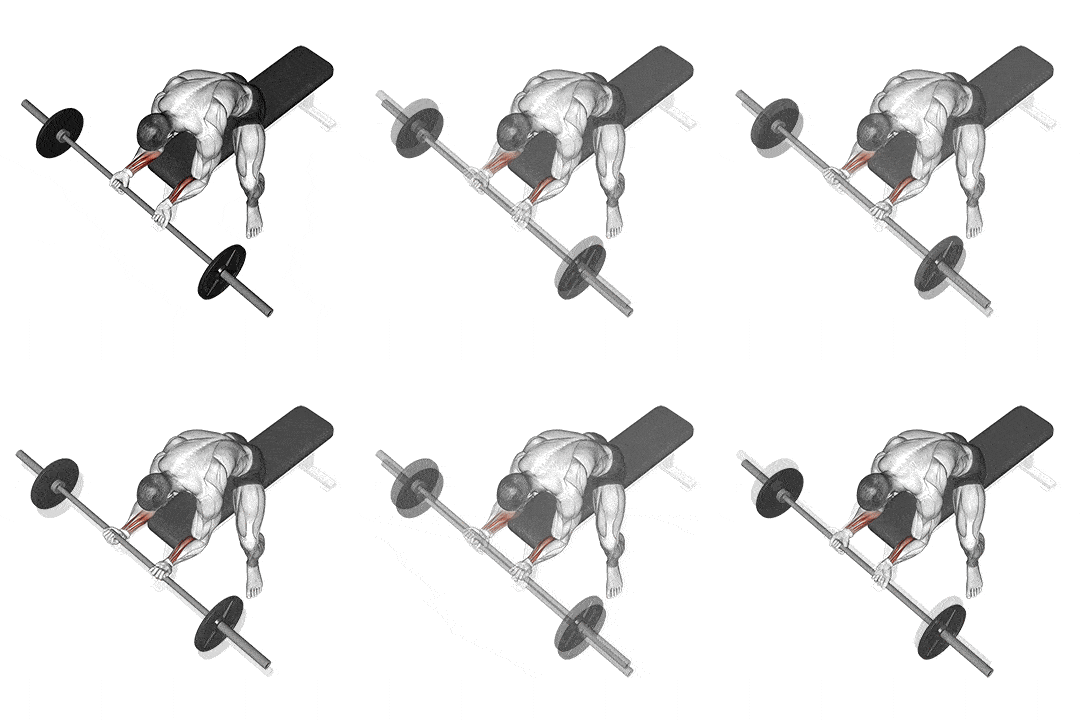
Exercise Description
Sit on a bench with your forearms resting on your thighs, palms facing up, and a barbell in your hands. Curl your wrists upward, squeeze the forearms at the top, then lower the bar slowly through a full range of motion while keeping the elbows and forearms stable on your thighs.
How To Perform
Sit on a flat bench and place your forearms on your thighs with your wrists just beyond the knees, palms facing up.
Grip the barbell with a comfortable underhand (supinated) grip, hands about shoulder-width apart.
Keep elbows and forearms anchored to your thighs; only the wrists move throughout the set.
Curl the barbell by flexing at the wrists until you feel a strong contraction in the forearms.
Pause and squeeze at the top for a moment to increase time under tension.
Lower the barbell slowly under control, allowing a full stretch at the bottom without losing forearm contact.
Expert Tips
Use a full range of motion - Let the wrists extend fully at the bottom before curling to maximize forearm activation.
Keep elbows planted - Do not lift your elbows off your thighs; keep the forearms stable to isolate the wrists.
Start light and progress gradually - Master control with lighter loads before increasing weight to avoid joint strain.
Consider thicker bars for challenge - A thicker bar can increase grip demand for advanced trainees when form is consistent.
Avoid momentum - Move slowly and deliberately; do not bounce the bar at the bottom of the rep.
Common Mistakes
Using momentum - Bouncing the bar reduces forearm tension and increases injury risk.
Lifting elbows or forearms - Allowing elbows to rise shifts tension away from the forearm flexors.
Cutting the range of motion short - Not fully extending or flexing at the wrists limits stimulus to the muscles.
Too much weight - Overloading leads to poor control and wrist discomfort; prioritize technique.
Info – Seated Barbell Wrist Curl
The seated barbell wrist curl primarily targets the forearm flexors. Emphasize control and a full range of motion, extending the wrists before curling and keeping your elbows anchored on your thighs. Begin with a manageable weight to master form, and progress gradually. Advanced lifters may experiment with thicker bars to increase grip demand. Perform 1–2 times per week to support balanced forearm development and avoid overuse.
Equipment Required
Barbell, bench