TWO-HANDED DUMBBELL FRONT RAISE
Strict anterior deltoid raise using two dumbbells
Primary Muscles
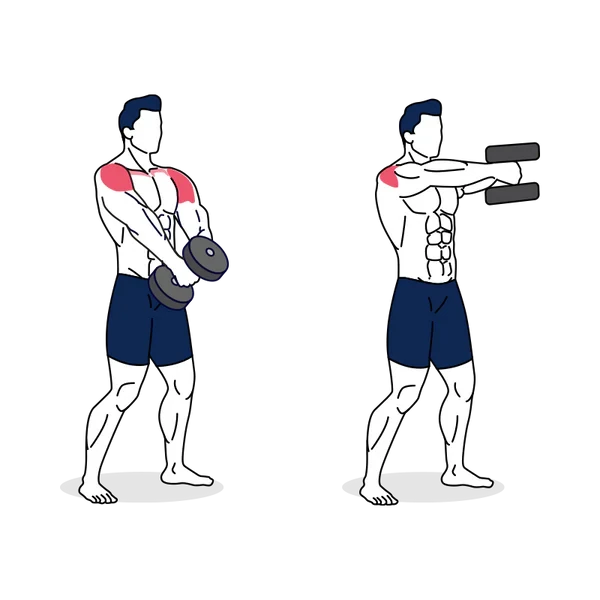
Exercise Description
Stand with feet shoulder-width apart, holding a dumbbell in each hand. With a slight bend in the elbows, raise the weights to shoulder level under control, then lower slowly. Keep the core engaged and torso still throughout.
How To Perform
Stand tall with feet shoulder-width apart and brace your core.
Hold a dumbbell in each hand in front of your thighs, palms facing your body, elbows softly bent.
Raise both dumbbells together in a controlled arc to shoulder height without swinging.
Pause briefly at shoulder level while keeping shoulders down and ribs tucked.
Lower the dumbbells slowly to the starting position and repeat for the target reps.
Expert Tips
Prioritize control over load - Excessive weight encourages torso swing. Choose a load that lets you lift smoothly with strict form.
Keep a slight elbow bend - Do not lock your elbows. A soft bend maintains tension on the anterior deltoids and protects the joints.
Maintain neutral wrists - Keep wrists straight to reduce strain and improve force transfer to the shoulders.
Brace your core - Keep the torso quiet—engage your core and avoid leaning back or using momentum.
Common Mistakes
Using momentum - Swinging the torso to drive the weights up reduces shoulder activation and raises injury risk.
Going too heavy - Excessive load breaks form. Start lighter and progress gradually as technique solidifies.
Locking the elbows - A rigid elbow position increases joint stress and diminishes muscle tension—keep a soft bend.
Info – Two-Handed Dumbbell Front Raise
The two-handed dumbbell front raise targets the shoulders, particularly the anterior deltoid. Common mistakes include using excessive weight, which can strain the back and shoulders, and swinging the torso for momentum. Focus on controlled movements, avoid locking the elbows, and keep wrists neutral.
Beginners should start with lighter weights to perfect form. Advanced trainees can increase load or include brief pauses at the top for extra intensity. Keep the core engaged to maintain balance and protect the spine.
Equipment Required
Dumbbells