Chest exercise guide
Decline Bench Press
Setup, form and the mistakes to avoid on the barbell decline.
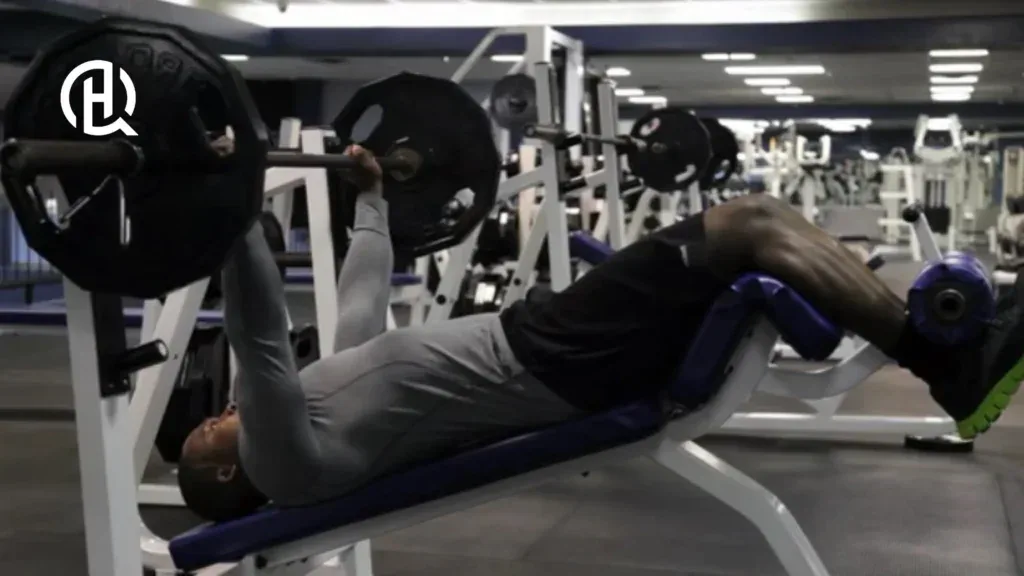
The decline bench press is a barbell press on a head-down bench. It trains the chest with less front-shoulder work than an incline press, and it needs a careful setup.

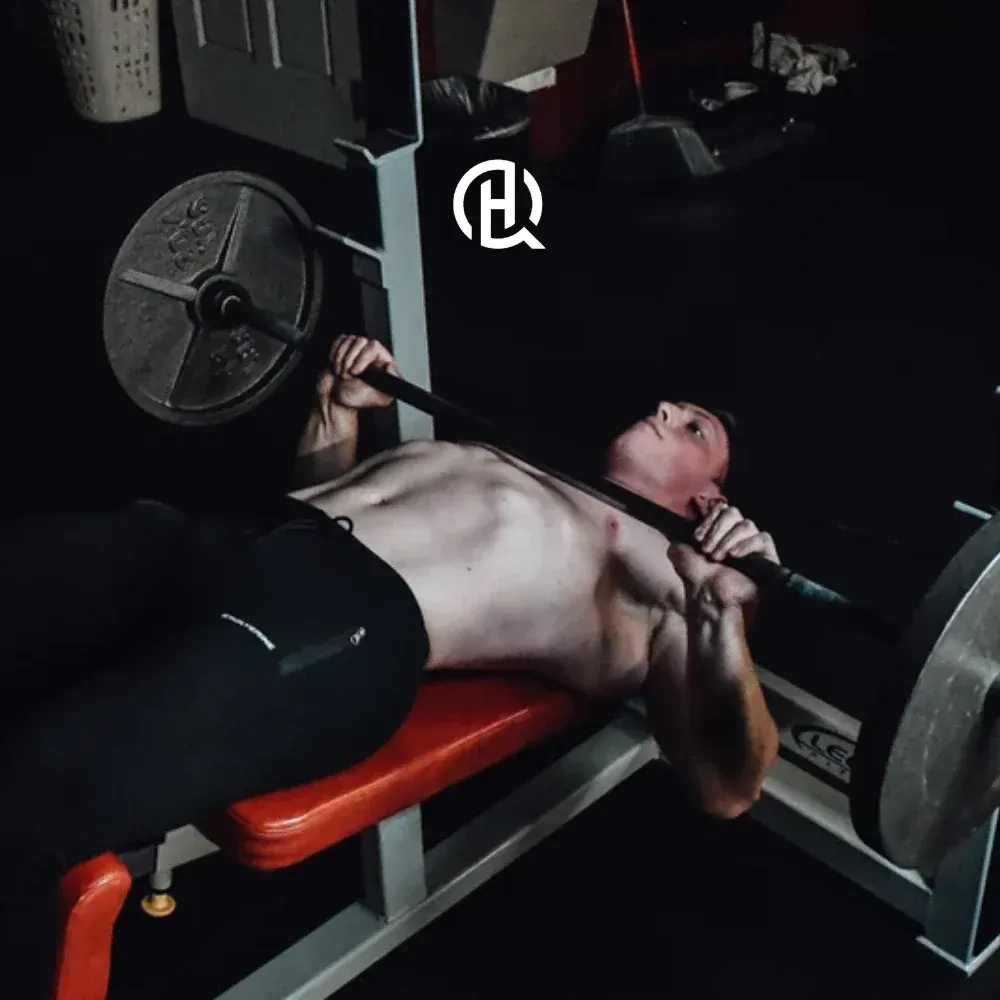
The decline bench press is a barbell press done on a bench set 15 to 30 degrees head-down, with your legs locked under foot pads. It trains the chest, triceps and front shoulders, with more lower-chest work than an incline press. Lower the bar to your lower chest, then press it straight back up. Use a spotter.
Key takeaways
- Set the bench 15 to 30 degrees head-down and lock your legs under the pads before you unrack.
- Grip slightly wider than shoulder width and lower the bar to the lower chest, never the neck.
- Keep your elbows about 45 degrees from your body and lower for 2 to 3 seconds. No bouncing.
- Train it with a spotter or safety arms. Getting the bar out of the rack is the risky part.
- It is a useful option, not a must. A flat bench and dips also train the lower chest.
- Muscles
- Chest (more lower-chest work than an incline press), triceps, front shoulders
- Equipment
- Decline bench with foot pads and rack, barbell, spotter or safety arms
- Difficulty
- Intermediate
- Sets & reps
- 3–4 sets of 6–10 reps
The basics
What Is the Decline Bench Press?
The chest does most of the work. Your triceps straighten the arms, and the front shoulders help, though less than in an incline press. Because the bar travels a shorter distance than on a flat bench, many lifters can handle a little more weight.
Why do it
Benefits of the Decline Bench Press
- 01
More lower-chest work
Compared with an incline press, the angle shifts the press toward the lower chest.
- 02
Less front-shoulder stress
The arms press at a lower angle, which many lifters find kinder to the shoulders than incline pressing.
- 03
Heavy pressing with a short bar path
Useful if you want to load the chest heavy for strength.
- 04
Variety
A different angle gives a plateaued flat bench a break without dropping chest work.
Step by step
How to Do the Decline Bench Press
- 01
Set the bench
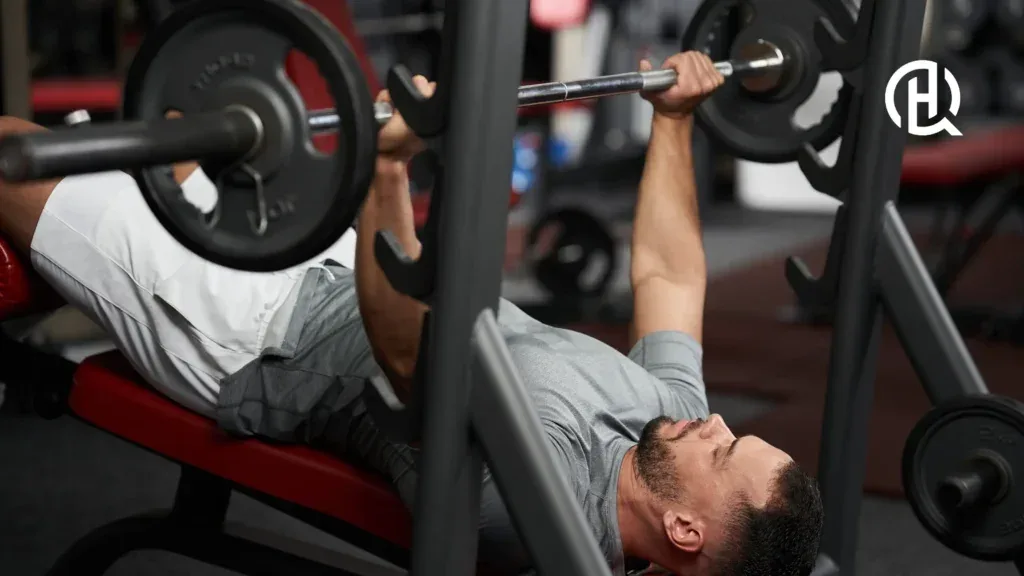
Set it 15 to 30 degrees head-down. Set the safety arms, if the rack has them, just below your chest height at the bottom.
- 02
Lock in
Hook your legs under the foot pads and lie back with your eyes roughly under the bar.
- 03
Grip
Take a grip slightly wider than shoulder width. Wrap your thumbs around the bar and keep your wrists as straight as you can.
- 04
Unrack with help
Have your spotter help lift the bar off the hooks. Move it until it sits over your lower chest, arms straight.
- 05
Lower for 2 to 3 seconds
Bring the bar down to your lower chest, below the nipple line. Keep your elbows about 45 degrees from your body. Breathe in on the way down.
- 06
Press
Touch lightly, then breathe out and press the bar straight back up. No bounce off the ribs or sternum.
- 07
Rack it
After the last rep, lock your arms and move the bar back to the hooks with your spotter guiding it. Unhook your legs and sit up slowly.
Get it right
Form Cues
- 01
Bar over the lower chest
At the top, the bar sits over your lower chest, not over your face or neck.
- 02
Elbows at 45
Flaring the elbows straight out shifts stress to the front of the shoulder.
- 03
Wrists stacked
Knuckles point to the ceiling and the bar sits over your forearms.
- 04
Shoulders pinned
Squeeze your shoulder blades into the bench and keep them there.
- 05
Slow on the way down
The lowering is controlled every rep, even the last one.
"When someone's decline feels wrong, I check the bar path first. Most of the time the bar is drifting toward the neck."
Herman Leir, Personal Trainer
What to avoid
5 Common Decline Bench Press Mistakes
- 01
Lowering too fast
Dropping the bar and bouncing it off your chest cuts the work the chest does and risks the ribs and sternum. Lower for 2 to 3 seconds.
- 02
Bent wrists
Wrists bent back put the load on the joint, not the bar. If your wrists hurt, straighten them and grip the bar lower in the palm.
- 03
Doing it without foot pads
Without pads, you slide and cannot brace. If your bench has no pads, use a flat press or dips instead.
- 04
Lowering to the wrong spot
The bar goes to the lower chest. Lowering it toward the neck is unsafe in a head-down position.
- 05
Going heavy alone
A failed rep on a decline is hard to escape. Use a spotter or safety arms, every time you go heavy.
Swaps
Decline Bench Press Alternatives
No decline bench, or the barbell does not suit you? These cover the same job.
| Alternative | Why pick it |
|---|---|
| Decline dumbbell bench press | Same angle, longer range, no spotter needed to bail |
| Parallel bar dips | Bodyweight lower-chest and triceps work |
| High-to-low cable crossover | Lower-chest isolation with constant tension |
| Flat barbell bench press | Trains the whole chest, including the lower part |
| Pec deck | Very stable, easy to learn, good for beginners |
| Push-ups | No equipment needed |
For the full ranked list, see the best chest exercises.
Programming
Sets and Reps for the Decline Bench Press
General guidance, not a prescription. Finish each set with 1 to 3 good reps left in the tank.
| Goal | Sets | Reps | Rest |
|---|---|---|---|
| Learning the movement | 2–3 | 10–12 (light) | 90 s |
| Muscle growth | 3–4 | 8–12 | 90–120 s |
| Strength | 3–5 | 4–6 | 2–3 min |
Put it first or second in a chest session, when you are fresh. To pick working weights from a recent set, use the one-rep max calculator.
Fit check
Who It's For, and Who Should Skip It
Good fit: lifters who can already bench press with solid form, who want more lower-chest work or a press that is easier on the shoulders than incline.
Skip it or swap it if: you train alone without safety arms, you feel sharp pain in the shoulder or chest, head-down positions make you dizzy, or your doctor has told you to avoid them. A flat bench press or dumbbell decline covers the same ground. Beginners should learn the flat bench press first.
Questions
Frequently Asked Questions
Is the decline bench press worth doing?
It is worth doing if you want more lower-chest work or if incline and flat pressing bother your shoulders. It is not a must. A flat bench press already trains the whole chest, and dips cover the lower chest well. If your program has room for one more press and you have a spotter, the decline is a good pick. If not, skip it without worry.
Does the decline bench press work the lower chest?
Yes. The chest does most of the work on every bench press angle, but compared with an incline press the decline shifts more of it to the lower part of the chest and less to the front shoulders. It does not isolate the lower chest. Your whole chest, triceps and front shoulders still work, so treat it as a chest press with a lower-chest bias.
Why can I lift more on decline than on flat bench?
Mostly because the bar travels a shorter distance. On a decline, the bar touches your lower chest and the distance to straight arms is smaller than on a flat bench. Many lifters also find the arm angle a little stronger. So a heavier decline does not mean a stronger chest. Compare your decline to your last decline, not to your flat bench.
What angle should a decline bench be?
Set it 15 to 30 degrees head-down. That is enough to change the press without making the setup awkward or uncomfortable. Steeper angles make unracking harder, send more blood to your head and add nothing useful. If your bench has preset notches, start with the first decline setting and stay there until the lift feels routine.
Can you do the decline bench press without a spotter?
Only with safety arms set just below your chest, and with weights you are sure of. A failed rep in a head-down position is hard to escape, because you cannot roll the bar down your body the way you might on a flat bench. If you train alone and the rack has no safeties, use dumbbells for the decline press instead.
HermQ programs
Train your chest with a plan.
Want the decline press inside a full plan? One subscription unlocks every HermQ bodybuilding program. Billed monthly.