

The barbell row is one of the big-daddy mass builders; a fundamental and necessary compound exercise that’s highly effective for adding slabs of beef to your back, specifically in the upper back, lats and rhomboids, Since it’s a horizontal pull, it also builds core stability, grip strength, making it one of, if not THE most beloved, back exercise amongst athletes and lifters who desire a thicker, stronger back.
Unlike the machine rows or pulldowns, the barbell row makes things more unstable, which means the body is required to recruit and coordinate different muscle groups while under a load outside of its normal range. Whether your goal is building size, or sheer performance, the barbell row gets results.
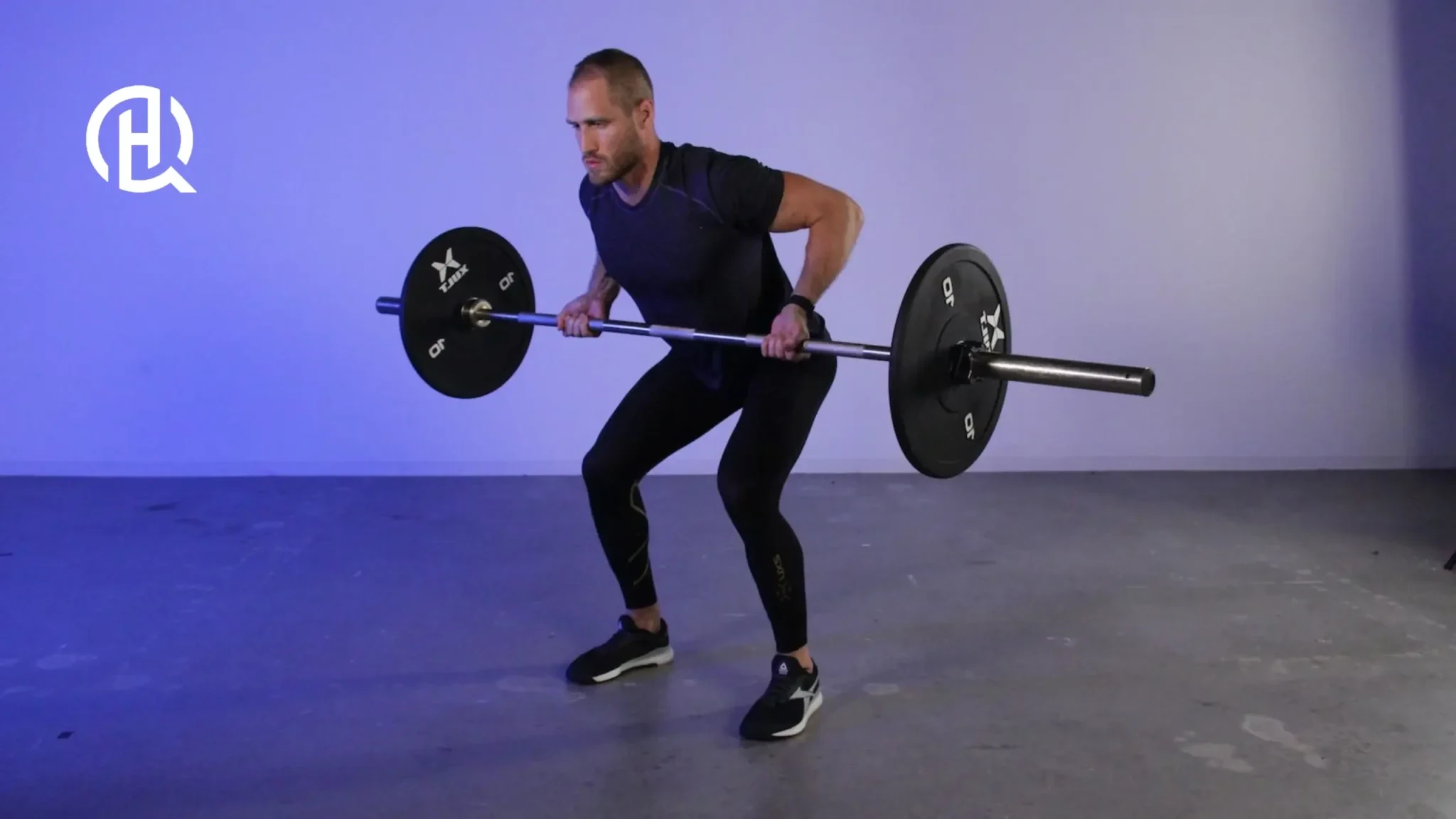
Use Straps If Grip Is a Limiting Factor – Focus on back, not hands.
This guide will tell you everything you need to know to do the barbell row with perfect form, outline its major benefits, highlight the most common form failures, and share expert tips that can help you get the most out of your training.
Barbell Row: How To

Keep Knees Slightly Bent – Adds stability and takes pressure off the lower back.
- • Position your feet shoulder-width, and a loaded barbell over your midfoot.
- • Bend at your hips and your knees slightly to bend down and grab the bar with an overhand grip on the outside of your legs.
- • Lay your back flat, brace your stomach, and pull your shoulder blades back and down.
- • Start the lift by pushing through your heels and pulling the bar upwards towards the lower ribs or upper abdomen while keeping your elbows close to the body. Squeeze your shoulder blades together at the top of the movement.
- • Slowly and with control, return the bar back down, keeping your core tight and your back flat.
Note:
Avoid rounding your back or letting your chest drop. A neutral spine and controlled movement are critical to staying safe and strong.
Muscles Worked in the Barbell Row
The barbell row is one of the most effective compound pulling exercises because it recruits a wide range of muscles at once:
- Latissimus Dorsi (Lats) – primary movers for pulling the bar towards the torso.
- Trapezius (middle and lower fibers) – stabilize the scapulae and support thickness through the upper back.
- Rhomboids – retract the shoulder blades at the top of each row.
- Rear Deltoids – assist with pulling and shoulder stability.
- Biceps – secondary movers that flex the elbow during the pull.
- Erector Spinae and Core – work isometrically to hold a hinged torso position.
- Glutes and Hamstrings (stabilizers) – maintain the hip hinge and provide balance.
This makes the barbell row not just a back builder, but a total posterior chain developer.
Barbell Row: Benefits

Don’t Let the Bar Drift Away From Your Body – Keep it close for efficiency.
Builds Total Back Thickness
The barbell row is one of the best exercises for adding size to your upper and mid back. It incorporates all the big pulling muscles, which help add thickness and make the body look more powerful.
Boosts Deadlift and Pull-Up Strength
Barbell rows work a lot of the same muscles as deadlifts and pull-ups. Therefore, getting stronger on this lift will directly correlate to better performance in those exercises.
Enhances Core and Hip Stability
Staying hinged under load could call upon deep stabilizers in your core and hips. This will help you brace better in the midline, and you will have better overall posture, you will be more injury-proof, and have better lifting mechanics.
Requires Minimal Equipment
Adding in barbell rows can help to correct the rounded shoulders and weak upper-back muscles from excess pressing and/or hours at the computer.
Safer on the Shoulders
You need just one barbell and a few plates to do it, which means you can do these anywhere. It’s compact, scalable, efficient, and good for home or the gym.
Common Mistakes in the Barbell Row
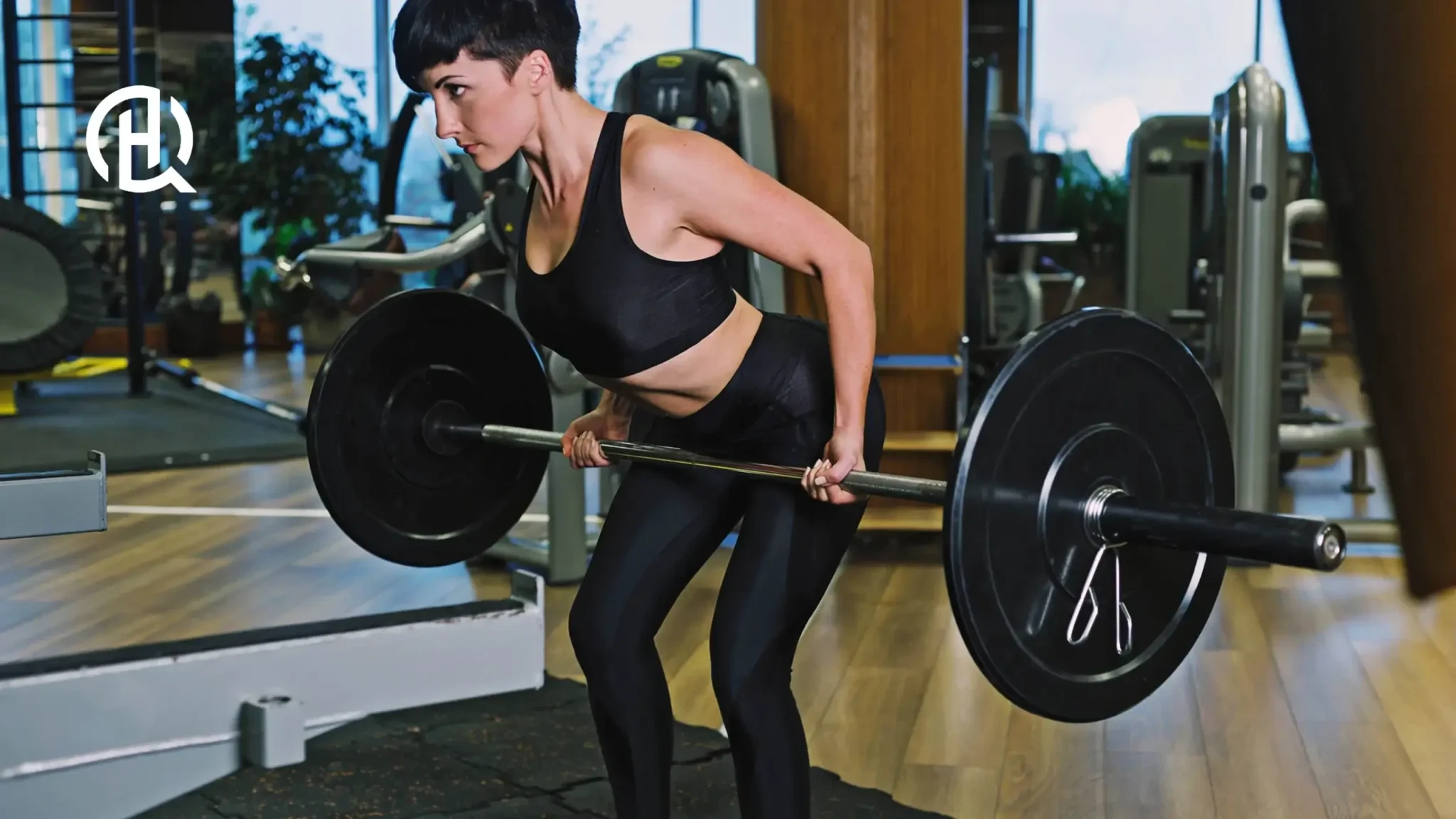
Start Light and Build Up – Form always comes first.
Mistake #1: Using Too Much Weight
Going too heavy leads to jerking and momentum, which reduces muscle activation and increases risk of injury. ✅ Solution: Start lighter and master control.
Mistake #2: Rounding the Lower Back
This puts the spine in a compromised position. ✅ Solution: Keep a neutral spine, brace your core, and hinge at the hips.
Mistake #3: Standing Too Upright
If your torso angle is too vertical, you’re not really rowing — you’re shrugging. ✅ Solution: Keep your torso hinged ~45° forward.
Mistake #4: Jerking the Bar
Swinging or bouncing shifts tension away from the back. ✅ Solution: Pull with a smooth, controlled motion and reset each rep.
Mistake #5: Short Range of Motion
Half reps mean half the gains. ✅ Solution: Lower the bar under control and pull it fully to the rib cage.
Synonyms & Search Variations
The barbell row is commonly referred to by different names, all describing variations of the same movement:
- Bent-Over Row
- Yates Row (underhand grip variation)
- Overhand Barbell Row
Barbell Row Variations
Mixing up your row style can help target different parts of the back and prevent plateaus:
- Pendlay Row – each rep starts from the floor; builds explosive pulling power.
- Yates Row (Underhand Grip) – emphasizes lower lats and biceps.
- T-Bar Row – chest-supported variation for more stability and isolation.
Expert Training Tips
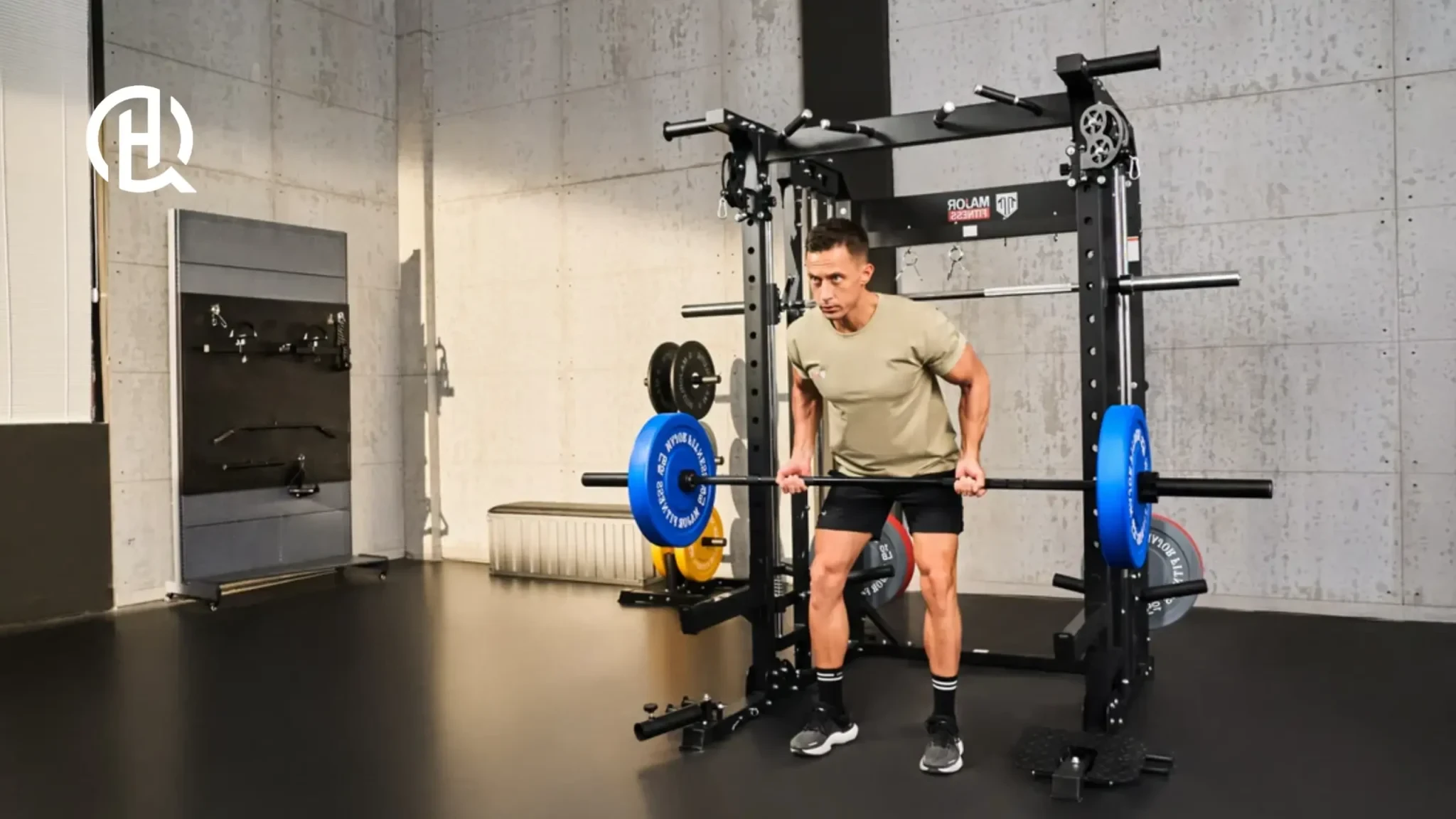
Grip Slightly Wider Than Shoulder Width – For balanced lat and trap work.
Master the Setup First
Work on dialing in your stance, how wide you grip, and the amount you hip hinge before adding weight. It allows you to generate more force and reduce the amount of strain you use instead. Think about building a “tabletop” back — flat, strong, braced — from your first rep to your last.
Use a Pause at the Top
At the top of the row, hold for a second and squeeze your shoulder blades together. This slight pause increases time under tension and enhances the mind-muscle connection – really focusing in on the rhomboids and middle traps.
Don’t Rush the Descent
Control the bar down, rather than dropping the bar. This eccentric portion of the lift plays a big role in building muscle and protecting your lower back from sloppy form.
Reset Your Brace Each Rep
Don’t bounce through reps, but pause, reset your core and make each row count. This will keep your back supported and the correct muscles engaged all the while you still perform your set.
Incorporate Tempo Work
Program barbell rows with specific tempo cues (2-0-2, for example: two seconds up, zero pause, two seconds down). This cuts down on the temptation to jerk the weight, and makes your muscles do more of the work when you do the exercise through a full range of motion.
FAQ: Barbell Row
Overhand vs. underhand grip – what’s the difference?
Overhand emphasizes the upper back and traps, while underhand shifts more tension to the lower lats and biceps.
How heavy should I go on barbell rows?
Start light, focus on form, and increase weight gradually. Use a weight that allows you to keep your torso fixed without swinging.
Are barbell rows good for beginners?
Yes, as long as you prioritize form over weight. They teach hip hinging, bracing, and pulling strength — all foundational skills.
What muscles do barbell rows build the most?
The mid and upper back, lats, and traps are the primary targets, but your biceps, core, and posterior chain also get strong secondary work.