Exercise list
Best Bicep Exercises
10 curls and pulls, ranked, with a workout to put them in.
The bicep exercises I would pick to build bigger arms, why each one earns its spot, and how to put them into a simple weekly workout.

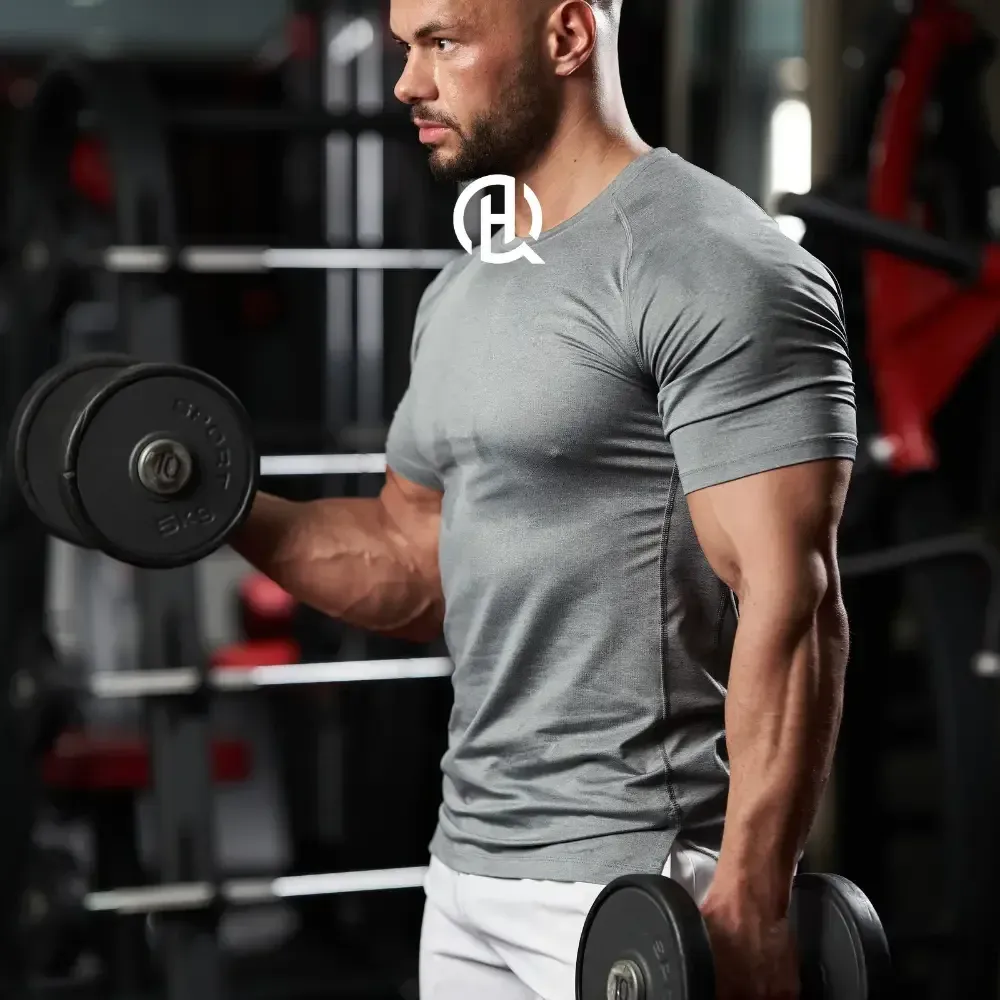
The best bicep exercises are the EZ-bar preacher curl, the incline dumbbell curl and the barbell curl, backed up by hammer curls and chin-ups. Pick one curl that is hardest in the stretched position, one heavy curl and one neutral-grip move. Train them twice a week and add a rep or a little weight each session.
Key takeaways
- Your biceps have two heads, and the brachialis underneath them adds arm thickness. A good plan trains all three.
- Choose exercises by job: one stretch-focused curl, one heavy curl, one neutral or overhand grip move.
- Two bicep sessions a week, 48–72 hours apart, is enough for most people.
- Control the lowering. If you swing the weight up, your back and shoulders do the work.
- Rows, chin-ups and pulldowns also train your biceps. Count them before adding more curls.
- For the clinch and grappling, chin-ups plus a hammer or reverse curl beat a long list of strict curls.
- Muscles
- Biceps brachii (long and short head), brachialis, brachioradialis
- Equipment
- Barbell, EZ bar, dumbbells, cable, pull-up bar
- Difficulty
- Beginner to advanced
- Sets & reps
- 2–3 exercises, 3–4 sets of 8–15 reps, twice a week
The ranking
The 10 Best Bicep Exercises
I ranked these by three things: how well the exercise loads the biceps, how easy it is to add weight over time, and how hard it is to cheat. The top three belong in almost every arm plan. The rest are there to add variety, train the brachialis or fit the equipment you have.
-
01
Best for: strict reps that are hardest in the stretch
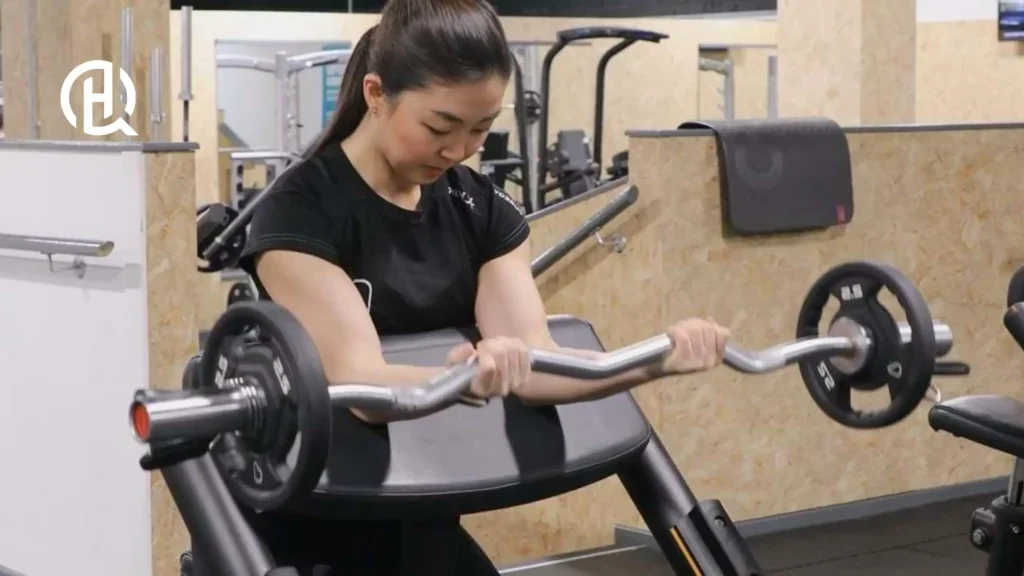
EZ-Bar Preacher Curl
Your upper arms rest on an angled pad, so you cannot swing, and the hardest part of the rep is the bottom, where the muscle is stretched.
- Set the pad so your armpits sit on top of it and your arms lie flat.
- Take a shoulder-width grip on the angled part of the EZ bar.
Key cue Lower until your elbows are almost straight, then curl up without lifting your elbows off the pad.
Why it ranks here: strict, easy to load, and hardest where the biceps are longest. It is also the bicep pick in our best exercise for each muscle group guide.
-
02
Best for: stretching the long head
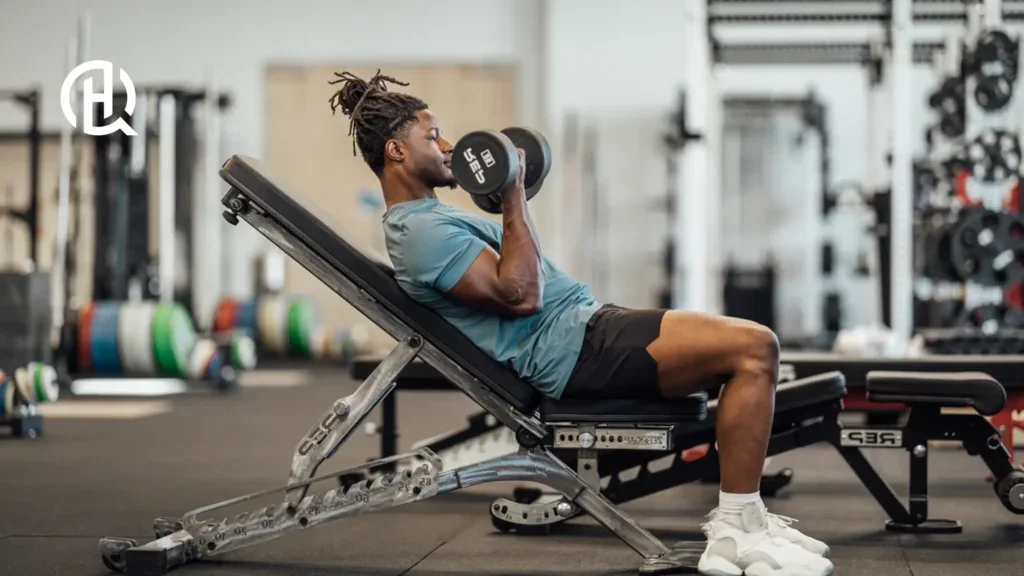
Incline Dumbbell Curl
Lie back on a bench set to about 45–60 degrees and curl with your arms hanging behind your body.
- Let your arms hang straight down from your shoulders, palms forward.
- Lower slowly to a full stretch.
Key cue Curl both dumbbells without moving your elbows forward.
Why it ranks here: the arm-behind-the-body position stretches the long head of the biceps more than a standing curl. Use moderate weights; the stretch makes it feel heavy.
-
03
Best for: lifting the heaviest load
Barbell Curl
The classic mass builder. Standing, both hands on a straight bar, palms up.
- Grip the bar at shoulder width, elbows at your sides.
- Lower under control until your arms are straight.
Key cue Curl to shoulder height, keeping your torso still.
Why it ranks here: you can lift the most weight with it, so it is the easiest curl to progress.
Barbell curl exercise card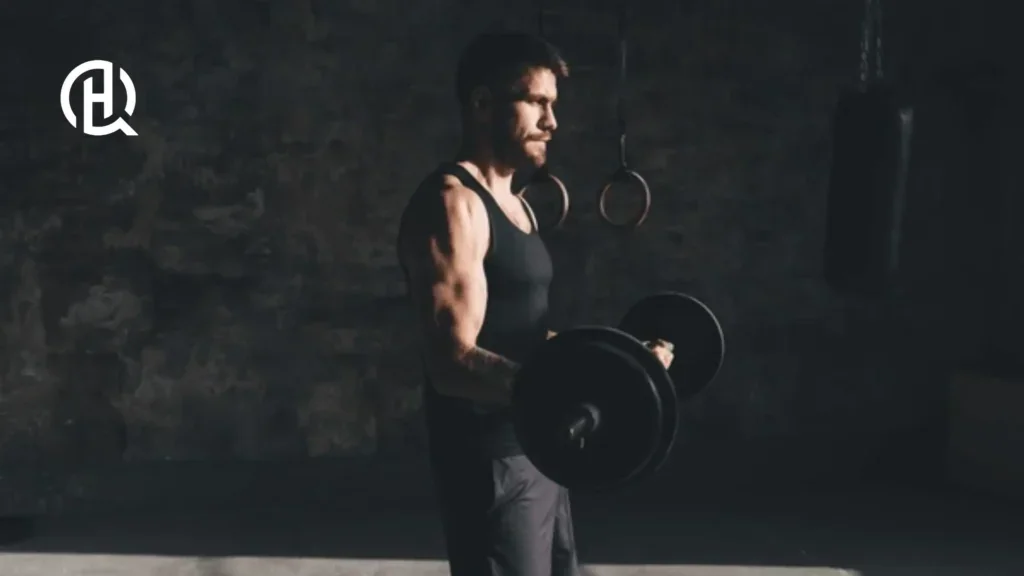
-
04
Best for: heavy curls that are easier on the wrists
EZ-Bar Curl
The same movement as the barbell curl on an angled bar.
- Hold the inner or outer angled grip, whichever feels better on your wrists.
- Curl up, pause, lower slowly.
Key cue Keep your elbows pinned to your sides.
Why it ranks here: almost as heavy as the straight bar and easier on the wrists for many lifters.
EZ-bar curl exercise card -
05
Best for: one arm at a time, with a palm turn
Alternating Dumbbell Curl
One arm at a time, turning the palm up as you lift.
- Start with palms facing your thighs.
- Curl one dumbbell, rotating your palm to face up as it rises.
Key cue Lower fully before the other arm starts.
Why it ranks here: training one side at a time shows and fixes a weaker arm, and the palm turn uses the biceps' second job, rotating the forearm.
-
06
Best for: constant tension
Rope Cable Curl
A curl on a low cable pulley with a rope handle.
- Stand facing the pulley, holding the rope with palms facing each other.
- Curl up and pull the rope ends apart slightly at the top.
Key cue Lower slowly; the cable keeps tension on the muscle all the way down.
Why it ranks here: steady tension from start to finish and easy small weight jumps. The neutral grip also brings in the brachialis.
Rope cable curl exercise card -
07
Best for: brachialis work and arm thickness
Hammer Curl
Dumbbell curl with palms facing each other the whole time.
- Stand tall, dumbbells at your sides, thumbs forward.
- Lower under control.
Key cue Curl without rotating your wrists.
Why it ranks here: the neutral grip shifts more work to the brachialis and brachioradialis, which adds thickness to the arm. For more on that muscle, see the brachialis workout.
Hammer curl exercise card -
08
Best for: bodyweight loading that trains the back too
Chin-Up
A pull-up with palms facing you, about shoulder-width apart.
- Hang with straight arms and pull your shoulder blades down.
- Pull your chest toward the bar, keeping your elbows in front of you.
Key cue Lower to a full hang every rep.
Why it ranks here: it lets you load your biceps with your whole bodyweight. The pull-up guide covers it as a variation and shows how to build up to it. If you cannot do one yet, the reverse-grip lat pulldown trains the same pattern on a machine.
How to do pull-ups and chin-ups -
09
Best for: a strict finisher
Dumbbell Concentration Curl
Seated, one arm braced against the inside of your thigh.
- Sit on a bench, lean forward and rest the back of your upper arm on your inner thigh.
- Squeeze for a second at the top, then lower fully.
Key cue Curl the dumbbell toward your shoulder without moving your upper arm.
Why it ranks here: very strict and easy to feel, but the load stays light. Use it as a finisher.
Concentration curl exercise card -
10
Best for: brachioradialis and forearm size
Reverse Curl
A barbell or EZ-bar curl with an overhand grip, palms down.
- Hold the bar at shoulder width with palms facing the floor.
- Lower slowly.
Key cue Curl up with your wrists straight.
Why it ranks here: the overhand grip puts the brachioradialis and brachialis to work, which helps arm and forearm size.
At a glance
Bicep Exercises Compared
Use this to pick two or three exercises that do different jobs.
| Exercise | Main job |
|---|---|
| 1. EZ-bar preacher curl | Strict, hard in the stretch |
| 2. Incline dumbbell curl | Long-head stretch |
| 3. Barbell curl | Heaviest load |
| 4. EZ-bar curl | Heavy, wrist-friendly |
| 5. Alternating dumbbell curl | One arm at a time, palm turn |
| 6. Rope cable curl | Constant tension |
| 7. Hammer curl | Brachialis, thickness |
| 8. Chin-up | Bodyweight load, back too |
| 9. Concentration curl | Strict finisher |
| 10. Reverse curl | Brachioradialis, forearms |
Tap an exercise to jump to it.
Anatomy
What Muscles Do Bicep Exercises Work?
Three muscles bend your elbow, and grip decides how the work is shared.
Biceps brachii
Two heads, long and short. It bends the elbow and turns your palm up. Palms-up curls work it hardest.
Brachialis
Sits under the biceps and bends the elbow in every grip. Neutral-grip work like hammer curls hits it well. A bigger brachialis pushes the biceps up and makes the arm look thicker.
Brachioradialis
The big forearm muscle near the elbow. Neutral and overhand grips (hammer and reverse curls) train it most.
Arm position matters too. With your arms behind your body, as on the incline curl, the long head is stretched. With your arms in front, as on the preacher curl, you cannot swing and the bottom of the rep is the hardest part.
Put it together
A Simple Bicep Workout
Two short sessions a week, 48–72 hours apart. Do them after a back day or on their own. Rest 60–90 seconds between sets.
Workout A
- EZ-bar preacher curl: 3 sets of 8–12
- Hammer curl: 3 sets of 10–12
- Rope cable curl: 2 sets of 12–15
Workout B
- Barbell curl: 3 sets of 6–10
- Incline dumbbell curl: 3 sets of 10–12
- Reverse curl: 2 sets of 12–15
How to progress: when you reach the top of the rep range on every set with clean form, add the smallest weight jump next session. If you already do chin-ups or heavy rows, start with two sets per exercise and build up.
If you want this built into a full weekly plan, the Bicep Focused program does that.
Grow faster
3 Tips for Bigger Biceps
- 01
Train close to failure
Most sets should end with one or two clean reps left in the tank. Easy sets that stop far from failure do little for growth.
- 02
Own the lowering
Take two to three seconds to lower every rep and go all the way down. The stretched part of the rep is where most people cut corners.
- 03
Recover and eat for growth
Biceps are small and recover fast, but they still need sleep and food. Aim for 7–9 hours of sleep and enough protein every day. The diet for muscle growth guide covers the food side.
For fighters
Bicep Exercises for Fighters
If you train MMA, Muay Thai or grappling, your biceps and the muscles under them do real work. They help you pull an opponent in, hold a clinch or a body lock, and control an arm. Your forearms and grip do much of that work too. Punching straightens the elbow again and again, so training the muscles that bend it also keeps your arms balanced over long pad sessions.
You do not need ten curls. Chin-ups and one curl with a neutral or overhand grip cover most of it. For the bigger picture, see strength and conditioning for fighters.
Best picks
Hammer curls and reverse curls are better picks for fighters than concentration curls, because they also train the forearms and grip.
How much
Do 2–3 sets of each and stop 1–3 reps short of failure. Cut the sets back as a fight gets close.
When
Avoid hard curls on the same day as heavy grappling, when your grip is already tired.
What to avoid
Common Bicep Training Mistakes
- 01
Swinging the weight
If your hips and lower back move, the weight is too heavy.
- 02
Elbows drifting forward
It turns the curl into a front raise. Keep your elbows at your sides, or use the preacher pad.
- 03
Half reps
Stopping short of straight arms skips the stretched position.
- 04
Only curling
Your biceps also work in every pull. Back training counts.
- 05
Doing too much
More sets are not better if you cannot recover. Two sessions a week done hard beats daily light pumping.
Bigger arms need triceps work too. See the full list of tricep exercises.
FAQ
Bicep Exercise Questions
Can I train biceps every day?
You can, but you should not need to. Biceps grow when you train them hard and then let them recover. For most people that means two sessions a week, 48–72 hours apart. Remember that rows, pulldowns and chin-ups also work your biceps, so daily curls on top of back training usually means more fatigue, not more growth.
What is the best bicep exercise for mass?
For most people, the EZ-bar preacher curl and the barbell curl. The preacher curl is strict and hardest in the stretched position, and the barbell curl lets you lift the most weight, so it is easy to progress. Pair one of them with a hammer curl for brachialis work and you have a solid base for bigger arms.
What exercise hits both heads of the biceps?
Every curl with your palms facing up trains both heads. You can shift the emphasis with arm position. Curls with your arms behind your body, like the incline dumbbell curl, stretch the long head more. Curls with your arms in front, like the preacher curl, keep you strict. Using one of each covers both heads well.
How many sets of biceps should I do per week?
Start with about 6–12 hard sets of direct bicep work a week, split over two sessions, then adjust by how you recover. If you already do a lot of chin-ups or rows, stay at the low end. Add sets only when your progress stalls and you are sleeping, eating and recovering well.
Do push-ups work the biceps?
Not in any useful way. Push-ups train your chest, shoulders and triceps. Your biceps only help keep your elbow stable. To grow your biceps you need exercises that bend the elbow against resistance, like curls, or pulls like chin-ups and rows.
What is the 10×10 method for biceps?
It means ten sets of ten reps with the same weight and short rests, usually 60 seconds. It is a high-volume method that gives a strong pump and a lot of work in little time. It is tough to recover from, so use it for a few weeks at most, with a weight you could lift for about 15–20 reps when fresh.
Are bicep exercises good for fighters?
Yes, if you keep them simple. Your biceps, forearms and grip help you pull, hold and control an opponent, especially in the clinch and in grappling. Chin-ups plus a hammer or reverse curl, two or three sets each, cover most of what a fighter needs. Do them on lighter training days, not right before heavy grappling, when your grip is already tired.
Final
Final Thoughts
You do not need ten exercises. You need two or three good ones, done hard and with control, twice a week, with a little more weight or one more rep over time. Start with the preacher curl, add a heavy curl and a hammer curl, and give it eight weeks before you judge it.
Bicep Focused
Train your biceps with a plan.
BICEP FOCUSED is one of HermQ's bodybuilding programs. One $19/month subscription unlocks every bodybuilding program while it is active.
60-day money-back guarantee.
Train for MMA, Muay Thai or striking? Combat Performance is a separate one-time program.
Get Instant Access – $29