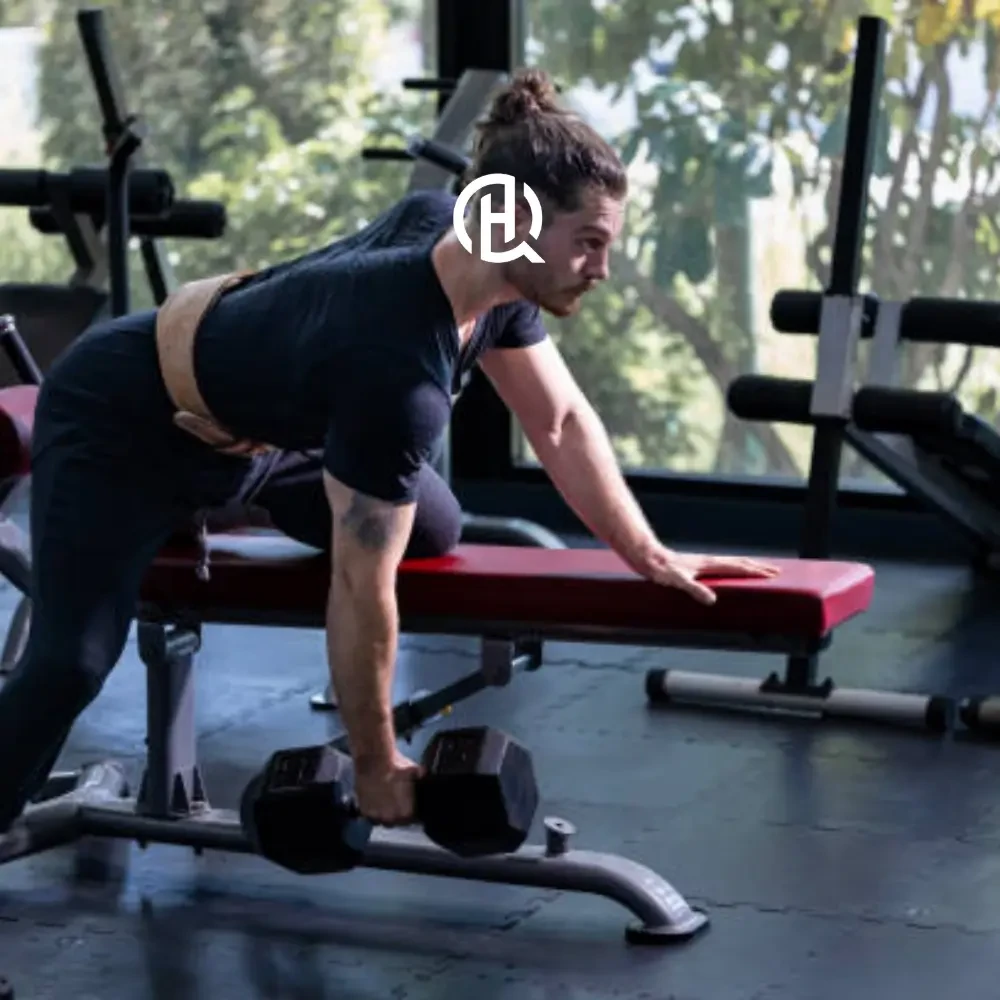

The single-arm dumbbell bent-over row may not get as much attention as a heavy compound barbell pull. Still, it offers one of the best bang-for-your-buck movements for building upper-back strength, postural integrity, and shoulder stability. Whether you want to level up your pulling power or carve out a more defined back, this unilateral row belongs in your routine.
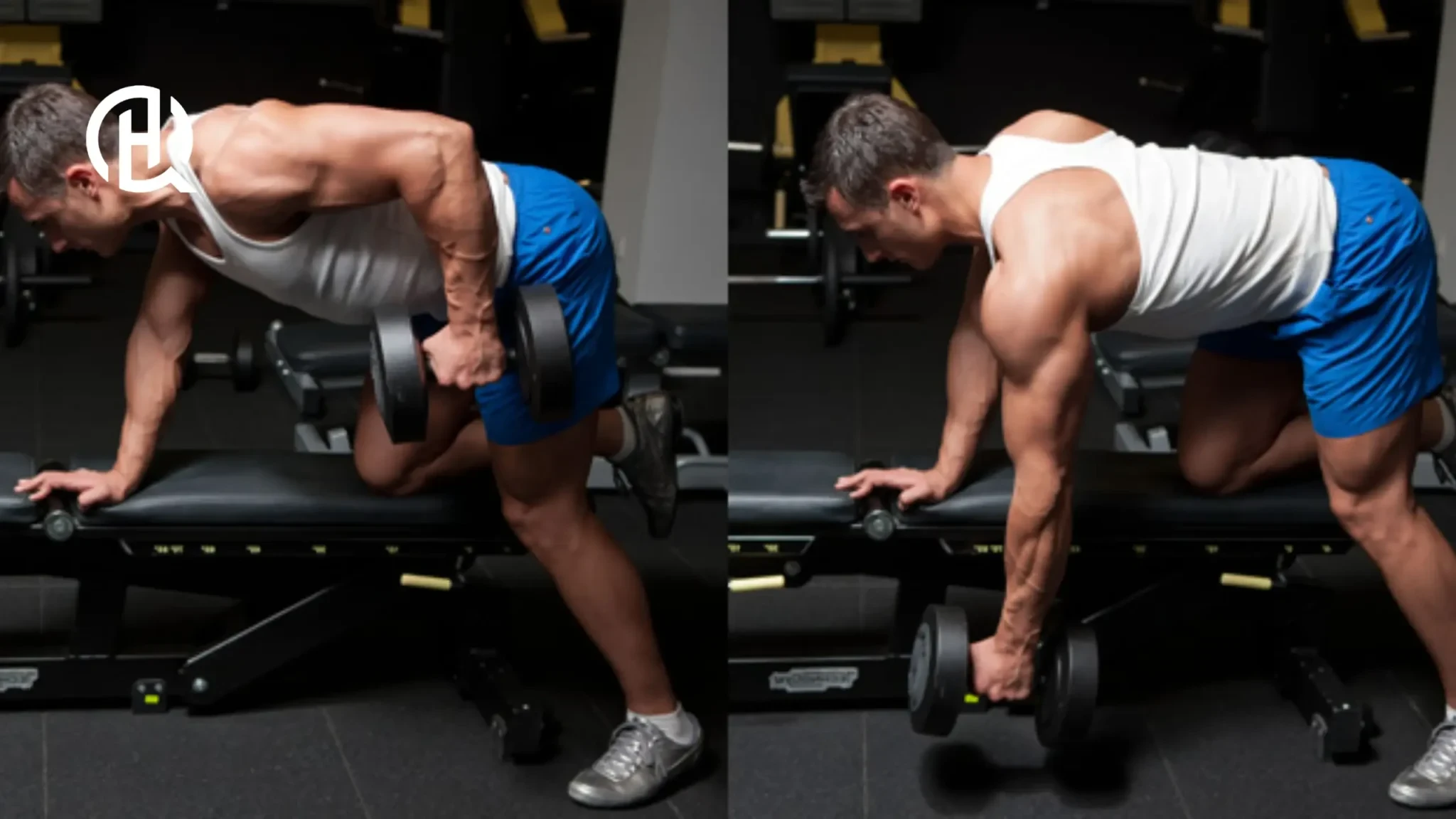
Bend About 45° at the Hips
This variation shines for balancing side-to-side strength and muscle development, helping you stay injury-resistant over the long term. Below, you will find exactly how to perform it, key benefits, common mistakes to avoid, and expert tips to make each rep count.
How to Perform the Dumbbell Bent-Over Row (Single Arm) — Video
Personal trainer from the HermQ team showing how to do the Dumbbell Bent-Over Row (Single Arm).
Dumbbell Bent-Over Row (Single Arm): How To
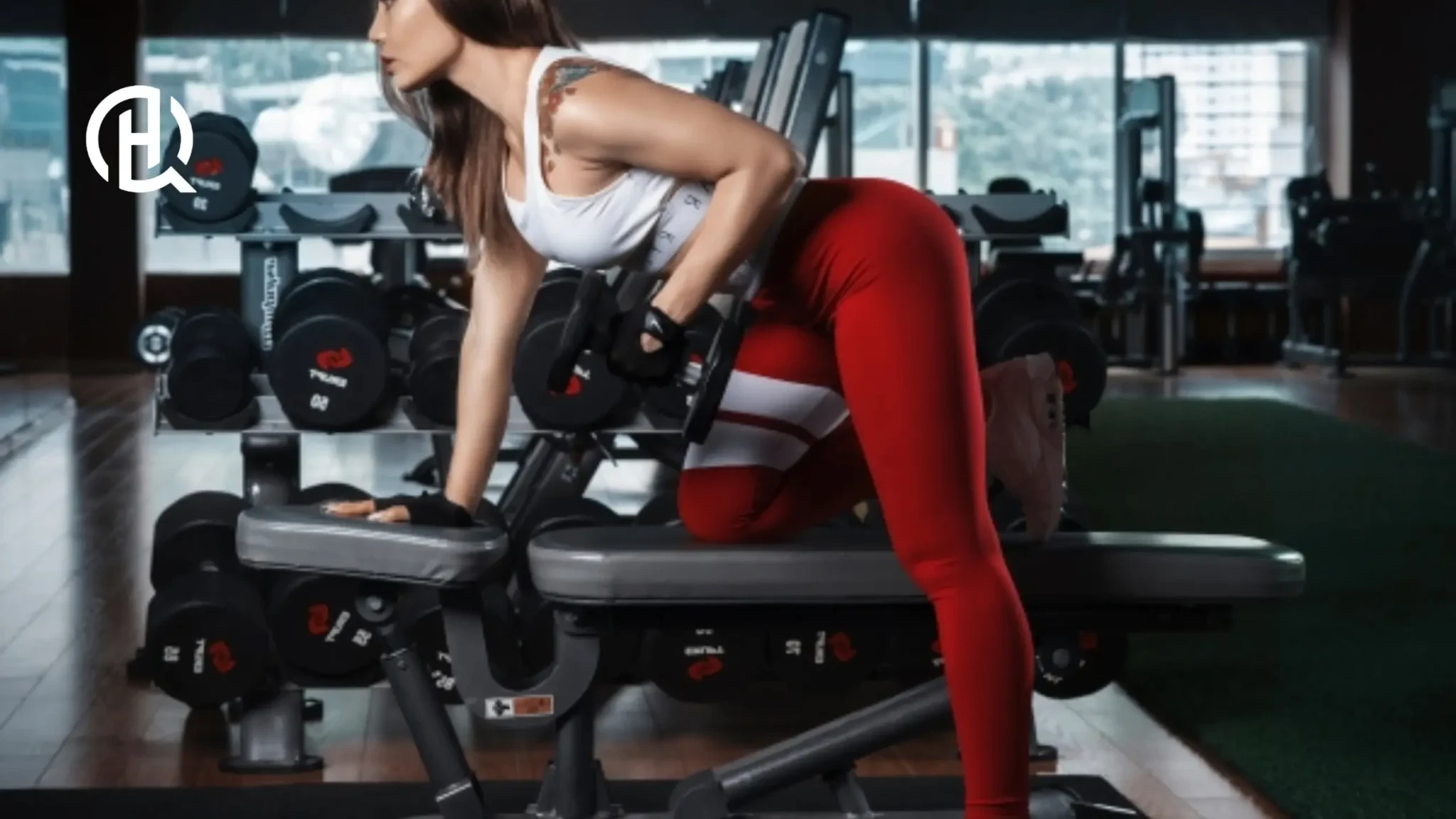
Control the Weight Down – No dropping dumbbells.
- • Hold a dumbbell in one hand and support your non-working arm and knee on a bench. Keep a flat back, neutral spine, and squared hips.
- • Let the dumbbell hang straight down from your shoulder with the working arm extended.
- • Pull the dumbbell toward your torso by driving the elbow back and up in a tight arc. Keep the elbow close to your body.
- • Squeeze your shoulder blades at the top, then guide the weight down under control to the start position.
- • Switch sides after your reps. Maintain the same body position without twisting or turning the torso.
Important Note:
Avoid rotating through the torso. This is a back exercise targeting the lats and upper back—not your hips or spine.
Dumbbell Bent-Over Row (Single Arm): Benefits
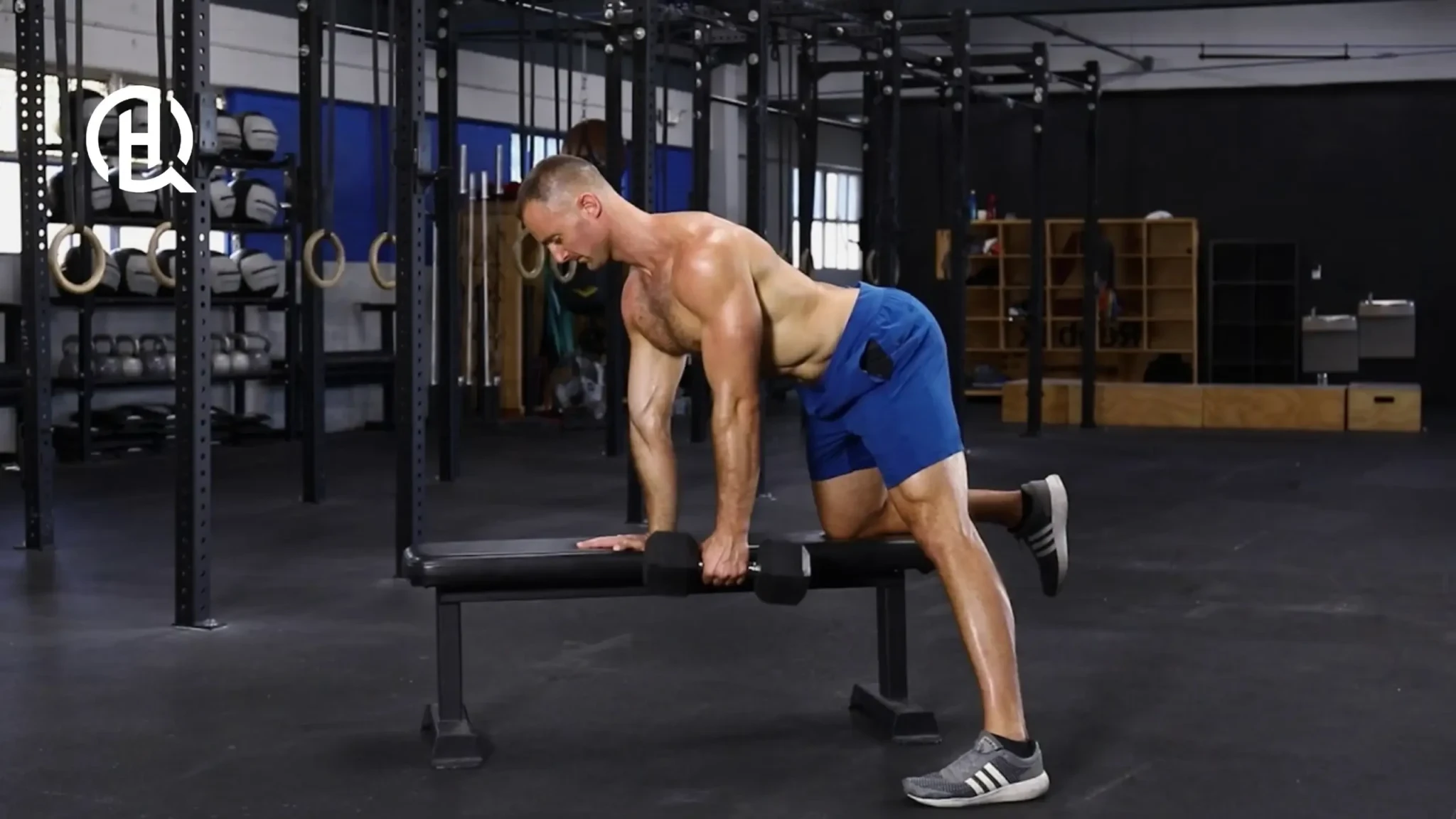
Keep Elbows Close to Your Body – Avoid flaring out.
Improved Upper Back Strength and Thickness
Trains the lats, traps, rhomboids, and rear delts to build a thick upper back that supports posture and complements pressing strength. It also contributes to the classic V-taper while boosting pulling power and control.
Enhanced Core Engagement and Stability
Even with bench support, you must brace to maintain a neutral spine and resist rotation. This develops anti-rotational strength that carries over to everyday movement and sport.
Fixes Muscle Imbalances
Training one side at a time exposes weak links and promotes balanced development compared to bilateral rows. Adjust volume or emphasis as needed per side.
Promotes Functional Pulling Strength
Builds practical pulling capacity that translates to daily tasks like carrying groceries, opening doors, and generating upper-body power.
Dumbbell Bent-Over Row (Single Arm): Mistakes to Avoid
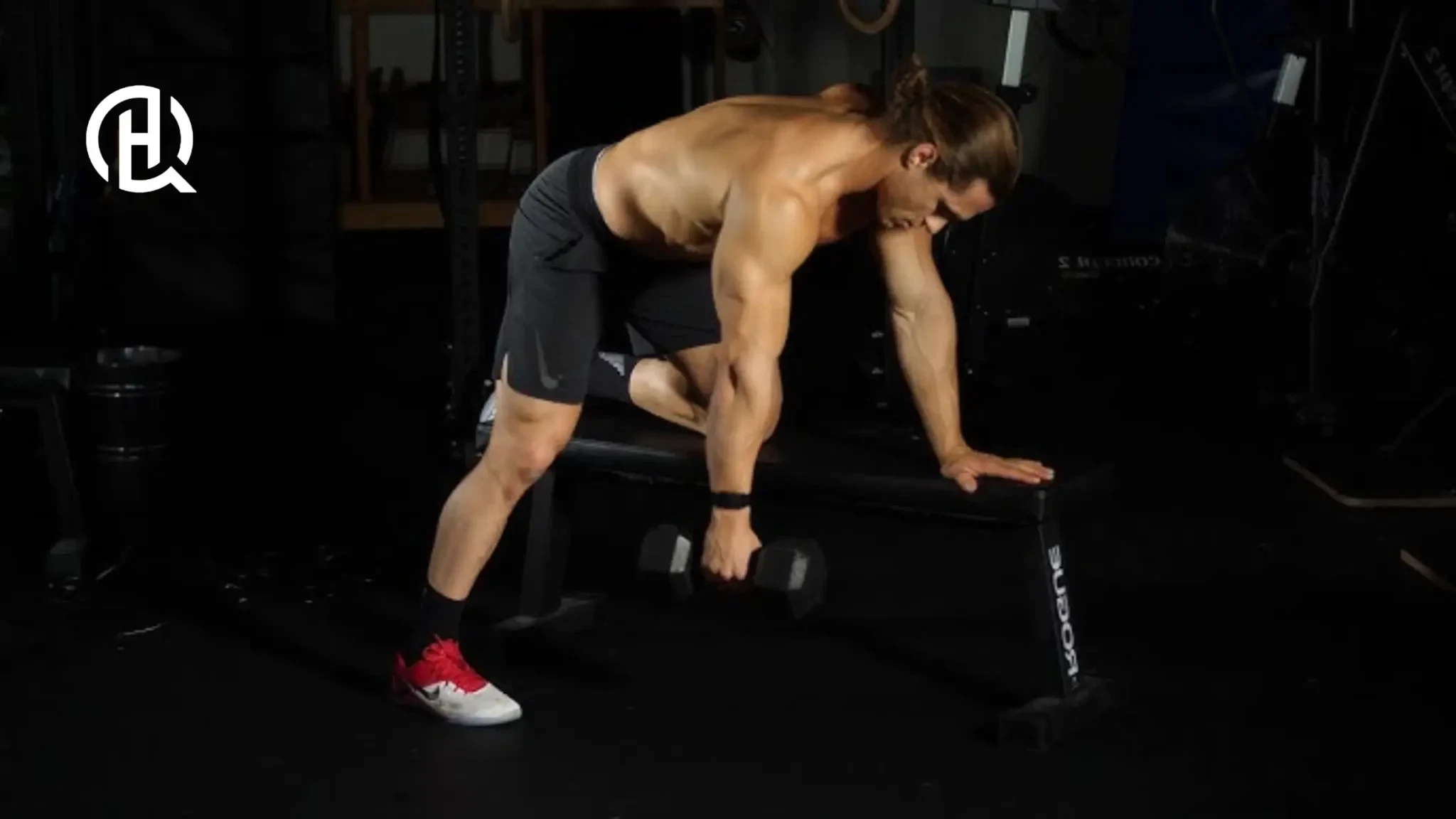
Add a Pause at the Top – Increases time under tension.
❌ Using Momentum to Pull the Weight
Jerking the dumbbell up with a body swing increases injury risk. Use a controlled tempo and eliminate momentum.
❌ Rotating or Twisting the Torso
Keep hips and shoulders square to the bench with a neutral spine. Let the back muscles—not momentum—do the work.
Expert Training Tips
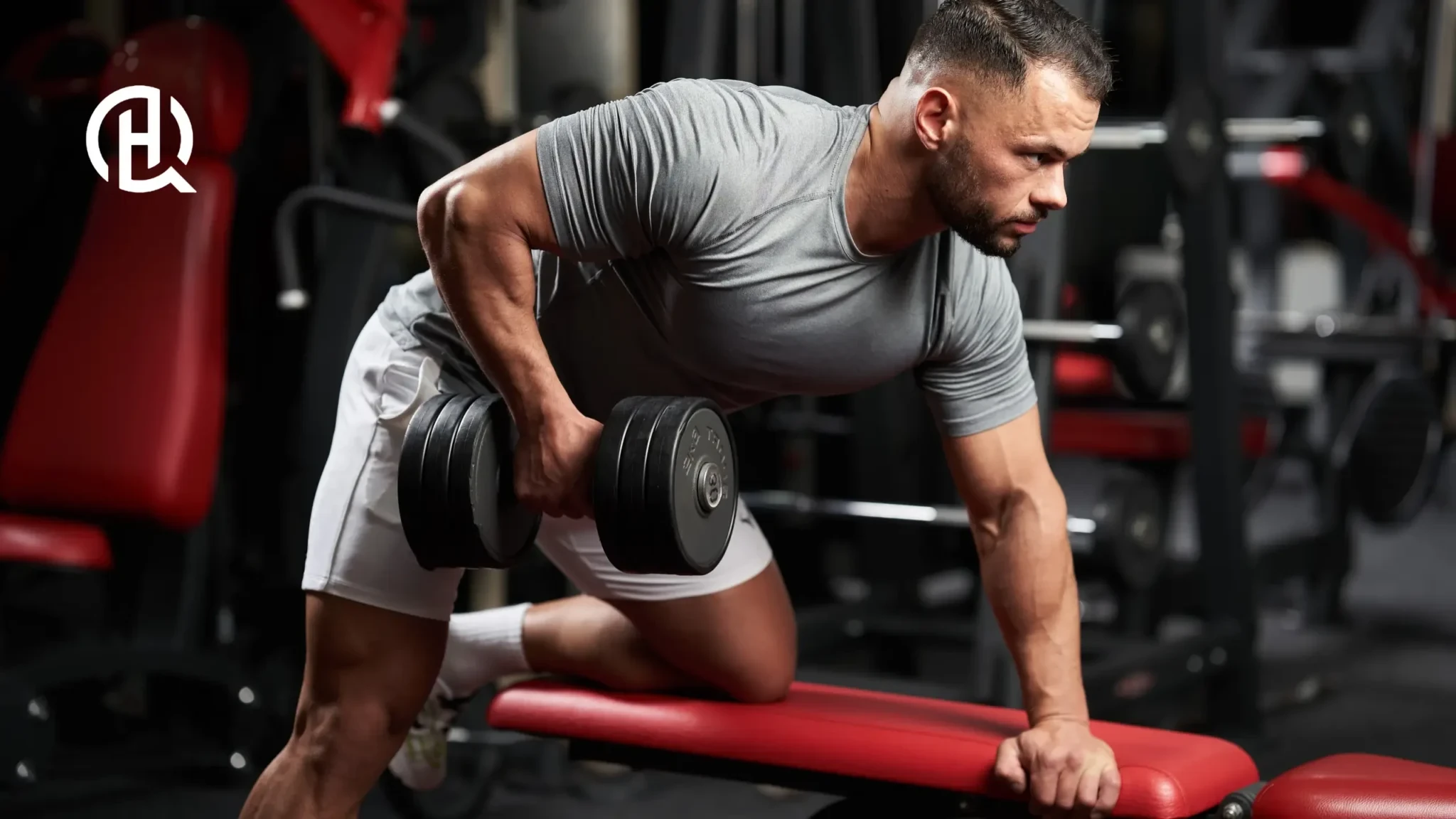
Look Slightly Ahead, Not Straight Down – Helps maintain spinal alignment.
✅ Pull with the Elbow, Not the Hand
Treat the hand as a hook and drive the elbow back to better engage the lats and mid-back.
Related Exercises
One-Arm Dumbbell Row
Explore more exercises and build your perfect workout routine with our comprehensive exercise library.
See More Exercises→