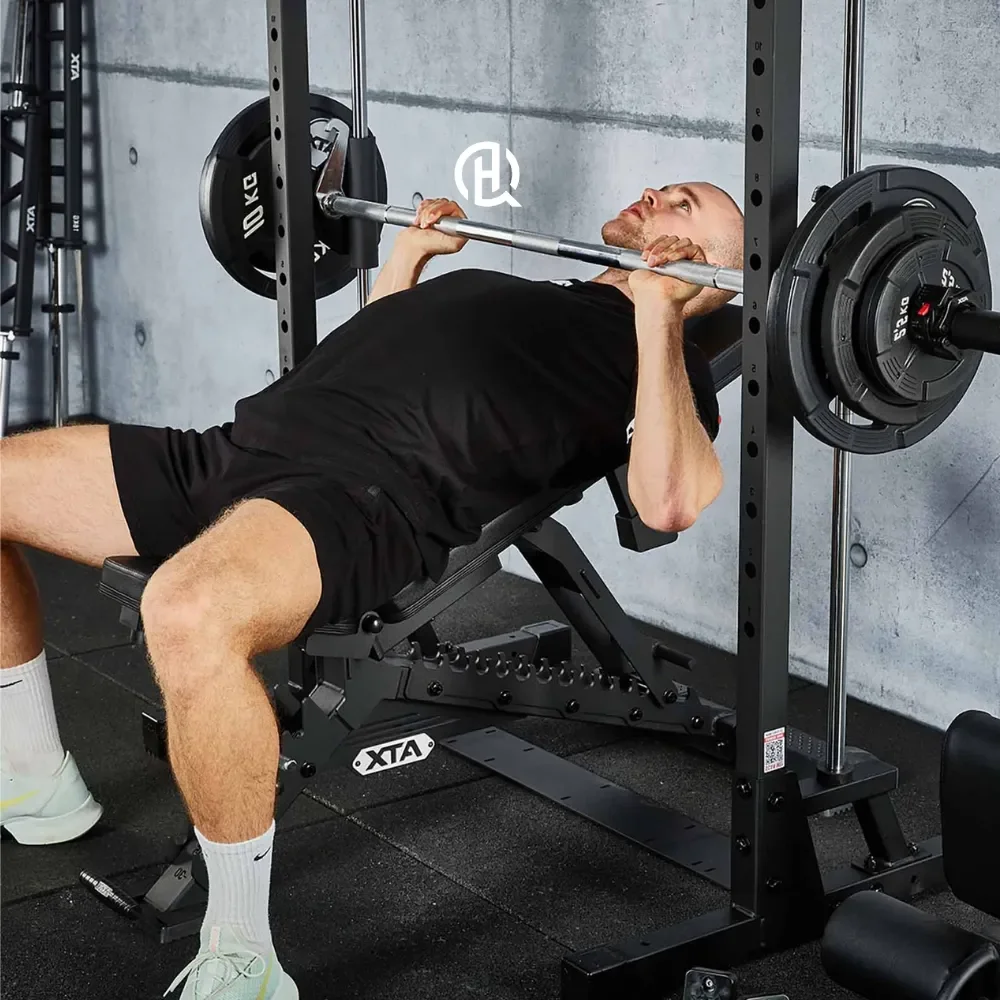

The incline barbell bench press is a popular exercise for targeting the upper chest muscles, and it has several added benefits, including improved shoulder strength, stability, and pressing power.
A combination of the barbell bench press and the incline dumbbell bench press (it's basically the same, but with a barbell instead of dumbbells), this exercise is a gym favorite that should be on the list of anyone looking to get more muscular pecs!
In this short guide, we will tell you how to do the perfect incline barbell bench press by focusing on two different workout stages: warm-up and performing the actual exercise. Ready to start?
How to perform the Incline Barbell Bench Press (Video)
Personal trainer from the HermQ team showing how to do the Incline Barbell Bench Press.
1: The Warm-Up Stage
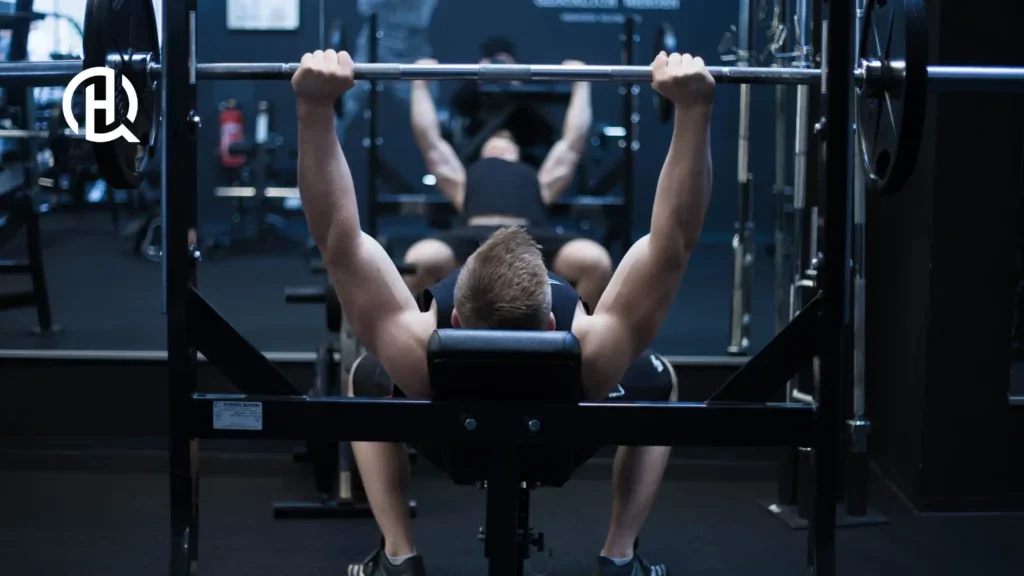
Set the Right Bench Angle - Keep the bench at a 30-45° incline.
Luckily, warming up for the incline barbell bench press won't take you more than 3 - 5 minutes. Lie down on the bench and perform two - three sets of incline barbell bench presses only with the barbell or a lighter weight than your working set.
2: Doing Incline Barbell Bench Presses (And Doing It Right!)
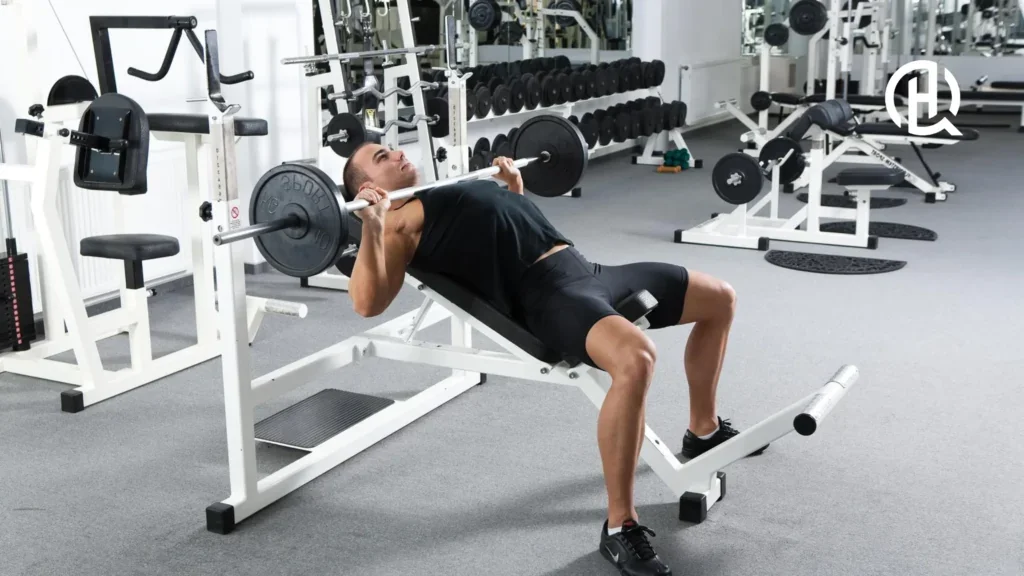
Grip Slightly Wider Than Shoulder-Width
Whether you're committing to a weekly split program or just trying to perform incline barbell bench presses isolatedly, positioning and movement are adamant.
Setting Up For the Exercise
For the setup, there are four essential notions to keep in mind:
- 1. Your feet should always be perfectly placed on the floor.
- 2. The bench should be inclined at least 30 degrees and no more than 45 degrees. If you're having trouble setting up the bench, don't be afraid to ask your personal trainer (or a more experienced gym buddy) for help.
- 3. Using a barbell isn't like using dumbbells, as your hands shouldn't be precisely placed at shoulder width. The goal is to ensure your hands are gripping the barbell a bit wider than shoulder-width apart.
- 4. When you move the barbell up, it should be directly above your chest. You can adjust this as you get more advanced.
Executing the Exercise
The key to performing flawless incline barbell bench presses is to always maintain control over the movement of the arms, both during ascent and descent.
While raising your arms, make sure you lift the barbell as high as possible, extending your arms to the fullest. During the descent, go as slowly as you can (never use the weight's momentum in your favor—that's cheating!) and try to keep your elbows at a 45-degree angle. Get down to your chest and stretch deeply, make sure not to rest at the bottom.
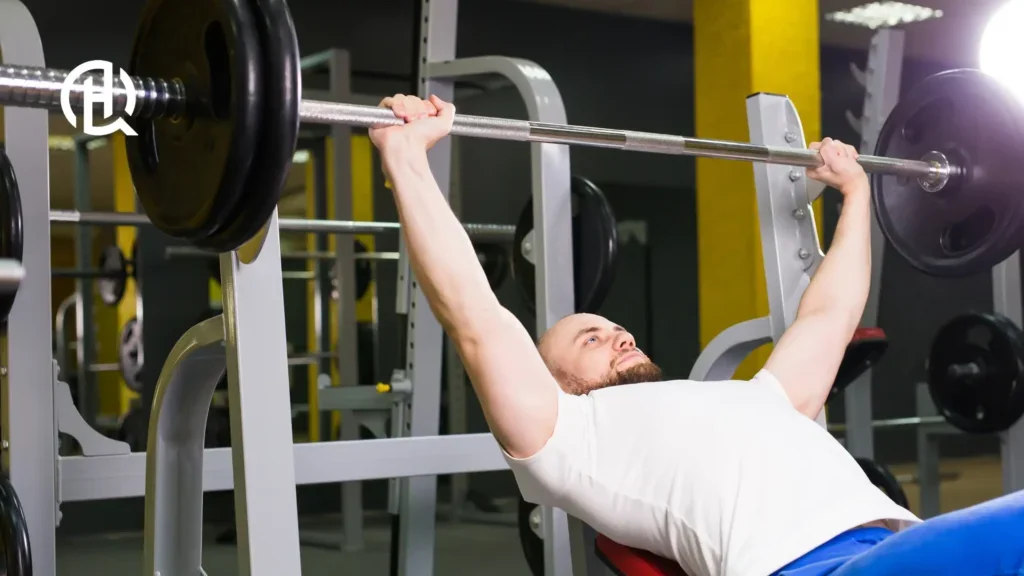
Keep Your Back and Feet Stable
During the exercise, don't forget to focus on the essentials:
- • Concentrate on your upper chest and triceps, as these are the muscles the incline barbell bench press is designed to work on
Don't Forget About the Rest!
Pulling weight is just one part of getting the good-looking chest you deserve. Post-workout sleep, nutrition (and your overall diet choices) are virtually as important.
Finally, don't forget that a strong upper body is never enough, so consider our expert workout programs for glute training and obtaining a stronger core (the latter is 100% free too!).
Benefits of the Incline Barbell Bench Press
The incline barbell bench press offers several advantages that make it a valuable addition to any upper body training routine:
- • Targets Upper Chest: The incline angle specifically emphasizes the upper portion of the pectoralis major, helping to build a well-rounded chest.
- • Improves Shoulder Strength: The pressing motion at an incline engages the anterior deltoids more than flat bench pressing.
- • Better Muscle Balance: Helps correct imbalances that can develop from only doing flat bench pressing.
- • Functional Strength: The incline angle mimics many real-world pushing movements, making it highly functional.
- • Progressive Overload: Easy to track and increase weight over time for continued muscle growth.
Common Mistakes to Avoid
To get the most out of your incline barbell bench press and avoid injury, watch out for these common mistakes:
- • Setting the bench too steep: Angles above 45 degrees shift too much emphasis to the shoulders rather than the chest.
- • Bouncing the bar off your chest: This reduces muscle tension and increases injury risk.
- • Lifting your feet off the ground: This reduces stability and power output.
- • Flaring elbows too wide: Keep them at about 45 degrees to protect your shoulders.
- • Partial range of motion: Lower the bar to your upper chest for full muscle activation.
Programming Tips
Here are some tips for incorporating the incline barbell bench press into your training routine:
- • Frequency: Train the incline bench press 1-2 times per week for optimal results.
- • Sets and Reps: 3-4 sets of 6-10 reps for strength, or 3-4 sets of 8-12 reps for hypertrophy.
- • Progression: Increase weight by 2.5-5 lbs when you can complete all sets and reps with good form.
- • Rest periods: 2-3 minutes between sets for strength training, 1-2 minutes for hypertrophy.
Need Inspiration?
If you're looking for great workout programs that integrate the incline barbell bench press and other effective chest exercises, please don't forget to take a look at our comprehensive training programs!