Workout
Leg Day Workout
Two sessions, a beginner version, and how to progress them.
The leg day I give most lifters: six exercises, about an hour, covering quads, hamstrings, glutes and calves. Run it once a week, or pair it with Day B for two.

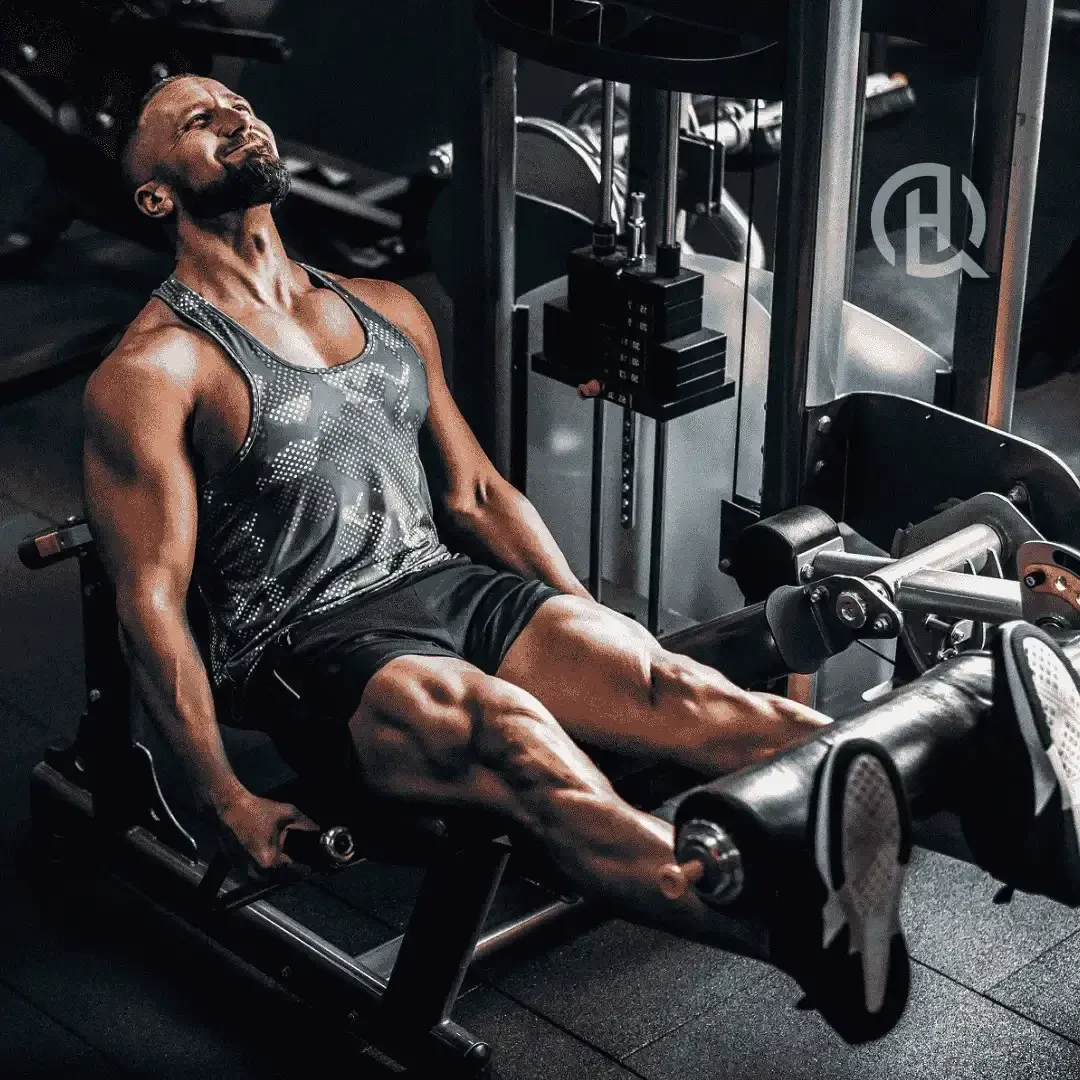
A good leg day workout starts with a heavy squat, then a hip hinge, a single-leg move, a hamstring curl, a quad isolation move and calf raises. Do 2–3 hard sets of each, rest 2–3 minutes on big lifts and 60–90 seconds on the rest, and train legs twice a week.
Key takeaways
- Order matters: heavy compound lifts first, isolation moves last.
- Cover four areas: quads, hamstrings, glutes and calves.
- Rest 2–3 minutes on squats and deadlifts, 60–90 seconds on machines.
- Take most sets to one or two reps short of failure.
- Add reps first, then weight. Twice a week beats one huge session.
- If you fight, run a trimmed leg day and keep it well away from hard sparring.
- Muscles
- Quads, hamstrings, glutes, adductors, calves
- Equipment
- Barbell, rack, bench, dumbbells, leg curl and leg extension machines
- Difficulty
- Beginner to intermediate
- Session
- 6 exercises, about 60 minutes
The session
The leg day workout
This is the session. Keep the exercise order: heavy compound lifts first, isolation moves last.
| Exercise | Sets × reps | Rest | Why it is here |
|---|---|---|---|
| 1. Back squat | 3 × 6 | 2–3 min | Heavy quad and glute work while you are fresh |
| 2. Romanian deadlift | 3 × 8 | 2–3 min | Hamstrings and glutes through a hip hinge |
| 3. Bulgarian split squat | 3 × 10 per leg | 90 s | One leg at a time, evens out sides |
| 4. Seated leg curl | 2 × 12 | 60–90 s | Hamstrings at the knee |
| 5. Leg extension | 2 × 12 | 60–90 s | Quad isolation to finish |
| 6. Standing calf raise | 3 × 12 | 60 s | Calves, full stretch at the bottom |
- 01
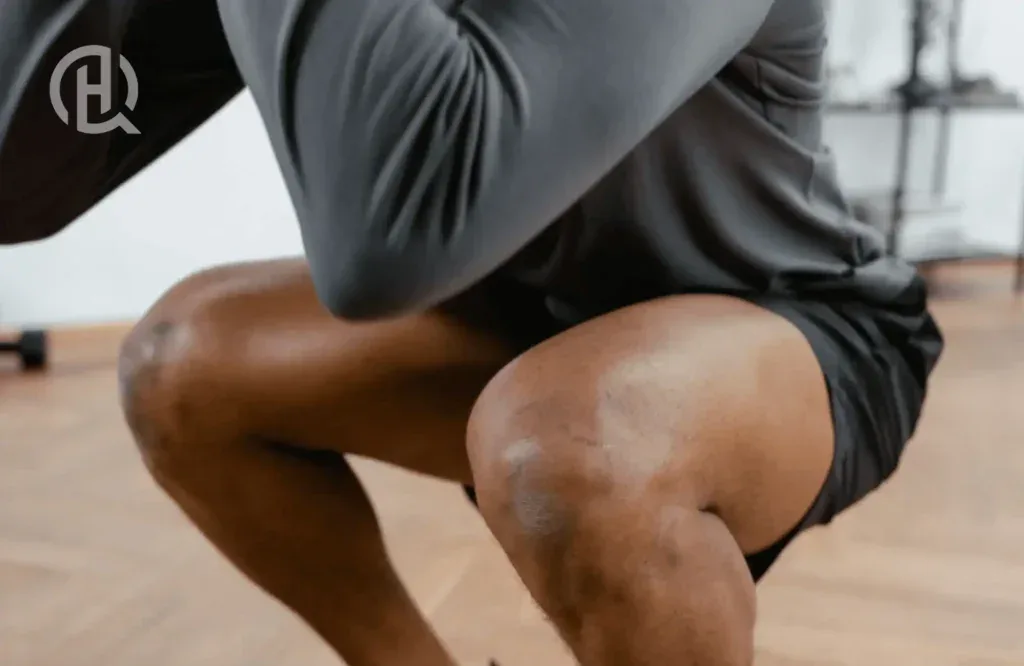
Back squat
The anchor of the day. Technique, muscles and variations are in squat benefits.
- 02
Romanian deadlift
Push your hips back with soft knees and a flat back. More hinge options in the best hamstring exercises.
- 03
Bulgarian split squat
Back foot on a bench, lower straight down. Upright for quads, slight lean for glutes.
- 04
Seated leg curl
Curl through the full range and lower slowly.
- 05
Leg extension
An isolation exercise for the quads. Pause at the top, lower under control.
- 06
Standing calf raise
Works the gastrocnemius and soleus. Pause at the bottom stretch, then rise all the way up.
Before you lift
How to warm up for leg day
- 01
Easy cardio
Five minutes of easy cardio on a bike, rower or incline walk.
- 02
Leg swings
Leg swings, 10 per side front to back and side to side.
- 03
Bodyweight moves
Ten bodyweight squats and ten bodyweight good mornings.
- 04
Ramp-up sets
Two or three lighter sets of squats, building up to your first work set.
Twice a week
Day B: a second leg session
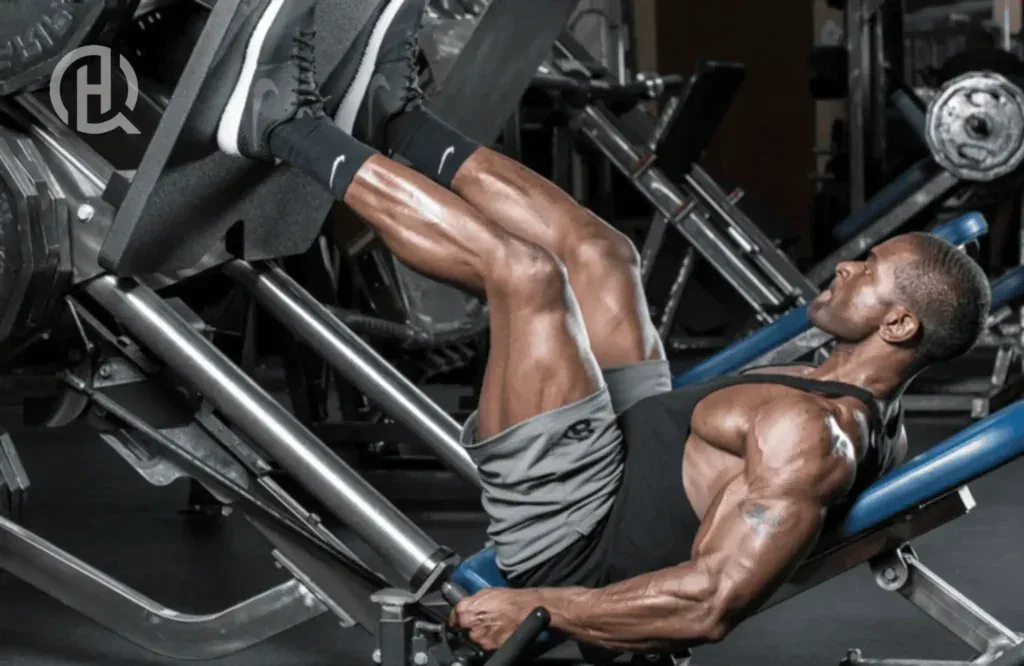
Training legs twice a week? Run the main workout as Day A and this as Day B, with two to three days between them. Day B leads with the hinge and uses the leg press.
| Exercise | Sets × reps | Rest |
|---|---|---|
| 1. Romanian deadlift | 3 × 6–8 | 2–3 min |
| 2. Leg press | 3 × 10–12 | 2 min |
| 3. Walking lunge | 2 × 10 per leg | 90 s |
| 4. Lying leg curl | 3 × 10–12 | 60–90 s |
| 5. Leg extension | 2 × 12–15 | 60–90 s |
| 6. Seated calf raise | 3 × 12–15 | 60 s |
Set the leg press seat so your hips stay on the pad at the bottom, and keep your feet flat, shoulder-width, in the middle of the platform.
Starting out
Beginner leg day workout
New to lifting? Use this for 4–8 weeks before the main workout. Lighter, simpler, same pattern.
| Exercise | Sets × reps | Rest |
|---|---|---|
| 1. Goblet squat | 3 × 10 | 90 s |
| 2. Dumbbell Romanian deadlift | 3 × 10 | 90 s |
| 3. Leg press | 2 × 12 | 90 s |
| 4. Seated leg curl | 2 × 12 | 60 s |
| 5. Standing calf raise | 2 × 15 | 60 s |
Stop each set with two or three reps in the tank. Learn the movements first.
Progression
How do you progress a leg day workout?
Use double progression.
- 01
Pick your weight
Pick a weight you can lift for the bottom of the rep range with good form.
- 02
Add a rep
Each session, try to add a rep to each set.
- 03
Then add weight
When you hit the top of the range on every set, add a small amount of weight and start again at the bottom.
Write your sets down. If you stall for three sessions in a row, take a lighter week, then build again.
Anatomy
Which muscles should leg day cover?
Most leg exercises use several of these at once.
| Area | Muscles | Main job | Moves in this workout |
|---|---|---|---|
| Front of thigh | Quadriceps, sartorius | Straighten the knee, lift the thigh | Squat, split squat, leg extension |
| Back of thigh | Hamstrings | Bend the knee, extend the hip | Romanian deadlift, leg curl |
| Hips | Glutes | Extend and open the hip | Squat, Romanian deadlift, split squat |
| Inner thigh | Adductors | Pull the leg in, steady the hip | Squat, split squat |
| Lower leg | Calves (gastrocnemius, soleus) and shin muscles | Point the foot, balance, push off | Calf raise |
Want more options for one area? See the best quad exercises, best hamstring exercises and best glute exercises.
Combat sports
Leg day for fighters
If you train Muay Thai, MMA, boxing or grappling, leg day has to fit around your skill training. Strong legs carry over: they push force from the floor into punches and kicks, hold your stance through a round and drive takedowns. But a hard leg day the night before sparring leaves you slow and heavy on your feet.
So place it well, then trim it. For the rest of the week, see strength and conditioning for fighters.
When
Put leg day on a day with light skill work, or several hours away from hard sparring, and leave a day before your hardest session.
How much
Keep the back squat, Romanian deadlift and Bulgarian split squat, do two or three sets of each, and stop 1–3 reps short of failure. Drop the leg extension. One session a week is often enough during heavy fight training. Cut the volume further in the last weeks before a fight.
Speed
If you want more speed, open with three sets of five jump squats while you are fresh.
Questions
Leg day FAQ
How often should I train legs?
Twice a week works best for most people who want bigger, stronger legs. Run the main workout as Day A and Day B a few days later. If you can only train legs once a week, do the main workout and add a set to each exercise. That still builds muscle, just more slowly. For how leg days fit your whole week, see how much should you train.
How long should a leg day workout take?
About 45 to 75 minutes, including the warm-up. Most of that time is rest between heavy sets, which you need to lift well. If you are short on time, keep the squat, the Romanian deadlift and one curl or extension, and cut the rest. Three hard exercises done well beat six rushed ones. Shorten rest on the machine work before you shorten it on squats.
Can I build leg muscle without weights?
Yes, at the start. Bodyweight squats, lunges, step-ups and single-leg glute bridges build strength and some muscle when you are new. Your legs adapt quickly, though, so you need to make the work harder over time: more reps, slower lowering, single-leg versions or added weight in a backpack. For steady growth, you will want weights or machines that you can load up.
Should I train all my leg muscles in one workout?
For most people, yes. One session that covers quads, hamstrings, glutes and calves is simple and works. If you train legs twice a week, you can bias each day, for example squats first on Day A and Romanian deadlifts first on Day B. What matters more is the total number of hard sets per muscle each week, spread over at least two sessions.
What is the best rep range for leg muscle growth?
Legs grow across a wide range, from about 6 to 20 reps per set, as long as you finish close to failure. Heavier sets of 5–8 build more strength on squats and deadlifts. Higher sets of 10–15 suit machines like the leg press, leg curl and leg extension. Use both, keep good form, and add weight or reps over time.
How many exercises should a leg day have?
Four to six is plenty. Start with one heavy squat pattern and one hip hinge, add one single-leg move, then one or two isolation moves for the hamstrings and quads, and finish with calves. More exercises usually means less effort on each one. If your sessions run long and your last sets feel weak, drop an exercise rather than rushing.
Should fighters do leg day?
Yes, in a smaller dose. Strong legs help you drive punches and kicks from the floor, hold your stance and finish takedowns. Keep the squat, Romanian deadlift and split squat, do two or three sets of each, and stop short of failure. Train legs on a light skill day or hours away from hard sparring, so sore legs do not slow your footwork.
Bottom line
Final thoughts
Squat, hinge, one leg, curl, extend, calves. Rest enough to lift well, add a rep or a little weight each week, and train legs twice a week when you can.
HermQ programs
Train your legs with a plan.
Want leg day planned inside a full week? Every HermQ bodybuilding program, including the training splits, is in one monthly subscription.
60-day money-back guarantee.
Fitting leg day around fight training? Combat Performance is a one-time $29 with lifetime access. The complete combat S&C system. Explosive power, fight conditioning, movement quality, and resilience for Muay Thai, MMA, and striking.
Get Instant Access – $29