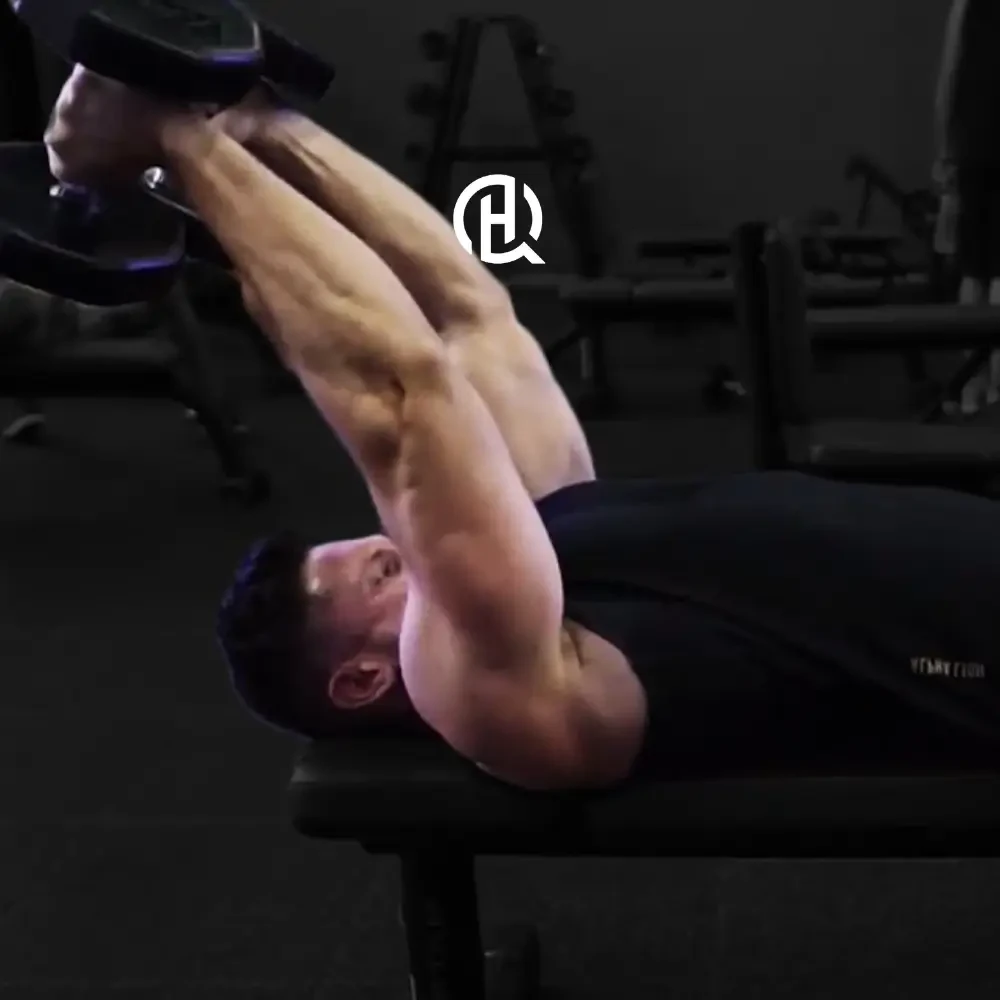

When it comes to building strong, well-defined arms, isolating the triceps is essential — and the lying dumbbell triceps extension is a classic that deserves a place in your routine. Also known as “skull crushers,” this dumbbell variation allows greater freedom of movement than a barbell, promotes balanced development by training each arm independently, and can reduce elbow strain by letting your wrists move naturally through the rep.
How to Perform the Lying Dumbbell Triceps Extension (Video)
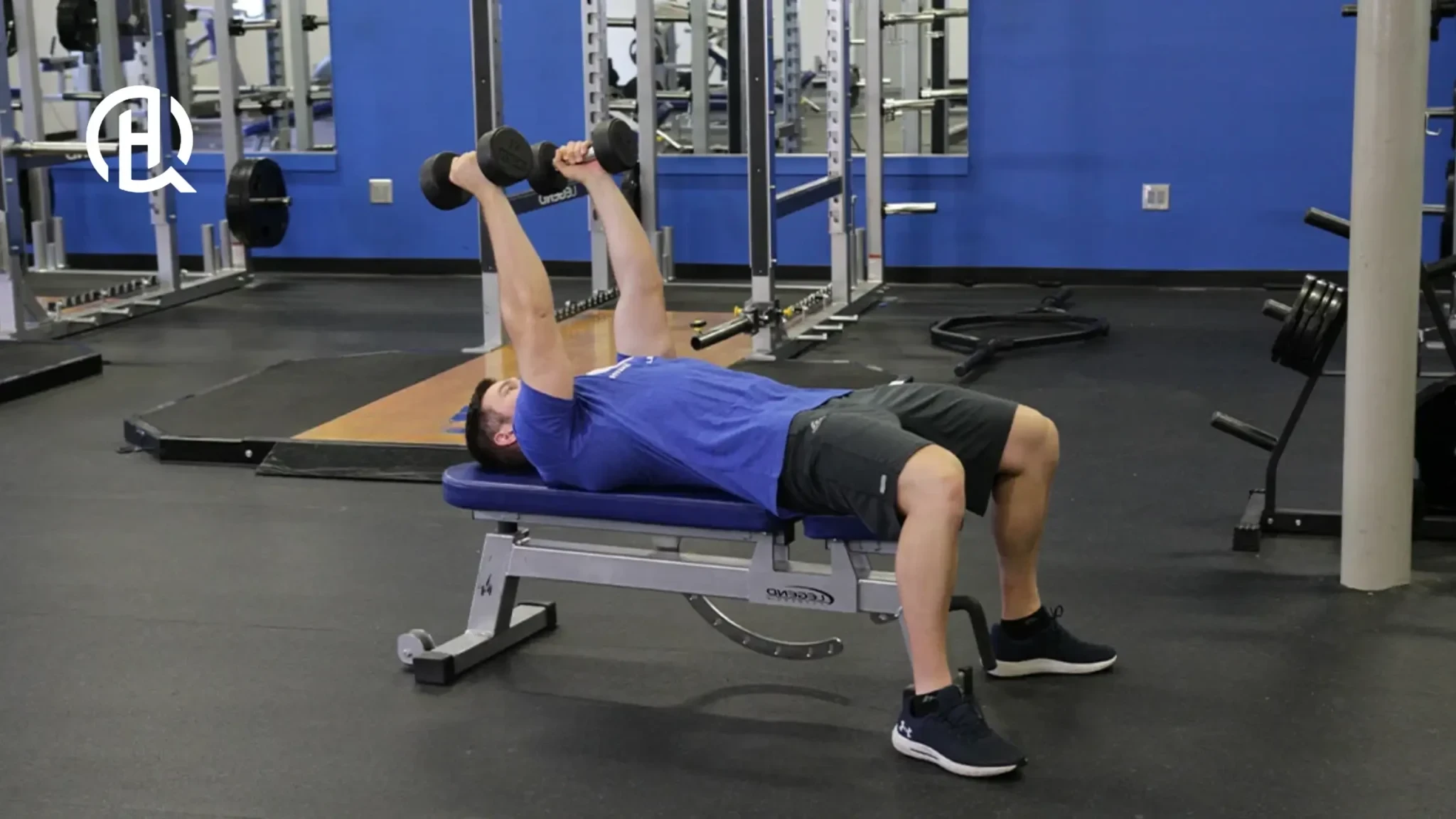
Lying Dumbbell Triceps Extension
Demonstration of proper form and tempo for the lying dumbbell triceps extension.

Use a Neutral Grip – Palms facing each other = less elbow stress.
Below you will find a complete how-to guide, the key benefits, the most common mistakes to avoid, when to use it in your training week, and expert tips to get the most out of every rep.
Lying Dumbbell Triceps Extension: How To
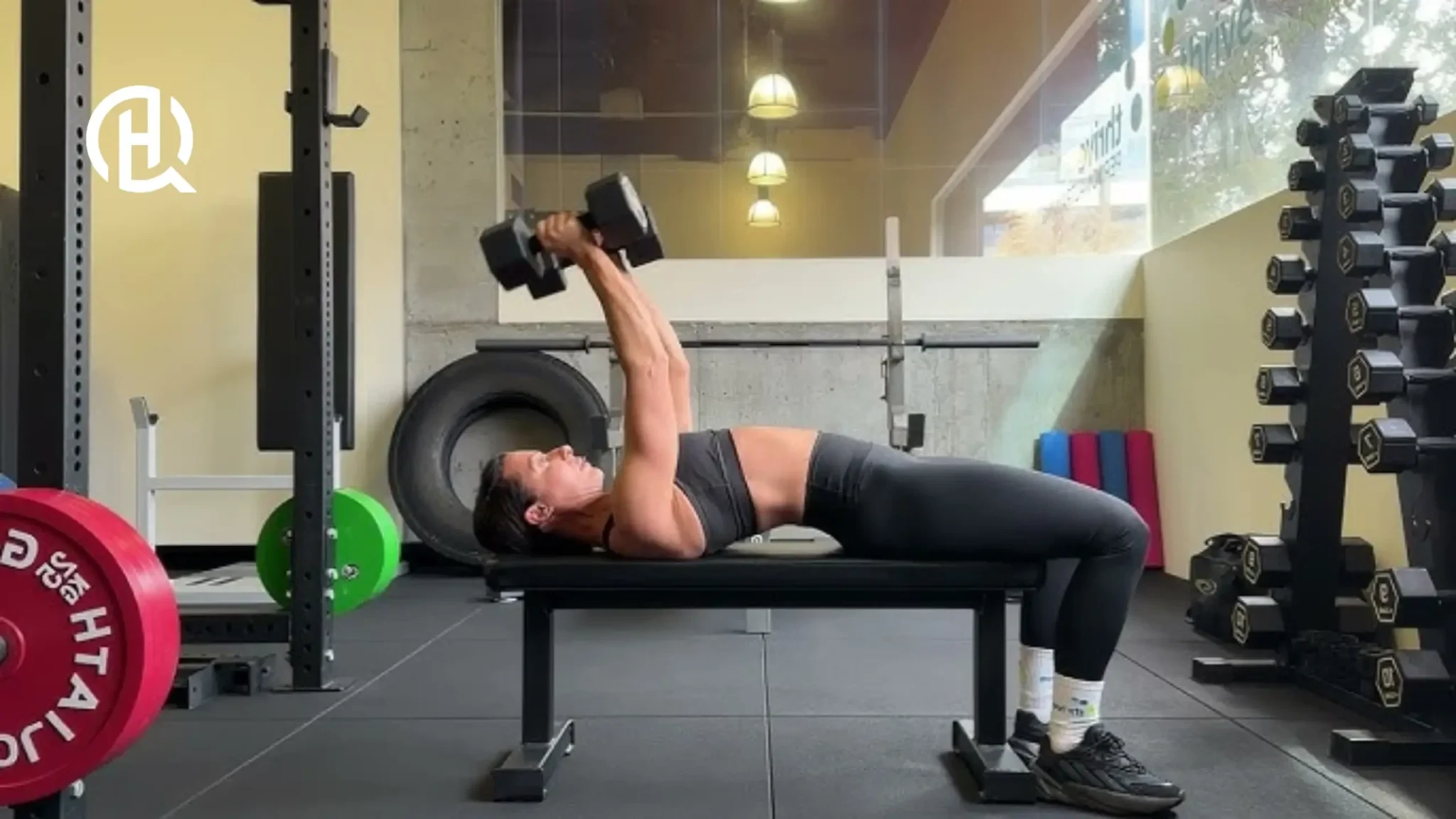
Keep Elbows Pointed Straight Up
- • With a dumbbell in each hand, raise your arms so your elbows are pointed upward and slightly back, keeping your upper arms stationary.
- • Slowly lower the dumbbells behind your head by bending at the elbows. Keep your elbows in place — do not let them flare out or move forward.
- • Lower until you feel a deep stretch in your triceps, then press the dumbbells back up by extending your elbows. The movement should feel smooth and controlled.
- • Keep your shoulder joints locked in place so the triceps stay fully isolated.
Important Note:
Avoid letting the upper arms drift forward or the elbows flare. A stable upper arm position keeps tension where it belongs — on the triceps.
Benefits

Lower the Dumbbells Slowly – Control is key to avoid injury.
Balanced Muscle Development
Dumbbells enable each arm to move independently, addressing strength imbalances and symmetry issues that can be masked when using a barbell.
Elbow-Friendly Mechanics
The neutral wrist path and natural movement arc typically alleviate elbow strain compared to more rigid barbell variations.
Enhanced Range of Motion
Dumbbells let you lower farther than a barbell, delivering a fuller stretch and stronger contraction — both essential for hypertrophy.
Mistakes to Avoid
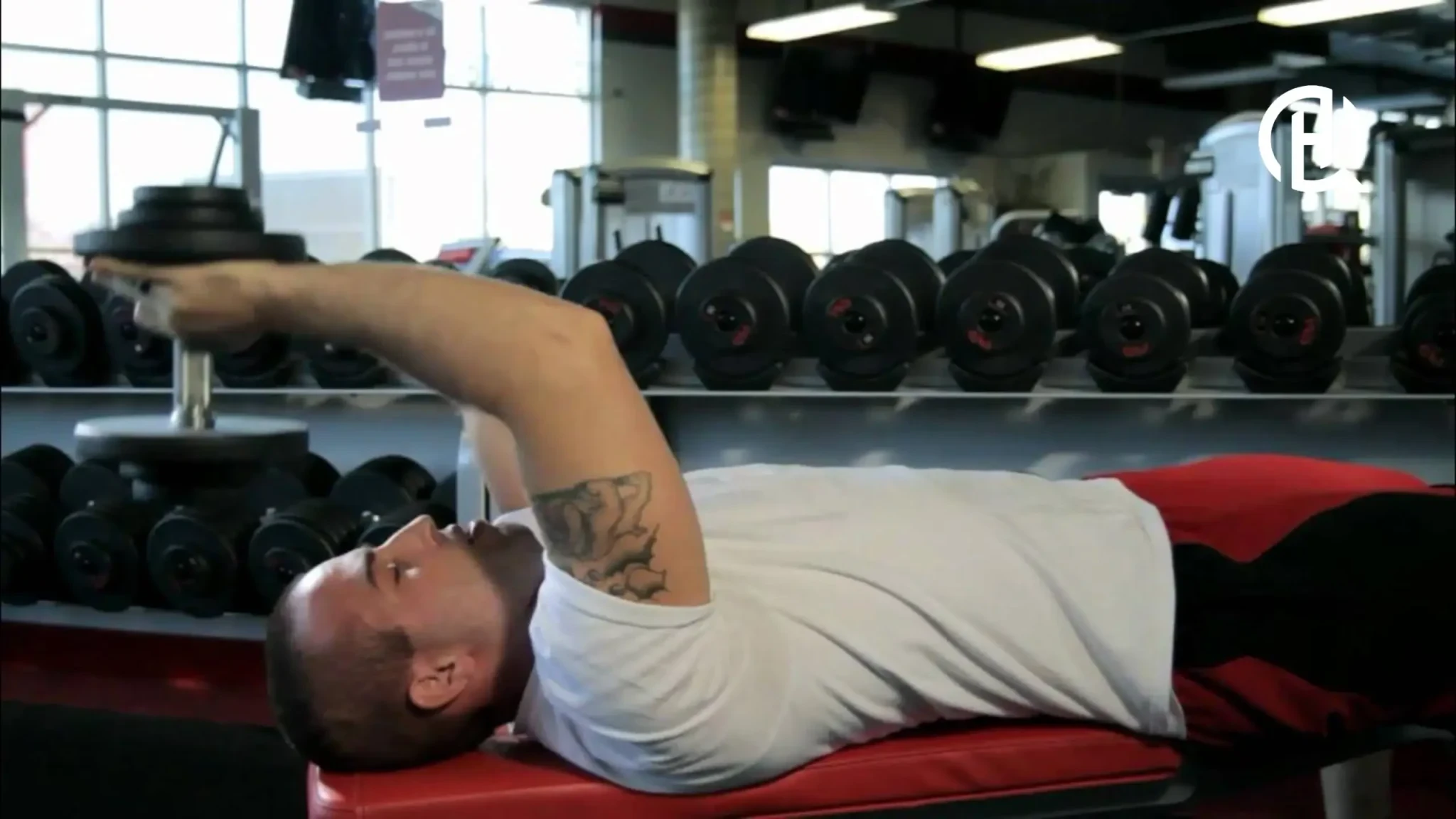
Stop Just Short of the Forehead – Or go slightly behind the head for deeper stretch.
❌ Using Momentum
Swinging the dumbbells or recruiting the chest and shoulders reduces triceps activation. Keep the movement controlled to maintain tension.
❌ Going Too Heavy Too Soon
Jumping weight quickly leads to poor form and joint stress. Start moderate and progress gradually — this is an isolation lift, not a heavy compound.
❌ Cutting the Range of Motion
Stopping short decreases muscle fiber recruitment. Aim for a deep stretch just below the ears and extend up without locking out harshly.
When to Use the Lying Dumbbell Triceps Extension
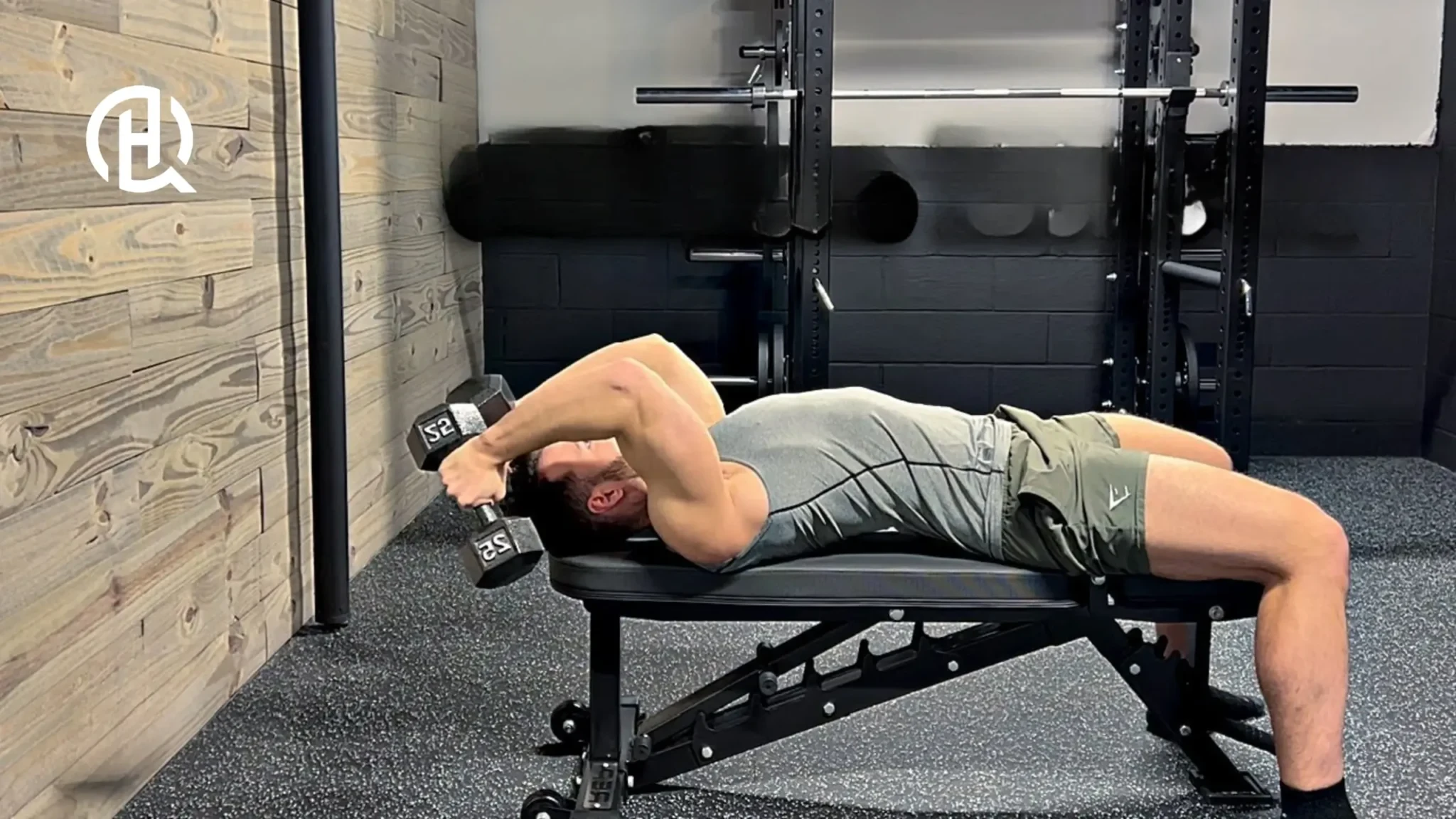
Don’t Flare Your Elbows Out – Keep them tucked for full triceps isolation.
Mid to Late Workout
Use after compound pushing movements like the close-grip bench press or overhead presses to isolate and exhaust the triceps with maximal tension.
As Supersets or Finishers
Pair with push-ups or close-grip presses for a serious pump. Excellent for end-of-session work when you want high tension without excessive joint stress.
Deloads or Joint-Friendly Phases
A slight incline and the dumbbell path can reduce elbow strain, making this a smart choice when managing joint issues or recovering from heavy barbell work.
Expert Training Tips
Start Light and Build Up – Form first, heavy weight later.
✅ Customize Your Reps and Sets
Aim for 3–4 sets of 10–12 reps, resting 60–90 seconds between sets.
✅ Experiment with Grip & Angle
Once technique is dialed, introduce small variations — a slight twist at the top or a subtle change to the dumbbell path — to keep the stimulus novel and effective.
Related Exercises
Lying Dumbbell Triceps Extension
Explore more exercises and build your perfect workout routine with our comprehensive exercise library.
See More Exercises→