Back · Cable exercise
Seated Cable Row
Setup, form cues, handle choices and how to program the most adjustable row in the gym.
The seated cable row is the row I give most beginners first. Your lower back is supported, the weight is easy to adjust, and you can focus on squeezing your back.

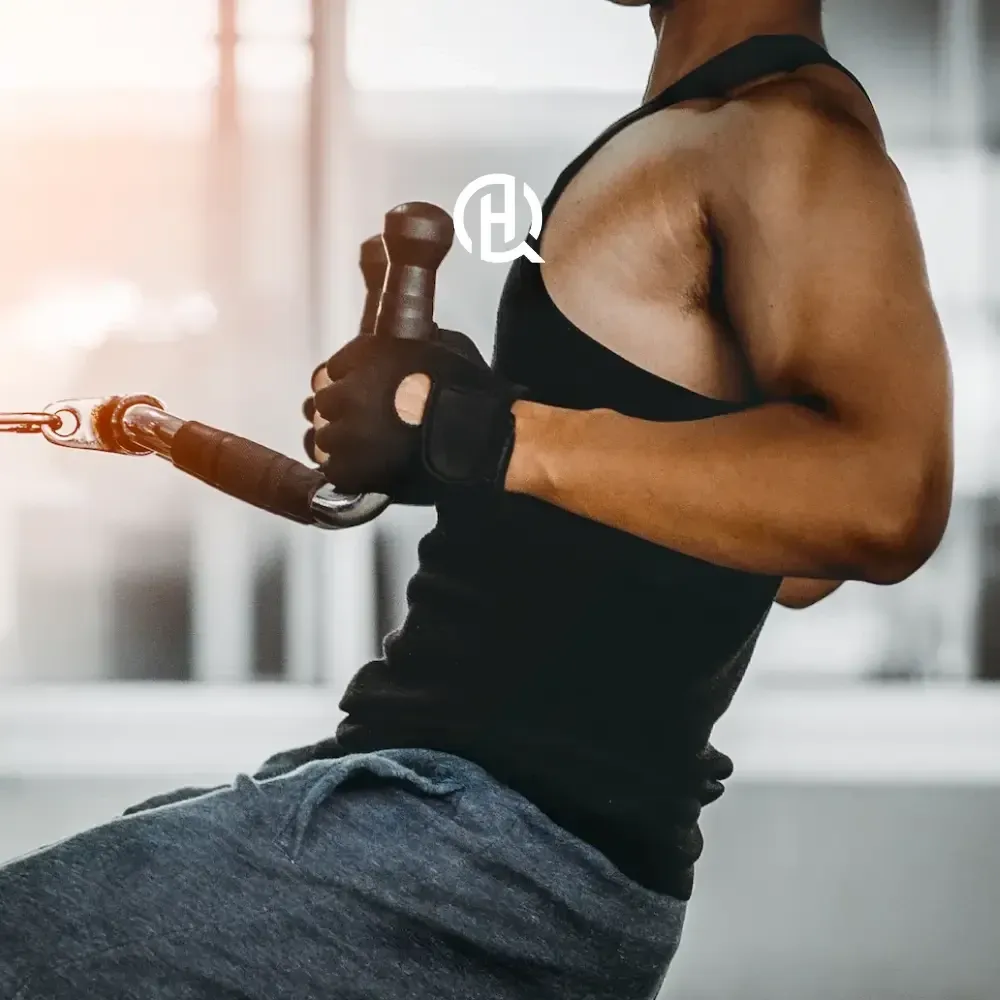 Watch the demo
The seated cable row is a horizontal pull done sitting at a low cable station. With your feet on the platform and your back straight, you pull the handle to your lower ribs and squeeze your shoulder blades together. It builds the mid-back, lats and rear delts with little load on your lower back.
Key takeaways
- Sit tall with a flat back and soft knees. Lean forward a little at the stretch, sit upright at the squeeze.
- Pull the handle to your lower ribs or upper stomach with your elbows close to your sides.
- Do not rock. Your torso moves a few degrees, not a swing.
- A close V-handle hits the mid-back and lats; a wide bar hits the upper back and rear delts more.
- 3–4 sets of 10–12 is a good default for muscle growth.
- For boxers and Muay Thai fighters, it balances all the punching and pushing with upper-back work that is easy to recover from.
- Muscles
- Mid-back (rhomboids, mid traps), lats, rear delts, biceps, forearms
- Equipment
- Low cable station, V-handle (or wide bar, rope)
- Difficulty
- Beginner
- Sets & reps
- 3–4 sets of 10–12
Quick version: see the seated cable row exercise card.
Step by step
How to Do the Seated Cable Row
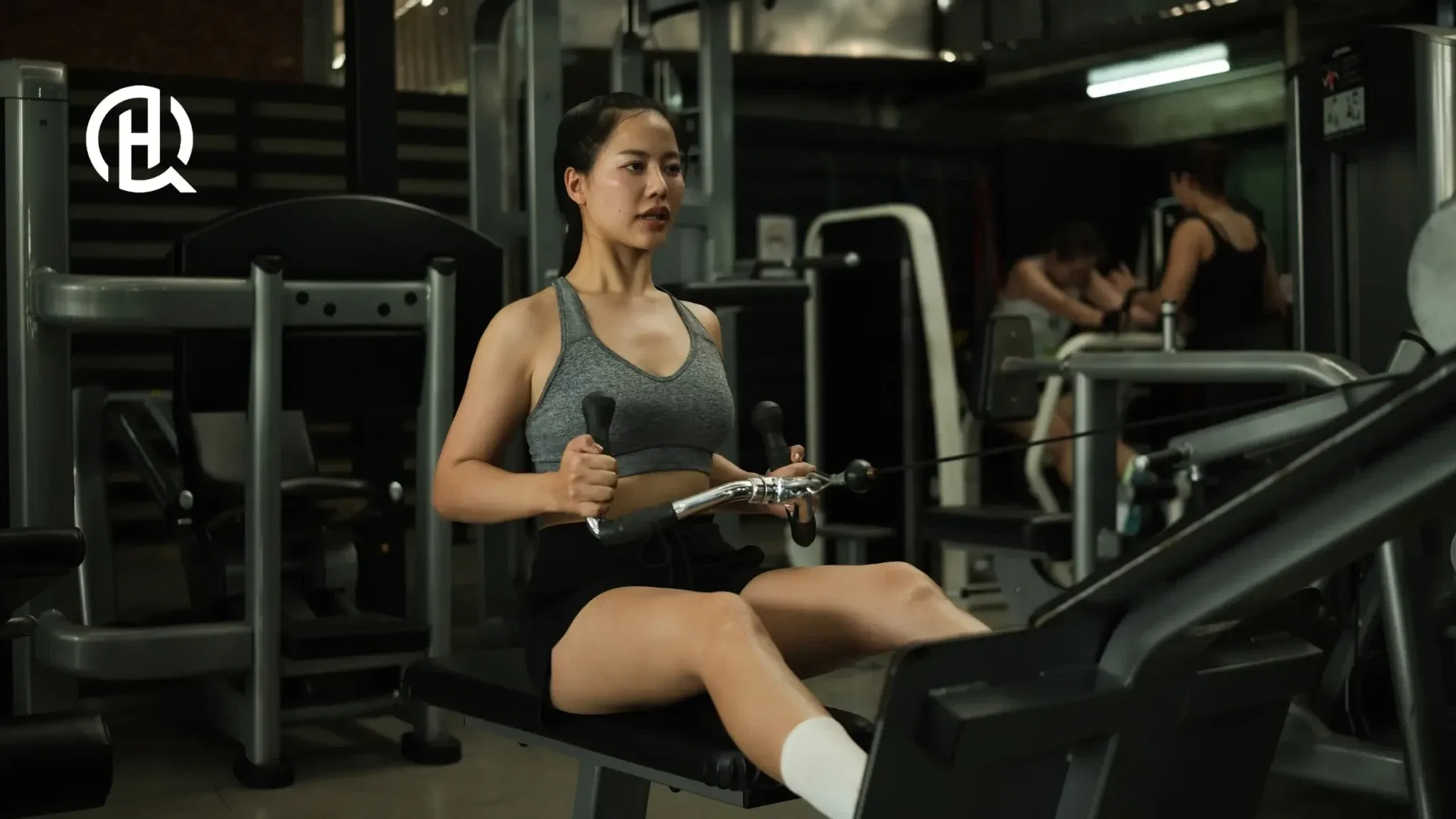
Elbows back, chest tall, a short pause at the squeeze.
- 01
Set up at the low cable
Attach a V-handle to the low cable. Sit on the bench with your feet flat on the platform and your knees slightly bent.
- 02
Sit up tall
Lean forward and grab the handle, then sit up tall. Back flat, chest up, arms straight in front of you.
- 03
Set your shoulders
Pull your shoulder blades back and down to start the rep.
- 04
Drive your elbows back
Drive your elbows straight back, close to your sides, and pull the handle to your lower ribs or upper stomach.
- 05
Pause and squeeze
Pause for a moment and squeeze your back.
- 06
Return slowly
Let the handle travel forward slowly until your arms are straight and you feel a stretch across your back. Lean forward a few degrees at most. Repeat.
Get it right
Form Cues
- 01
Sit tall, don't lean too far back
Finish each rep with your torso upright, not leaning behind your hips.
- 02
Shoulders down, then pull
Shrugging moves the work to your neck.
- 03
Squeeze your shoulder blades together
Hold for a second at the end of the pull.
- 04
Control the negative
Take two to three seconds to let the handle forward.
- 05
Elbows past your body
Your elbows should finish slightly behind your torso.
Anatomy
Muscles Worked
- Mid-back (rhomboids, middle traps): pull the shoulder blades together. The main target.
- Lats: pull the upper arm back, more so with elbows tucked.
- Rear delts: help, more with a wide grip and elbows flared.
- Biceps and forearms: assist the pull and hold the handle.
- Lower back and core: hold you upright, with much less load than a bent-over row.
Why do it
Benefits of the Seated Cable Row
- 01
Builds mid-back thickness
It trains the rhomboids, lats, traps and rear delts, and pairs well with vertical pulls like pulldowns and pull-ups.
- 02
Easy on the lower back
You sit with your feet braced, so your lower back does far less than in a barbell row.
- 03
Builds grip and arm strength
Your forearms and biceps assist on every rep.
- 04
Good for every level
The weight changes in small steps on the stack, so beginners can learn the movement and advanced lifters can push volume.
Avoid these
Common Seated Cable Row Mistakes
- 01
Using momentum
Rocking the torso back to move the weight. Fix: slow tempo, stable torso.
- 02
Leaning far back at the finish
Fix: stop the torso at upright.
- 03
Rounding forward at the stretch
Fix: lean forward from the hips with a flat back, a few degrees only.
- 04
Shrugging
Fix: shoulders down before you pull.
- 05
Pulling with the hands
Wrists curl and elbows stop early. Fix: think "elbows back".
Options
Handles and Variations
- 01
Close V-handle (neutral grip)
The standard. Mid-back and lats.
- 02
Wide bar, overhand
Pull to the upper stomach with elbows wider. More upper back and rear delts.
- 03
Rope
Lets the hands spread at the end for a longer squeeze.
- 04
Single-arm cable row
One D-handle, one side at a time. Good for evening out sides, similar to a single-arm dumbbell row.
- 05
Free-weight options
T-bar row or barbell row when you want to load heavier.
Programming
Sets and Reps by Goal
| Goal | Sets | Reps | Rest |
|---|---|---|---|
| Learning the movement | 2–3 | 12–15, light | 60 s |
| Muscle growth | 3–4 | 10–12 | 60–90 s |
| Strength | 3–4 | 6–8 | 2 min |
Leave one to three reps in reserve. When you can do every rep at the top of your range with a clean pause, move the pin down one plate.
Fit
Who It's For
Good for: beginners, anyone whose lower back limits bent-over rows, and lifters adding back volume late in a session.
Go lighter or adjust if: reaching forward hurts your lower back. Shorten the stretch and keep your torso upright. Stop if you feel sharp pain.
For where it fits in a full plan, see the most effective exercise for each muscle group.
For fighters
Seated Cable Rows for Fighters
If you box, kickbox or train Muay Thai, your week is full of pushing: punches, teeps, push-ups. The seated cable row trains the opposite side, the mid-back and rear delts that pull your shoulders back. That strength helps you hold a tall posture and keep your hands up late in a round. It also carries over to pulling an opponent in during the clinch or in grappling.
A swap for strikers: clip on the rope, raise the pulley to chest height, and pull the rope toward your face with your elbows high. This face pull shifts the work to the rear delts and upper back.
For the full plan, see strength and conditioning for fighters.
Your lower back is supported and the stack moves in small steps, so it is an easy row to fit around fight training.
When
It suits an easier day, or the day after pads.
How much
Use two or three sets of 10–12 and stop one to three reps before failure. Use fewer sets in the weeks before a fight.
Balance
Pair each pull with a press so pushing and pulling stay even.
Questions
Seated cable row FAQ
What muscles does the seated cable row work?
The seated cable row mainly works the mid-back, meaning the rhomboids and middle traps, along with the lats and rear delts. The biceps and forearms help you pull and hold the handle. Your lower back and core keep you upright but work much less than in a bent-over row, which is why many people find it an easier row to recover from.
Should you lean back on a seated cable row?
Only a little. Lean forward a few degrees at the stretch and come back to upright at the end of the pull. Leaning far back turns the rep into a body swing and moves work away from your back. If you have to rock to finish the rep, lower the weight. Your shoulder blades should do the moving, not your lower back.
Where should you pull the handle on a seated cable row?
Pull the handle to your lower ribs or upper stomach with your elbows close to your sides. That path works the mid-back and lats best. With a wide bar, pull a little higher, to the upper stomach, with your elbows further out to bring in more upper back and rear delts. Keep the handle in a straight line from the cable.
Which handle is best for seated cable rows?
The close V-handle is the standard and a good place to start. It puts your hands in a neutral grip and works the mid-back and lats. A wide bar shifts more work to the upper back and rear delts. A rope lets your hands spread at the end for a longer squeeze. Rotating handles every few weeks keeps the exercise fresh.
Is the seated cable row good for beginners?
Yes. It is one of the easiest rows to learn. Your feet are braced and you sit upright, so your lower back is supported, and the weight changes in small steps on the stack. Start with 2–3 light sets of 12–15 to learn the squeeze, then move to 3–4 sets of 10–12 once the movement feels steady.
Is the seated cable row good for fighters?
Yes. It trains the mid-back and rear delts that balance the pushing in striking, plus the pulling you use in the clinch. Your lower back is supported, so it is easy to recover from and fits well on lighter days. Two or three sets of 10–12, stopped a few reps short of failure, is plenty next to skill training.
Back Focused
Train your back with a plan.
Want cable rows placed in a full back plan? The BACK FOCUSED program is part of the HermQ bodybuilding programs subscription.
60-day money-back guarantee.
Training for striking? Combat Performance is a one-time $29 program, sold separately from the $19/month subscription.
The complete combat S&C system. Explosive power, fight conditioning, movement quality, and resilience for Muay Thai, MMA, and striking.
Get Instant Access – $29