Exercise guide
Squat Benefits
What squats do for you, which muscles they work, and how to do them well.
The squat is the exercise I build most leg training around. Here is what it does for you, which muscles it works, and how to squat with good form at any level.

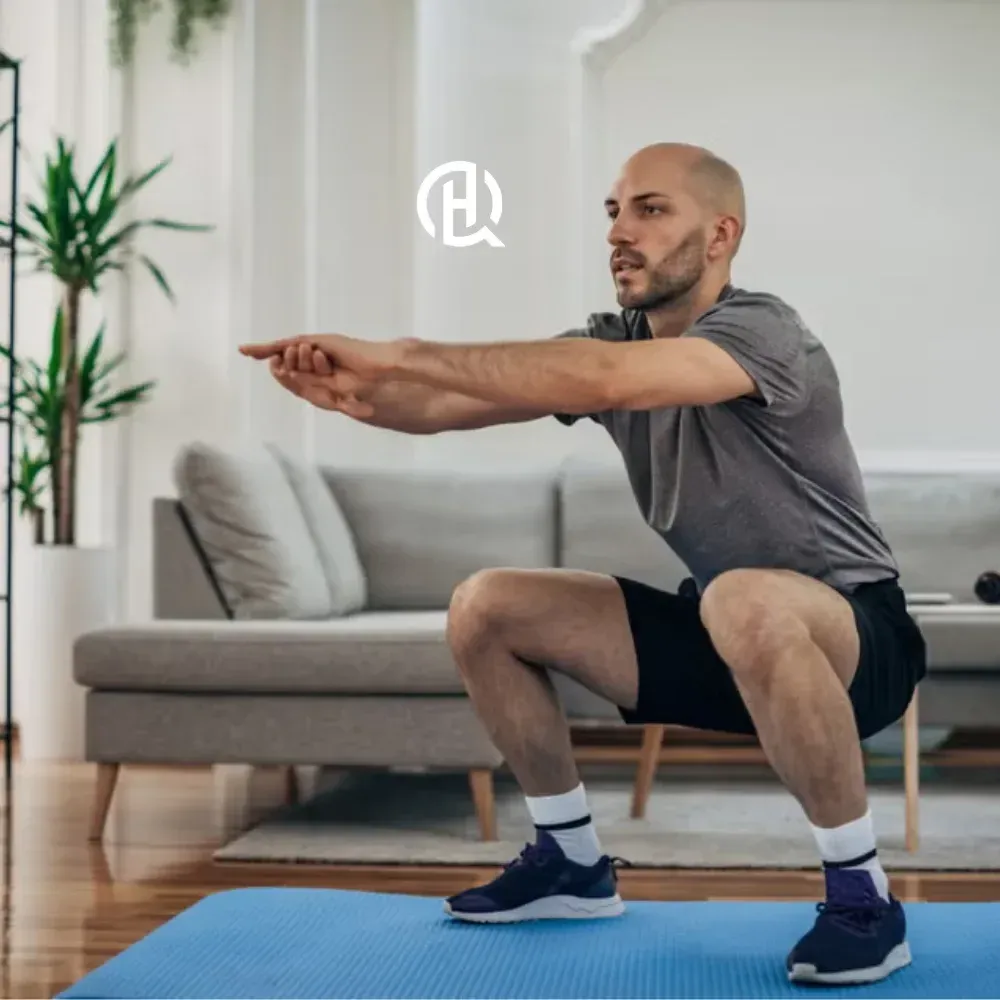
Squats build strength and muscle in your quads, glutes and adductors, train your core to brace, and practise a movement you use every time you sit and stand. They scale from bodyweight to a heavy barbell, so they suit beginners and advanced lifters. Two to three times a week, with good form, is enough.
Key takeaways
- Squats mainly work the quads, glutes and adductors. The hamstrings, calves and core help stabilise.
- They build leg strength and size, support jumping and sprinting, and carry over to daily movement.
- Good form: feet about shoulder-width, brace, knees track over toes, go as deep as you control.
- Start with bodyweight or goblet squats. Move to a barbell when those feel solid.
- Two to three sessions a week works for most people.
- Fighters squat for strength, not for a record: moderate weight, low reps, plenty left in the tank.
- Muscles
- Quads, glutes, adductors; hamstrings, calves and core as stabilisers
- Equipment
- None to barbell and rack
- Difficulty
- Beginner (bodyweight) to advanced (barbell)
- Sets & reps
- 3–4 × 6–12 for muscle; 3–5 × 3–6 for strength
Why squat
What are the benefits of squats?
- 01
Stronger legs
Squats load your quads, glutes and adductors together, so you can lift heavy and keep adding weight over time.
- 02
More muscle
Deep squats under load are one of the most reliable ways to build bigger thighs and glutes.
- 03
Power for sport
Stronger legs help you jump higher and sprint faster when you also train those skills. That is why most strength programs for athletes include a squat.
- 04
Easier daily movement
Sitting down, standing up, lifting a box, climbing stairs: all squat patterns. Training the squat makes them easier.
- 05
A stronger core
Bracing under a bar trains your trunk to stay stiff while your legs work.
- 06
Works with any equipment
Bodyweight at home, a dumbbell for goblet squats, or a barbell in the gym. Easy to start, easy to progress, easy to track.
Anatomy
What muscles do squats work?
| Muscle | Role in the squat |
|---|---|
| Quadriceps | Main mover. Straighten the knee as you stand up. |
| Glutes | Main mover. Extend the hip, working hardest near the bottom of a deep squat. |
| Adductors | Help extend the hip and steady the knees. |
| Hamstrings | Help steady the hip and knee. They work, but squats are not a main hamstring builder. |
| Calves | Keep your ankles stable. |
| Core and lower back | Brace your spine so the load moves through your legs. |
Want to build the hamstrings? Add the best hamstring exercises alongside your squats.
Step by step
How to do a squat
Bodyweight or barbell, the steps are the same.
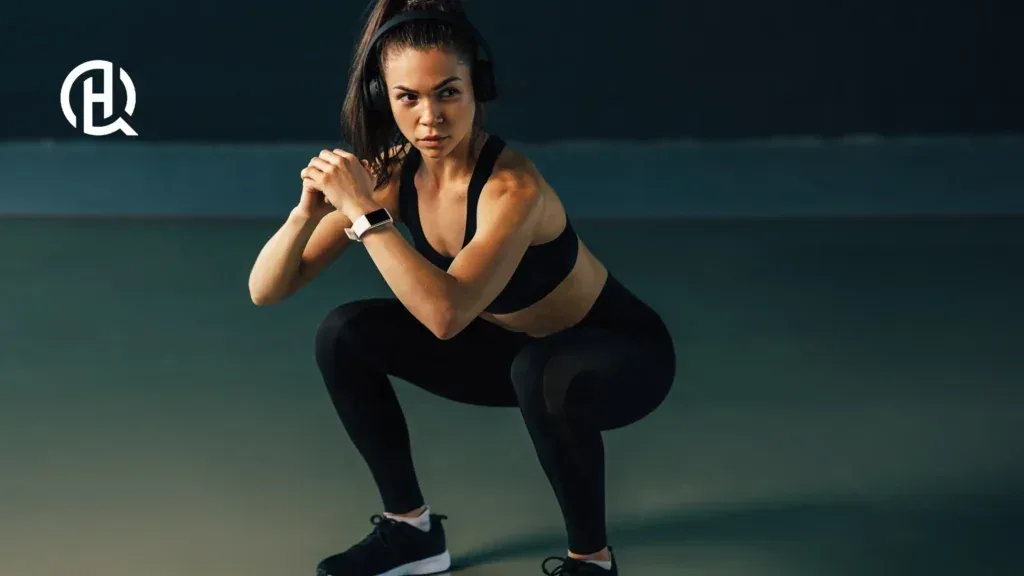 Watch the demo
Brace, sit down between your heels, stand tall.
- 01
Set your feet
About shoulder-width, toes turned out slightly. If you are not sure, take the stance you would use for a big vertical jump.
- 02
Brace
Take a breath into your belly and tighten your core as if someone is about to poke your stomach.
- 03
Sit down
Bend your hips and knees together and sit down between your heels. Keep your chest up and your whole foot on the floor.
- 04
Go as deep as you control
Aim for your hips at or below knee height, as long as your back stays flat and your heels stay down.
- 05
Stand up
Drive through your whole foot and stand tall. Breathe out at the top.
For the one-screen version, see the squat exercise page.
Get it right
Common squat mistakes
Do
- Knees track over your toes.
- Heels stay down.
- Brace before each rep.
- Keep your chest high.
- Go to a depth you control.
Avoid
- Knees caving in. Push your knees out so they track over your toes.
- Heels lifting. Sit back between your heels. If your ankles are stiff, try a small heel lift or a goblet squat.
- Cutting depth. Half reps build less muscle. Lower the weight and go deeper.
- Rounding at the bottom. Stop just above the point where your lower back tucks under.
- Losing your brace. Breathe in and brace before each rep, not halfway down.
Options
Squat variations
| Variation | Best for | Level |
|---|---|---|
| Bodyweight squat | Learning the pattern, warm-ups | Beginner |
| Goblet squat | Learning depth and posture with light load | Beginner |
| Box squat | Finding consistent depth | Beginner |
| Back squat | Heavy strength and size | Intermediate |
| Front squat | More quad work, upright torso | Intermediate |
| Sumo squat | More inner-thigh and glute work | Beginner–intermediate |
| Bulgarian split squat | One leg at a time, evening out sides | Intermediate |
| Hack squat (machine) | Hard quad work with back support | Beginner–intermediate |
| Zercher squat | Core and upper back, bar held in the elbows | Advanced |
| Overhead squat | Mobility and control | Advanced |
| Pistol squat | Single-leg strength and balance | Advanced |
Wall sits build endurance but are not a squat movement.
Programming
Sets and reps by goal
| Goal | Sets × reps | Rest |
|---|---|---|
| Learn the movement | 2–3 × 8–12 (bodyweight or goblet) | 60–90 s |
| Build muscle | 3–4 × 6–12 | 2–3 min |
| Build strength | 3–5 × 3–6 | 3 min |
| Muscular endurance | 2–3 × 15–20 | 60 s |
Take most sets to one or two reps short of failure. To pick a starting weight for strength work, estimate your max with the one rep max calculator.
Fit
Who should squat, and who should modify?
Most healthy adults can squat. Beginners start with bodyweight or goblet squats. Lifters chasing strength or size use the back or front squat.
Modify if you have knee, hip or back pain, or a recent injury. Get checked by a doctor or physiotherapist first, then start with a box squat to a depth that feels comfortable. Stop any rep that causes sharp pain.
For fighters
Squats for fighters
If you train Muay Thai, MMA, boxing or grappling, the squat gives you base strength in the legs and hips. That carries over to pushing off the floor into a strike, holding a low stance, changing levels and standing back up in grappling. Bracing under the bar also trains your trunk to stay stiff while your legs drive.
A fighter does not need a huge squat. Once you squat a solid weight with good form, more strength gives you less in the ring than speed, skill and conditioning.
A good fighter option is to pair each squat set with a set of 3–5 jump squats after a short rest. You keep the strength and practise moving fast. For how this fits your week, see strength and conditioning for fighters.
So keep the squat itself simple.
When
On an easier day, or several hours away from hard sparring.
How much
3–4 sets of 3–6 reps at a weight you could lift for two or three more reps.
Before a fight
Cut the volume in the last weeks before a fight.
Questions
Squat FAQ
How often should I squat?
Two to three times a week works for most people. Beginners doing bodyweight or goblet squats can squat more often because the load is light. If you squat heavy, leave at least a day or two between hard sessions so your legs recover. One option is a heavy day and a lighter day each week, for example back squats on Monday and goblet or front squats on Thursday.
Are squats bad for your knees?
For most people with healthy knees, squats done with good form are not bad for them. Keep your knees in line with your toes, your heels down, and the load at a level you control. Your knees moving forward past your toes is normal. If you already have knee pain or an injury, get advice from a doctor or physiotherapist before you squat, and stop if a rep causes sharp pain.
Should I squat below parallel?
If you can do it with a flat back and your heels down, yes. Squatting deeper works your quads and glutes through a bigger range, which is good for strength and size. If your back rounds or your heels lift before you reach parallel, squat to the depth you control and work on it with goblet squats or box squats over time. Depth should never cost you form.
What is the best squat for beginners?
The goblet squat. Holding a dumbbell or kettlebell at your chest keeps you upright and makes it easier to sit deep with good form. Start with bodyweight squats for a week or two if you are completely new, then move to goblet squats. When you can do 3 sets of 10–12 with a heavy dumbbell and good form, you are ready to learn the barbell back squat.
What do squats work the most?
Squats work your quadriceps and glutes the most, with your adductors, the inner thigh muscles, close behind. Your hamstrings, calves, core and lower back work to keep you steady, but they are not the main movers. A deeper squat puts more work on the glutes. A more upright squat, like the front squat, puts more on the quads.
Can I replace squats with other exercises?
Yes. If squats do not suit your body or your gym, the leg press, hack squat, Bulgarian split squat and lunges all train the same main muscles. Add a hip hinge such as the Romanian deadlift for the hamstrings and glutes. You lose a little core and balance work without a free-weight squat, but you can still build strong, muscular legs.
Are squats good for fighters?
Yes. Squats build the leg and hip strength behind strikes, a low stance and level changes, and they train you to brace. Fighters do well with 3–4 sets of 3–6 reps, stopping a few reps short of failure, on a day away from hard sparring. You do not need a huge squat. Past a solid base, speed, skill and conditioning matter more.
Wrap-up
Final thoughts
Squat two to three times a week, go as deep as you control, and add a little weight when the reps feel easy. Put it inside a full session with the leg day workout.
HermQ programs
Train your legs with a plan.
Want squats programmed for you, week by week? Every HermQ bodybuilding program is in one monthly subscription.
60-day money-back guarantee.
Squatting for fight sports?
Squatting to fight better, not to max out? Combat Performance is HermQ's combat program, $29 once.
The complete combat S&C system. Explosive power, fight conditioning, movement quality, and resilience for Muay Thai, MMA, and striking.
Get Instant Access – $29