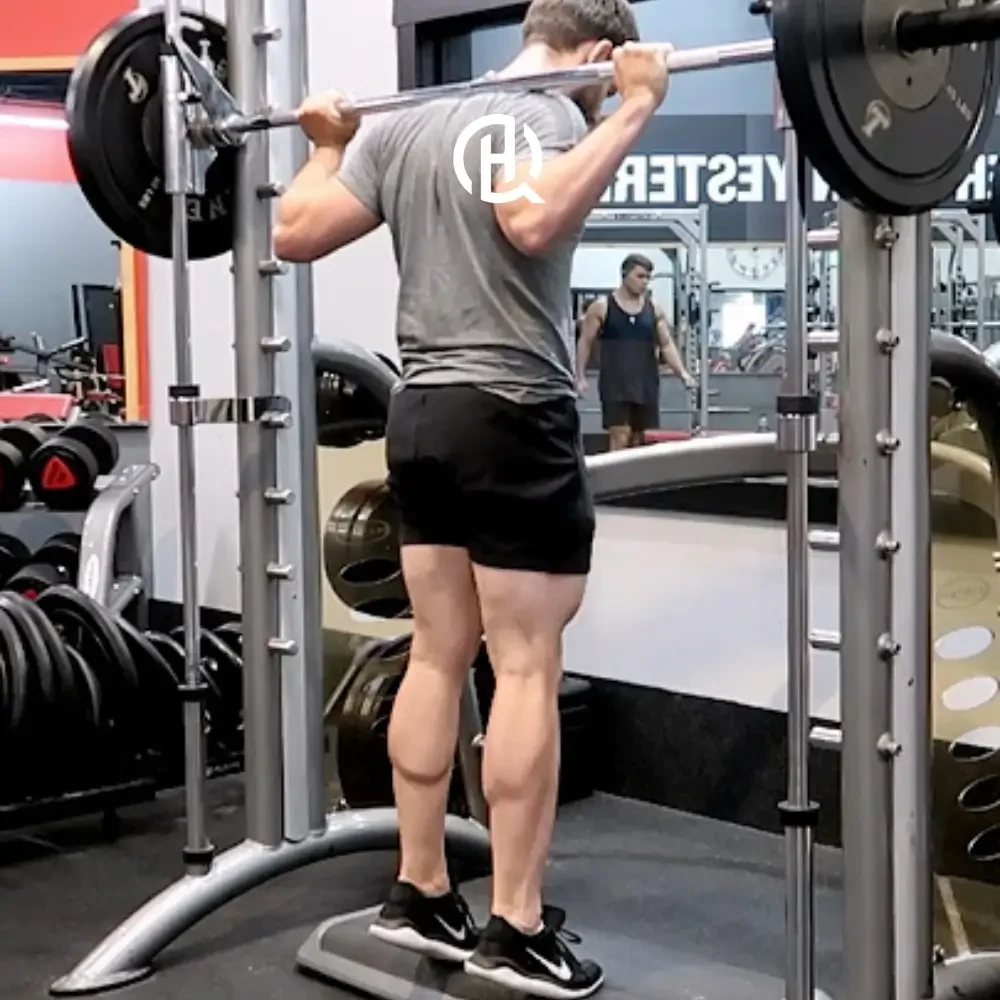

The standing calf raise is a foundational lower-body exercise that builds the kind of lower-leg strength and stability every human being needs. Whether you’re an athlete in search of explosive power, someone balancing aesthetics with hypertrophy, or a person just trying to move better in everyday life, this is a movement you should be doing consistently.
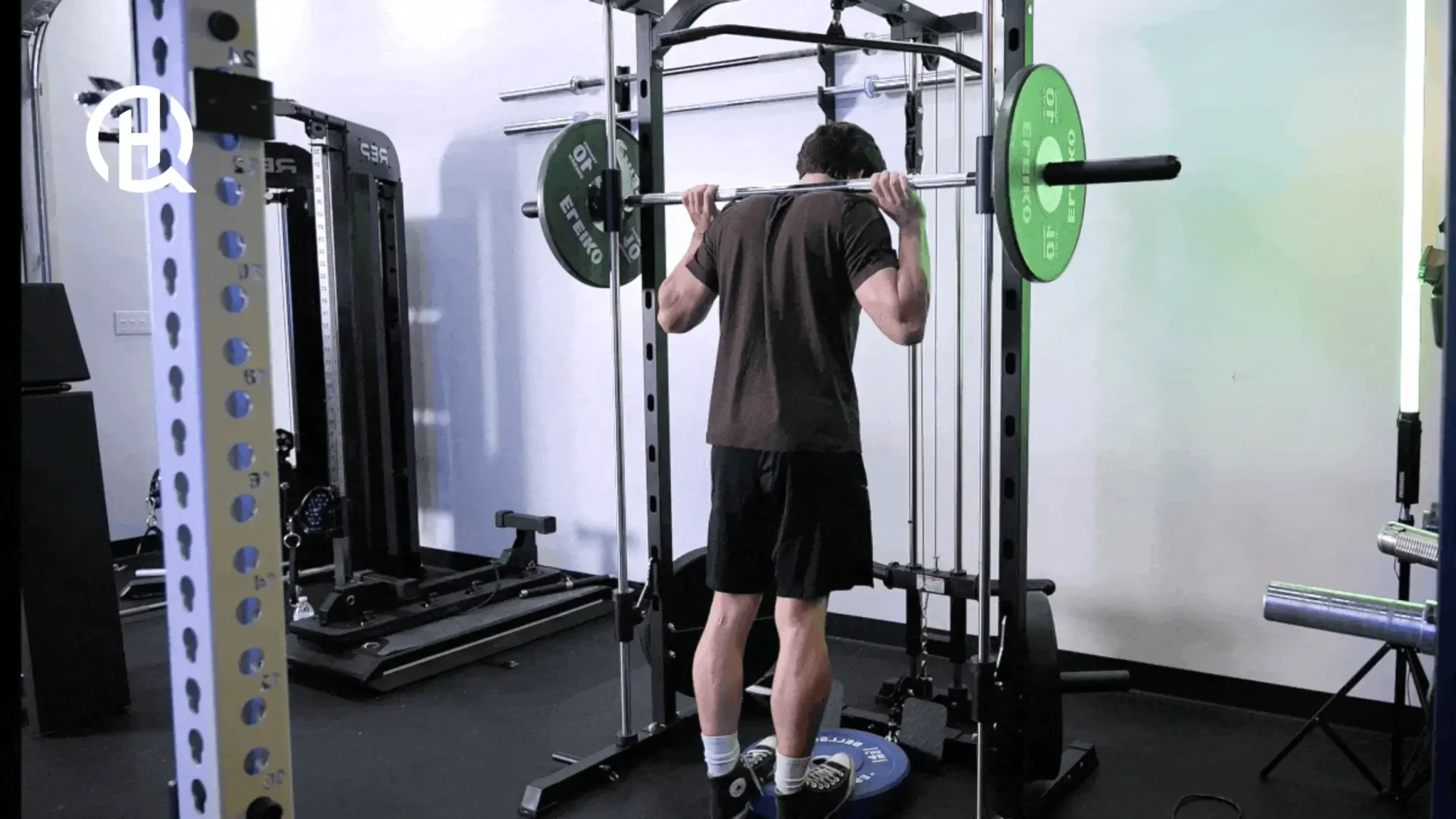
Use Full Range of Motion – Deep stretch at the bottom, hard squeeze at the top.
How to perform the Standing Calf Raise (Video)
Standing Calf Raise — Video Demo
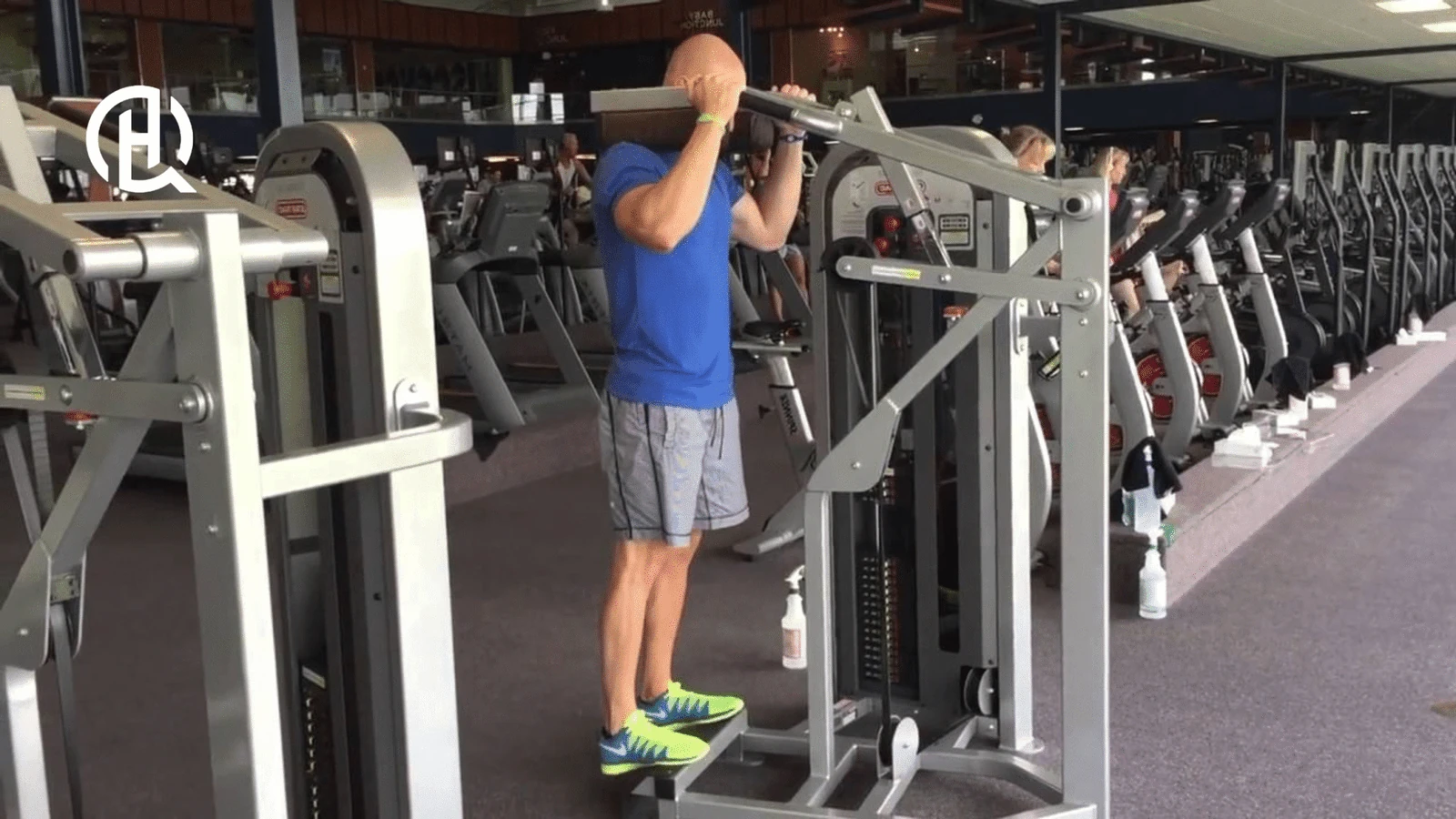
Personal trainer from the HermQ team showing how to do the Standing Calf Raise.
Standing Calf Raise: How To
- • Use a standing calf raise machine or a Smith machine with a step platform. Adjust the pads to shoulder height to allow a full stretch at the bottom.
- • Place the balls of your feet on the platform with heels hanging off; toes forward, hip-width apart.
- • Begin fully lengthened, letting your heels drop below the platform. Lightly flex your tibialis anterior to ensure a true stretch.
- • Drive through the balls of your feet and squeeze your calves to raise your heels as high as possible. At the top, attempt to go an inch higher by squeezing harder.
- • Lower slowly and with control, returning to that deep stretch at the bottom.
Important Note:
Keep your knees locked out throughout each rep to isolate ankle movement and load the gastrocnemius effectively.
Standing Calf Raise: Benefits
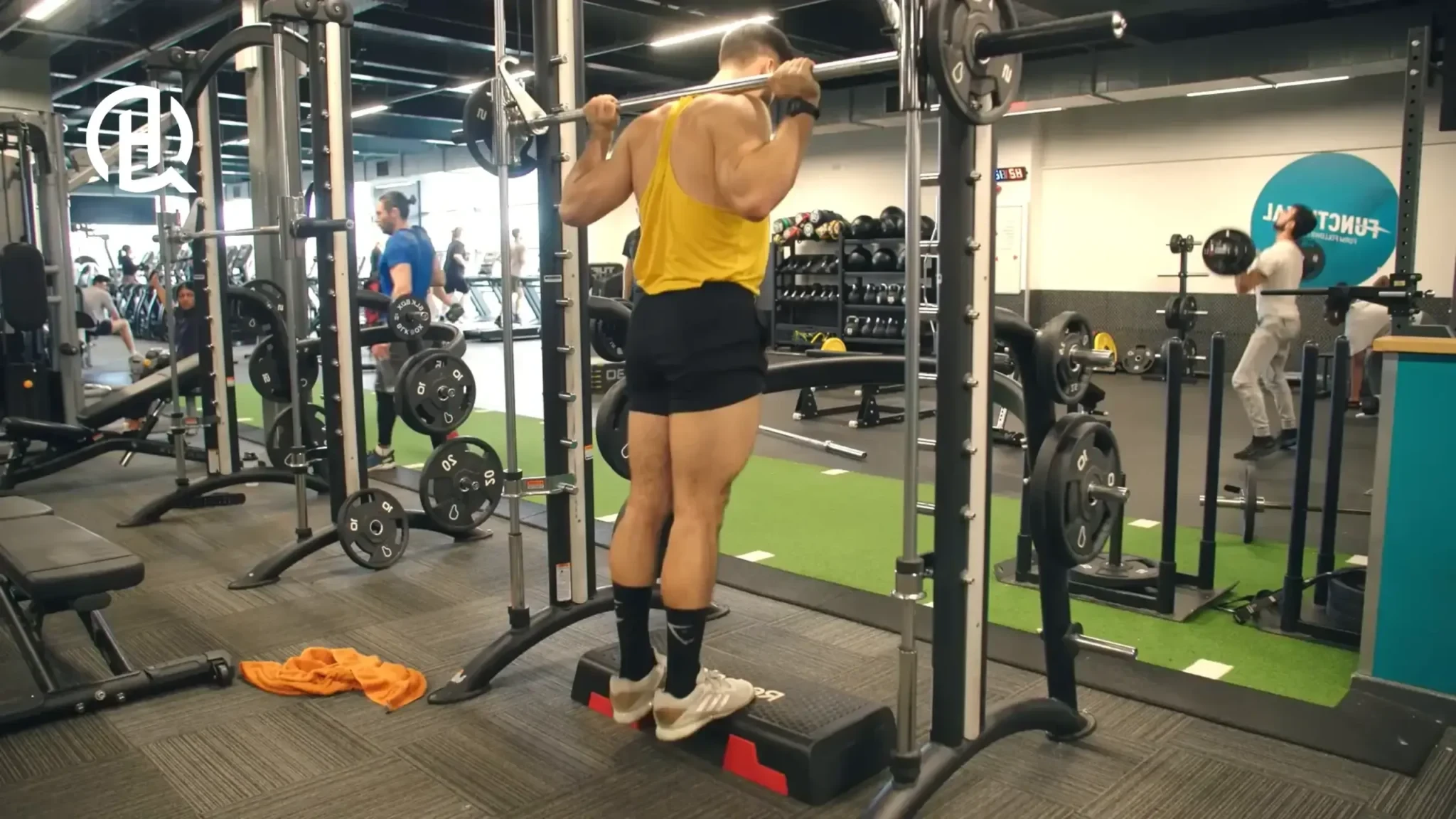
Use a Platform for a Deeper Stretch – Adds intensity and range.
Trains the Gastrocnemius
The standing variation targets the gastrocnemius—the larger, upper calf muscle. With straight legs, it’s placed under maximal tension for size and strength.
Builds Stabilizers and Resilience
Plantar flexion under control trains stabilizing muscles and reduces injury risk during high-impact tasks like running, jumping, and moving on uneven ground.
Boosts Athletic Performance
Stronger calves improve force transfer from the ground up—translating to quicker acceleration, higher jumps, and stronger deceleration mechanics.
Improves Lower-Leg Circulation
Repeated contraction and relaxation act as a “muscle pump,” aiding venous return— helpful for people who sit or stand a lot.
Supports Daily Movement
From climbing stairs to uphill walking, stronger calves reinforce functional movement and everyday capability.
Standing Calf Raise: Mistakes to Avoid
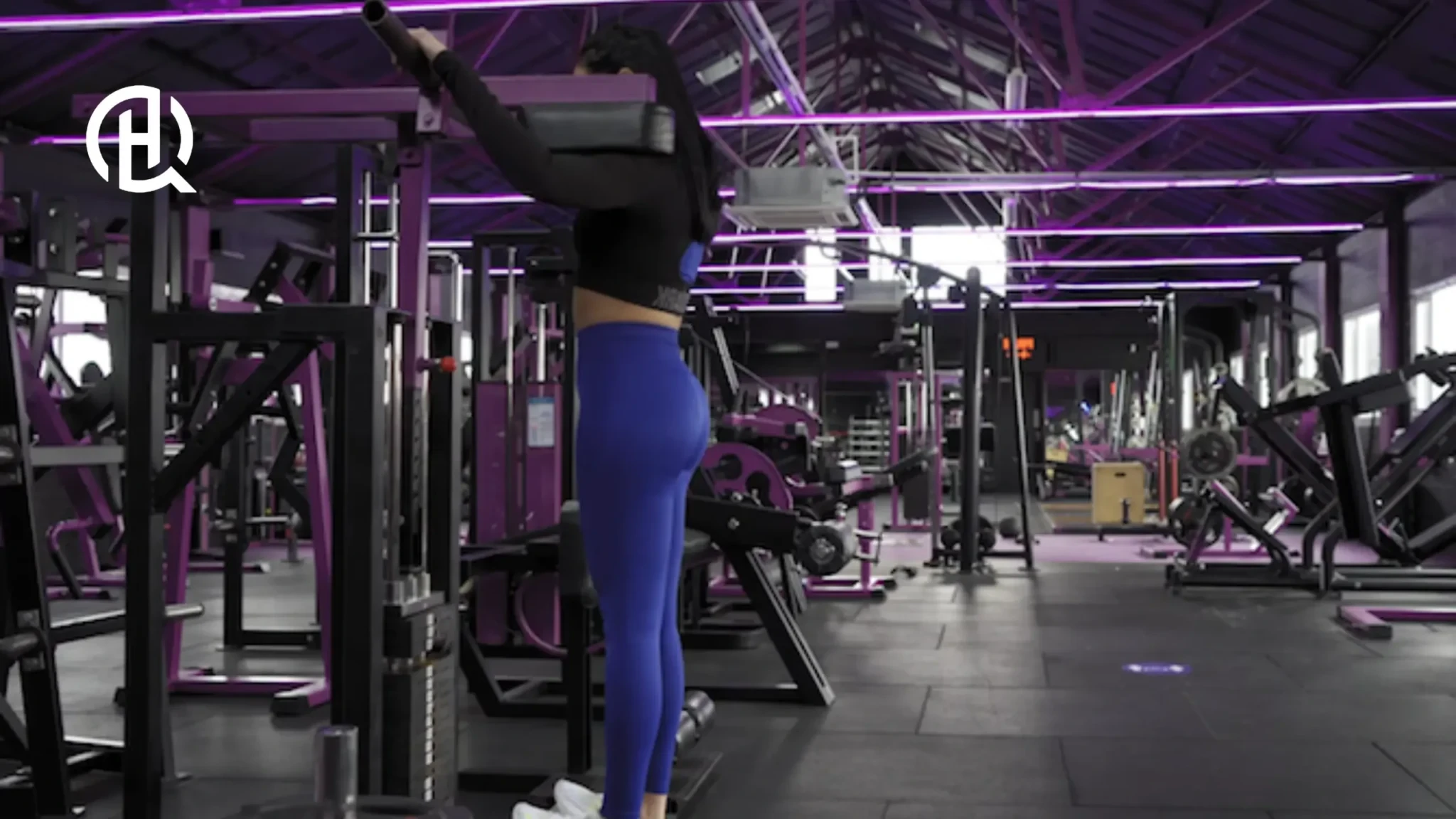
Don’t Let Ankles Roll – Keep motion straight up and down.
❌ Not Using Full Range of Motion
Avoid cutting reps short. Lower to a full stretch and rise to a complete contraction to maximize stimulus and growth.
❌ Relying on Momentum
Bouncing reduces tension and increases injury risk. Control each rep—especially the eccentric—to keep the work on the calves.
❌ Poor Foot Position
Keep the balls of your feet firmly supported and toes forward or slightly inward to engage both gastrocnemius and soleus effectively.
❌ No Progressive Overload
Gradually add load via machines, dumbbells, or a weighted vest. Progression prevents plateaus and drives continued growth.
Expert Training Tips
Be Consistent – Calves need frequent and focused training to grow.
✅ Focus on Slow Eccentrics
Both concentric and eccentric phases matter, but emphasize a 2–3 second lowering to increase time under tension and improve control and growth.
✅ Use a Full Range of Motion
Drop your heels as low as is comfortable at the bottom and rise as high as possible at the top for complete stimulation of the calves.
Related Exercises
Standing Calf Raise
Explore more exercises and build your perfect workout routine with our comprehensive exercise library.
See More Exercises→