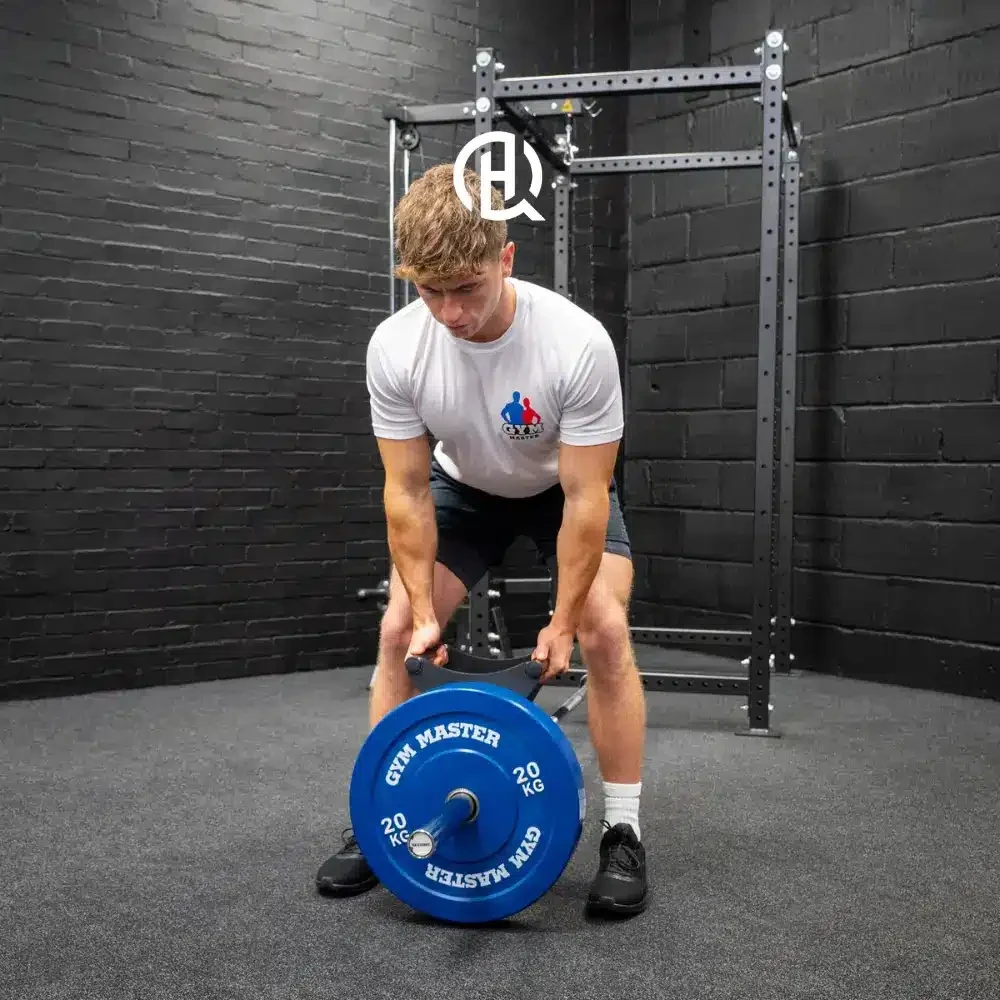

The T-Bar Row is an old-school staple that has stood the test of time — and for good reason. When it comes to building a thicker, wider, more powerful back, this exercise is non-negotiable. It smashes the mid-back, torches the lats, and hits the traps, rhomboids, and erectors all in one shot. Unlike standard rows, the T-Bar Row allows you to load up serious weight while maintaining solid control. Thanks to the neutral grip, it is easier on the shoulders and wrists, making it a more joint-friendly heavy pull.
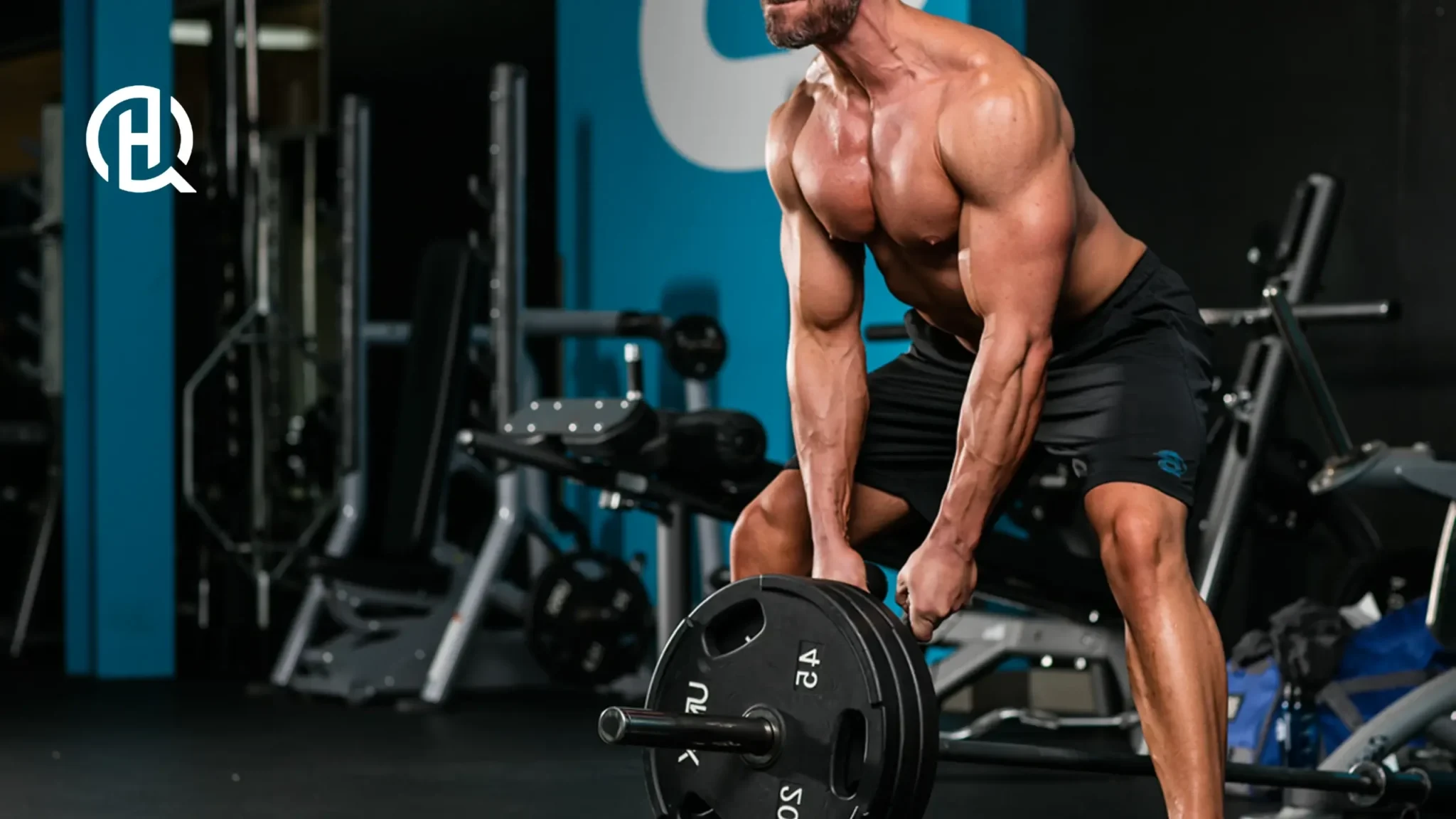
Use a Shoulder-Width Foot Stance – Gives you stability and control.
How to Perform the T-Bar Row
Personal trainer from the HermQ team showing proper T-Bar Row technique.
T-Bar Row: How To
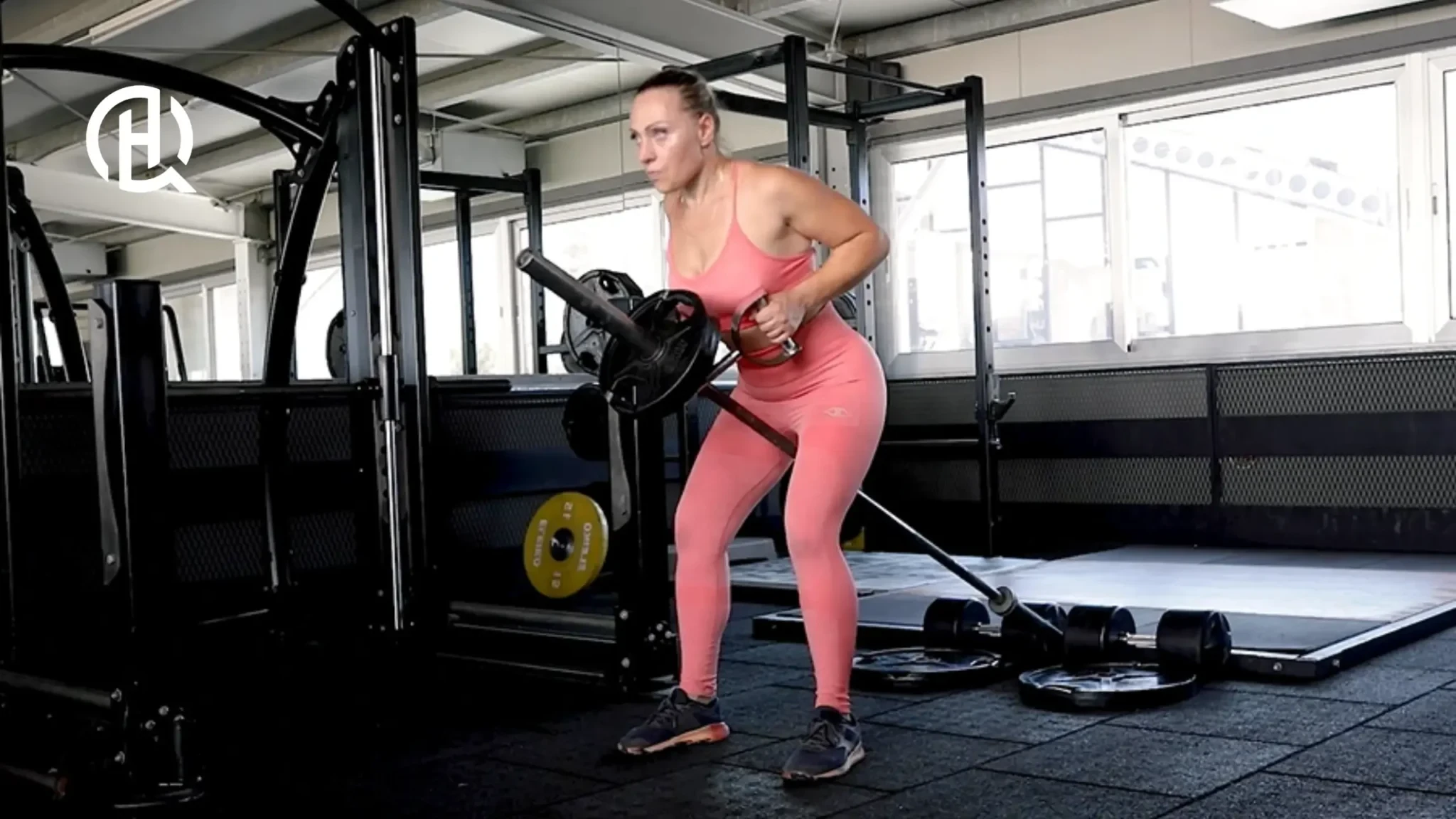
Keep Your Back Flat – Hinge at the hips, not the spine.
- Place one end of a barbell in a landmine or anchor the fixed end of the bar into a corner.
- Stand over the bar with your feet shoulder-width apart and step over the barbell so the weight plates are positioned between your legs.
- Position a close-grip T-bar handle or a V-grip attachment under the bar, then hinge at the hips and knees slightly with a flat back and chest up.
- Hold the handle and raise the bar just off the floor, maintaining the hip-hinged position with tension in your core.
- Bend the elbows and squeeze the shoulder blades together to pull the bar toward your lower chest or upper abs. Pause briefly.
- With control, lower the bar back down to the start while keeping your torso stable.
Pro Tip
Keep your torso still throughout the entire set. Picture yourself pulling with your elbows, not your hands.
T-Bar Row: Benefits
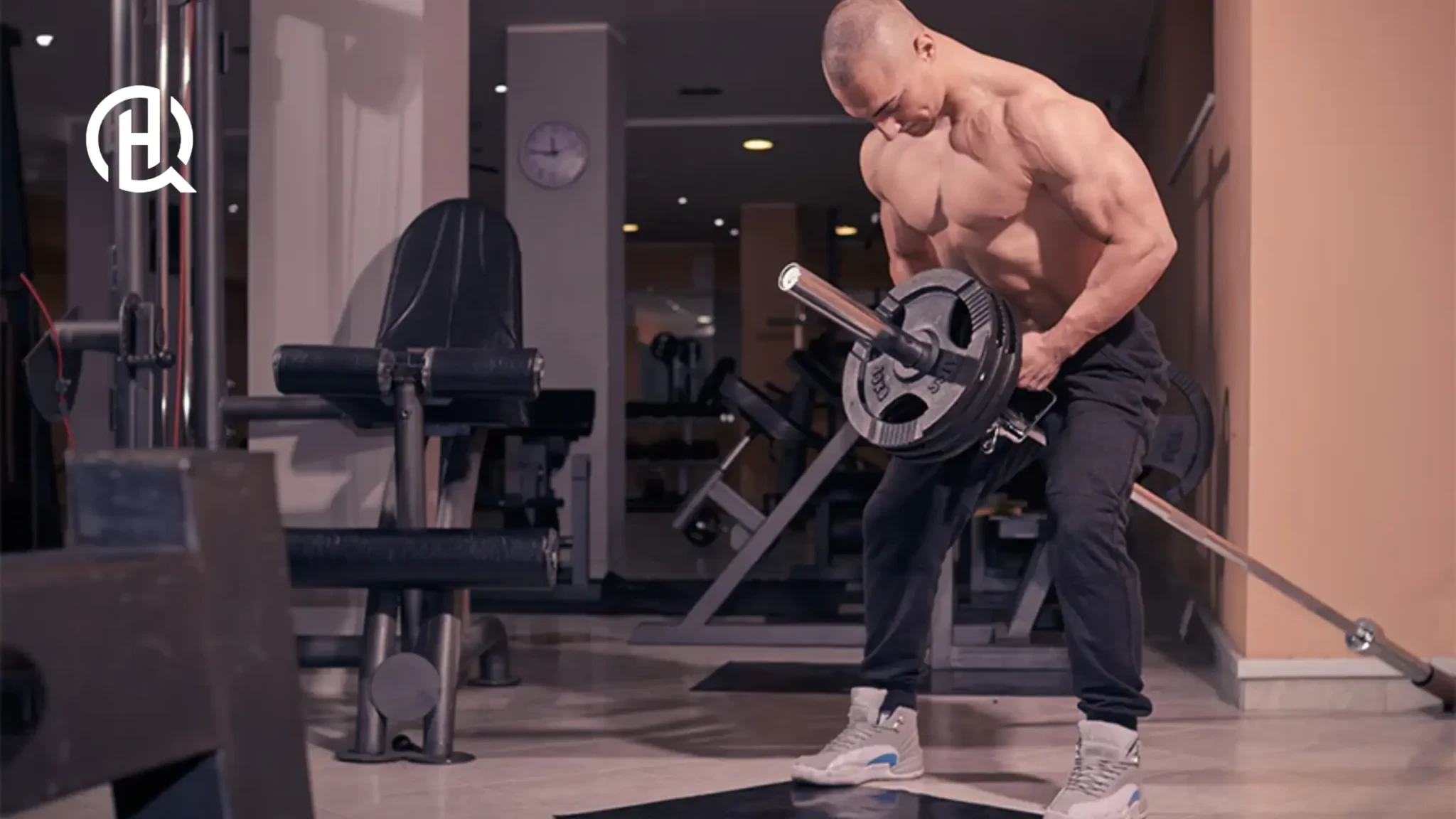
Grip the Handles Firmly – Use close, wide, or neutral handles depending on focus.
Builds a Thick, Dense Back
The T-Bar Row places a significant load on your posterior chain and is an excellent mass builder for the upper and mid-back, challenging the rhomboids, traps, and lats in a brutal pulling movement.
Hits Multiple Back Angles
Thanks to the neutral grip and pull angle, T-Bar Rows hit your upper and lower lats as well as your traps and spinal erectors — a total posterior-chain developer for width and thickness.
Enables Progressive Overload
The T-Bar setup allows you to load lots of weight safely and push your strength to the next level, which is ideal for building brute pulling strength and maximizing hypertrophy.
Joint Friendly
The neutral grip and arc-like bar path tend to be less irritating on the wrists and shoulders than straight-bar rows — great for lifters with mobility limitations.
T-Bar Row: Mistakes to Avoid
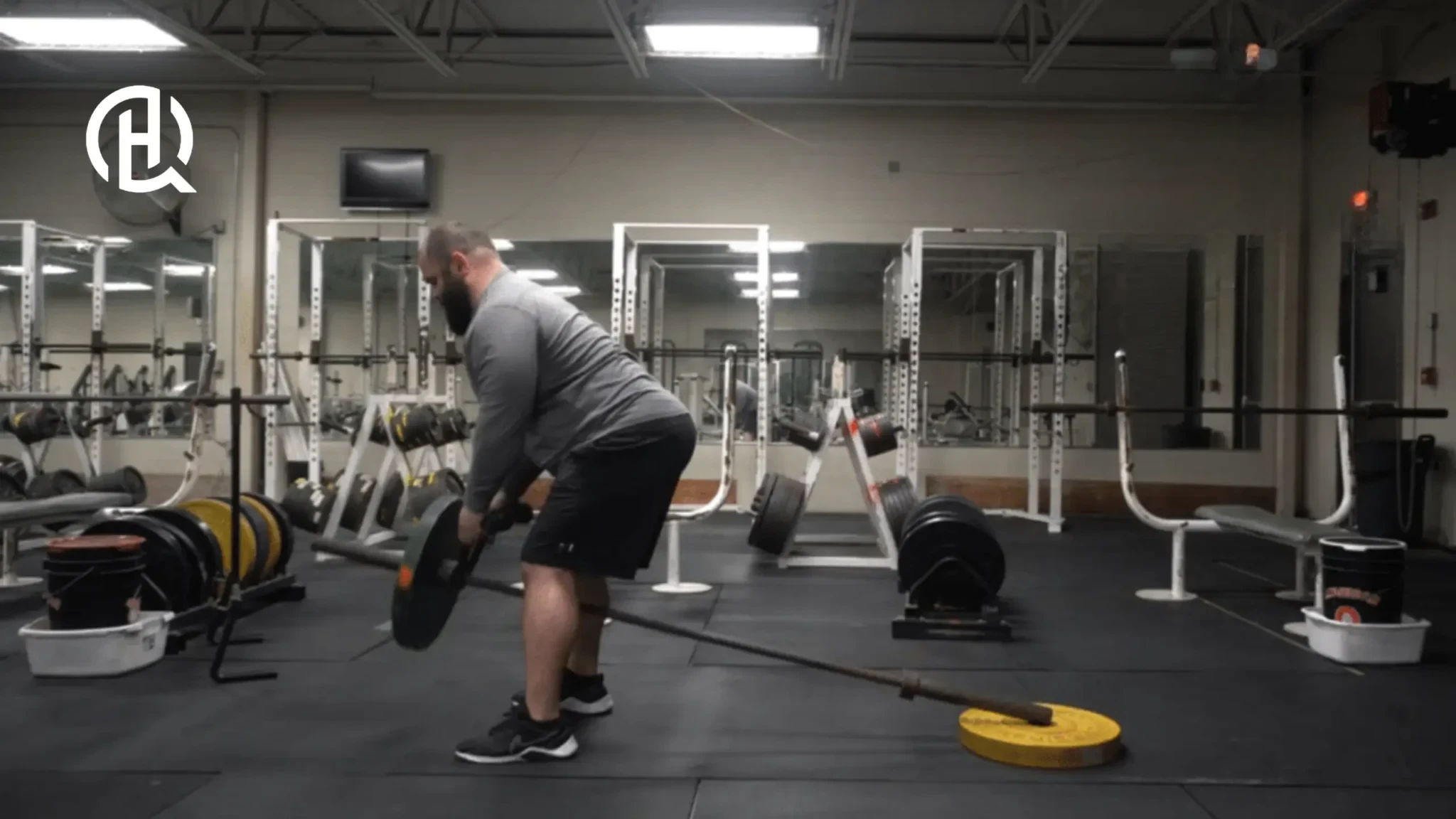
Pull Toward Your Lower Chest or Upper Abs – Targets mid-back and lats.
❌ Turning It Into a Deadlift
Pulling the weight up with your legs and hips turns the row into a cheat-lift. Keep your hips stationary and your back tight — this is a row, not a hinge.
❌ Rounding the Back
Rounding your back under load is a recipe for injury. Set up with a tight brace, push back with the hips, and keep your spine flat throughout the lift.
❌ Shrugging the Weight
Lifting the shoulders to elevate the bar takes tension off the lats and is ineffective for rowing. Think retraction and rowing — not shrug and yank.
❌ Using Too Much Weight
If your body is bouncing and reps are jerky, the weight is too heavy. Take the ego out and strive for clean, high-quality reps that recruit your back properly.
Expert Training Tips
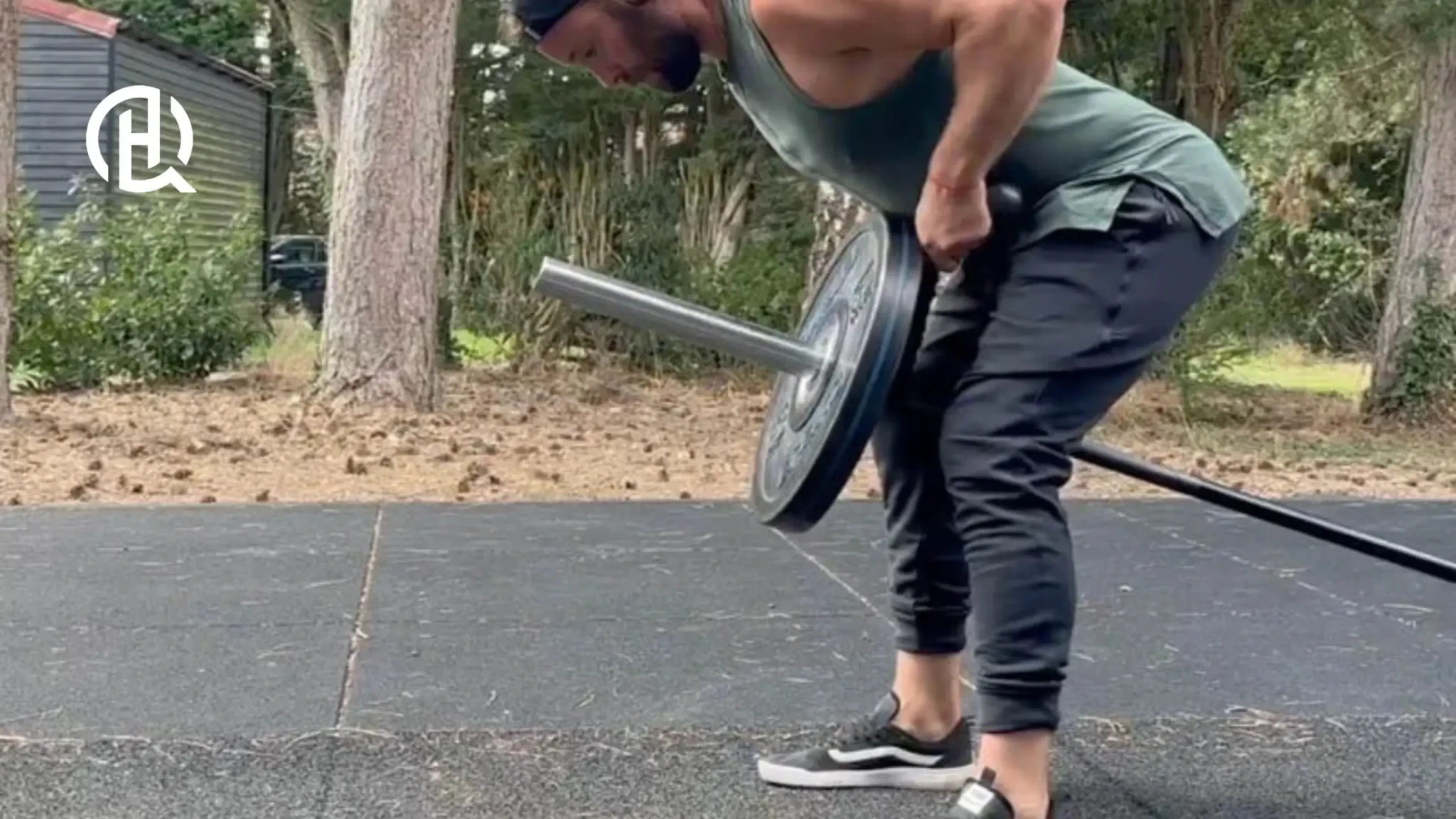
Squeeze Your Shoulder Blades Together – Max contraction = max growth.
✅ Begin Each Rep from a Dead Stop
Briefly rest the weight at the bottom, reset your brace, and pull from a dead stop. This develops explosive strength and forces your back to do the work.
✅ Use Straps for Heavy Sets
Your grip can fail before your back does. For heavy sets, use lifting straps so you can focus on the target muscles without limitation.
✅ Try Different Attachments
A V-grip hammers the mid-back, while a wider handle brings more lat emphasis. Rotate attachments to challenge different regions of your back.
✅ Finish with Volume Sets
After heavy work, strip the bar and perform 12–15 high-quality reps. The T-Bar Row responds well to both load and volume — finish with a solid pump.
Related Exercises
Explore more exercises and build your perfect workout routine with our comprehensive exercise library.
See More Exercises→