Triceps · Dumbbell and cable
Tricep Kickback
What it is good for, how to do it right, and why the cable version is worth trying
The kickback is not the best triceps builder, but it is a useful light finisher when you do it strictly. Here is what it does well, and how to get more out of it.

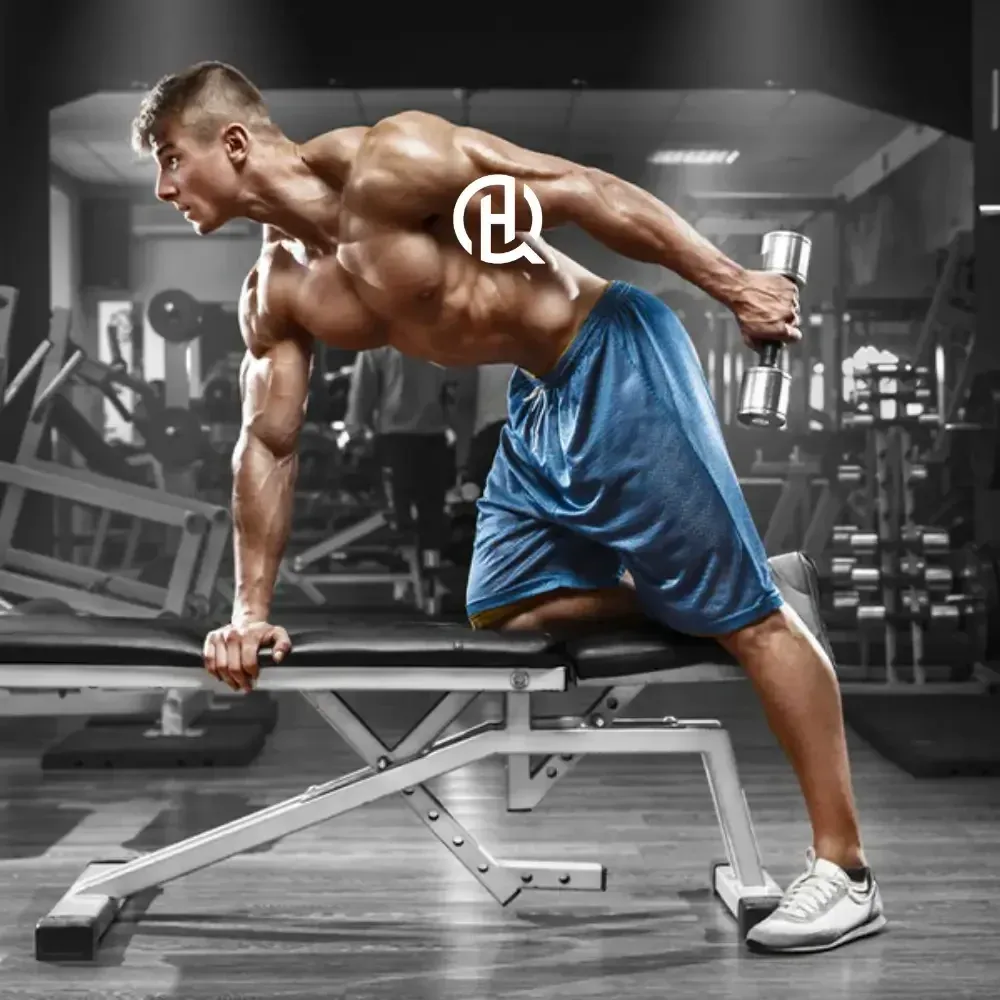
The tricep kickback is an isolation exercise where you hinge forward, pin your upper arm to your side and straighten your elbow behind you. It needs only a light dumbbell or a cable, is easy on the joints, and works well as a finisher. It is hardest at full lockout, so keep the weight light and every rep strict.
Key takeaways
- The kickback isolates the triceps with light weight and little joint stress.
- It is hardest at the top, with the arm straight. The bottom of the rep is nearly unloaded with a dumbbell.
- A cable kickback keeps resistance on through more of the range.
- Use it last in a triceps workout, after heavier presses and extensions, not as your main triceps exercise.
- Support your body on a bench so you can focus on the arm.
- Muscles
- Triceps (all three heads; long head in a shortened position)
- Equipment
- Light dumbbell or low cable, flat bench optional
- Difficulty
- Beginner
- Sets & reps
- 2–3 sets of 12–20 reps
Why do it
Tricep kickback benefits
There are more effective triceps exercises than the kickback. That does not make it useless. It is a good light finisher, and it is one of the few triceps exercises you can do with one small dumbbell. For the heavier options, see the full list of tricep exercises.
- 01
Strict isolation
With the upper arm pinned, only the elbow moves. It is hard to cheat if you keep the weight honest.
- 02
Light load, low joint stress
You need only a small dumbbell, so it is easy on the elbows and shoulders, and useful when heavier triceps work feels rough.
- 03
Hard squeeze at lockout
The resistance peaks with the arm straight, so you train the fully contracted position that pushdowns and extensions finish in.
- 04
Minimal equipment
One dumbbell and a bench, or a single cable. It works at home or in a crowded gym.
- 05
Good for each arm on its own
Done one arm at a time, it shows you if one side is weaker.
- !
The limit
With a dumbbell, the bottom half of the rep has almost no resistance, and the long head works in a shortened position. That is why I would not build a triceps routine around it. Use it after an overhead extension and a heavier press.
Step by step
How to do a tricep kickback
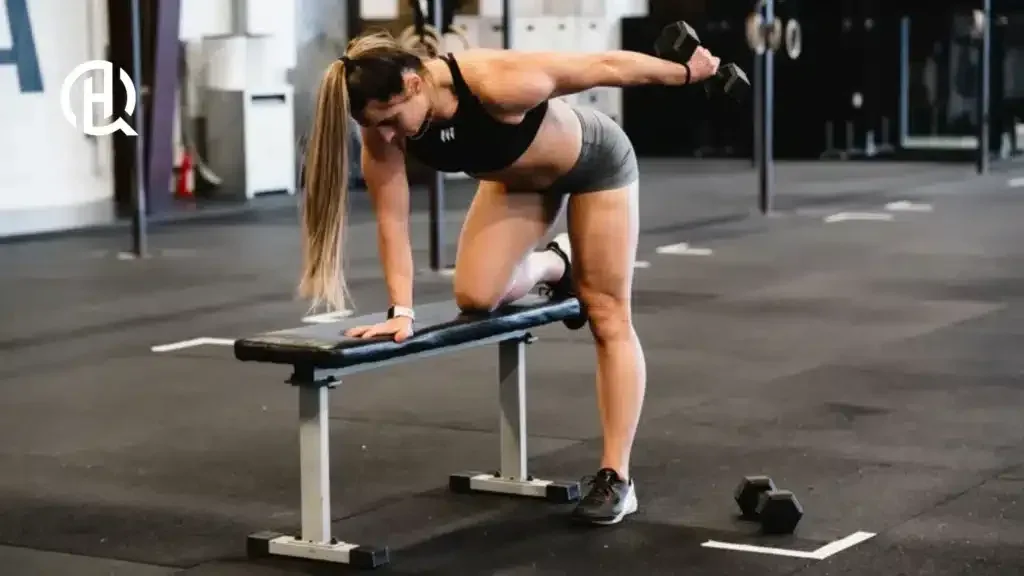
Arm fully straight behind you, upper arm in line with the torso.
- 01
Set up on a bench
Put your left knee and left hand on a flat bench, right foot on the floor. Hold a light dumbbell in your right hand. Standing option: feet hip-width or staggered, free hand on a rack or wall.
- 02
Hinge forward
Hinge until your torso is at about 45° to the floor or lower, back flat.
- 03
Lift the upper arm
Lift it so it is in line with your torso, elbow pinned to your side.
- 04
Bend the elbow to 90°
Let the dumbbell hang below the elbow, close to your body.
- 05
Straighten the elbow
Straighten it until your arm is fully extended behind you. Squeeze the triceps for a second.
- 06
Lower slowly
Take about two seconds back to 90°. Do not let the weight swing.
- 07
Switch sides
Finish all reps, then switch sides.
Get it right
Form cues
- Upper arm still and parallel to the floor, or close to it.
- Move only at the elbow.
- Full lockout every rep.
- Slow on the way down. No swinging.
- Neutral wrist, palm facing your body.
What to avoid
Common kickback mistakes
- 01
Letting the upper arm drop
If your elbow sinks toward the floor, the arm swings like a pendulum and the triceps barely work. Keep the upper arm in line with your torso.
- 02
Going too heavy
A heavy dumbbell forces you to swing it up. Pick a weight you can hold at full lockout for a second.
- 03
Standing too upright
With your torso upright, gravity barely loads the movement. Hinge to about 45° or lower.
- 04
Rushing the lowering
Dropping the weight wastes half the rep. Lower it under control.
Equipment
Dumbbell vs cable kickback
| Feature | Dumbbell | Cable |
|---|---|---|
| Resistance | Mostly at the top of the rep | Through more of the range |
| Setup | One dumbbell, any bench | Low pulley, single handle or no handle |
| Best for | Home, crowded gyms, light finishers | Getting more out of each rep |
My take: if you have a cable, use it. Set the pulley low, hold the handle (or the cable end) in one hand, hinge forward and extend back the same way.
Options
Kickback variations
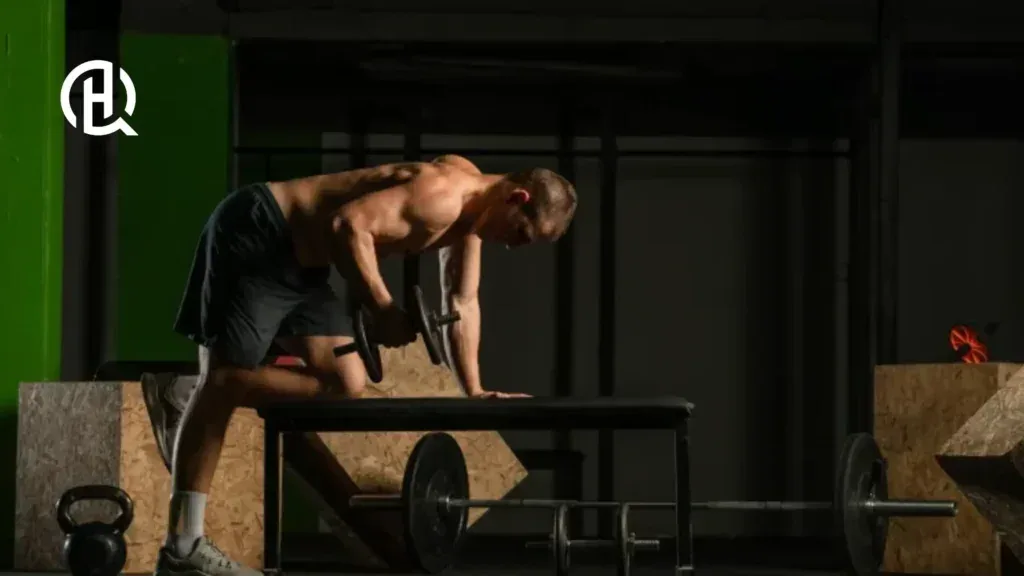
Bench-supported kickback
The default above. Most stable.
Standing staggered-stance kickback
Free hand on a rack or wall. Good when no bench is free.
Cable kickback
Low pulley, one arm. More even resistance.
Two-arm bent-over kickback
Both dumbbells at once, torso hinged and unsupported. Harder on the lower back; keep it light.
Programming
Sets & reps by goal
| Goal | Sets | Reps | Rest |
|---|---|---|---|
| Finisher or pump | 2–3 | 15–20 | 45–60 s |
| Muscle growth (cable) | 3 | 10–15 | 60–90 s |
| Technique practice | 2 | 12–15, very light | 60 s |
General guidance. Kickbacks go last in the session.
Fit check
Who it's for, and who should skip it
Good for: beginners, home training with light dumbbells, lifters whose elbows dislike heavy extensions, and anyone who wants a short finisher.
Skip or swap: if you have limited time, an overhead extension or a pushdown gives more per set; see the tricep pushdown or the dumbbell overhead triceps extension. If your lower back aches in the hinged position, use the bench-supported version or a cable.
Questions
Tricep kickback FAQ
Are tricep kickbacks effective?
They are effective as a light isolation exercise, not as your main triceps builder. With a dumbbell, the resistance is mostly at the top of the rep, so the bottom half does little. Overhead extensions, pushdowns and close-grip presses give more per set. Use kickbacks as a finisher, do them strictly, and try the cable version, which keeps resistance on through more of the range.
What muscles do tricep kickbacks work?
Kickbacks work the triceps brachii, all three heads, because all three straighten the elbow. Your arm is behind your body, which keeps the long head in a shortened position rather than stretched. The rear shoulder and upper back work to hold the upper arm in place, and your core keeps your torso still in the hinged position, especially if you do them standing without support.
Are kickbacks better with dumbbells or cables?
Cables are usually the better choice when you have one. A cable pulls from the pulley, so it keeps resistance on through more of the movement, while a dumbbell loads you mainly at the top. Dumbbells win on convenience: you need only one light weight and a bench, so they suit home training or a busy gym. The form is the same for both.
How heavy should tricep kickbacks be?
Light. Pick a weight you can hold at full lockout for one second with your upper arm still and parallel to the floor. For most people that is far lighter than what they use on curls. If you have to swing the weight up or your elbow drops, it is too heavy. Aim for 12 to 20 controlled reps and add weight only in small steps.
Kickbacks or pushdowns: which should I do?
If you can only pick one, do pushdowns. They are easier to load, keep resistance on through the whole rep and let you progress steadily. Kickbacks are a good addition at the end of a session, or a substitute when you have only dumbbells. Either way, add an overhead extension to the same week so the long head gets trained in a stretched position.
Tricep Focused
Train your triceps with a plan.
TRICEP FOCUSED is one of HermQ's bodybuilding programs. One $19/month subscription unlocks every bodybuilding program while it is active.
60-day money-back guarantee.