Exercise guide
Behind-the-Neck Lat Pulldown
Who it suits, how to do it with control, and better options for most lifters.
The behind-the-neck pulldown has a bad reputation. Here is an honest answer on what it asks of your shoulders, who can use it, and what to do instead.

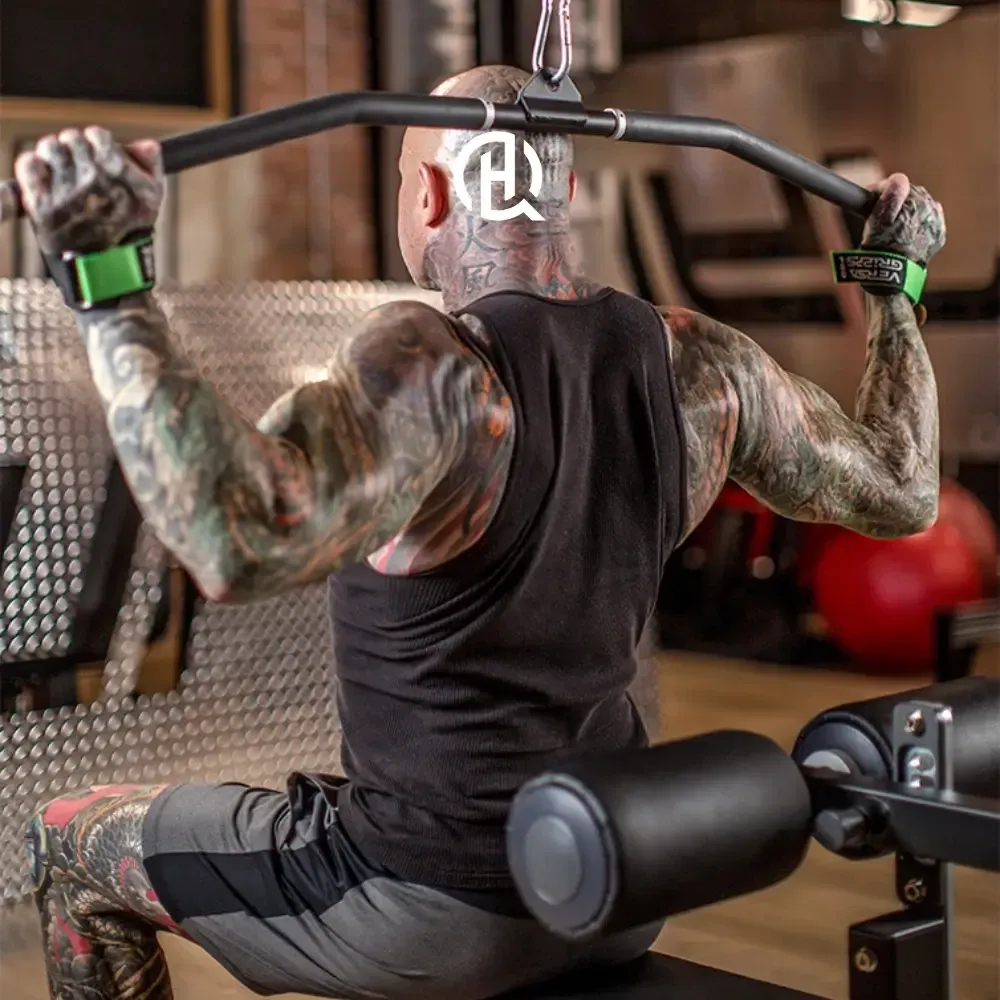
The behind-the-neck lat pulldown is not automatically dangerous, but it asks a lot of your shoulders. To get the bar behind your head, your upper arms rotate back near the end of their range while your head moves forward. If you have that range and no pain, light, controlled sets are fine. For most lifters, I recommend the front pulldown.
Key takeaways
- It is a lat pulldown with the bar lowered behind your head instead of to your chest.
- It needs a lot of shoulder mobility. Without it, the shoulders and neck take the strain.
- It works the same muscles as the front pulldown. It has not been shown to work the lats better.
- If you use it: light weight, 10–15 reps, bar no lower than ear level or the top of your traps.
- Stop if you feel pinching or sharp pain. A front, close-grip or reverse-grip pulldown does the same job.
- Muscles
- Lats, teres major, rhomboids, mid traps, rear delts, biceps
- Equipment
- Lat pulldown machine, long straight bar
- Difficulty
- Advanced (mobility-dependent)
- Sets & reps
- 2–3 sets of 10–15, light, 60–90 s rest
Also called the behind-the-head pulldown or back lat pulldown.
Safety
Is the Behind-the-Neck Pulldown Safe?
Short answer: it depends on your shoulders, not on the exercise's reputation.
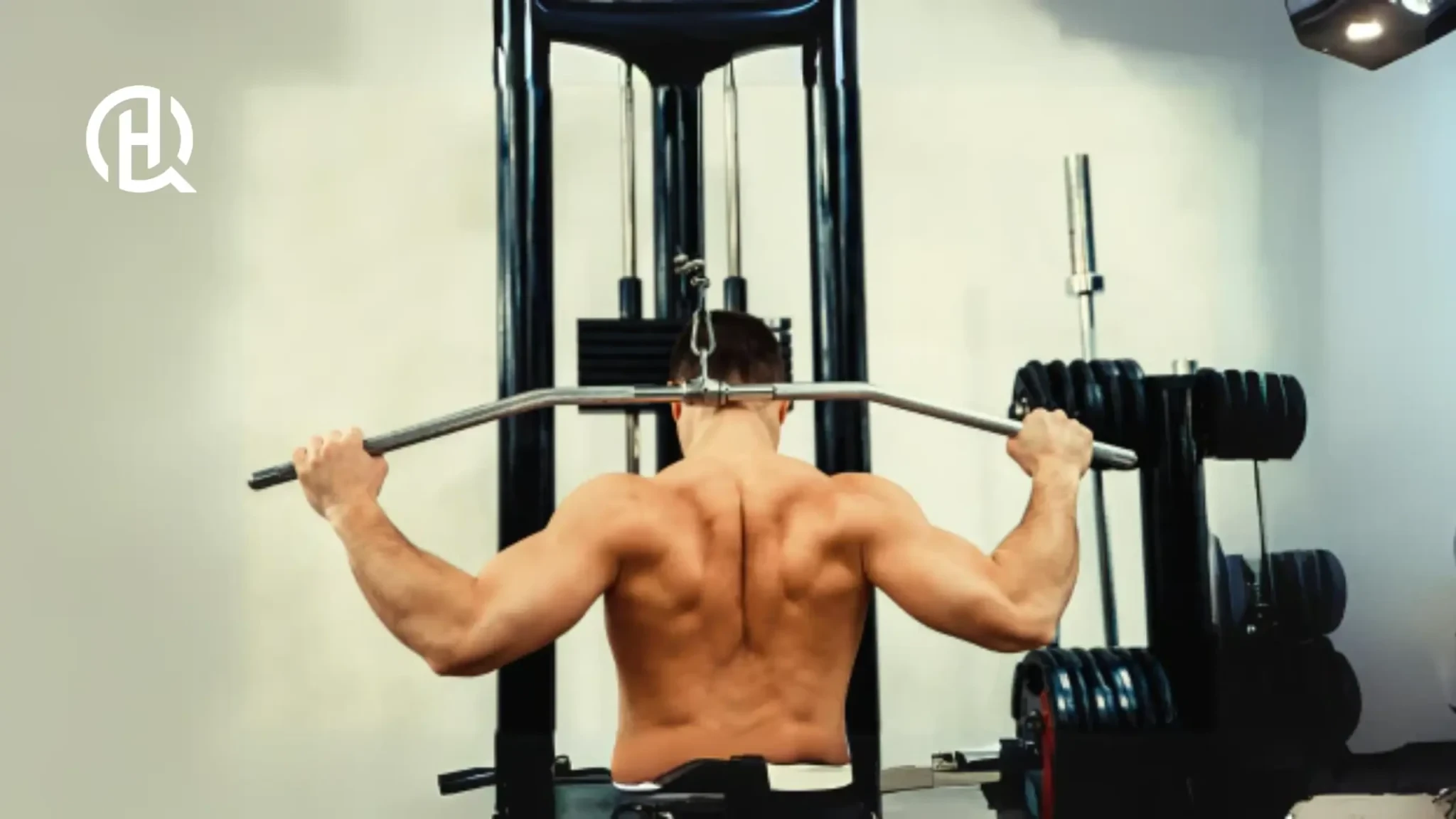
To bring the bar behind your head, your shoulders have to rotate outward and reach back further than in almost any other pulling exercise. That is near the end of their range, and under load, small form errors matter more there. Your head also has to move forward to clear the bar, which is why many people feel this exercise in the neck.
None of that makes it harmful for everyone. Lifters with good shoulder mobility do it without problems. The catch is what you get in return: it trains the same muscles as the front pulldown. So the trade-off is only worth it if you like the exercise and it feels good.
Fit check
Who It Suits and Who Should Skip It
It can suit you if
- You pass the self-check above with no pain.
- You already train the front pulldown and pull-ups well and want variety.
- You are happy to keep the weight light.
Skip it if
- You can't get the bar behind your head without pushing your head forward.
- It pinches or hurts your shoulder or neck, even lightly.
- You have a current or past shoulder injury and haven't had it cleared.
- You are new to training. Learn the front pulldown first.
Step by step
How to Do the Behind-the-Neck Lat Pulldown
- 01
Set up
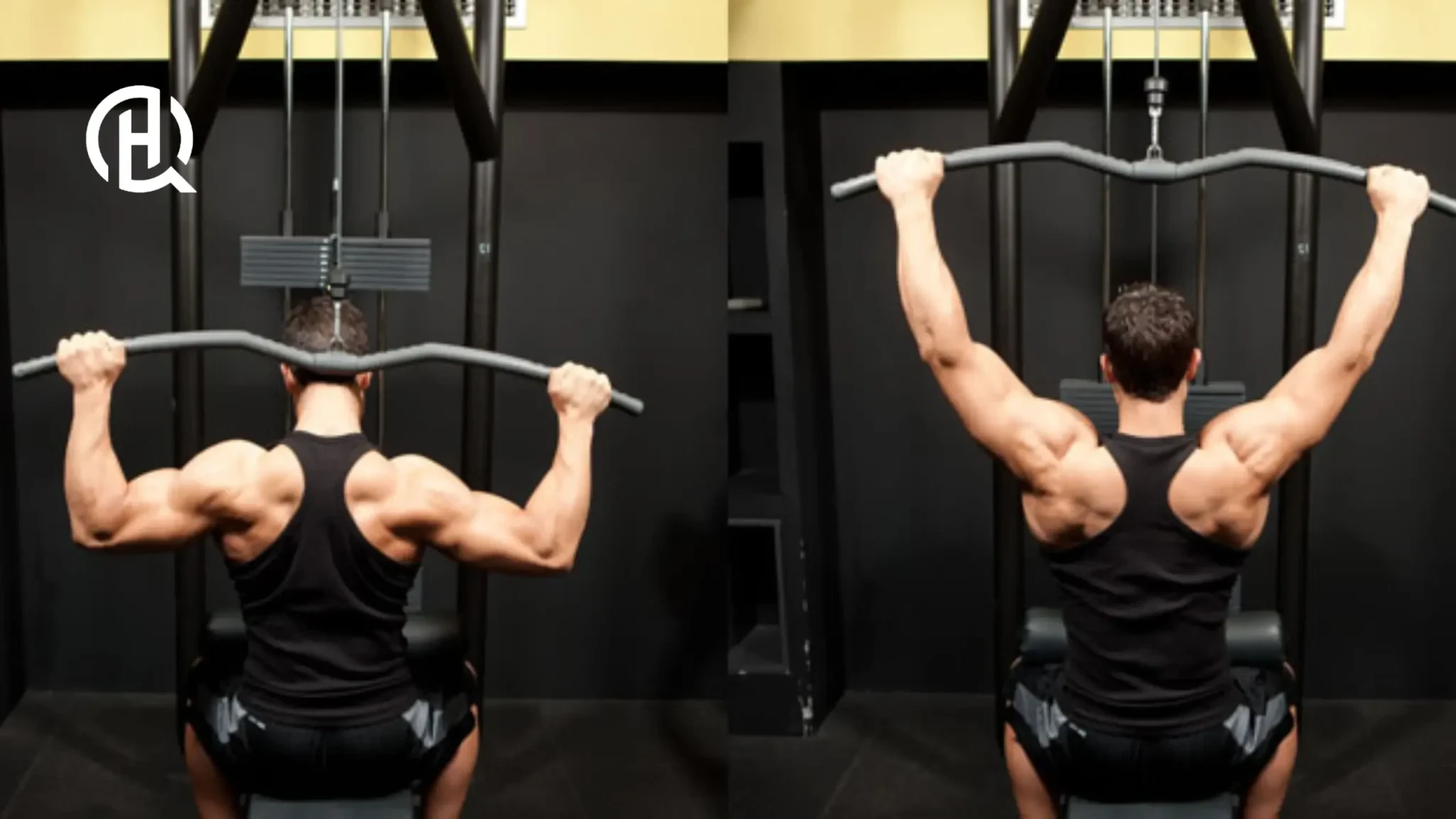
Thighs locked under the pad, feet flat. Take an overhand grip a little wider than shoulder width.
- 02
Sit upright
Sit tall with your torso vertical or leaning very slightly forward, so the bar can pass behind your head. Chest up, back flat.
- 03
Head neutral
Tuck your chin slightly and let your head move just enough to clear the bar. Do not push your head forward.
- 04
Shoulder blades first
Pull them down before your elbows bend.
- 05
Pull
Lower the bar behind your head, with your elbows pointing down, until it is level with your ears or just touches the top of your traps. No lower.
- 06
Return slowly
Two to three seconds up, to straight arms.
Use light weight: 2–3 sets of 10–15 controlled reps. Use it in addition to front pulldowns or pull-ups, not instead of them. For a one-screen version, see the behind-the-neck pulldown exercise card.
Anatomy
Muscles Worked
It works the same muscles as the front lat pulldown.
| Muscle | Role |
|---|---|
| Latissimus dorsi | Main mover. |
| Teres major | Helps the lats. |
| Rhomboids, mid traps | Pull the shoulder blades together and down. |
| Rear delts | Help pull the arm back. |
| Biceps | Bend the elbow. |
Some lifters feel it more in the upper back. That is a matter of feel.
What to avoid
Common Mistakes
- 01
Going too heavy
Heavy loads in this position are where it goes wrong. Keep the weight light enough for 10–15 clean reps.
- 02
Pulling too low
Taking the bar below the top of your traps forces your shoulders further back than they need to go. Stop at ear level.
- 03
Letting the elbows drift back
Keep your elbows pointing down, under the bar.
- 04
Pushing your head forward
Craning your neck to clear the bar. Tuck your chin slightly and sit taller instead.
Why do it
Benefits
- 01
Variety for experienced lifters
A different bar path can make an old exercise feel new. Useful if you have trained the front pulldown for years.
- 02
Forces strict, light work
You can't load it heavy with good form, so it rewards control and a steady tempo.
- 03
Strong feel in the mid-back
Many lifters feel their shoulder blades working hard in this position.
Swaps
Better Alternatives for Most Lifters
Wide-grip lat pulldown
Same grip, bar to your upper chest. The standard choice. See the wide-grip lat pulldown.
Close-grip lat pulldown
V-bar, palms facing. Long range, comfortable grip. See the close-grip lat pulldown.
Reverse-grip lat pulldown
Underhand at shoulder width. Elbows stay close. See the reverse-grip lat pulldown.
Pull-ups and chin-ups
The bodyweight version of all of these. See pull-ups and chin-ups.
"I program the front pulldown for almost everyone. The behind-the-neck version is an option, not a requirement."
Herman Leir, Personal Trainer
FAQ
Behind-the-Neck Pulldown Questions
Is the behind-the-neck lat pulldown safe?
It can be, for lifters with good shoulder mobility who use light weight and strict form. It puts the shoulders near the end of their range and pushes the head forward, so it suits fewer people than the front pulldown. If you can't reach the position without pain or craning your neck, choose a front pulldown instead.
Is it better to pull in front of or behind the neck?
For most people, in front. Pulling the bar to your upper chest trains the same muscles and keeps your shoulders and neck in a more comfortable position. Behind the neck is an option for experienced lifters who like it and have the mobility, not an upgrade.
What can I do instead of behind-the-neck pulldowns?
The wide-grip lat pulldown to the chest is the closest swap: same grip, different bar path. The close-grip pulldown with a V-bar, the reverse-grip pulldown and pull-ups or chin-ups all train the same muscles. Rows like the seated cable row cover the mid-back from a different angle.
Who should avoid behind-the-neck pulldowns?
Skip it if you can't get the bar behind your head without pushing your head forward, if it pinches or hurts your shoulder or neck, or if you are new to lifting. If you have a current or past shoulder injury, ask a physiotherapist or doctor before trying it. The front pulldown is a good choice for everyone in these groups.
How low should the bar go on a behind-the-neck pulldown?
To about ear level, or until it lightly touches the top of your traps. Going lower forces your shoulders further back for no extra benefit. Sit tall, keep your elbows pointing down and your chin slightly tucked, and stop the bar there on every rep.
Final
Final Thoughts
The behind-the-neck pulldown is not a banned exercise, and it is not a better one. If your shoulders handle it and you enjoy it, keep it light and controlled. If not, you lose nothing by pulling to your chest. For the bigger picture of which exercises matter most, see the best exercise for each muscle group guide.
Back Focused program
Train your back with a plan.
BACK FOCUSED is one of HermQ's bodybuilding programs. One $19/month subscription unlocks every bodybuilding program while it is active.
60-day money-back guarantee.