Training guide
MMA Training
What it is, how the week fits together, and how to start.
MMA training explained by a fight coach: how to build the week, train striking and grappling, and add strength, conditioning and recovery.

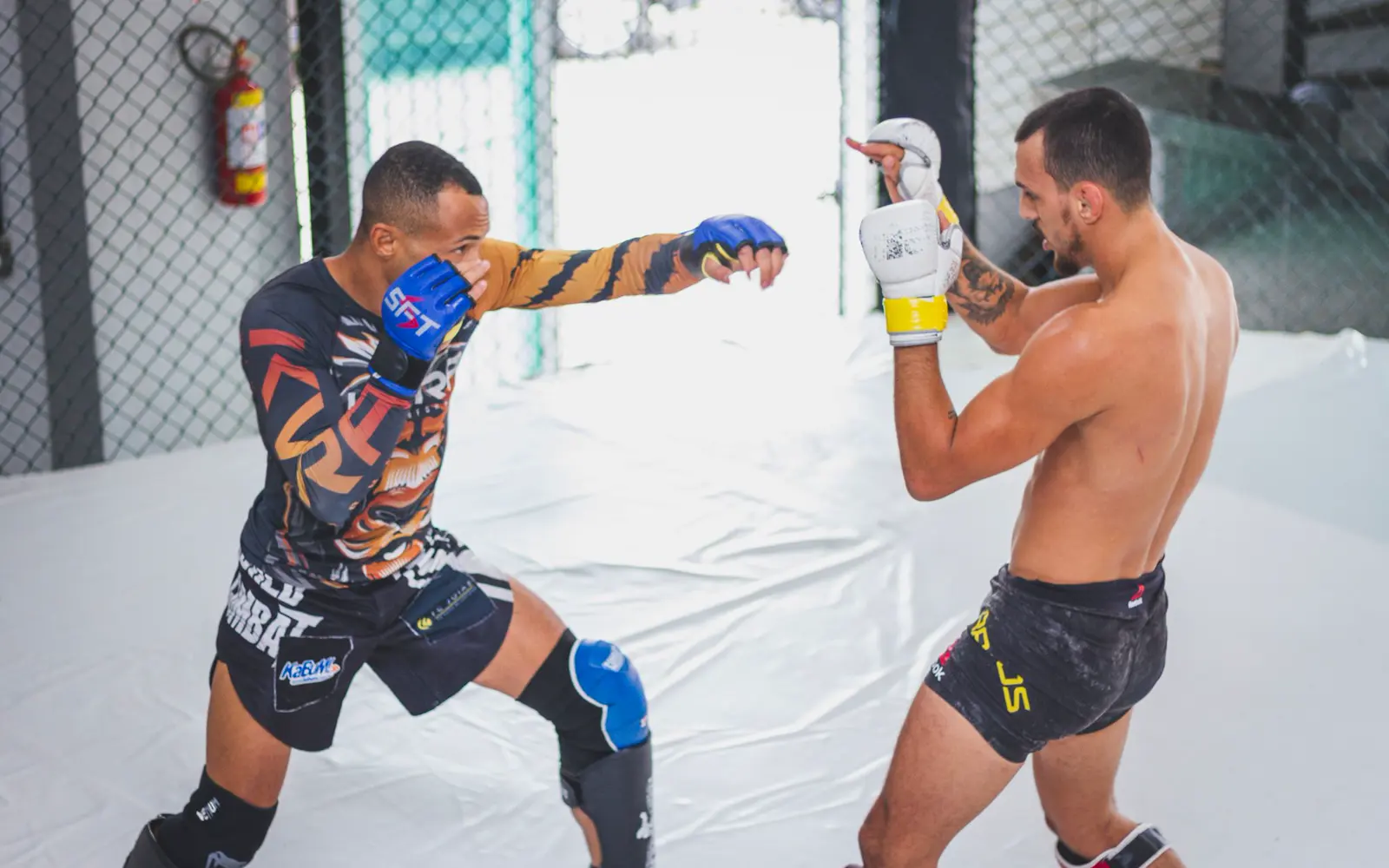
MMA training is three jobs in one week. Striking and grappling are the skills. Strength and conditioning keep those skills sharp when you are tired.
I coach Muay Thai, MMA and kickboxing, and the fighters who improve are rarely the ones who train the most hours. They are the ones who put striking, wrestling, Brazilian jiu-jitsu and the gym into an order they can repeat.
This guide explains what MMA training is, how to build the week, and a beginner plan you can start with a coach.
Key takeaways
- A useful MMA week separates striking, grappling, strength and easy conditioning. Hard sparring, a heavy lift and intervals do not belong on the same day.
- Beginners do well on four days: two striking sessions, one grappling session and one short strength session, plus an easy conditioning day if you recover.
- Wrestling keeps the fight standing. Brazilian jiu-jitsu is the fight once it hits the mat. Learn positions before you hunt submissions.
- Most of your engine comes from skill rounds. Extra conditioning is easy work you can talk through, with a small dose of intervals only on a calm week.
- Give a new week six weeks before you judge it, and take a lighter week every 4 to 6 weeks.
The definition
What Is MMA Training?
MMA training is the weekly practice of mixed martial arts: striking, grappling, and the strength and conditioning that support both. A class that only hits pads is striking practice. A class that only rolls is grappling practice. MMA training is the plan that makes them one fighter.
The striking base for most of the fighters I coach is Muay Thai. Read what Muay Thai is if you are new to it, and the complete Muay Thai guide for the weapons. The kicks have their own page: Muay Thai kicks.
Striking, grappling, and the gym
Hands, kicks, knees and the guard that stays up.
The shot, the sprawl, and the mat.
| Compare | Striking | Grappling | S&C |
|---|---|---|---|
| Job | Score and defend on the feet | Take the fight down, or get back up | Make the skills repeatable when you are tired |
| You practise | Jab, cross, teep, low kick, defence | Level change, sprawl, guard, pass, position | Squat, pull, carry, easy aerobic work |
| A good rep | You finish on balance with hands up | You can name the position you were in | Two reps left, and class tomorrow is still sharp |
| Guardrail | Stop the round when the chin lifts | Tap early. The neck and the joints come first | A hard spar already counted as your hard day |
Under the common unified rules, a professional bout is often three rounds of five minutes, and a title fight can be five. Many amateur bouts are shorter, and some amateur rules limit elbows or certain strikes. Your promotion's rules decide the details. The week still has one job: leave you able to work for every round you are booked for.
What changes from a pure striking sport
In MMA you stand lower and wider than you would in Muay Thai, because a tall stance is easy to shoot under. You kick with more care, because a caught kick can put you on your back. The clinch has to account for underhooks, trips and the fence.
Those changes are why MMA training is its own week, even when the individual skills come from boxing, Muay Thai, wrestling and Brazilian jiu-jitsu.
The week
How to Structure an MMA Training Week
The order matters as much as the sessions. A fresh skill day beats a tired one.
Put the skill you are worst at on a day you are fresh. Put the lift on its own day, or at least six hours away from sparring. Put the easy conditioning where it does not steal from either.
Four blocks cover a week that you can actually recover from.
- Skill: the tallest block
- Strength: short and heavy
- Engine: easy enough to talk
- Rest: a real day off
- 2
Striking days
One technical, one a little livelier. Pads and bag before any hard sparring.
- 1
Grappling day
Wrestling or jiu-jitsu, coached. Add a second day only when the first one recovers cleanly.
- 1
Strength day
A few quality sets. The strength and conditioning guide shows how to keep it short.
- 1
Easy day
A walk, a skip, or a bike where you can still talk. Skip it after a hard spar.
If striking and grappling have to share a day, strike first, then grapple, and keep the second half technical. That order follows the fight: you meet standing, and the mat comes after. Wrestling before a long roll, on a day that is only grappling, lets the shot stay fast.
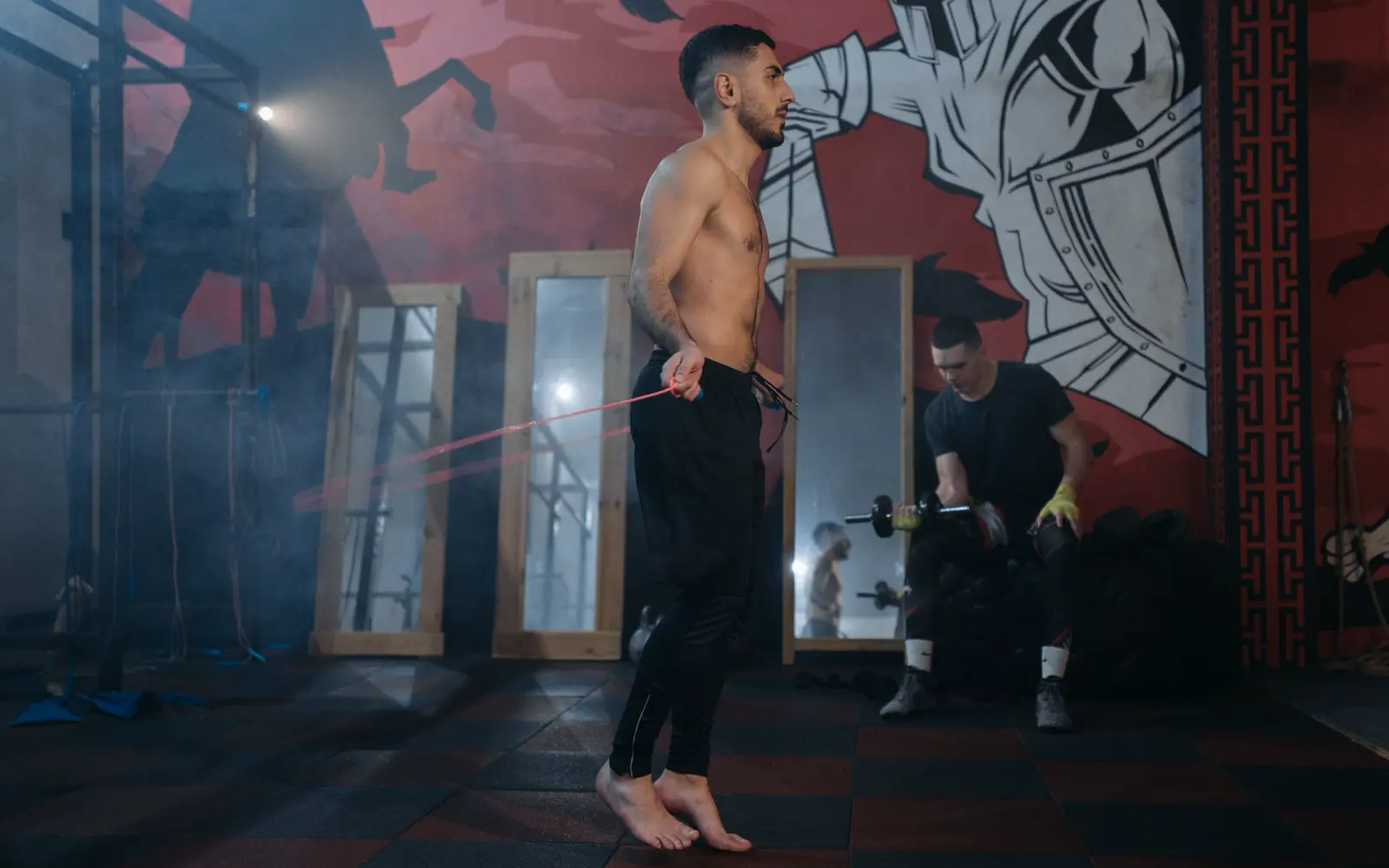
The pieces
The 6 Parts of MMA Training
Six names cover the week. Two are skills. Four keep those skills available.
1. Striking
Stance, jab, cross, teep and the low kick, both sides. Hands come back to the cheek after every shot. Knees and elbows wait until the basics land on balance.
A technical round counts. A round where you lean back and wing power does not. The kick details live in the Muay Thai kicks guide.
2. Grappling
Wrestling and Brazilian jiu-jitsu are different sports that share a mat. Wrestling is the shot, the sprawl and the return to your feet. Jiu-jitsu is guard, the pass, and holding a position.
Learn the position with a coach before you learn the finish. Tap as soon as a joint or the neck is caught.
3. Conditioning
Skill rounds already train your energy systems. Extra easy work, the kind you can talk through, builds the base (LISS).
Short intervals (HIIT) are a small dose, and only on a week that did not already include a hard spar.
4. Strength
Squat, hinge, pull, push and carry. Three sets of 4 to 6 reps, with 2 or 3 reps left (reps in reserve). Rest long enough to lift well.
A little controlled neck and grip work belongs here, with a coach watching the load. Pain that runs into the arm is a stop.
5. Recovery
Training is the signal. You get better between sessions. Protect sleep, eat enough to train again, and plan a lighter deload week every 4 to 6 weeks.
Hips, ankles and hamstrings limit the kick and the shot. Five to ten minutes of mobility before class is enough, and these hamstring stretches help if the back of the leg is tight.
6. Progression
Repeat the same week so you can see a change. Add one round, one rep, or a little load. That is progressive overload. Change one thing at a time.
Across months, the hard weeks and the lighter weeks are periodization. Judge the plan after six weeks, not after one sore Monday.
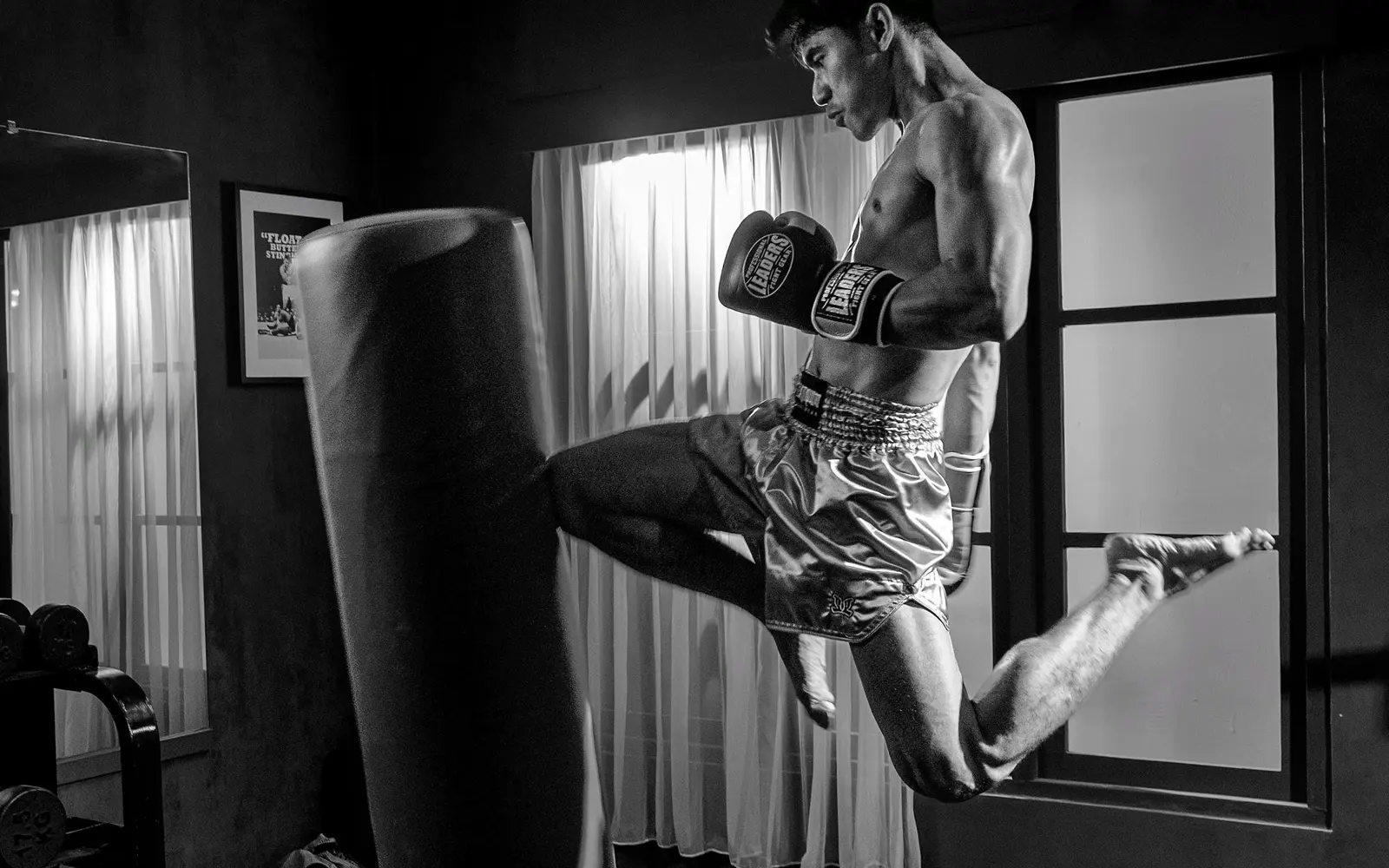
Striking stays technical until the guard is honest
Shadow boxing shows the shape. The bag shows whether the shin, the fist and the balance agree. Pads show whether you can do it while someone else sets the rhythm. Sparring is last, and it stays light until a coach says otherwise.
In the cage, a kick you cannot recover is a kick they can catch. Bring the foot home. Keep the chin down. If you want the kick itself, use the kicks guide and leave the power for later.
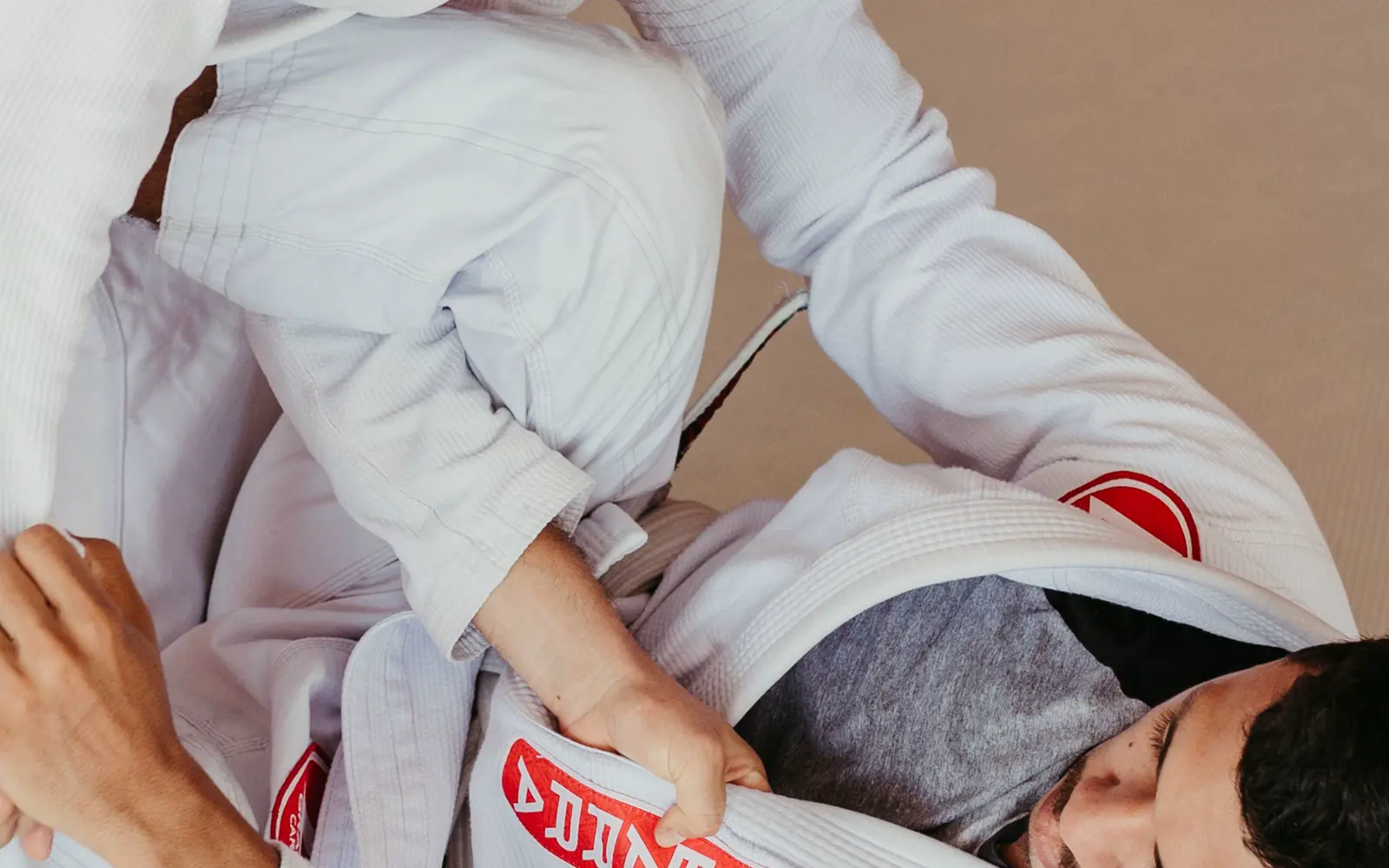
Grappling is two sports
A wrestler's job in MMA is to choose where the fight happens: finish the shot, sprawl and get back up, or use the fence. A jiu-jitsu player's job is to keep a position and improve it. Submissions are the last layer, learned slowly, with a partner who can tap and a coach who can see the angle.
Heel hooks, neck cranks and stacking a partner onto their neck are coach territory. They are not something to invent from a clip on a rest day.
Strength supports the shot, the sprawl and the clinch
The lifts that transfer are the ones you can own: a squat, a trap-bar deadlift, a pull-up, a push-up, and a farmer's carry. Kettlebell swings are a useful bridge between strength and the engine, kept crisp rather than turned into a burnout.
Get strong at a body weight you can live at. Mass you add for the mirror is mass you carry for every round.
Combat sports
MMA Training for Fighters
Once you are in camp, the week serves the fight date. It does not serve the workout you feel like doing.
Skill sessions stay. The number of hard rounds comes down as the bout gets close. Strength stays heavy and short, then the sets get cut. Intervals that feel like a fight get removed, because sparring is already that fight.
- Skill work comes first. Pads, wrestling and jiu-jitsu decide the day. The lift fits around them.
- Two strength sessions a week is the ceiling when you already train the sport four or more times. One is enough in a hard camp.
- Keep a round in the tank. The last spar of the week should still look like the first.
- Do not invent a weight cut. If you have a bout, your coach and a doctor own that plan. Class is not a place to dehydrate.
- Arrive fresh. Fight week keeps the movements and halves the extra work.
- Skill first
- The gym supports it
Flagship program · Combat Performance
Strength and conditioning for the weeks around your striking and grappling. Explosive power, fight conditioning, and legs that still have a shot in the last round.
Your first week
A Beginner MMA Training Week
Four training days and one easy day. Hard sparring stays off the plan until a coach puts it on.
| Day | Session | Effort | What you do |
|---|---|---|---|
| Monday | Striking technique | 2 of 3 | 3 rounds of 2 minutes of shadow boxing. Then jab, cross, teep and low kick on the bag, both sides. Stop when the hands drop |
| Tuesday | Rest | 0 of 3 | Walk if you want. No bag, no rolling, no lift |
| Wednesday | Grappling | 2 of 3 | A coached class: stance, sprawl, and positional work. New grapplers skip hard rolling |
| Thursday | Strength | 2 of 3 | Squat or trap-bar deadlift, push-up, pull-up, farmer's carry. 3 sets of 4 to 6, with reps left |
| Friday | Striking defence | 2 of 3 | Pads if you have a partner, or the bag: checks, the teep, and one simple combination. 3 rounds of 2 minutes |
| Saturday | Easy conditioning | 1 of 3 | 20 to 30 minutes where you can still talk: skip, cycle or jog. Then hips and hamstrings. Skip it if Friday left you cooked |
| Sunday | Rest | 0 of 3 | Full rest. This is the day the week actually sticks |
Effort shows how hard the day is, from 1 to 3.
Already training most nights at a gym? Keep the classes, add Thursday, and use Saturday only when the week was technical. Drop Saturday after any hard spar.
Four rules make this week work:
- 01
Learn with a coach in the room.
Stance, sprawl and the guard are easy to fake when nobody is watching. A coach sees the version you cannot feel.
- 02
One hard day, then an easier one.
Sparring, a heavy lift and intervals are three hard days. Pick one.
- 03
Add a little each week.
One more clean round, or one more rep, is the whole progression.
- 04
Halve the extra work on a tired week.
Every 4 to 6 weeks, and any week you feel beaten up, keep the movements and cut the sets in half.
What to avoid
Common MMA Training Mistakes
These five mistakes account for most of the weeks I have to rebuild.
- 01
Training only the part you like
All pads and no wrestling, or all rolling and no striking. The hole is the place a decent partner will take you.
- 02
Sparring hard every session
Hard sparring is a test. It is a poor way to learn a jab. Keep most rounds technical, and save the hard ones for when a coach is watching.
- 03
A second fight after class
Hill sprints, a long bag burnout and a hard roll on the same night feel like work. They spend the recovery the skills needed.
- 04
Lifting sore into sparring
A huge leg day the evening before wrestling makes the shot slow and the stance lazy. Move the lift, or make it shorter.
- 05
Adding sessions instead of sleeping
A sixth day on top of a tired week is how people get hurt and quit. The lighter week is part of the plan.
Questions
Common Questions About MMA Training
What is MMA training?
MMA training is the weekly mix of striking, grappling, and strength and conditioning. Striking is usually boxing and Muay Thai. Grappling is wrestling plus Brazilian jiu-jitsu. The gym work keeps those skills repeatable when you are tired, and it stays shorter than the skill sessions.
How many days a week should I train MMA?
Beginners progress on three or four days: two striking sessions, one grappling session and one short strength session. An easy conditioning day can sit on top if you are recovering. Fighters in camp train more often, and they cut that volume as the bout gets close.
Should beginners learn striking or grappling first?
Learn both from the first month, on separate days. Striking teaches you the range and the guard. Grappling teaches you what happens when that range disappears. Waiting a year to start wrestling is how people become easy to take down.
Do I need to lift weights for MMA?
You need strength. Weights are the simplest way to build it: a squat or trap-bar deadlift, a push, a pull and a carry, for a few sets of 4 to 6 with reps left in the tank. Bodyweight versions work at the start. Two strength sessions a week is plenty if you already train the sport most days, and one is enough when you are new.
Can I do MMA training at home?
You can shadow box, skip, and do the strength work at home. You cannot learn a sprawl, a guard pass or a checked kick properly without a coach and a partner. Use home days for the easy engine and the lift, and get the skills in class.
How long does MMA training take to show up?
Most people feel fitter within a month and move more cleanly by six weeks, which is why you should run the same week that long before you change it. Timing, defence and the mat take years. That is the part worth staying for.
Final thoughts
One week you can repeat. Then a little more.
MMA training rewards the boring version. Strike on fresh legs. Grapple with a position in mind. Lift a few heavy sets and leave the gym. Do easy work you can talk through. Sleep. Take a lighter week before the aches make you take one anyway.
Put the beginner week on the calendar and give it six weeks. The sessions should look calmer, and the last round should look more like the first.
If you want the week built around your gym, your gaps and your schedule, I coach MMA one on one. You can train with me online from anywhere, or in person in Bali.
More on the pieces: the complete Muay Thai guide and the strength and conditioning guide. Adults also need both strength work and aerobic work across the week: World Health Organization, physical activity recommendations.
1:1 coaching with Tarzan