BODYWEIGHT GLUTE BRIDGE
Glute Strength and Hip Stability
Primary Muscles
Exercise Description
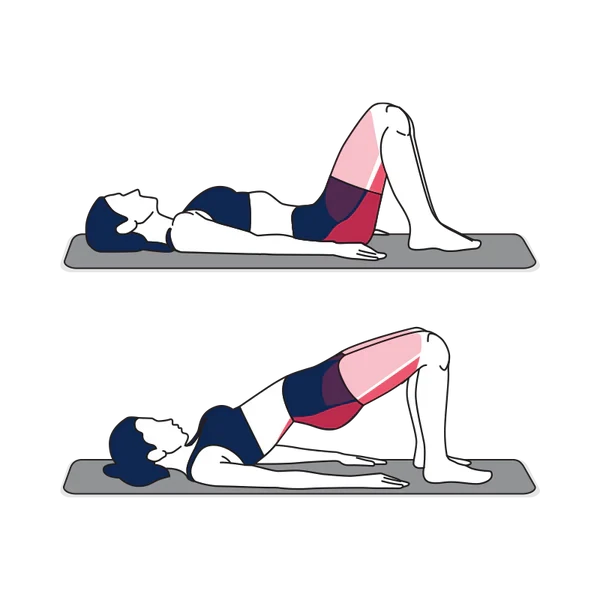
Lie on your back, knees bent, feet flat. Engage core, squeeze glutes, and lift hips until body forms a straight line from shoulders to knees. Hold, then lower slowly.
How To Perform
Lie on your back with knees bent and feet flat on the floor, hip-width apart. Place your arms by your sides with palms down.
Brace your core and keep your ribs down. Drive through your heels as you squeeze your glutes to lift your hips.
Raise your hips until your body forms a straight line from shoulders to knees without arching your lower back.
Pause briefly at the top while maintaining core tension and even knee alignment.
Lower your hips back to the floor under control and repeat for the desired reps.
Expert Tips
Press through the heels - Driving through your heels maximizes glute activation and reduces quad dominance.
Avoid lower-back arching - Keep ribs down and core braced to prevent compensating through the lumbar spine.
Align the knees - Keep knees tracking in line with hips and feet; avoid caving inward or flaring out.
Progress thoughtfully - Start with short holds; advance to single-leg variations or elevate the feet as strength improves.
Common Mistakes
Arching the lower back - Overextending at the top shifts tension away from the glutes and stresses the spine.
Pushing through the toes - This reduces glute activation; focus on driving through the heels instead.
Letting knees cave in - Maintain knee alignment over the mid-foot to protect the knees and improve activation.
Holding your breath - Use steady breathing to maintain core stability and consistent performance.
Info – Bodyweight Glute Bridge
The bodyweight glute bridge primarily targets the glutes and can improve hip mobility and core stability. Keep ribs down and your core engaged to avoid arching the lower back. Press through your heels instead of your toes to maximize glute activation. Start with shorter holds and gradually increase time under tension as strength improves. Advanced lifters can try single-leg variations or elevate the feet for more challenge. Maintain knee alignment to prevent strain.
Equipment Required
No equipment needed.