JUMP SQUAT
Explosive Lower-Body Power and Conditioning
Primary Muscles
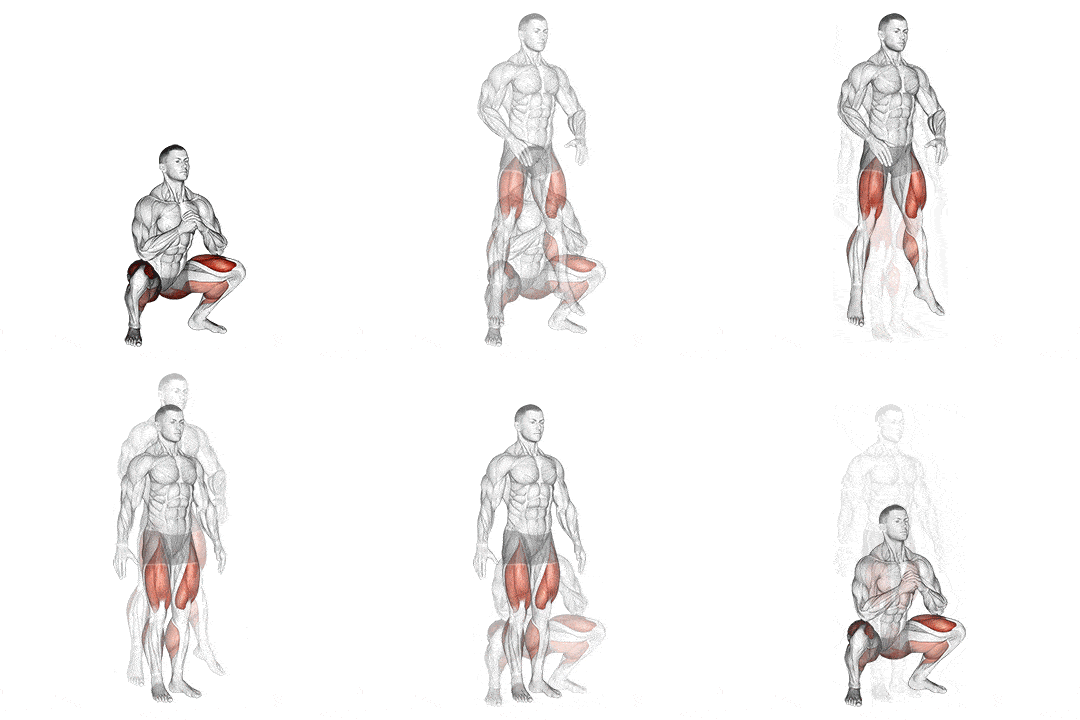
Exercise Description
Stand with feet shoulder-width apart, lower into a squat, then explode upward into a jump. Land softly with knees slightly bent, keep your core engaged, and repeat with smooth rhythm.
How To Perform
Stand tall with feet shoulder-width apart, toes slightly out, and brace your core.
Hinge at the hips and bend your knees to lower into a controlled squat, keeping your chest up and heels grounded.
Drive forcefully through your feet to jump explosively straight up, swinging arms naturally for momentum.
Land softly on the mid-foot to heel with knees bent and tracking over toes; immediately absorb into the next squat.
Maintain a steady rhythm while keeping your core engaged and spine neutral throughout.
Expert Tips
Focus on soft landings - Absorb impact by landing with bent knees and hips to reduce joint stress.
Keep knees tracking over toes - Avoid knee valgus by pressing knees out slightly during the jump and landing.
Stay tall through the torso - Keep the chest up and core braced to protect the lower back and maintain power.
Progress gradually - Start with bodyweight and lower jump height; add reps, height, or light load only after form is solid.
Common Mistakes
Letting knees cave inward - This increases injury risk; actively drive knees out to align with toes.
Landing with locked knees - Locking out on landing transfers force to the joints; land softly with a slight knee bend.
Rounding the back or losing core tension - A loose core reduces power and can strain the spine; brace throughout the movement.
Rushing without control - Prioritize quality reps and controlled landings over speed to maintain technique.
Info – Jump Squat
Jump squats are a powerful plyometric movement that develops explosive leg drive and boosts cardiovascular fitness. Keep knees tracking over toes and prioritize soft, quiet landings to reduce joint stress. Beginners can limit jump height and extend rest periods, while advanced athletes may add resistance or increase volume. Always complete a thorough warm-up before plyometric sessions.
Equipment Required
No equipment needed.