Training guide
Grappling
What it means, the main styles, and where a striker starts.
Grappling meaning, from a Muay Thai coach: what grappling is in martial arts, the main styles, what it means in MMA, and how the clinch bridges striking and the mat.
Grappling is fighting by holding someone. You close the space, take the grip, and decide where the fight goes. Striking is the other half. A striker who never trains the hold gets stuck when the range disappears.
I coach Muay Thai and kickboxing. The mat is not the room I teach. What I do coach, every week, is the moment a striking fight turns into a hold: the clinch. The rest of this page is the map I wish strikers had before they walk into a wrestling or jiu-jitsu class.
Grappling means seizing a person and controlling them. In martial arts that covers throws, takedowns, pins, clinches and submissions. In MMA it is that same family of skills, used next to strikes.
Key takeaways
- Grappling means you win by grips, clinches, throws, takedowns and holds. You do not need a punch to score.
- The main grappling arts are wrestling, Brazilian jiu-jitsu, judo and sambo. The Muay Thai clinch is standing grappling inside a striking sport.
- In MMA, grappling is how you choose where the fight happens, and how you hold someone once it hits the mat. Strikes are still allowed.
- A striker starts with the clinch they already stand in, then adds one technical grappling day a week with a coach who teaches that art.
- Submissions and takedowns are learned live. A clip is not a coach, and a hard roll does not belong on top of a hard spar.
The definition
What Is Grappling?
Grappling is the part of fighting where you grab, hold, unbalance or pin another person. A throw, a takedown, a clinch, a pin and a submission are all grappling. A jab is not. A teep is not. The word itself means to seize or take hold. If you can describe the action as "I had them" rather than "I hit them", you are talking about grappling.
What grappling means in a gym is a little wider than the dictionary. People use it for a whole class of martial arts, and also for one phase inside a fight that is mostly striking. Both uses are fair. The useful question is which rule set you are under, because the rule set decides whether the hold is the whole sport or a moment inside it.
What the word covers
A grappling exchange has a job. You close the distance, you take a grip, and you try to improve that grip until the other person is thrown, pinned, or forced to give up the position. Some contests stop at the pin. Some stop when someone taps. Some, like the Muay Thai clinch, let you strike while you hold. The hands are doing the same kind of work in all three. The rules around the hands are not the same.
What it is not
Grappling is not MMA. Mixed martial arts uses grappling and striking together. A pure grappling round has no punches and no kicks. It is also not one style. Wrestling, Brazilian jiu-jitsu, judo and sambo are different sports that share the idea of control. Saying "I grapple" without saying which rule set is like saying "I strike" without saying whether you box or train Muay Thai.
It is not something you learn by yourself on a mat at home. You need a partner who can tap, and a coach who can see the angle of a joint. Shadow work has a place in striking. The shadow boxing guide is that place. It will not teach you a hold.
| Compare | Grappling | Striking | MMA |
|---|---|---|---|
| Job | Control, throw, pin or submit | Score with punches, kicks, knees and elbows | Do both, and choose the range |
| Distance | Chest to chest, or on the mat | A step away, where a kick or a jab lands | All of it, including the fence |
| A good rep | The grip got better and you can still breathe | The shot lands and the hands come home | You can strike, then hold, then stand back up |
| Guardrail | Tap early. Stop when a joint is past straight | Stop when the chin lifts or the feet stick | A hard spar already counted as the hard day |
The arts
What Grappling Is in Martial Arts
Five names cover almost every grappling conversation a striker walks into. They are not the same sport.
- Wrestling: takedowns
- BJJ: position first
- Judo: the throw
- Sambo: throws and legs
- Clinch: a standing hold
| Style | What decides it | What a striker should know |
|---|---|---|
| Wrestling | Takedowns, rides and pins. Freestyle, Greco-Roman and folkstyle do not finish by submission | The shot and the sprawl. This is who chooses whether you stay standing |
| Brazilian jiu-jitsu | A dominant position, then a choke or a joint lock. Many contests also score the position | How to keep posture on the ground, and how to stand back up. The finish comes later |
| Judo | Throws from the jacket. Groundwork is part of it, and in contest the referee often stands you up | Grips and off-balancing. The jacket will not be there in MMA or in a Muay Thai clinch |
| Sambo | Sport sambo is jacket grappling with throws and submissions, including the legs. Combat sambo adds strikes | It is its own sport. Do not treat a sambo class as "wrestling with a gi" |
| Muay Thai clinch | Inside position, posture, knees, off-balances and dumps. It is not a submission art | This is the grappling you can learn inside the striking you already train |
Catch wrestling is the wrestling branch that does include submissions. The wrestling most gyms mean does not.
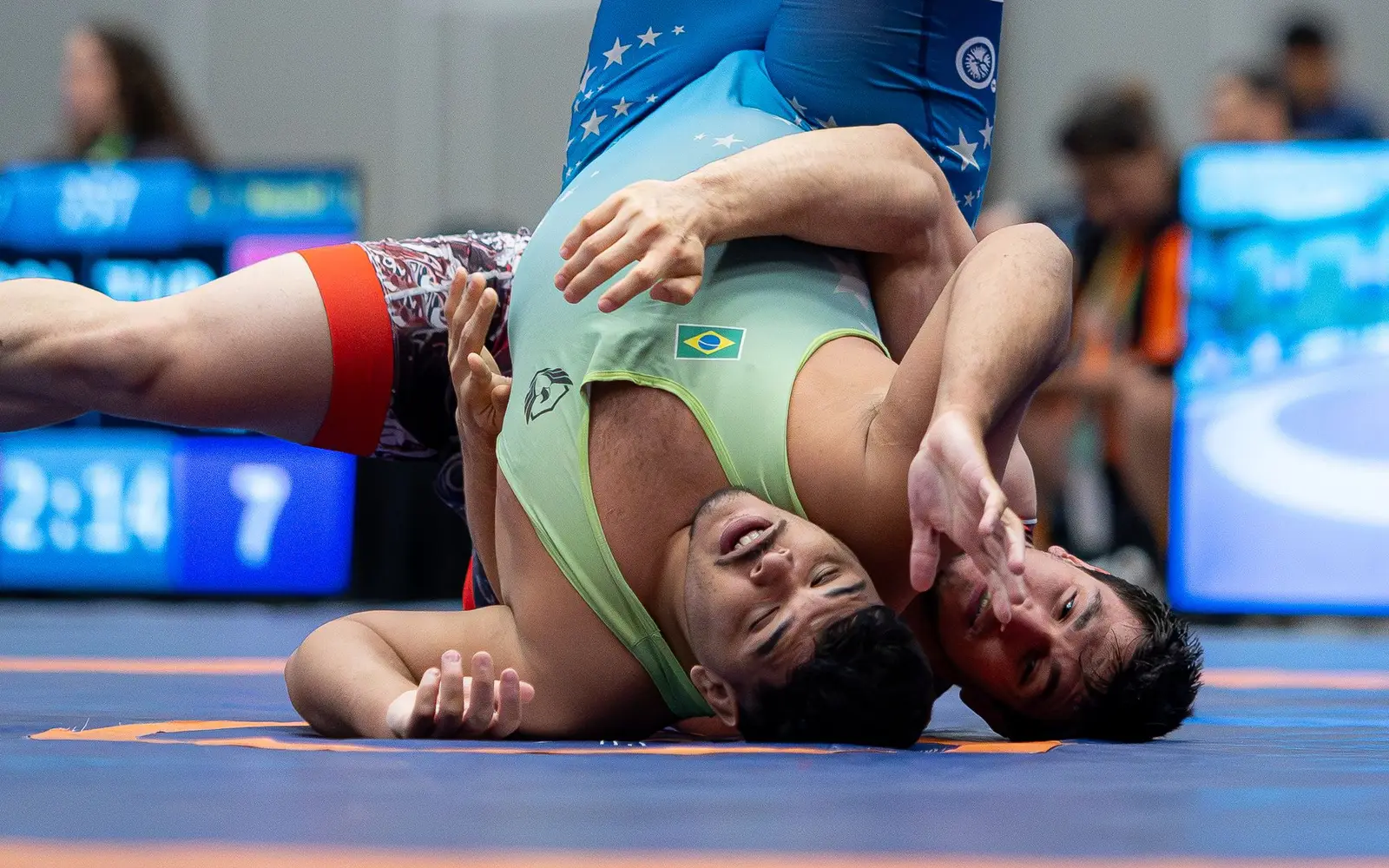
Wrestling is the art of taking someone down and keeping them there, or getting back up when they try it on you. Freestyle and Greco-Roman are Olympic sports. Folkstyle is the scholastic version common in the United States, scored differently, still won by control rather than by a tap. In a fight gym, "wrestling" usually means the shot, the level change, the sprawl and the mat return.
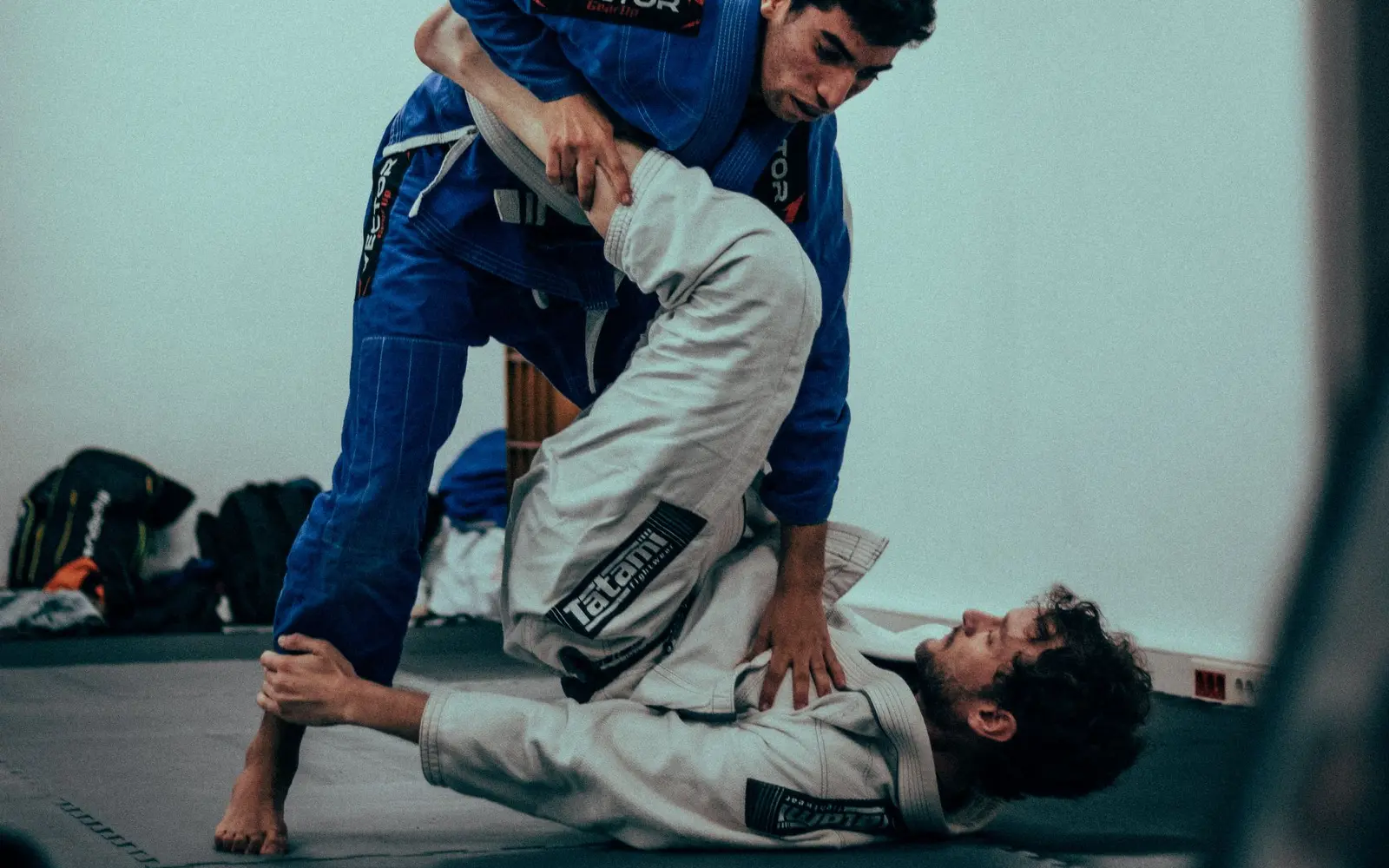
Brazilian jiu-jitsu spends its time on the ground. You pass, you keep a position, and you look for a choke or a lock. It is trained in a gi or without one. No-gi is the closer match to shorts, because there is no collar to hold. The position is the lesson. The submission is what you earn after you can hold the place you are in.
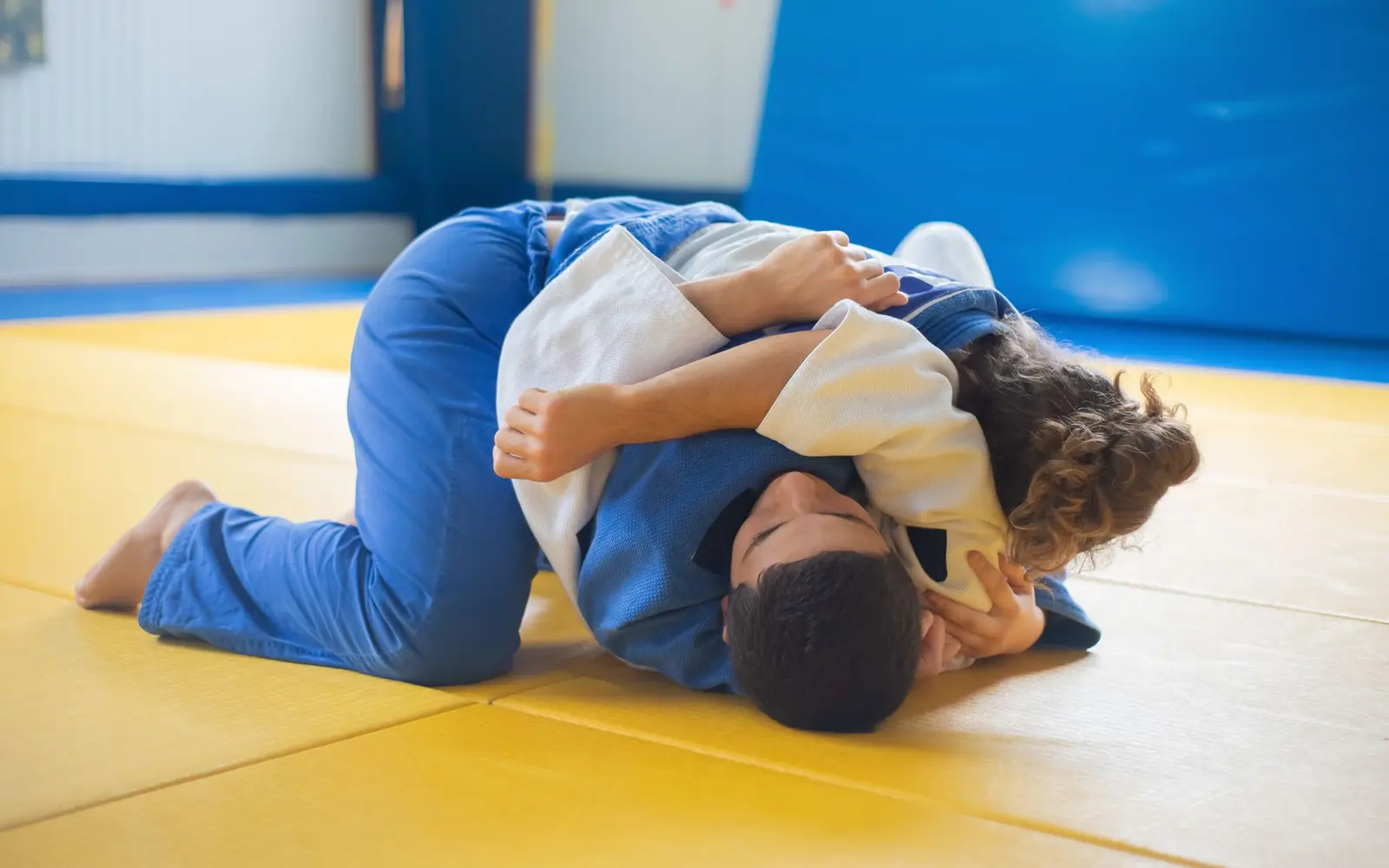
Judo is built on the throw. You grip the jacket, you break their balance, and you try to put them on their back. There is groundwork after the throw, called ne-waza, and in a lot of contests it is short because the referee stands the pair back up. Judo is an Olympic sport. The grips are real. They are also jacket grips, so they do not copy straight across to a cage or a Muay Thai clinch.
Sambo came out of the Soviet Union as its own system, drawing on judo, wrestling and regional styles. Sport sambo keeps the jacket and adds a serious leg-lock game to the throws. Combat sambo is the branch that also allows strikes. If a gym offers sambo, ask which one. The answer changes the whole session.
Two jobs
Grappling vs Striking
Striking needs space. Grappling removes it. They fail in different ways, so they belong on different days.
A kick and a jab are honest at range. You can see them, you can check them, and you can step off the line. The Muay Thai kicks guide is that range, written out. Grappling starts when the step is gone and someone has a hand on you. The skills do not replace each other. A beautiful teep does not teach you a sprawl. A tight pin does not teach you to bring the rear hand home.
The mistake I see in strikers is treating the clinch, or a shot, as a failure of their striking. Sometimes it is. Sometimes the other person is simply better at closing distance than you are at keeping it. You can fix the first problem on the bag. You can only fix the second one by practising the hold, with someone who is allowed to hold you back.
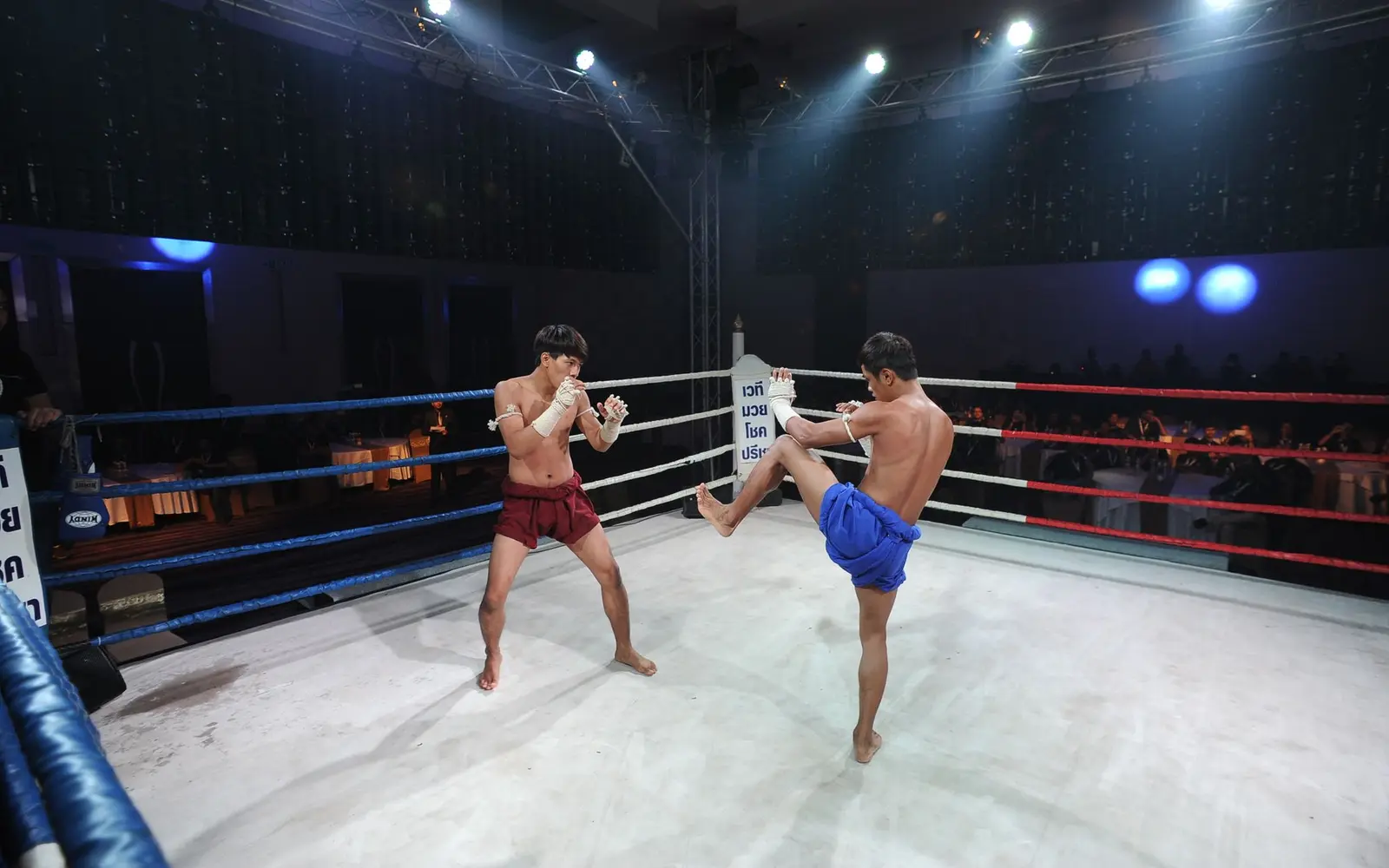
There is a training consequence. A hard spar and a hard roll both spend the same kind of recovery. Put them on the same day and the second one is sloppy, which is how people get hurt. Strike on the striking day. Grapple on the grappling day. Lift on a third day, short, the way the strength and conditioning guide lays out. If you want the whole mixed week in one place, that is the MMA training guide.
In the cage
What Is Grappling in MMA?
In MMA, grappling is not a separate sport you visit. It is how you decide the range, and how you fight once the range is gone.
What grappling means in MMA is the set of holds you can use while strikes are still legal. That includes the shot and the takedown defence, the clinch and the fence, top control, getting back to your feet, and submissions. It also includes the strikes you throw while you are holding someone. Ground-and-pound is striking from a grappling position. A pure jiu-jitsu round never asks you to do that, which is why an MMA grappling round feels different even when the positions look familiar.
Most MMA gyms build that round from wrestling and no-gi jiu-jitsu. Wrestling supplies the takedown and the scramble. No-gi supplies the control and the submissions without a collar, which matches shorts and gloves better than a jacket does. Judo throws and sambo leg locks show up in fights. They are usually brought in by someone who already trained that art, not invented in a general class.
A striker who cannot grapple does not get to keep the fight where their kicks work. A grappler who cannot strike gets hit on the way in, and hit again from the bottom. You do not have to be equal at both in your first year. You do have to touch both, on purpose, so neither one is a surprise. If you are new to the striking half, start with what Muay Thai is and the complete Muay Thai guide. The grappling half still needs its own coach.
The first skills worth your time, before any finish, are simple. Sprawl when a shot comes. Keep your hips back and your posture tall enough that you are not folded in half. On the ground, frame with your arms and get to a hip so you can stand. On top, hold the position you have. Do not jump to a submission you saw once. Heel hooks, neck cranks and stacking a partner onto their neck are coach territory. They are not a rest-day project.
Where I coach
The Clinch Is the Bridge
The Muay Thai clinch is standing grappling. It is the hold a striker can learn without leaving striking behind.
In Muay Thai the clinch is not a break in the fight. It is a phase of it. You tie up, you fight for the inside position, you break their posture, and you knee, turn or dump them. Kickboxing, under most rule sets, separates you almost at once. Muay Thai does not. That is why a striker who only kickboxes can look lost the first time someone hangs on their neck and knees. If you want the sport around that hold, what Muay Thai is covers the eight limbs, and the clinch is one of the two skills that make the art different.
Inside position, then the knee
The position I want is both arms inside, forearms on the collarbones, hands cupped on the crown of the head rather than cranking the neck. Elbows stay tight. Hips stay in. Chest stays up. From there you can steer the head and knee the body. If your elbows flare, they swim an arm inside and the position is theirs. If you bend at the waist to hang on, you gave the posture away, and a knee or a turn is coming back at you.
I do not interlace the fingers. It is slow to let go, and a caught finger is a bad trade for a slightly tighter grip. One hand over the other is enough. Knees in partner work stay on the body, at a pace you agreed before the round. The head is not a target until a coach has both of you in headgear and has said so.
It is not a wrestling tie, and it is not a guard
A collar tie in wrestling is there to set up a shot or to keep them from shooting. A Muay Thai clinch is there so you can strike and off-balance without leaving the hold. A jiu-jitsu guard is a ground position. If you pull someone into a plum and then shoot a double, you have changed sports in the middle of the grip. That can be correct in MMA. It is a foul, or at least a wasted position, under Muay Thai rules. Know which room you are in.
The small details decide the clinch more than the strength does. A better head position. A tighter elbow. A hip that stays under you. Those are the same kind of corrections I make on a jab. They are just happening with someone attached to you.
The week
Where Grappling Fits the Week
One technical grappling day. Clinch work stays inside Muay Thai. The hard spar and the hard roll do not share a date.
If you already train striking three times a week, do not add three grappling sessions on top. Add one. Make it positional: a coach shows a situation, you do it slowly, you tap when you are stuck, you reset. Live rolling, if the gym runs it, is a short block at the end for people who already know how to tap, not the whole class and not your first month.
The clinch does not need its own night if your Muay Thai coach already puts it at the end of class. Ten honest minutes of posture and inside position beats an hour of hanging off each other. If the gym never clinches, ask before you invent partner drills in the car park.
Strength stays on its own day. A squat or a trap-bar deadlift, a push-up, a pull-up, and a farmer's carry cover the legs, the pull and the grip a hold asks for. Two or three sets, with reps left. The carry is the one I care about for a clinch week, because a grip that dies in the first minute is a clinch you cannot steer. It is still not a substitute for the skill.
Put the grappling day away from the heaviest lift and away from hard sparring. Easy technical rounds the day after squats are fine. A live roll on dead hips teaches you to stall and hold your breath. After a hard spar, walk. You already spent the hard day.
Combat sports
Grappling for Fighters
Once a fight is booked, grappling stays in the camp and it gets more specific. It does not become a new hobby the month of the bout.
Keep the position you actually lose. If you get tied up and kneed, the clinch is the round. If you get taken down, the sprawl and the stand-up are the round. Do not collect a new submission in fight week. The MMA training guide is how that week is built when striking and grappling are both the sport.
- One problem per session. The inside arm, the sprawl, or the stand-up. Not a highlight reel.
- Skill work comes first. Pads, clinch and the mat decide the day. The lift fits around them.
- Keep a round in the tank on fight week. Same positions, half the time.
- Do not turn a roll into a second fight after sparring. Walk instead.
- The lift stays short. Heavy enough to matter, finished while you could have done another set.
- Posture first
- Then the grip
Flagship program · Combat Performance
Strength and conditioning for the weeks around your striking and your grappling. Power, a grip that lasts, and legs that still have a step in the last round.
Your first month
How a Striker Starts Grappling
Four weeks. Three striking days, one grappling day, one short strength day. The grappling day stays technical.
| Day | Session | Effort | What you do |
|---|---|---|---|
| Monday | Muay Thai | 2 of 3 | Technical class. If the coach clinches, spend that block on posture and inside position. No hard spar |
| Tuesday | Rest | 0 of 3 | Walk if you want. No rounds, no roll, no lift |
| Wednesday | Grappling | 2 of 3 | One coached class, wrestling or no-gi. One position for the month: the sprawl, or getting back to your feet. Tap early |
| Thursday | Strength | 2 of 3 | Squat or trap-bar deadlift, push-up, pull-up, farmer's carry. 3 sets with reps left |
| Friday | Pads or bag | 2 of 3 | Striking only. Hands home, kicks you can put down. If this day becomes a hard spar, Wednesday stays drill-only |
| Saturday | Optional | 1 of 3 | Shadow boxing for 15 minutes, or clinch posture with a partner only if a coach is watching. Otherwise skip it |
| Sunday | Rest | 0 of 3 | Full rest. This is the day the week sticks |
Effort shows how hard the day is, from 1 to 3. A 3 is a hard spar or a hard live roll, and this month does not need one.
Run the same week for four weeks before you change it. The only progression is a cleaner position: you sprawl and recover your stance, or you keep the inside arm for a whole short round, or you stand up without sticking your arm out straight for someone to take. Do not add a submission because the month felt quiet.
Four rules make the plan work:
- 01
Start in a class, not a group chat.
Wrestling or no-gi, with a coach who can see you. Tell them you are a striker and you want one position, not a finish.
- 02
Keep the clinch in Muay Thai.
It is the grappling you already stand in. Do not skip it to go and roll.
- 03
One hard day, then an easier one.
A live roll, a heavy lift and a hard spar are three hard days. This month you do not need all three, and you never stack two of them.
- 04
Tap before you need to.
A word, a hand on the partner, or a tap on the mat. Pride is how elbows get straightened past the point they should.
What to avoid
Common Grappling Mistakes
These five are the ones I have to unwind in strikers who "added grappling" by themselves.
- 01
Using one tie for every sport
A Muay Thai clinch, a wrestling collar tie and a judo collar grip are three positions. The hands look similar. The next move is not.
- 02
Learning finishes from a clip
A submission without the position, and without someone watching the joint, is how people get injured in the first month. Drill the hold you were shown.
- 03
Stacking it on a hard spar
The roll feels like extra work. It is a second fight. Your posture goes, and that is when the hold gets ugly.
- 04
Giving up your posture to keep a grip
Bent in half, arms straight, head pulled down. You are not controlling them. You are hanging, and hanging is easy to turn.
- 05
Quitting striking for a month of rolling
You came in as a striker. The kicks and the guard get worse while you chase a new sport. Keep the striking days. Add one grappling day.
Questions
Common Questions About Grappling
What is grappling?
Grappling is fighting by holding someone. You close the distance, take a grip, and try to throw them, take them down, pin them, or make them give up the position. Punches and kicks are striking. A hold is grappling. Some sports let you strike during the hold. The Muay Thai clinch is the version strikers meet first.
What does grappling mean?
To grapple means to seize or take hold. In a gym it means the family of skills built on that hold: clinches, throws, takedowns, pins and submissions. It can mean a whole art, such as wrestling or Brazilian jiu-jitsu, or one phase inside a striking fight.
What is grappling in martial arts?
In martial arts, grappling is the group of styles that win by control rather than by strikes. Wrestling, Brazilian jiu-jitsu, judo and sambo are the main ones. The Muay Thai clinch is standing grappling kept inside a striking art. They share the idea of a grip. The rules, the clothing and the way you win are different, so they are not one class you can swap between.
What is grappling in MMA?
In MMA, grappling is how you choose the range and how you fight once you are holding someone. Takedowns, takedown defence, the clinch, the fence, ground control, getting back up, and submissions all count. Strikes are still allowed, including strikes from on top. Most gyms build it from wrestling and no-gi jiu-jitsu, because a cage has no jacket to grip.
Is the Muay Thai clinch grappling?
Yes. It is standing grappling with a striking job: inside position, posture, knees, off-balances and dumps. It is not a submission art, and it is not the same tie you use to shoot a takedown. Kickboxing usually breaks the clinch. Muay Thai fights inside it.
How should a striker start learning grappling?
Keep your striking days. Add one coached grappling class a week, wrestling or no-gi, and stay on one position for a month: the sprawl, or getting back to your feet. Keep the clinch inside Muay Thai. Do not stack that class on a hard spar, do not learn submissions from a video, and tap early. Strength work stays on its own short day.
Final thoughts
Learn the hold you already stand in. Then add one day.
Grappling is a clear idea that people make muddy by using one word for five sports. It means you seize someone and control them. Wrestling, Brazilian jiu-jitsu, judo and sambo are the main ways the martial arts do that. MMA uses them next to strikes. The Muay Thai clinch is the version a striker can learn without abandoning the jab and the kick.
Start there if you already train with me, or with any Muay Thai coach: posture, inside arms, a knee to the body, and the honesty to let go when you are bent in half. Add one technical grappling day with a coach of that art. Leave the finishes until they are taught in the room.
If you want the striking and the clinch coached one on one, I do that in Bali. The mat work still belongs with a grappling coach. I will not pretend otherwise.
More on the week around it: MMA training, what Muay Thai is, Muay Thai kicks, shadow boxing, and strength and conditioning.
Private Muay Thai with Aaron