Back · Row variation
Underhand Barbell Row
The reverse-grip bent-over row: how to do it, how it differs from the overhand row, and when to use it.
Turn your palms up and the barbell row changes. Your biceps and lower lats do more, and most people can stand a little taller. Here is how to do it well and when to choose it over the overhand row.

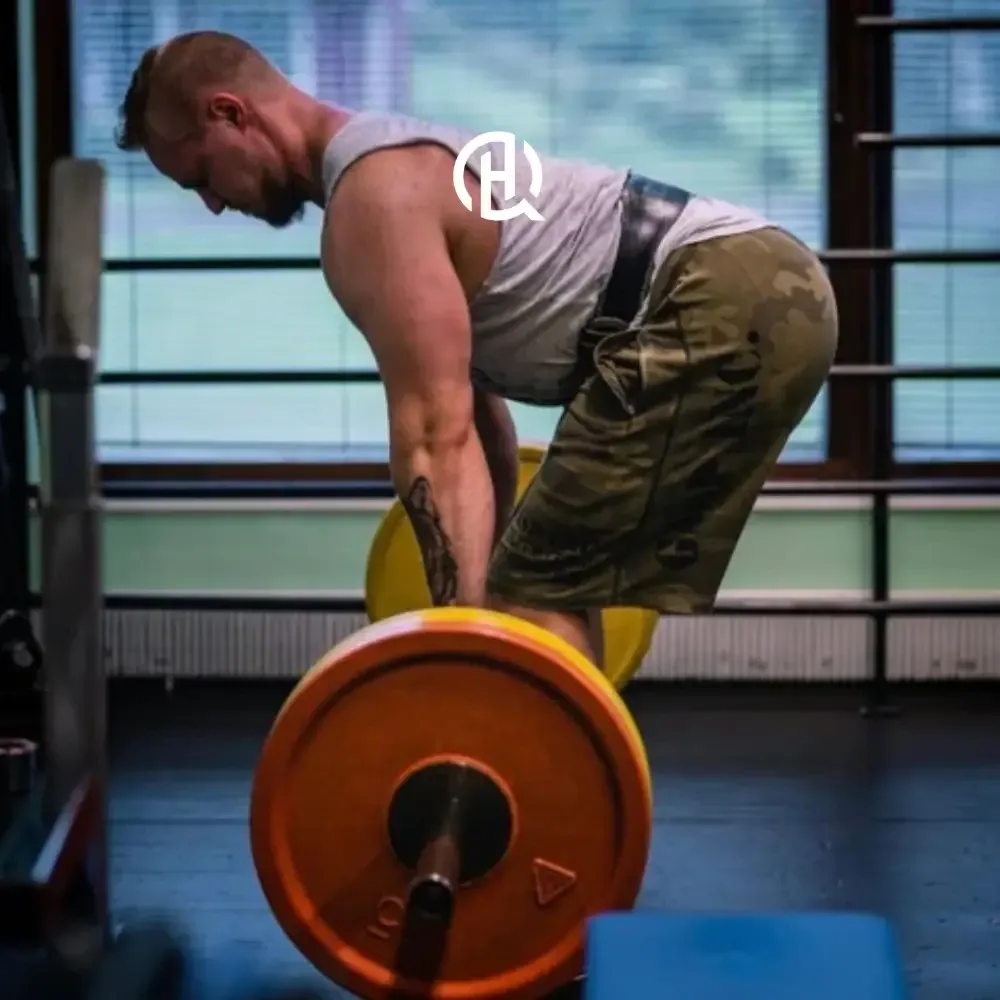
The underhand barbell row is a bent-over row done with your palms facing up, hands about shoulder-width apart. You hinge forward, pull the bar to your lower stomach and squeeze your back. Compared with the overhand row, it brings in more biceps and lower lats and usually lets you keep a slightly more upright torso.
Key takeaways
- Palms up, hands about shoulder-width, torso at roughly 45 degrees or a little higher.
- Pull the bar to your lower stomach with the elbows close to your sides.
- More biceps and lower-lat work than the overhand row; less upper-back and rear-delt emphasis.
- Do not let it turn into a deadlift or a shrug. Keep your hips and torso still.
- 3–4 sets of 8–12 reps works for most people chasing muscle growth.
- Muscles
- Lats (especially lower), mid-back, rhomboids, biceps, rear delts; lower back and hamstrings stabilise
- Equipment
- Barbell and plates
- Difficulty
- Intermediate
- Sets & reps
- 3–4 sets of 8–12
Quick version: see the underhand barbell row exercise card.
Step by step
How to Do the Underhand Barbell Row
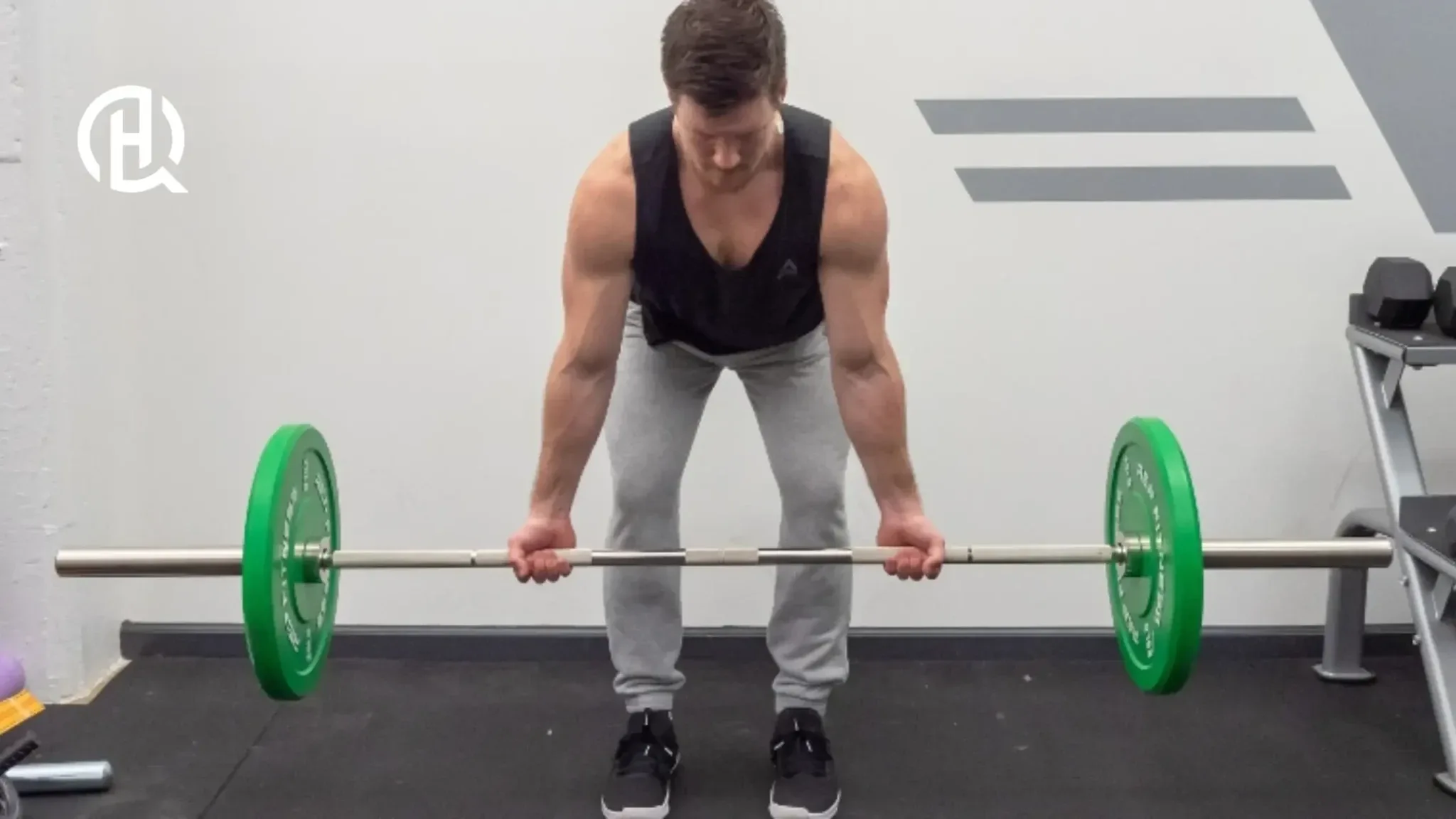
Hinge to about 45 degrees with a flat back before the first pull.
- 01
Set your feet
Stand with feet hip-width apart, the bar over the middle of your feet.
- 02
Take an underhand grip
Take an underhand grip (palms facing away from your legs, toward the front) about shoulder-width apart.
- 03
Hinge to 45 degrees
Lift the bar, then hinge at the hips until your torso is at about 45 degrees. Knees soft, back flat, stomach braced.
- 04
Row to your belly button
Pull your elbows back close to your sides and bring the bar to your lower stomach or belly button.
- 05
Squeeze at the top
Squeeze your shoulder blades together for a moment at the top.
- 06
Lower under control
Lower under control until your arms are straight. Keep the same torso angle. Repeat.
Compare
Underhand vs Overhand Barbell Row
| Feature | Underhand row | Overhand row |
|---|---|---|
| Grip | Palms up, about shoulder-width | Palms down, slightly wider than shoulders |
| Elbow path | Close to the sides | About 45 degrees from the sides |
| Bar touches | Lower stomach | Lower ribs / upper stomach |
| Torso | About 45 degrees, often a bit more upright | About 45 degrees |
| More emphasis on | Lower lats, biceps | Upper back, rear delts, traps |
| Watch out for | Elbow and biceps strain if loaded too heavy | Shrugging, flared elbows |
Neither grip is better. Use the overhand row as your main row if upper-back thickness is the goal. Use the underhand row when you want more lat and biceps work, or rotate them across training blocks. Many lifters find they can row a little more weight underhand, but form decides the load, not the grip.
Why do it
Benefits of the Underhand Barbell Row
- 01
More lat and biceps work
Elbows tucked to your sides shift the pull lower on the lats, and the palms-up grip asks more of the biceps.
- 02
Builds a thick back
You can load it heavy, so it builds the mid-back along with the lats.
- 03
Easy to progress
A barbell can go up in small steps, which makes progressive overload simple to track.
- 04
Trains your hinge and brace
Holding the bent-over position works your lower back, glutes and core.
- 05
A grip option for comfort
Some lifters find the underhand grip more comfortable on their shoulders than the overhand grip. Others feel it more in the elbows or wrists. Use the grip that feels better, and stop if you feel sharp pain.
What to avoid
Common Mistakes
- 01
Turning it into a deadlift
Hips rise and fall with each rep. Do this instead: lock the hips in place and move only the arms and shoulder blades.
- 02
Rounding the back
The lower back bends as the bar comes up. Do this instead: brace before each rep, chest up.
- 03
Shrugging the weight
The shoulders ride up toward the ears. Do this instead: pull the shoulder blades back and down, not up.
- 04
Curling the bar
Wrists bend and elbows stay forward. Do this instead: drive the elbows behind your body.
- 05
Using too much weight
Heavy underhand rows can strain the biceps tendon at the elbow. Do this instead: if you cannot pause at the top, lower the load.
Options
Variations
Yates row
An underhand row done more upright (closer to 60–70 degrees) with a heavier load. More traps and lats, less range. Use it once you have the standard version down.
Narrow or wide underhand grip
Narrower works the mid-back more; slightly wider works the lower lats harder.
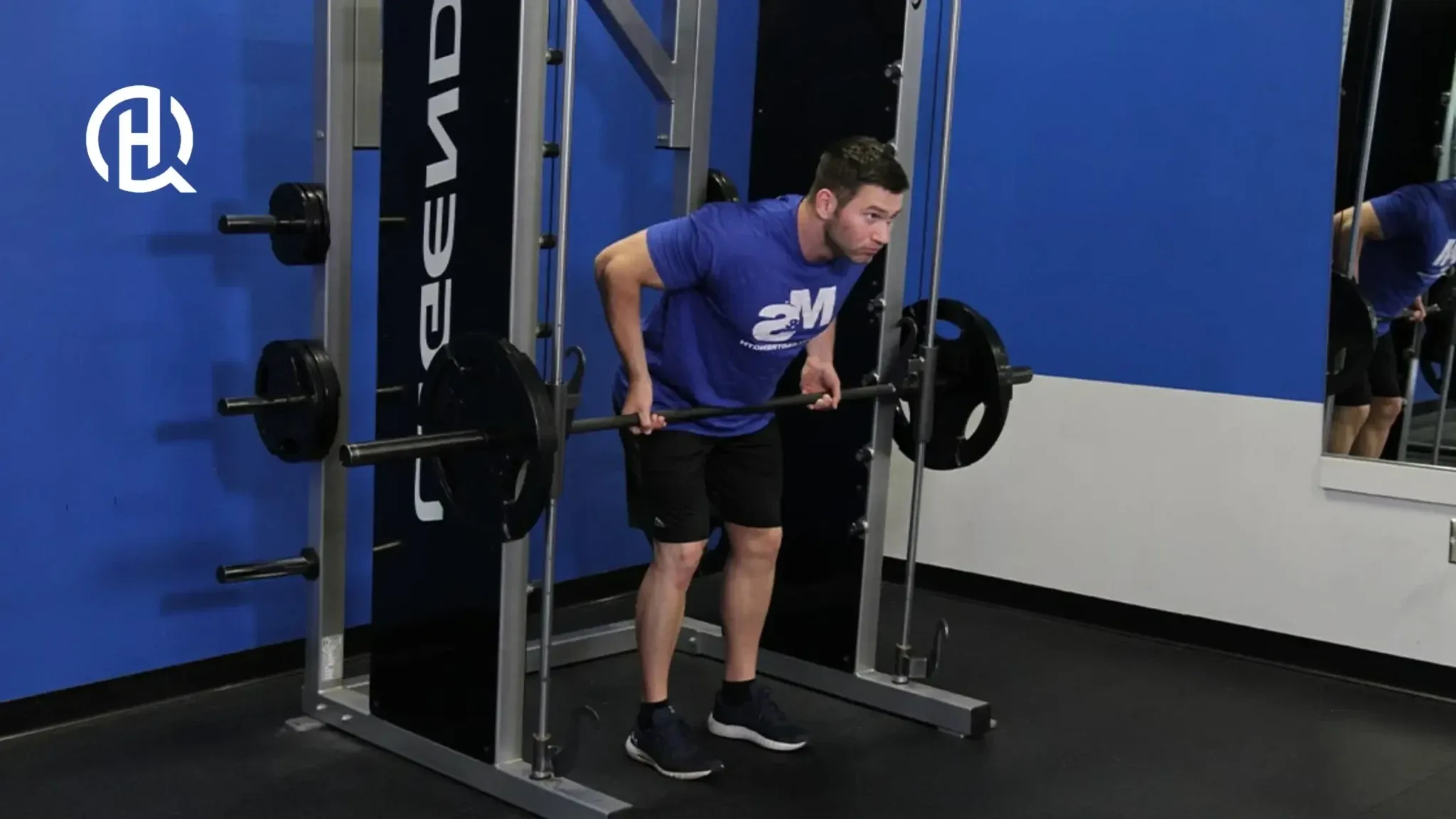
Smith machine underhand row
The fixed bar path lets you focus on the squeeze.
Reverse-grip pulldown
Same grip, vertical pull. See the reverse-grip pulldown guide.
Overhand barbell row
Palms down, more upper back. See how to do barbell rows.
Programming
Sets and Reps by Goal
| Goal | Sets | Reps | Rest |
|---|---|---|---|
| Strength | 3–4 | 6–8 | 2–3 min |
| Muscle growth | 3–4 | 8–12 | 60–90 s |
| Burnout finisher | 1 | 12–15, light and strict | – |
Use lifting straps on heavy sets if your grip gives out before your back. Leave one to three reps in reserve.
Fit check
Who It's For (and Who Should Skip It)
Good for: lifters who already row overhand and want more lat and biceps work, or a change of stimulus.
Skip or go lighter if: you have elbow or biceps tendon pain, or you cannot hold a flat back when bent over. A seated cable row with a neutral grip is an easier option. Stop if you feel sharp pain.
For where rows fit in a full plan, see the most effective exercise for each muscle group.
Questions
Underhand barbell row FAQ
Is the underhand barbell row better than the overhand row?
Neither is better overall. The underhand row puts more work on the lower lats and biceps and usually lets you stay a little more upright. The overhand row puts more work on the upper back, traps and rear delts. If upper-back thickness is your main goal, make the overhand row your main row. If you want more lat and arm work, add the underhand row or rotate the two.
What muscles does the underhand barbell row work?
The lats do most of the work, especially the lower part, because your elbows stay close to your sides. The rhomboids, mid traps and rear delts help squeeze the shoulder blades together, and the biceps work harder than in the overhand row. Your lower back, glutes, hamstrings and core hold the bent-over position for the whole set.
Is the underhand row the same as the Yates row?
They are close but not the same. Both use an underhand grip. The Yates row is done more upright, with the torso at roughly 60 to 70 degrees, and usually with heavier weight and a shorter range. The standard underhand row uses a lower hinge, around 45 degrees, and a longer pull. Learn the standard version first, then try the Yates row.
Is the underhand barbell row bad for your elbows?
Not for most people, but the palms-up grip does load the biceps more, and very heavy sets can irritate the front of the elbow. Warm up with lighter sets, avoid jerking the bar off the floor, and keep the weight at a level you can pause at the top. If you feel sharp pain at the elbow, stop and switch to an overhand or neutral grip.
How many sets and reps should I do for underhand rows?
For muscle growth, 3–4 sets of 8–12 reps with 60–90 seconds of rest is a good default. For strength, 3–4 sets of 6–8 with longer rest. If you like, finish with one light, strict set of 12–15. Leave one to three reps in reserve on working sets and add weight only when every rep looks the same.
Back Focused
Train your back with a plan.
Want rows like this in a full back plan? The BACK FOCUSED program is part of the HermQ bodybuilding programs subscription.
60-day money-back guarantee.