BARBELL STIFF-LEG DEADLIFT
Hamstring-Focused Hip Hinge
Primary Muscles
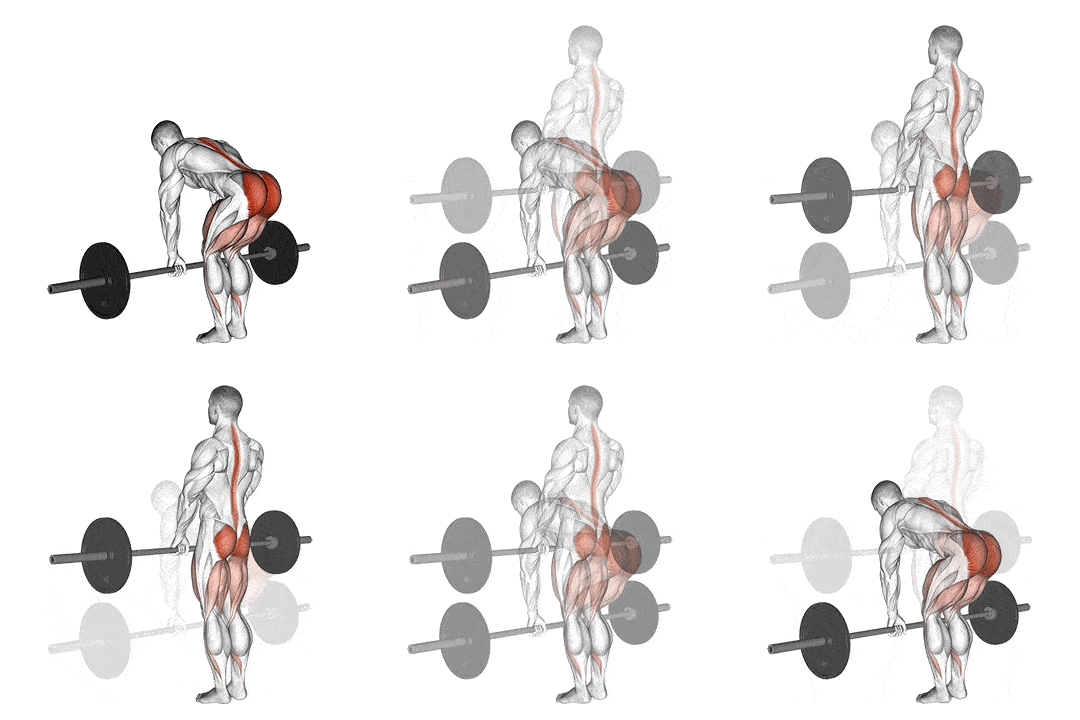
Exercise Description
Stand with feet hip-width apart and the barbell over the mid-foot. Grip shoulder-width, hinge at the hips with a neutral spine, and keep the bar close to your body. Lower the bar to just below the knees, then engage the glutes and hamstrings to return to standing.
How To Perform
Set up with feet hip-width and barbell over mid-foot. Grip the bar slightly wider than shoulder-width.
Brace your core, retract your shoulders lightly, and maintain a neutral spine throughout.
Unlock the knees slightly (do not lock), then hinge at the hips to lower the bar while keeping it close to your legs.
Lower until you feel a strong hamstring stretch, typically just below the knees, without rounding your back.
Drive through your mid-foot and heels, engaging hamstrings and glutes to return to standing. Squeeze at the top without hyperextending.
Control the descent and keep the bar path vertical and close to the body for every rep.
Expert Tips
Keep a neutral spine - Avoid rounding the back. Maintain ribcage down and a stable core to protect the lower back.
Slight knee bend only - Do not lock the knees. A soft bend allows a proper hip hinge and protects the joints.
Start light to learn the pattern - Use modest loads to groove technique and hamstring tension before progressing weight.
Bar close to the body - Keep the bar skimming the legs to reduce shear on the lower back and improve leverage.
Brace effectively - Inhale and brace before you hinge; maintain tension through the entire range.
Common Mistakes
Rounding the lower back - Compromises spinal safety and reduces hamstring loading.
Locking the knees - Removes the hinge mechanics and can strain the joints and lower back.
Letting the bar drift forward - Increases lower-back stress. Keep the bar close to the shins and thighs.
Going too deep - Stop when the hamstrings are stretched without losing a neutral spine.
Info – Barbell Stiff-Leg Deadlift
The barbell stiff-leg deadlift primarily targets the hamstrings, glutes, and lower back. Keep a neutral spine, avoid locking the knees, and keep the barbell close to your body throughout the movement. Start with lighter weights to perfect form and engage the core to stabilize the spine.
Equipment Required
Barbell