Triceps exercise guide
Bench Dips
A simple triceps exercise you can do anywhere, done in a way your shoulders will like
All you need is a bench, a chair or a step. Bench dips train your triceps with your own bodyweight, and you can make them easier or harder by moving your feet.

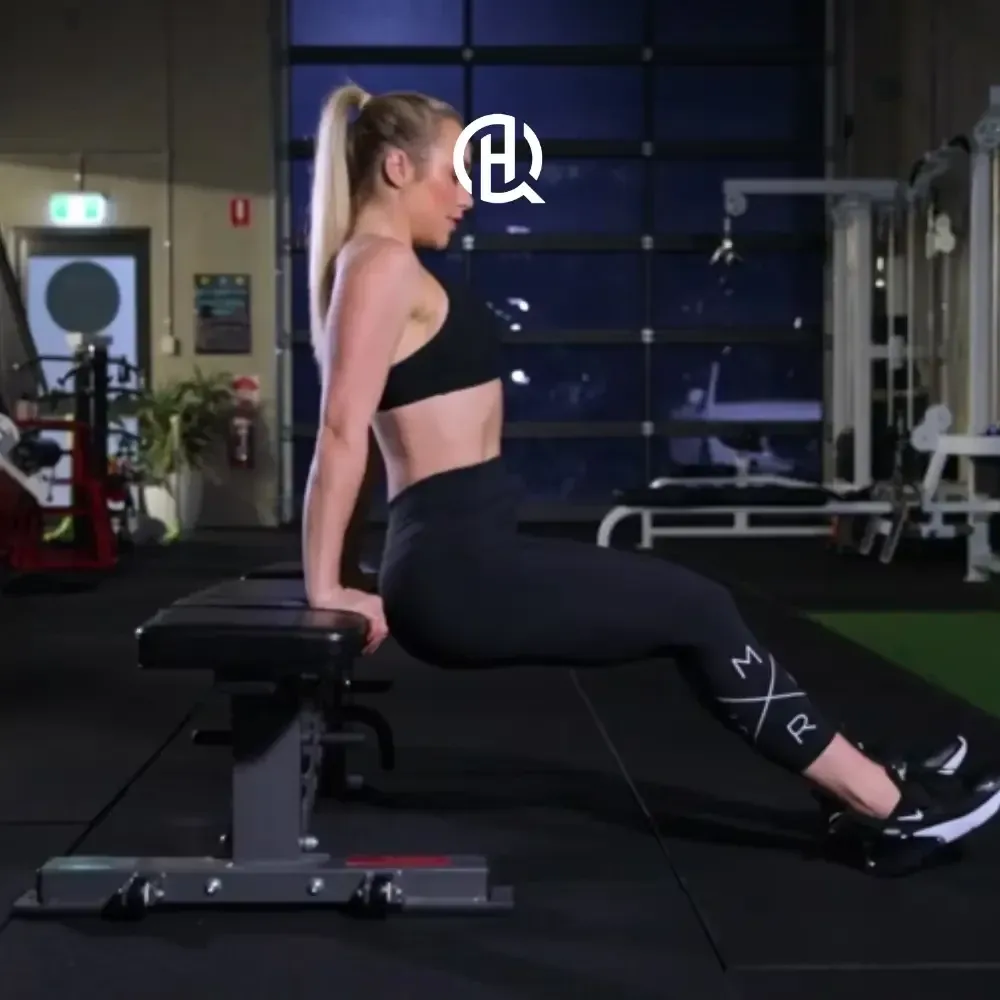 Watch the demo
Bench dips are a bodyweight triceps exercise. Sit on the edge of a bench, place your hands beside your hips, slide your hips off, and bend your elbows straight back until your upper arms are about parallel to the floor. Keep your shoulders down and back, then press up through your palms until your arms are straight.
Key takeaways
- Bench dips mainly train the triceps, with the chest and front shoulders helping.
- Stop at about 90° at the elbow. Going deeper puts more stress on the front of the shoulder.
- Keep your shoulders down and back, and keep your hips close to the bench.
- Make them easier with bent knees, harder with straight legs, raised feet or a plate on your lap.
- When bench dips get easy, parallel bar dips are the next step.
- Muscles
- Triceps; chest and front shoulders assist
- Equipment
- A bench, chair or step
- Difficulty
- Beginner
- Sets & reps
- 2–3 sets of 8–12
Step by step
How to do bench dips

- 01
Sit on the edge
Sit on the edge of a stable bench with your hands beside your hips, fingers pointing forward and gripping the edge.
- 02
Slide your hips off
Walk your feet out and slide your hips just off the bench. Start with bent knees, and move to straight legs with heels down when you're stronger.
- 03
Set your shoulders
Roll your shoulders down and back, and keep your chest up.
- 04
Lower yourself
Bend your elbows straight back to lower yourself. Keep your hips close to the bench.
- 05
Stop at about 90°
Stop when your upper arms are about parallel to the floor (about 90° at the elbow).
- 06
Press up
Press through your palms and straighten your arms.
- 07
Repeat with control
Keep your shoulders down and back for every rep.
Get it right
Form cues
- 01
Pack your shoulders
Down and back before the first rep, and keep them there.
- 02
Elbows point back, not out
Think of your elbows sliding along a rail behind you.
- 03
Hips close to the bench
If your hips drift forward, your shoulders take over.
- 04
Try a slight outward turn of the hands
Do this if the standard grip feels tight in your shoulders. Use whatever hand position lets you keep the shoulders down.
What to avoid
Common mistakes
- 01
Shoulders shrugging or rolling forward
At the bottom your shoulders rise toward your ears and roll forward. Fix: press them down and back, and stop higher.
- 02
Elbows flaring out to the sides
It shifts load to the shoulders. Fix: elbows point straight back.
- 03
Going too deep
Dropping well below 90° at the elbow puts the front of the shoulder under more strain. Fix: stop when your upper arms are about parallel.
- 04
Hips drifting away from the bench
The further your hips move forward, the more your shoulders work. Fix: keep your back close to the bench edge.
- 05
Bouncing and rushing
Using momentum instead of control. Fix: 2 seconds down, a short pause, then press.
"Most bench dips I correct are simply too deep. Stop at parallel and the same exercise starts hitting the triceps instead of the shoulders."
Herman Leir, Personal Trainer
Shoulder safety
Are bench dips bad for your shoulders?
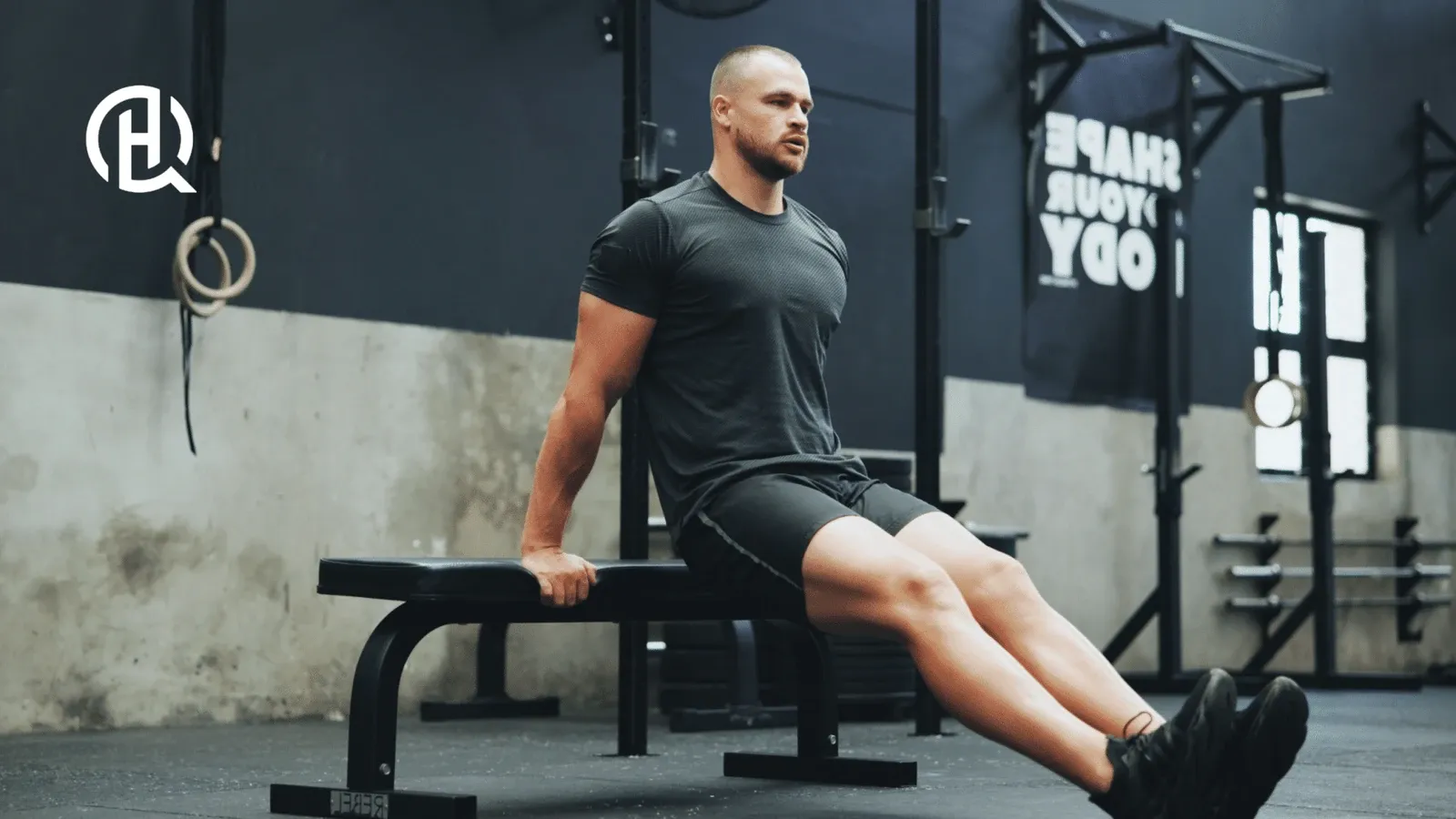
Bench dips are not bad for everyone, but they are the dip variation that asks most of the front of your shoulder, because your arms are behind your body at the bottom. Keep them shoulder-friendly:
- Stop at about 90° at the elbow.
- Keep your shoulders down and back and your hips close to the bench.
- Use slow, controlled reps.
If you feel sharp pain or a pinch at the front of the shoulder, stop. Train your triceps with pushdowns or overhead extensions instead, and get the shoulder checked if the pain stays. If bench dips don't suit your shoulders, pick from the full list of tricep exercises.
Progress
Progressions and easier versions
Start at the top and move down as you get stronger.
- 01
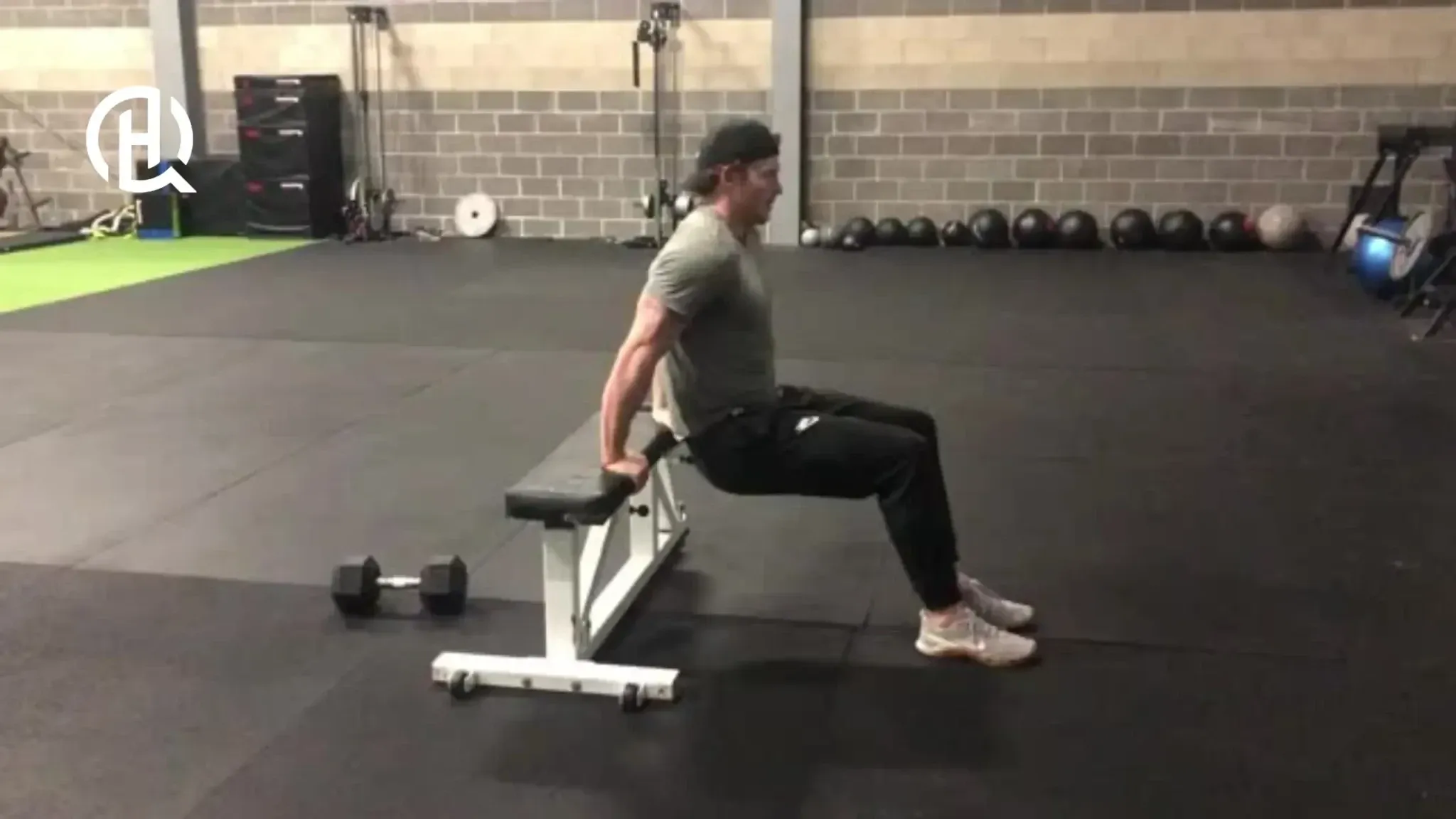
Bent-knee bench dips
Feet flat, knees at about 90°.
- 02
Straight-leg bench dips
Heels on the floor.
- 03
Feet-elevated bench dips
Heels on a second bench or box.
- 04
Weighted bench dips
A plate on your lap, placed by a partner.
- 05
Parallel bar dips
The next step once bench dips are easy. See the parallel bar dips guide.
Programming
Sets & reps by goal
General guidance.
| Goal | Version | Sets & reps |
|---|---|---|
| Beginner | Bent-knee | 2–3 sets of 8–12 |
| Muscle growth | Straight-leg or feet-elevated | 3–4 sets of 10–15 |
| Finisher | Any version | 1–2 sets close to failure |
In your week
When to use bench dips
- 01
After your main presses
Use them as an assistance movement after compound pushing movements like the bench press or push-ups.
- 02
Burnout sets
Use them to close an upper-body session when you want to finish the triceps.
- 03
At home or while travelling
Bench dips aren't just a hotel-room or home workout fix. They are a real test of triceps strength and endurance.
- 04
Supersets and circuits
Pair them with another exercise when you want a short finisher and all you have is a bench.
Why do it
Benefits of bench dips
- 01
Triceps focus
The triceps do most of the work, with the chest and front shoulders helping.
- 02
Almost no equipment
A bench, a chair or a step is enough.
- 03
Scales with you
Move your feet or add a plate to make the same exercise harder.
Questions
Bench dips FAQ
What muscles do bench dips work?
Bench dips mainly work your triceps, the muscle on the back of your upper arm that straightens the elbow. Your chest and front shoulders help, especially at the bottom of the rep. Your shoulder-blade muscles work to keep your shoulders down and back. Keep your elbows pointing straight back and stop at about 90 degrees at the elbow to keep the focus on the triceps.
Do bench dips bother healthy shoulders?
They are not bad for healthy shoulders when you control the depth, but they ask more of the front of the shoulder than most triceps exercises. Stop when your upper arms are about parallel to the floor, keep your shoulders down and back, and keep your hips close to the bench. If you feel a sharp pinch at the front of the shoulder, stop and choose another triceps exercise.
How deep should you go on bench dips?
Go down until your elbows are bent to about 90 degrees and your upper arms are roughly parallel to the floor. That is deep enough to work the triceps well. Going lower mostly adds stress to the front of the shoulder without adding much for the triceps. If you can't reach 90 degrees without your shoulders rolling forward, stop a little higher.
How many bench dips should I do?
Start with 2 to 3 sets of 8 to 12 bent-knee bench dips. When you can do 3 sets of 15 with clean form, straighten your legs, then raise your feet, then add a plate on your lap. For muscle growth, 3 to 4 sets of 10 to 15 reps after your main pressing work fits most programs well.
Are bench dips or bar dips better?
Bar dips are harder, because you press almost your whole bodyweight instead of part of it. Bench dips are the easier, more accessible option and a good place to start. Use bench dips to build the pattern, then move to bar dips.
Tricep Focused
Train your triceps with a plan.
TRICEP FOCUSED is one of HermQ's bodybuilding programs. One $19/month subscription unlocks every bodybuilding program while it is active.
60-day money-back guarantee.