Training guide
Boxing Stance
Orthodox, southpaw, and where the weight should sit.
Boxing stance explained by a performance coach: orthodox boxing, what southpaw means, where the weight sits, and how to set your feet.
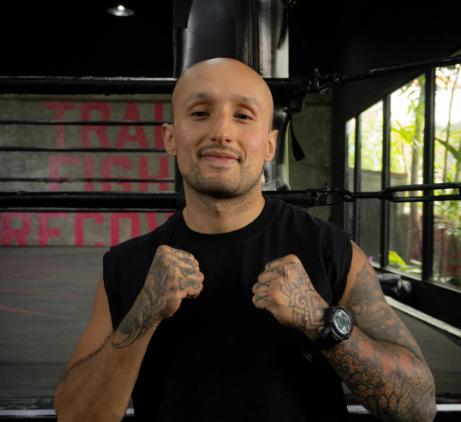
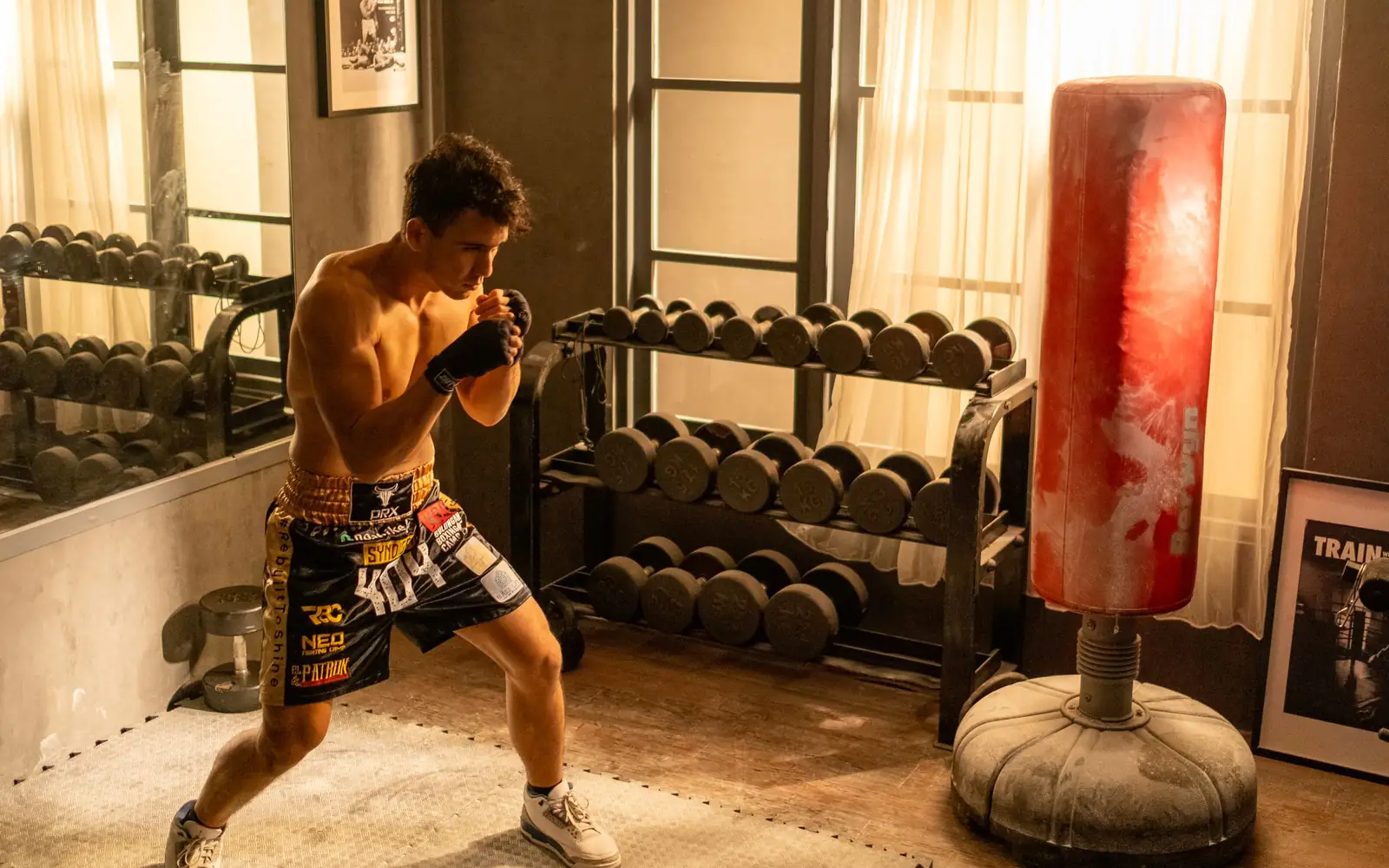
A boxing stance is a base you can move from. The feet, the hips and the weight decide whether the hands have anywhere to go. Pretty hands on stuck feet are a photo, not a stance.
I have coached athletes and everyday people for more than a decade, including combat athletes. Before I add work, I watch how someone stands. A lot of them can throw a punch and still cannot take one quiet step without hopping, crossing the feet, or falling onto the front toes.
This guide is the position. Orthodox and southpaw, where the weight sits, and a short way to practise it. The first month around a gym, the jab and the week is how to start boxing. I am a performance coach. A striking coach still has to see your hands.
Key takeaways
- A boxing stance is the standing position you punch, defend and move from. If you cannot step and finish on the same base, it is not set yet.
- Orthodox means the left side leads. Southpaw means the right side leads. They are the same shape, mirrored.
- Start with the feet a bit wider than your hips, knees soft, and the weight close to even with a little more on the rear foot.
- Hips and shoulders turn a little with the feet. Hands sit by the cheeks. Eyes stay on the person, not on the floor.
- Pick one stance and keep it for a month. Switching every round teaches neither base.
The definition
What Is a Boxing Stance?
A boxing stance is how you stand so a punch, a slip and a step can happen without you falling over. Feet, knees, hips, hands and chin are one position. Change one of them and the others usually follow.
People also say boxing stances, plural, because there are two common versions. The shape is the same. The lead side changes. Lead means the foot and the hand closer to the other person. Rear means the side behind you, the one that crosses.
The two boxing stances
Orthodox boxing, in a gym, usually means the orthodox boxing stance: left foot and left hand in front, right hand behind. Some people also use orthodox boxing to mean ordinary boxing, the sport with the fists, as distinct from a kick or a mixed fight. This page is about the stance.
Southpaw is the other one. The right side leads. It is not a personality and it is not a different sport. The checks below are the same for both. If you want the punches that leave this position, and the first gym, that is how to start boxing. If you want to repeat the shape with nobody in front of you, that is shadow boxing.
| Compare | Orthodox | Southpaw | More square |
|---|---|---|---|
| Lead side | Left foot and left hand | Right foot and right hand | Chest more toward the other person |
| Rear hand | Right hand, the cross | Left hand, the cross | Either hand can strike from a shorter turn |
| Weight | Close to even, a little more on the rear foot | The same, mirrored | More even, so a kick can check and return |
| Where you meet it | Most right-hand boxers start here | Common for left-hand boxers, and a choice for some right-handers | Muay Thai and a lot of MMA, because of kicks and takedowns |
The pieces
The Base Under a Boxing Stance
Four checks cover the position. If the feet are wrong, the hands do not get a vote yet.
- Feet: the widest block
- Weight: close to even
- Hips: a small turn
- Hands: home on the cheeks
- 1
Feet
A bit wider than your hips. Lead foot a short step forward, toe slightly in. Rear foot angled out, not parked directly behind the lead heel. You are not on a tightrope, and you are not in a lunge you cannot leave.
- 2
Weight
Close to even, with a little more on the rear foot so a jab does not drag you onto your toes. You should be able to step forward and step back without a hop.
- 3
Hips
Hips and shoulders turn a little with the feet. Not square, and not so side-on that the rear foot is stuck. The rear hip is what turns when the cross goes.
- 4
Hands and chin
Both hands by the cheeks, elbows toward the ribs. Chin slightly down. Eyes on a spot about chest height in front of you, not on your own fists.
Knees stay soft the whole time. Locked knees turn the stance into a statue and send any push straight into the lower back. The rear heel may lift a little when you move. Neither heel lives in the air for the whole round. Standing on the toes looks light and asks the calves to do a job the hips should share.
Ankles and hips need enough room for this. If the lead knee dives in, or the rear heel cannot come down at all, that is a range problem, not a reason to stand taller and lock out. A slow lunge and a squat with the heel down tell you whether the position is available. The mobility work is there so the stance is a choice, not a compensation.
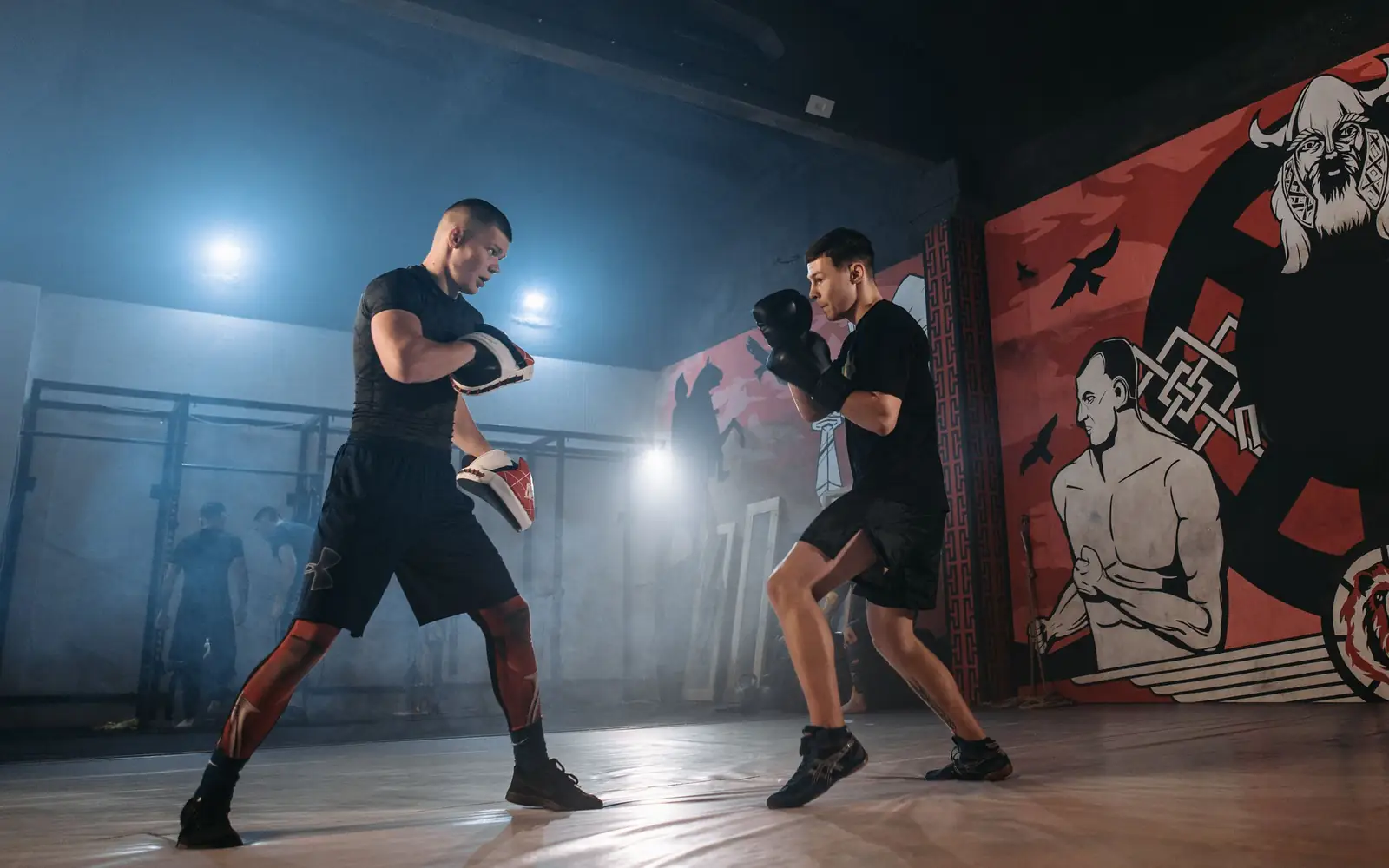
Left side leads
The Orthodox Boxing Stance
Most people who write with the right hand start here. The left side leads. The right hand stays home until it has a reason to leave.
An orthodox boxing stance is the left-lead version. Left foot forward, right foot back. Left hand is the jab. Right hand is the cross. The name is the setup, not a rank and not a style of boxing you have to earn.
Set it in this order. Do it slowly, in front of a wall or a mirror, once, then turn away from the mirror and look at a spot in the room.
- 01
Stand under yourself.
Feet about hip width, knees soft, weight even. You should be able to talk. If the shoulders are already up by the ears, drop them before you step.
- 02
Step the left foot.
A short step toward the spot you are looking at, not a long lunge. The left toe points slightly toward that spot. The right foot stays back and angles out about a quarter turn.
- 03
Offset the rear foot.
The right heel is not directly behind the left heel. A little width keeps you off the tightrope. If the feet are so wide you cannot bring them back under you, narrow it.
- 04
Put the hands home.
Both fists by the cheeks, elbows down, chin slightly tucked. Look through the gloves. Then do the weight check from the section above.
The first punch from here is a jab that leaves and comes back. The hand is on the cheek again before the right hand moves. The hip turn on the cross is small. If you have to wind up, the stance was too square or the weight was stuck on the back heel. Those punches, and the week around a beginner class, live in how to start boxing.
Writing hand is a hint, not a law. Right-hand people usually find orthodox easier because the stronger hand is the rear hand. If the left-lead base feels like you are standing on the wrong foot, try southpaw for one round of steps and compare. Keep the one you can move from.
Right side leads
What Is Southpaw in Boxing?
Southpaw means the right side leads. Same knees, same hands-home rule, mirrored feet.
What is southpaw in boxing? It is the right-lead stance. Right foot and right hand in front. Left foot and left hand behind. The jab is the right hand. The cross is the left hand. A southpaw boxing stance is that position, held so you can still step.
Set it the same way as orthodox, on the other side. Step the right foot a short step forward, toe slightly in. Angle the left foot out. Keep a little width so the heels are not in one line. Weight close to even, a little more on the left foot, which is now the rear foot. Both hands by the cheeks.
Many left-handed boxers use it because the stronger hand stays rear, where the cross comes from. Some right-handers choose it on purpose. Either reason is fine if the base is honest. Choosing it because a video looked awkward for the other person is a bad reason. Awkward for them does not help you if you cannot move.
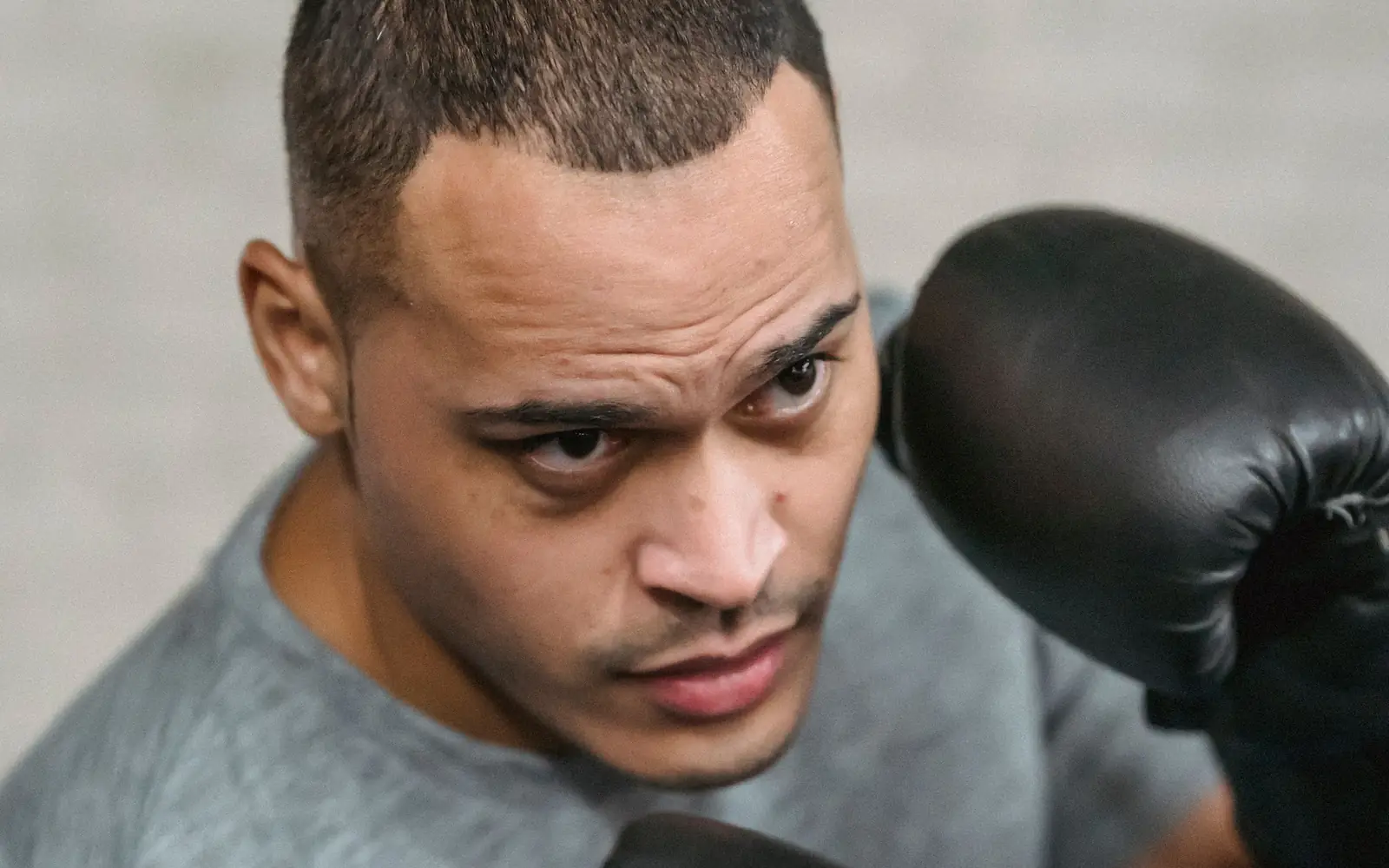
Do not switch inside a combination while you are new. A switch is a step that changes the lead foot. It has a use later, when one stance is already stable. In the first month it mostly means you never practise either base long enough to feel it. Pick one. Stay there for four weeks of the plan below. A coach can film both and tell you which one still looks like you when you are tired.
Against another southpaw, or against an orthodox partner, your lead foot will want to stand on the same line as theirs. That is a footwork problem for later, in a class. At home, the job is still your own feet: apart, soft knees, hands home.
The week
Where the Stance Fits the Week
It is a skill you repeat, not a workout you grind. The legs that hold it are built on another day.
Two or three short rounds before class are enough. Step, reset, jab, and put the hand home. You should arrive at the coach sharper, not cooked. The class is the session. The stance work was the on-ramp. Those rounds are the same idea as shadow boxing, with one job: finish where you started.
At home, ten to fifteen minutes is a real session. Three of those days a week is plenty when you also lift. A fourth day stays easy. Do not stack a long stance session on top of a hard spar. The spar already asked your legs to hold a position under pressure.
The position will not build much muscle. Air and a quiet hold do not get heavier. The tissue that holds a soft knee is the tissue you load: a squat or a trap-bar deadlift, a lunge, and a farmer's carry. Three sets of 4 to 8, with reps left. Two lifting days is enough if you already train the sport. One day is enough when you are new. The strength and conditioning guide is how I keep that day short enough that the next class still has a step in it.
Keep the heavy lift away from the day the feet are the point. Easy steps the day after squats are fine. Fast combinations on dead legs teach you to stand still and punch. If you are coming back from an injury, earn the position first. Pain in the knee, the ankle or the hip is a stop. Soreness in the legs the next day, after a lift, is a different thing.
Combat sports
Boxing Stance for Fighters
For boxing, the stance can sit a little taller. For Muay Thai and MMA it usually sits lower, because other weapons are allowed.
I do not coach the fight. I coach the position you are in when the striking coach asks you to move. A tall, narrow boxing stance is easy to kick under and easy to shoot under. In Muay Thai the base is a bit more square and the weight a bit more even, so you can check and throw. The kicks themselves are the Muay Thai kicks guide. In MMA the stance drops. That week is MMA training. Once someone has a hand on you, the job changes, and that is the grappling guide.
- One base per sport day. Do not rehearse a tall boxing stance on the day you are supposed to sprawl.
- Hands still come home. A lower stance is not a reason to leave the chin out.
- The rear hip still has to be free enough to turn a cross or a kick without the lead knee collapsing in.
- Cut the volume near a fight. Same position, fewer rounds. Arrive able to stand in it.
- The lift stays on its own day. Short, and finished while the knees can still bend softly.
- Base first
- Then the hands
Flagship program · Combat Performance
Strength and conditioning for the weeks around your striking. Legs that can hold a stance in the last round, and a step that is still there.
Your first week
A Beginner Plan for the Stance
Three short stance days and one strength day. The strength day is there because holding still will not build the legs.
| Day | Session | Effort | What you do |
|---|---|---|---|
| Monday | Stance and steps | 1 of 3 | 4 rounds of 2 minutes. Round 1 is feet only. Rounds 2 to 4 add a slow jab that comes home. 60 seconds between rounds |
| Tuesday | Rest | 0 of 3 | Walk if you want. No stance rounds, no lift |
| Wednesday | Strength | 2 of 3 | Squat or trap-bar deadlift, lunge, push-up, pull-up. 3 sets of 4 to 8, with reps left |
| Thursday | Stance again | 1 of 3 | The same four rounds. Add a small step after the jab only if Monday still looked calm |
| Friday | Class or easy | 1 of 3 | A beginner class if you have one. If not, a 20-minute walk. Do not add a hard bag session on top |
| Saturday | Optional | 1 of 3 | Ten minutes of steps in your stance, only if Thursday left you fresh. Otherwise skip it |
| Sunday | Rest | 0 of 3 | Full rest. This is the day the position sticks |
Effort shows how hard the day is, from 1 to 3. Stay in one stance all week.
Run this for four weeks before you change the lead side. The only progression is a cleaner step, or one extra honest minute. Judge it by whether the last round still has soft knees and hands up, not by how sweaty you got.
Four rules make the plan work:
- 01
One stance.
Orthodox or southpaw. Write it down. Do not switch because a round felt awkward.
- 02
Feet before fists.
If the weight check fails, you are not ready to speed the hands up.
- 03
One harder day, then an easier one.
The lift is the harder day. The stance days stay technical.
- 04
Let a coach see it.
Film one round from the side, or better, let a coach watch. The mistakes you cannot feel are the ones that stick.
What to avoid
Common Boxing Stance Mistakes
These are the ones I have to unwind most often, before any punch is the problem.
- 01
Feet on a tightrope
The rear foot sits directly behind the lead foot. One push and you fall off the line. Offset it. Keep a little width.
- 02
Weight stuck on the heels
You cannot jab without hopping, and you cannot push the rear heel down. Bring the weight forward until the weight check works both ways.
- 03
Knees locked, or a lunge you cannot leave
Locked knees are brittle. A lead foot that is too far turns the stance into a stretch. Soften the knees and shorten the step until you can move.
- 04
Chin up, hands low
Looking at your feet lifts the chin. Eyes on the person. Both hands come back to the cheeks between shots.
- 05
Switching every round
Orthodox for a minute, southpaw for a minute, then neither feels like home. Pick one for the month.
- 06
Using the stance as the whole program
A quiet hold will not build the legs that keep the knees soft. Lift on another day, and get a coach to see the shape.
Questions
Common Questions About Boxing Stance
What is a boxing stance?
A boxing stance is the position you punch, defend and move from. The feet are a bit wider than the hips, one foot leads, the knees are soft, the hands sit by the cheeks and the chin is slightly down. It only counts if you can step and finish on that same base.
What are the main boxing stances?
Two. Orthodox, with the left side leading, and southpaw, with the right side leading. The shape is the same. Muay Thai and MMA often use a lower, more square version of whichever one you fight from, because kicks and takedowns are allowed.
What is an orthodox boxing stance?
The left foot and the left hand are in front. The right hand is the rear hand, the one that crosses. Most right-handed people start here. Orthodox boxing, when people mean the stance, is this setup. It can also just mean ordinary boxing, the sport with the fists.
What is southpaw in boxing?
Southpaw means your right side leads. The right foot and the right hand are in front, and the left hand is the rear hand. Many left-handed boxers use it. Some right-handers choose it. It is a stance, not a different sport.
How do I stand in a southpaw boxing stance?
Step the right foot a short step forward, toe slightly in, and angle the left foot out. Keep the feet a bit wider than your hips, knees soft, a little more weight on the rear foot, and both hands by the cheeks. Then check that you can step forward and back without hopping.
Should a beginner use orthodox or southpaw?
Try both for a round of steps. Keep the one you can move from without thinking about which foot is in front. Right-hand people usually start orthodox. Stay with that choice for about four weeks. Switching every round teaches neither base. A coach can confirm it once they can see you.
Does a boxing stance build strength?
Not in any useful way. Holding the position teaches the shape. The legs that keep the knees soft come from a squat or a trap-bar deadlift, a lunge and a carry, for a few sets with reps left. Do that on its own day.
Final thoughts
Set the feet. Then see if you can still move.
A boxing stance is simple to copy and easy to fake. Lead foot forward, rear foot offset, knees soft, hands home, eyes up. Then take a step and finish in the same place. If you cannot, the hands were early.
Pick orthodox or southpaw, put the beginner week on the calendar, and give it four weeks. The last round should look calmer than the first, with the same foot in front.
If you want the stance and the lifting set around the way you actually train, I coach that one on one. You can train with me online from anywhere, or in person in Bali.
More on the week around it: how to start boxing, shadow boxing, MMA training, and strength and conditioning.
1:1 coaching with Christian