Chest exercise guide
Incline Dumbbell Fly
The bench angle, the form, and how it compares with the flat fly.
The incline dumbbell fly stretches and isolates the upper part of your chest. The angle you set the bench to decides whether your chest or your shoulders do the work.

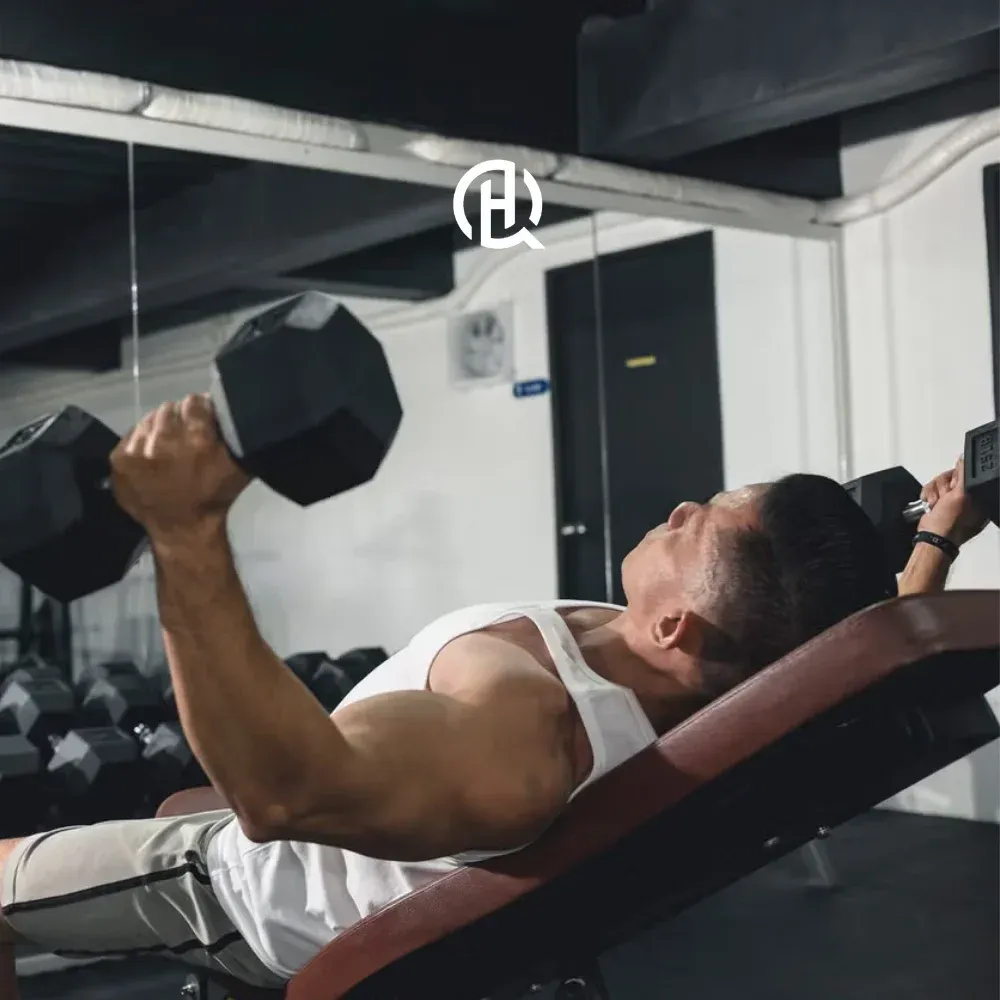
The incline dumbbell fly is a chest isolation exercise done on a bench set to about 30 degrees. With your elbows slightly bent, open your arms in a wide arc until you feel a stretch, then bring the dumbbells back together. It puts more work on the upper chest than a flat fly.
Key takeaways
- Set the bench to about 30 degrees. Past 45, the front shoulders start taking over.
- Palms face each other, elbows slightly bent, and that bend stays fixed.
- Lower until you feel a stretch at about chest level, then reverse slowly.
- Go light: 2 to 4 sets of 10 to 15 reps after your presses.
- Flat or incline? Pick the one you feel more in your chest and that does not bother your shoulders.
- Muscles
- Chest (more upper chest than a flat fly), front shoulders, biceps as stabilisers
- Equipment
- Adjustable bench, two dumbbells
- Difficulty
- Beginner to intermediate
- Sets & reps
- 2–4 sets of 10–15 reps
The basics
What Is the Incline Dumbbell Fly?
The incline dumbbell fly is a fly done on an incline bench. Your arms move in a wide arc with the elbows slightly bent, so the chest does the work and the triceps barely help.
The incline angle moves the work toward the upper part of the chest. Its main benefit is a strong stretch across the pecs. For where it fits among other chest moves, see the best chest exercises.
Benefits
- 01
Upper-chest focus
The angle shifts the work toward the upper chest compared with a flat fly.
- 02
A deep stretch
The chest works hardest at the bottom, where it is stretched.
- 03
No triceps limit
Useful after presses, when your arms are tired but your chest is not.
Bench setup
What Angle Should the Bench Be?
Set the bench to about 30 degrees. That is a good default for most people. You can go up to 45 if you feel it more in your upper chest there, but not much higher.
The reason: in a 2020 study of the bench press at five angles, upper-chest activity peaked at 30 degrees, and angles above 45 degrees put more of the work on the front shoulders. That study looked at pressing, not flies, but the same rule of thumb is a sensible starting point.
Step by step
How to Do the Incline Dumbbell Fly
- 01
Warm up
Do one or two light sets of the fly before your working sets. If it is your first chest exercise, do a light incline press first.
- 02
Set up
Set the bench to about 30 degrees. Sit back with the dumbbells on your thighs, then lie back and press them up over your upper chest. Feet flat on the floor.
- 03
Set your position
Shoulders down and back, back against the bench. Palms face each other. Bend your elbows slightly and keep that bend.
- 04
Lower in an arc
Open your arms out to the sides for 2 to 3 seconds. Breathe in.
- 05
Stop at the stretch
Stop when the dumbbells reach about chest level and you feel a stretch. If your shoulders feel pinched, stop higher.
- 06
Bring them back
Breathe out and bring the dumbbells back up along the same arc until they nearly meet over your upper chest.
- 07
Let the chest lead
Some shoulder work is normal. If you feel pain, adjust your position or switch to a cable fly. If it persists, stop.
"I set most people at 30 degrees and only go steeper if they still do not feel it in the upper chest."
Herman Leir, Personal Trainer
Avoid these
Common Mistakes
Do
- Set the bench to about 30 degrees.
- Palms face each other, elbows slightly bent, and that bend stays fixed.
- Lower until you feel a stretch at about chest level, then reverse slowly.
- Start light and control every rep.
Don't
- Starting too heavy. Heavy dumbbells pull your arms too deep and strain the shoulder. Start light.
- Using momentum. Bouncing out of the bottom takes the work off the chest and can cause injury. Control every rep.
- Setting the bench too steep. Above 45 degrees, it turns into a shoulder exercise.
- Locking the elbows. Straight arms load the elbow and the front of the shoulder. Keep the slight bend.
- Pressing instead of flying. Bending and straightening the elbows moves the work to the triceps.
Compare
Incline vs Flat Dumbbell Fly: Which Is Better?
The difference is small, and how it feels to you matters most. If the flat fly hurts your shoulders, try the incline. If the flat fly feels better and you feel it more in your chest, keep doing it.
| Factor | Incline dumbbell fly | Flat dumbbell fly |
|---|---|---|
| Bench | About 30° | Flat |
| Main emphasis | Upper chest | Whole chest |
| Shoulder involvement | A little more | A little less |
| Best for | A lagging upper chest | General chest work |
For the flat version, see the dumbbell fly guide. To load the upper chest heavier, pair it with the incline dumbbell bench press or the incline barbell bench press.
Programming
Sets and Reps for the Incline Dumbbell Fly
Pick a weight you can lower slowly to a full stretch for every rep, and finish each set with 1 to 3 reps left. Add weight only when every set reaches the top of the range with the same form.
| Goal | Sets | Reps | Rest |
|---|---|---|---|
| Learning the movement | 2 | 12–15 (very light) | 60 s |
| Muscle growth | 2–4 | 10–15 | 60–90 s |
Do it after your presses. Training is only part of it. Eating enough protein and calories matters too; see what to eat for muscle growth.
Good fit?
Who It's For, and Who Should Skip It
Good fit
Anyone whose upper chest lags behind, and lifters who want an isolation exercise after incline presses.
Skip it or swap it if
Deep stretches cause shoulder pain. A low-to-high cable crossover or a lighter, shallower fly can work instead. Stop if you feel sharp pain.
Quick answers
Frequently Asked Questions
What angle should the bench be for incline dumbbell flies?
About 30 degrees suits most people. You can go up to 45 degrees if you feel it more in your upper chest there. Above 45, the front shoulders start doing more of the work and the exercise drifts toward a shoulder movement. If your bench has notches, pick the first or second incline setting and stay there while you learn the movement.
Do incline dumbbell flies work the upper chest?
Yes. The incline angle moves more of the work to the upper part of the chest compared with a flat fly. The whole chest still works, and the front shoulders help. It is an isolation exercise, so it adds to your upper-chest training rather than replacing incline presses, which let you lift heavier. One press plus one fly is a good pairing.
Is incline or flat dumbbell fly better?
Neither is clearly better. The difference between them is small. Choose the incline if your upper chest lags or the flat fly bothers your shoulders. Choose the flat fly if it feels better and you feel it more in your chest. Many people rotate between the two every few weeks. Use the one you can do with good form and progress over time.
How heavy should incline dumbbell flies be?
Light. Use a weight you can lower slowly to a stretch at about chest level and bring back up without bending your elbows more. For most lifters that is much lighter than the dumbbells they press with. Aim for 10 to 15 controlled reps with one to three left in the tank. If the dumbbells drag your arms down, go lighter.
Should palms face each other on an incline fly?
Yes. Palms facing each other, with a slight bend in the elbows, is the standard grip. It keeps the shoulders in a comfortable position and lets the chest pull the dumbbells together. Some lifters turn their pinkies slightly in at the top. That is fine, but do not rotate the dumbbells so far that your elbows start to drop or flare.
Upper Chest Focused program
Train your upper chest with a plan.
Want a plan built around your upper chest? The Upper Chest Focused program is part of the HermQ bodybuilding subscription. Billed monthly.