Chest training
Best Chest Exercises
12 lifts ranked, with what each one builds and how to put them together
Twelve chest exercises, from push-ups to decline presses. Each one gets what it builds, the cue that matters most, and a link to the full guide.

- Chest: upper, mid and lower
- Front delts: help every press
- Triceps: lock out the press
The best chest exercises for most lifters are the barbell bench press, the dumbbell bench press and the incline dumbbell bench press, plus push-ups if you train without equipment. Presses build size and strength. Flies and cable crossovers add stretch and isolation. Two or three of these, trained hard, cover the whole chest.
Key takeaways
- Presses (barbell, dumbbell, incline, machine) are the base of chest size and strength. Flies are the finisher.
- An incline bench around 30° puts more work on the upper chest. Much steeper and the front delts take over.
- Two or three chest exercises per session is enough for most people if every set is hard.
- Pick by goal: strength → barbell bench, upper chest → incline dumbbell, no equipment → push-ups, joint-friendly isolation → cable crossover or pec deck.
- Fighters: one press plus push-ups covers it. Pressing helps frames and the clinch; punch power comes mostly from the legs, hips and trunk.
At a glance
The best chest exercises at a glance
Ranked by how much they give most lifters who want a bigger, stronger chest. The top four are presses for a reason: they let you load the chest heavy and progress for years.
| Exercise | Best for |
|---|---|
| 1. Barbell bench press | Strength and mass |
| 2. Dumbbell bench press | Range of motion, fixing left-right imbalance |
| 3. Incline dumbbell bench press | Upper chest size |
| 4. Incline barbell bench press | Upper chest strength |
| 5. Push-ups | Beginners, training anywhere |
| 6. Chest press machine | Stable pressing, beginners, high reps |
| 7. Cable crossover | Squeeze and constant tension |
| 8. Dumbbell fly | Deep stretch |
| 9. Incline dumbbell fly | Upper chest stretch |
| 10. Pec deck | Easy-to-learn isolation |
| 11. Decline bench press (barbell) | Lower chest, heavy pressing with less shoulder angle |
| 12. Decline dumbbell bench press | Lower chest with more range |
Tap an exercise to jump to it. For the rest of the body, see the best exercises for each muscle group.
The ranking
The 12 best chest exercises
-
01
Best for: strength and overall chest mass
Barbell bench press
The barbell bench press lets you move the most weight of any chest exercise, which is why it sits at the top. It works the whole chest, the front delts and the triceps in one movement, and it is easy to track progress. Use a spotter or safety arms when you go heavy.
Key cue Lower the bar to mid-chest with control. Do not bounce it off your ribs. Keep your feet planted and your shoulder blades pulled back.
See the full list of bench press benefits and setup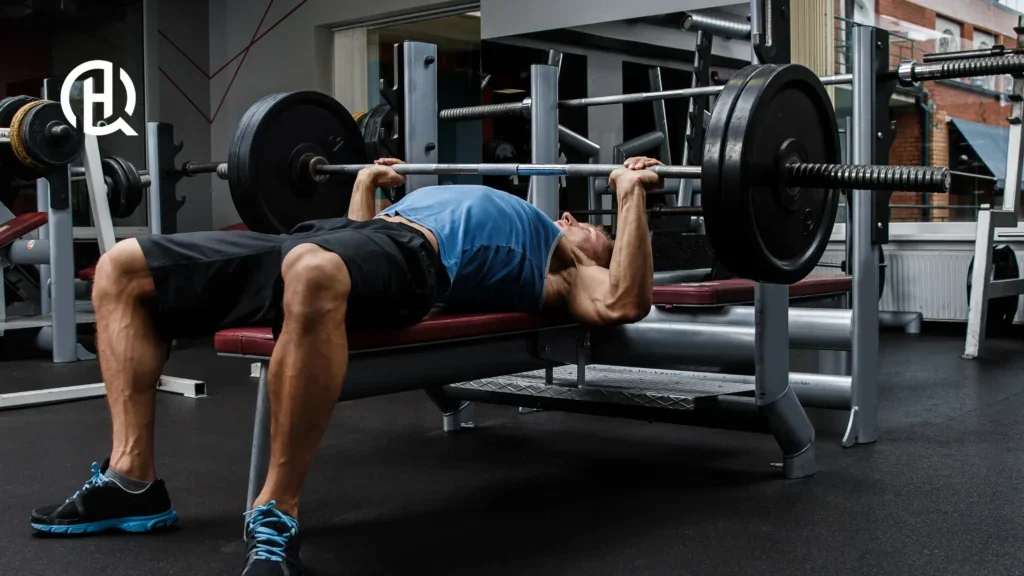
-
02
Best for: more range of motion and evening out a weaker side
Dumbbell bench press
Dumbbells let each arm work on its own and let your hands travel lower and closer at the top. You will lift less total weight than on a barbell, but each side has to pull its weight.
Key cue Control the descent. Lower until you feel a stretch across the chest, then press up and slightly in.
Learn the dumbbell bench press step by step -
03
Best for: upper chest size
Incline dumbbell bench press
Setting the bench to around 30° shifts more of the work to the upper chest. With dumbbells you get a deep stretch and a free path for your shoulders, which most people find comfortable.
Key cue Keep the bench low. Past about 45° the front delts start doing most of the work.
How to do the incline dumbbell bench press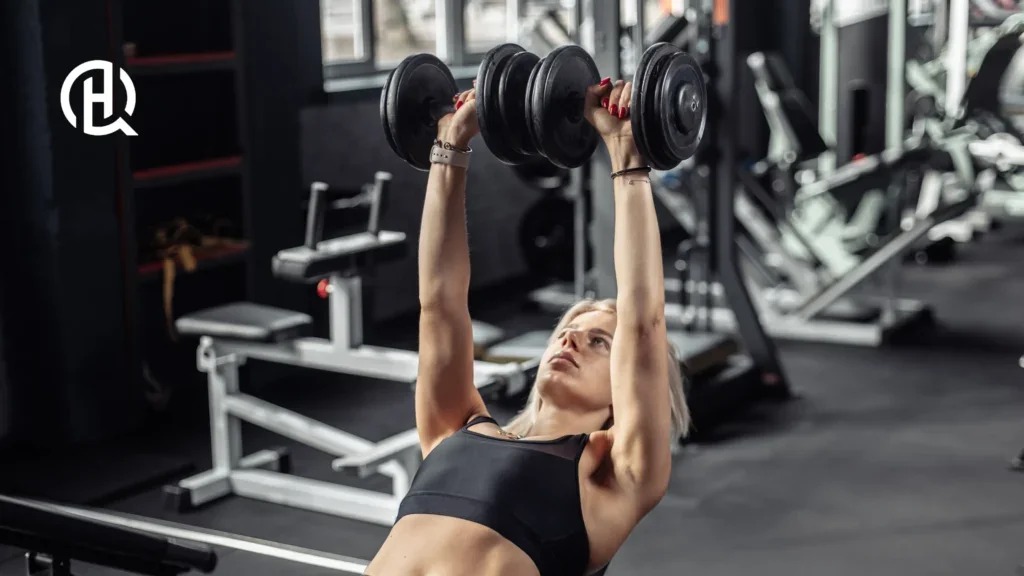
-
04
Best for: upper chest strength
Incline barbell bench press
The incline barbell press is the heavy version of the upper-chest press. It loads more than dumbbells and is easy to progress in small jumps.
Key cue Keep your wrists stacked over your elbows and touch the bar to your upper chest, just below the collarbones.
Incline barbell bench press guide, including the best bench angle -
05
Best for: beginners and training anywhere
Push-ups
Push-ups need no equipment and work the chest, front delts and triceps while your core holds a straight line. Make them harder over time with a slower descent, a deficit, or added weight.
Key cue Hands just outside shoulder width, body in one straight line from head to heels.
Push-up benefits and how to progress them -
06
Best for: stable pressing, beginners and high-rep sets
Chest press machine
The machine sets the path for you, so you can push hard without balancing a bar. It is a good first press for beginners and a good way to add volume late in a session.
Key cue Push in a controlled motion and take 2–3 seconds on the way back.
How to set up the chest press machine -
07
Best for: a hard squeeze and constant tension
Cable crossover
Cables keep tension on the chest through the whole rep, including the squeeze at the end where dumbbells go slack. Change the pulley height to bias the upper or lower chest.
Key cue Set the pulleys at about chest height or slightly above. Stand in a split stance and keep your torso still.
Cable crossover guide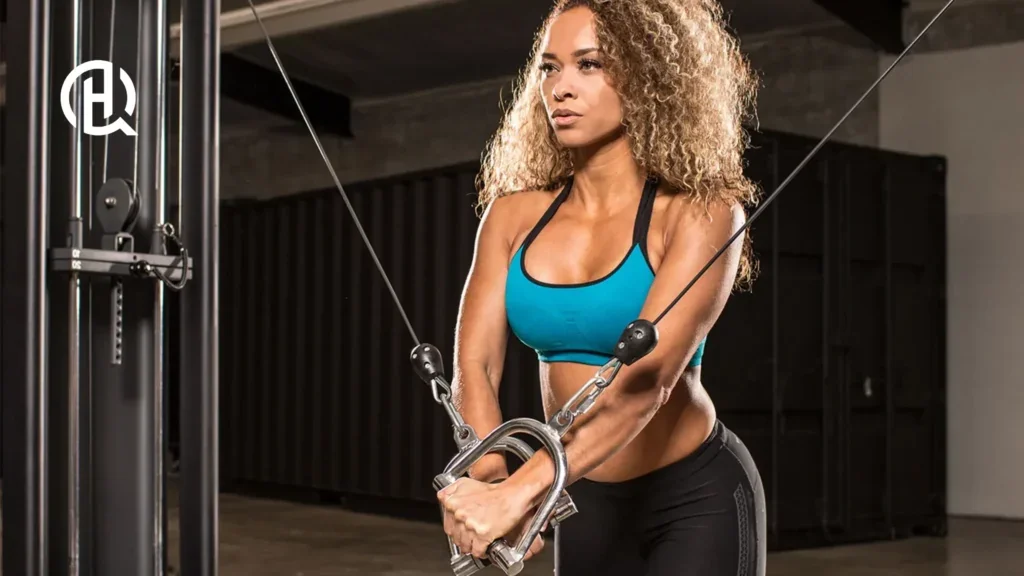
-
08
Best for: a deep stretch on the chest
Dumbbell fly
The fly has the widest arc on this list. It is an isolation exercise, so go lighter than you press.
Key cue Keep a slight, fixed bend in your elbows. It protects the elbow and shoulder and keeps the work on the chest. Do not turn the fly into a press.
How to do the dumbbell fly without straining your shoulders -
09
Best for: stretching and isolating the upper chest
Incline dumbbell fly
Same movement as the flat fly, on a bench at about 30°. It pairs well after an incline press.
Key cue Use a light to moderate weight and stop the stretch where your shoulders still feel solid.
Incline dumbbell fly guide -
10
Best for: simple, easy-to-learn isolation
Pec deck
The pec deck guides the arc for you, so you can focus on squeezing the chest. The path is fixed, but too much weight can still strain your shoulders.
Key cue Set the seat so the handles line up with mid-chest and start from a stretch you can control.
Pec deck machine benefits and setup -
11
Best for: lower chest and heavy pressing with a shorter range
Decline bench press (barbell)
The decline angle puts more of the work on the lower chest and less on the front delts.
Key cue Lock your feet under the pads before you unrack. Beginners should use a bench with footpads and a spotter.
Decline bench press guide -
12
Best for: lower chest with more range of motion
Decline dumbbell bench press
The dumbbell version of the decline bench press, with a deeper stretch and each arm working alone.
Key cue Getting the dumbbells into position on a decline is awkward. Use a spotter for heavy sets.
Decline dumbbell bench press guide
Choose
Which chest exercise should you pick?
Strength
Barbell bench press. It moves the most weight and progresses in small, trackable jumps.
Overall size
Barbell or dumbbell bench press, plus one fly or cable movement.
Upper chest
Incline dumbbell or incline barbell press at about 30°, then an incline fly.
Lower chest
Barbell or dumbbell decline press. Dips are another option.
Beginner or no gym
Push-ups, then the chest press machine once you have access.
Cranky shoulders
Dumbbells, a slight incline and a neutral grip often feel better than a flat barbell. Cables and the pec deck let you train hard with lighter loads. Stop any exercise that gives you sharp pain.
Put it together
How to build a chest workout
One heavy press, one press at a different angle and one isolation movement. For most lifters that is enough.
| Slot | Exercise | Sets × reps | Rest |
|---|---|---|---|
| Heavy press | Barbell bench press or dumbbell bench press | 3–4 × 6–10 | 2–3 min |
| Angle press | Incline dumbbell bench press | 3 × 8–12 | 1.5–2 min |
| Isolation | Cable crossover or dumbbell fly | 2–3 × 10–15 | 1–1.5 min |
- Warm up with 2–3 lighter sets of your first exercise. You do not need a long cardio warm-up.
- Breathe in on the way down, brace, and breathe out as you press.
- Add weight or reps when you hit the top of the range on every set with clean form.
- Train chest once or twice a week. To see how much total training makes sense, read how much you should train each week.
- Chest growth also depends on eating enough protein and calories. See the best diet for muscle growth.
"When a client's chest stops growing, I almost never add exercises. I check that the presses are progressing and that every set is close to failure."
Herman Leir, Personal Trainer
For fighters
Chest exercises for fighters
If you train Muay Thai, MMA, boxing or grappling, chest work supports your training. It is not the main event. Punch power comes mostly from your legs, hips and trunk. What pressing strength gives you is a stronger push: holding a frame, pushing an opponent off in the clinch, and getting back up off the mat.
For that job, presses beat isolation. Pick one press, such as the barbell or dumbbell bench press, and add push-ups for more volume without much fatigue. For the bigger picture, see strength and conditioning for fighters.
When
On easier training days, or several hours away from hard sparring or pad work.
How much
Two or three hard sets per exercise. Stop 1–3 reps short of failure and cut sets as a fight gets close.
Balance
Pair every press with a row or pull-up so pushing and pulling stay even.
What to avoid
Common chest training mistakes
- 01
Bouncing the bar
It takes tension off the chest and stresses the ribs. Pause lightly or touch and press.
- 02
Flaring the elbows to 90°
It loads the front of the shoulder. Keep elbows about 45° from your torso on presses.
- 03
Setting the incline too steep
Past about 45° it turns into a shoulder press. Stay near 30°.
- 04
Ego weight on flies
Flies are for stretch and squeeze. If your elbows bend more each rep, the weight is too heavy.
- 05
Too many exercises, not enough effort
Five chest exercises done easily build less than three done hard.
Questions
Best chest exercises: FAQ
What is the most effective chest exercise?
For most people it is the barbell bench press. It works the whole chest, the front delts and the triceps, lets you lift the most weight, and is easy to progress week to week. If a barbell bothers your shoulders, the dumbbell bench press is just as good for growth. Pick the press you can train hard and consistently.
Are 3 exercises enough for chest?
Yes, for most lifters. One heavy flat press, one incline press and one fly or cable movement cover the whole chest. Do 2–4 hard sets of each and add weight or reps over time. Adding a fourth or fifth exercise rarely helps if the first three are not being pushed close to failure.
Is incline or flat bench better for chest?
Neither is better. They do different jobs. A flat bench lets you lift more and works the whole chest. An incline around 30° puts more work on the upper chest. Most people should do both in a week. If you only do one, flat for strength, incline if your upper chest lags. More on angles in the incline barbell bench press guide.
Is fly or press better for chest?
Presses are better for building size and strength because you can load them heavier and progress longer. Flies isolate the chest and train it in a deep stretch, which makes them a good second or third exercise. Use a press first in your workout, then a fly or cable crossover to finish.
Can you build a big chest with push-ups only?
You can build a decent chest with push-ups if you keep making them harder: slower reps, a deficit with hands on blocks, feet raised, or a weighted vest. Once you can do many easy reps in a row, growth slows. At that point a bench press or chest press machine makes progress simpler.
How often should you train chest?
Once or twice a week works for most people. Twice a week lets you split the work across two shorter sessions, which helps keep quality high. Leave at least a day between hard chest sessions so your chest, shoulders and triceps recover. A full split like the 5-day program spreads chest work across the week for you.
Is chest training good for fighters?
Yes, in the right dose. A stronger press helps you hold frames, push an opponent off in the clinch and get up off the mat in MMA or grappling. It adds little to punch power, which comes mostly from the legs, hips and trunk. One or two presses, such as the bench press and push-ups, for a few hard sets on easier days is enough for most fighters.
HermQ programs
Train your chest with a plan.
One subscription unlocks every HermQ bodybuilding program while it is active, from the 3-day split to the Upper Chest Focused program. Billed monthly.
Training for a fight sport? Combat Performance is a one-time $29 purchase with lifetime dashboard access.
Get Instant Access – $29