Exercise list · Full body
Best Full-Body Exercises
Ten lifts that train the most muscle per rep, and how to build a workout from them
Some exercises train one muscle. These train almost all of them at once, which makes them the best use of your time in the gym.

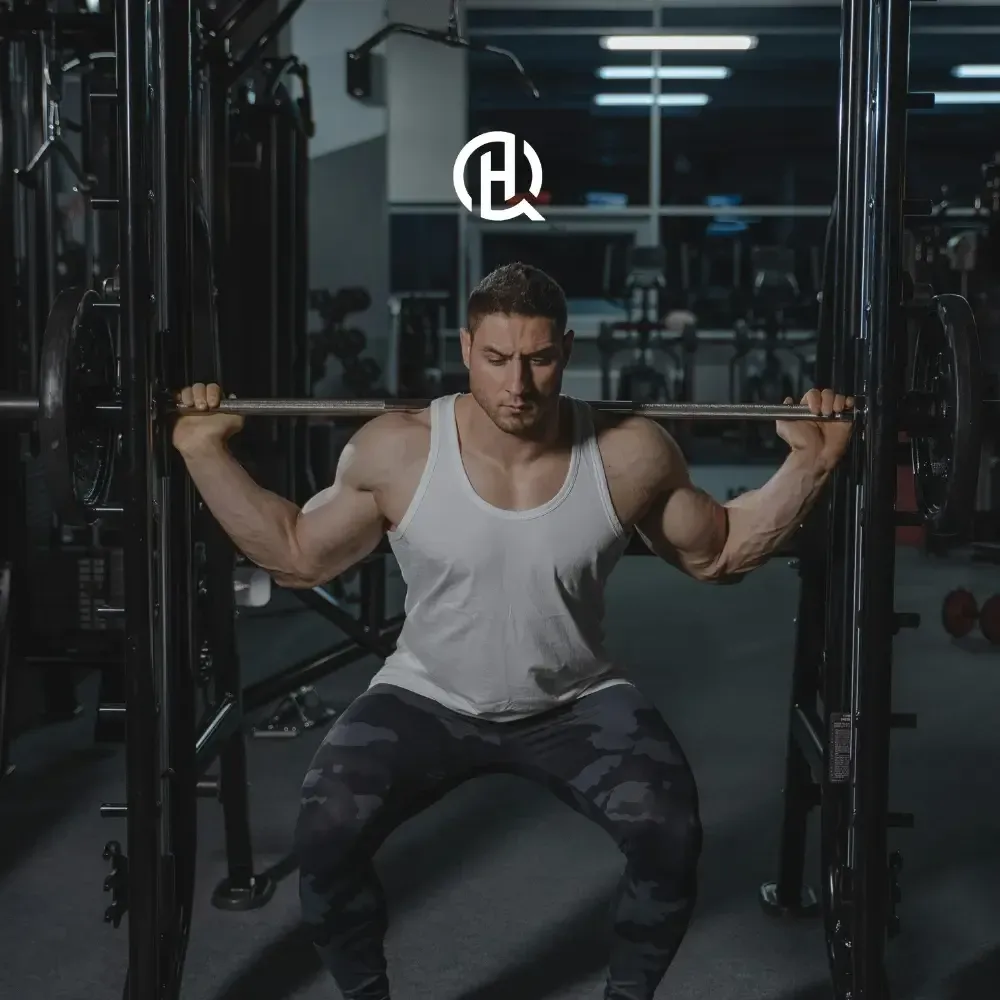
The best full-body exercises are big compound lifts that train your legs, hips, back and core in one movement. The deadlift, squat, clean and press, kettlebell swing and farmer's carry top the list. Build a session from one hinge, one squat or lunge, one push, one pull and one carry, two to three times a week.
Key takeaways
- A full-body exercise moves several big joints and muscle groups at once.
- The deadlift and squat are the base. Carries, swings and the clean and press add power, grip and conditioning.
- Pull-ups and push-ups are upper-body compounds, not full-body lifts. Pair them with a leg movement.
- One hinge, one squat or lunge, one push, one pull and one carry make a complete session.
- Two to three full-body sessions a week is enough for most people.
- If you fight, two short full-body sessions fit around skill training better than a body-part split.
- Muscles
- Legs, glutes, back, core, shoulders, grip
- Equipment
- Barbell, dumbbells, kettlebell, pull-up bar, rower, bodyweight
- Difficulty
- Beginner to advanced
- Sets & reps
- 3–5 × 3–12 depending on lift and goal
Quick list
The 10 best full-body exercises at a glance
| Exercise | Full body? | Main muscles | Equipment | Best for |
|---|---|---|---|---|
| 1. Deadlift | Yes | Glutes, hamstrings, back, grip, core | Barbell, trap bar, dumbbells | Total strength |
| 2. Squat | Yes | Quads, glutes, adductors, core, upper back | Barbell, dumbbell, bodyweight | Leg strength and size |
| 3. Clean and press | Yes | Legs, hips, back, shoulders, triceps, core | Barbell, dumbbells, kettlebell | Power, floor to overhead |
| 4. Kettlebell swing | Yes | Glutes, hamstrings, core, grip, shoulders | Kettlebell | Hip power and conditioning |
| 5. Farmer's carry | Yes | Grip, traps, core, legs | Dumbbells, kettlebells, handles | Grip and core strength |
| 6. Burpee | Yes | Legs, chest, shoulders, triceps, core | None | Conditioning anywhere |
| 7. Rowing machine | Yes | Legs, back, arms, core | Rower | Low-impact cardio |
| 8. Lunge | Mostly legs | Quads, glutes, core | Bodyweight, dumbbells, barbell | Single-leg strength and balance |
| 9. Pull-up | Upper body | Lats, upper back, biceps, grip, core | Bar | Pulling strength |
| 10. Push-up | Upper body | Chest, shoulders, triceps, core | None | Pushing strength anywhere |
Tap an exercise to jump to it.
Definition
What is a full-body exercise?
A full-body exercise is a compound, multi-joint movement that trains your lower body, upper body and core in the same rep. A deadlift is one. A biceps curl is not. You'll also see them called total-body or compound exercises. They're not exactly the same thing: every full-body exercise is compound, but not every compound exercise is full-body. A bench press is compound and upper-body only.
- 01
More muscle per rep
One movement trains several big muscle groups.
- 02
Time efficient
Five or six of these cover the whole body in one session.
- 03
Real-world strength
Lifting, carrying and pushing from the ground carry over to sport and daily life.
- 04
Heavy work in less time
Big lifts use a lot of muscle, so sessions feel demanding even when they're short.
The ranking
The 10 best full-body exercises, ranked
-
01
Best for: total strength
Deadlift
Lifts a weight from the floor with your hips and legs while your back holds position. It trains your whole posterior chain and grip.
Key cue Bar over the middle of your foot. Pull the slack out of the bar before it leaves the floor. Push the floor away and stand tall.
Variations: barbell deadlift, trap bar deadlift, dumbbell deadlift, kettlebell sumo deadlift, barbell stiff-leg deadlift.
Sets & reps: 3–5 × 3–6 for strength; 3 × 6–10 for muscle.
-
02
Best for: leg strength and size
Squat
Trains your quads, glutes and adductors, while your core and upper back hold the load.
Key cue Brace before you descend. Knees follow your toes. Go as deep as you can with a neutral back.
Variations: goblet squat, front squat, hack squat, Bulgarian split squat. Include single-leg work as well for balance.
Sets & reps: 3–5 × 5–10.
Exercise page: squat.
Why it matters: squat benefits -
03
Best for: power, floor to overhead
Clean and press
Two lifts in one: pull the weight from the floor to your shoulders, then press it overhead. Few exercises use more of your body in one rep.
Key cue Legs and hips move the weight to your shoulders, not your arms. Squeeze your glutes and brace your core for the press. Learn it light, with dumbbells or an empty bar.
Variations: dumbbell clean and press, kettlebell clean and press, barbell push press.
Sets & reps: 4–5 × 3–5.
-
04
Best for: hip power and conditioning
Kettlebell swing
A fast hip hinge that drives the bell to chest height. It trains glutes, hamstrings and grip, and gets your heart rate up.
Key cue Hike the bell back between your legs. Snap your hips forward. Your arms are ropes, not the engine.
Variations: single-arm swing, side-stepping swing.
Sets & reps: 5–8 × 10–15, or 10–15 swings at the start of every minute for 10 minutes.
Exercise page: kettlebell swings -
05
Best for: grip and core strength
Farmer's carry
Pick up two heavy weights and walk. Your grip, traps and core work hard to keep you upright, and your legs carry the load.
Key cue Stand tall, shoulders down. Short, steady steps. Walk slowly and keep your posture.
Variations: suitcase carry, one side at a time.
Sets: 3–5 walks of 20–40 metres.
Exercise page: dumbbell farmer's carry -
06
Best for: conditioning anywhere
Burpee
A squat, a plank, a push-up and a jump in one move. No equipment, high heart rate. Better for conditioning than for building muscle.
Key cue Hands down, jump the feet back, chest to the floor, jump the feet in, jump up. Come off the floor explosively.
Variations: single-leg, tuck-jump, Spiderman.
Sets & reps: 3–5 × 8–15, or 20–30 s work / 30 s rest intervals.
Exercise page: burpees -
07
Best for: low-impact cardio
Rowing machine
Each stroke uses your legs, back and arms in sequence. Low impact, easy on the joints, and good for conditioning and endurance.
Key cue Drive with your legs first: the initial drive comes from the heels, not the arms. Then lean back slightly and pull the handle to your lower ribs. Return in reverse.
Variations: steady pace, intervals.
Sets: 10–20 minutes steady, or 6–8 × 250 m with 60–90 s rest.
-
08
Best for: single-leg strength and balance
Lunge
A single-leg squat pattern. It trains quads and glutes one side at a time and challenges balance.
Key cue Take a step long enough that your front heel stays down. Your front knee follows your toes. Drive up through the front foot with the quads and glutes.
Variations: barbell reverse lunge, walking lunge, overhead lunge.
Sets & reps: 3 × 8–12 per leg.
Exercise page: lunge -
09
Best for: pulling strength
Pull-up
Not full-body, but the best upper-body pull you can do with your bodyweight. It trains your lats, upper back, biceps and grip.
Key cue Start from a dead hang. Pull your chest to the bar, not your chin over it. Lower under control.
Variations: negative pull-up, commando pull-up, chin-up (supinated grip).
Sets & reps: 3–4 × 5–10.
Exercise page: pull-up.
Full guide: how to do pull-ups -
10
Best for: pushing strength anywhere
Push-up
Upper-body only, but it trains your chest, shoulders and triceps while your core holds a plank. Easy to scale from knees to weighted.
Key cue Hands under your shoulders. Body in one line. Look at the floor just ahead of your hands.
Variations: diamond, pike, weighted vest or plate on the back.
Sets & reps: 3 × 8–20.
Exercise page: push-ups.
Why they're worth it: push-up benefits
Put it together
How to build a full-body workout from this list
Pick one exercise from each slot. Run the session two or three times a week with at least a day off between. Rest 60–90 seconds between sets on the lighter moves and 2–3 minutes on the deadlift and squat.
| Slot | Day A | Day B | Sets × reps |
|---|---|---|---|
| Hinge | Deadlift | Kettlebell swing | 3 × 5 / 5 × 12 |
| Squat or lunge | Squat | Lunge | 3 × 8 / 3 × 10 per leg |
| Push | Push-up | Clean and press | 3 × 10–15 / 4 × 5 |
| Pull | Pull-up | Rowing machine | 3 × 5–8 / 6 × 250 m |
| Carry or core | Farmer's carry | Plank | 3 × 30 m / 3 × 30–45 s |
Warm up first: a few minutes of easy cardio and lighter sets of your first lift. Prep every major joint and muscle.
For how much training you need each week, see how much should you train. If you want to train each muscle with its own best exercise instead, see the best exercises for each muscle group. Training for a combat sport? See the fighter section below.
"For most people I'd take three full-body sessions done well over five split days done halfway."
Herman Leir, Personal Trainer
For fighters
Full-body exercises for fighters
If you train Muay Thai, MMA, boxing or grappling, your time in the gym is limited, and full-body lifts give you the most for it. The deadlift and kettlebell swing build hip power, which helps drive strikes and takedowns. The clean and press teaches you to move force from the floor up through your body. The farmer's carry builds the grip and trunk strength you use in the clinch and in grappling.
Two short sessions a week fit around skill training better than a body-part split. The trap bar deadlift is an easier-to-learn swap. For the full picture, see strength and conditioning for fighters.
When
Lift on easier days or several hours away from hard sparring, and cut the volume in the last weeks before a fight.
How much
Pick four or five lifts, do power moves such as swings or the clean and press first while you are fresh, and keep two or three sets per lift, stopping 1–3 reps short of failure.
What to skip
Skip the burpees and rower here: your pads and sparring already cover conditioning.
What to avoid
Common full-body training mistakes
- 01
Starting heavy on technical lifts
The deadlift and clean and press punish rushed technique. Start light and add weight once the movement looks the same every rep.
- 02
Turning every session into cardio
Burpees and swings are great, but strength comes from the heavier lifts. Do those first, while you're fresh.
- 03
Skipping the pull
Lots of pushing and no pulling leaves your back behind. Every session gets a pull-up or row.
- 04
Never changing the numbers
Write down your sets, reps and loads, and beat one of them each week.
Questions
Best full-body exercises: FAQ
What is the single best full-body exercise?
For most people, the deadlift. It trains your glutes, hamstrings, back, grip and core in one lift, and it scales from a light kettlebell to a heavy barbell. If you can't deadlift yet, the kettlebell swing or a goblet squat is a good start. No single exercise covers everything, so pair it with a push, a pull and a squat.
How many times a week should you do full-body workouts?
Two to three times a week, with at least a day off between sessions, works for most people. Beginners recover well on that schedule and still train each muscle often. Advanced lifters can run more sessions if they split the load sensibly, but more is not automatically better. Pick a schedule you can repeat every week.
Can you build muscle with only full-body workouts?
Yes. Full-body training lets you hit each muscle two or three times a week, which is enough for most people to build muscle. The key is the same as any program: enough hard sets, close to failure, and more load or reps over time. Add a few isolation sets at the end if a body part lags behind.
Are compound exercises the same as full-body exercises?
Not exactly. Compound exercises move more than one joint, like the bench press, the row or the squat. Full-body exercises are compound lifts that also train the lower body, upper body and core together, like the deadlift, clean and press or farmer's carry. Every full-body exercise is compound, but many compound exercises are upper- or lower-body only.
What is the best full-body exercise without equipment?
The burpee. It combines a squat, a plank, a push-up and a jump, so it trains most of your body and raises your heart rate fast. Push-ups and lunges are good no-equipment choices too. Bodyweight work builds conditioning well, but for maximum strength you will need to add load over time, such as dumbbells or a kettlebell.
What is the best full-body cardio exercise?
The rowing machine and the kettlebell swing are two of the best. Both use your legs, hips, back and arms, raise your heart rate, and are easy on the joints. Burpees work too and need no equipment. Pick the one you can do with good form for the whole session, and start with short intervals before longer efforts.
Are full-body workouts good for fighters?
Yes. Full-body lifts train hip power, grip and trunk strength together, so two short sessions a week cover what most fighters need from the gym. Choose four or five lifts such as the deadlift, kettlebell swing, clean and press, farmer's carry and pull-up. Keep two or three sets each, stop short of failure, and lift away from hard sparring.
HermQ programs
Get a plan built around these lifts.
One HermQ bodybuilding subscription unlocks every bodybuilding program while it is active.
Lifting for Muay Thai, MMA or boxing? Combat Performance is a one-time $29 with lifetime access.
The complete combat S&C system. Explosive power, fight conditioning, movement quality, and resilience for Muay Thai, MMA, and striking.
Get Instant Access – $29