Training guide
Boxing Workout
Bag rounds, pads, conditioning, and a week you can run at home.
A boxing workout from a fight coach: bag rounds, pads, conditioning, boxing exercises, and a boxing workout at home with no equipment.

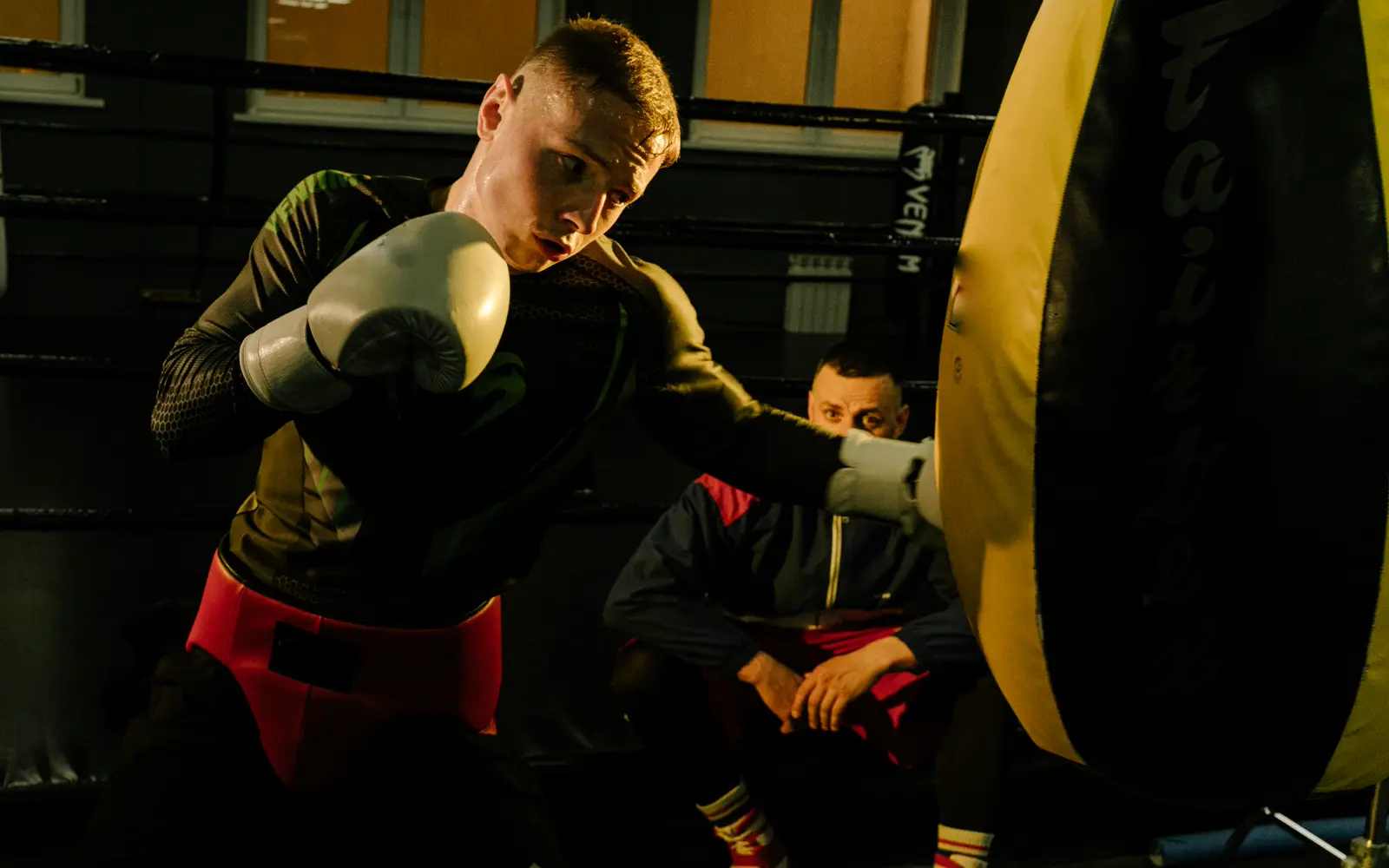
A boxing workout is a clock with one job per round. Bag, pads or the air. Conditioning comes after the hands stay honest.
I have competed in boxing, Muay Thai and amateur MMA, and I still build a boxing workout the way a camp does. A clock. One job per round. Enough left that you can do the same session again later in the week.
This page is the session: boxing exercises on the bag and the pads, the conditioning that belongs after them, a boxing workout at home with no equipment, and a boxing workout routine you can repeat. If you have never thrown a jab, start with how to start boxing. The feet under that jab are the boxing stance.
Key takeaways
- A boxing workout is timed rounds. Shadow boxing opens the shape. The bag or the pads are the work. Conditioning is optional, and only if the hands stayed up.
- The boxing exercises that matter are a jab and cross that return, a short hook, a slip and a step, plus the rope or a march.
- A boxing workout at home uses the same clock. You need floor space, not a bag. Push-ups, squats, a plank and burpees fill the rests.
- Beginners use two-minute rounds and skip the finisher. In a fight week, cut the extra rounds and keep the technical ones.
- Run the same boxing workout routine for four weeks. Change one job, not the whole session.
The session
What a Boxing Workout Is
A boxing workout is the practice session: rounds of punching and moving, a rest you can time, and a week those sessions sit in. It is not a mood and it is not a random playlist. You pick one job, you do it for the round, and you stop when the shape breaks.
Shadow boxing is the opener, not the whole workout. You picture a person and you move. The full plan for those rounds, the footwork and where they sit in a week, is the shadow boxing guide. Bag work answers back. Pads give you someone else's rhythm. Conditioning raises your breathing after the skill, or on its own easy day. They are different tools.
Three ways to run it
Use the version you can do well today. A sloppy bag round does less for you than a clean round in the air. If you train Muay Thai or MMA as well, this session is the hands. The kicks are the Muay Thai kicks guide. The mixed week is MMA training.
| Compare | Bag | Pads | At home |
|---|---|---|---|
| Job | Find out if the fist and the balance agree | Hit a target that moves when a holder moves it | Repeat the shape with no equipment |
| You need | A mounted bag, wraps and gloves | A holder who knows the drill, plus wraps and gloves | Floor space and a clear punch line |
| A good round | The bag moves a little and the hand comes back | You answer the mitt, then the hands are home | You finish on balance, looking at the person who is not there |
| Stop | When you lean back and swing | When the holder is eating shots they did not call | When the feet stick or the chin lifts |
The work
Boxing Exercises, Round by Round
Four boxing exercises cover the skill rounds. Add the rope only after they still look like boxing.
- Shadow: the opener
- Bag: the widest block
- Pads: same punches, a moving target
- Rope: only if the hands stayed up
- 1
Jab and cross
The jab is the lead hand, straight out and straight home. The cross is the rear hand, with a small turn of the hip. Exhale as the hand leaves. One punch at a time until both return. This is the round you repeat until it is boring.
- 2
A short hook
The elbow stays bent. The hand travels a short path to the bag, about chin height, then back to the cheek. If you wind the arm out wide, it is a slap. Skip the hook until the jab and cross come home on balance.
- 3
Slip, then the jab
A slip is a small move of the head, not a lean that takes your feet. Move the head, put it back, then jab. If you cannot name the punch you slipped, you are just bobbing. Keep this round slower than the others.
- 4
The rope, or a march
Easy skipping opens the session. A hard finisher waits until the skill rounds are done and the hands are still up. No rope? March in your stance, or do the burpee version in the home section. Do not hold weights while you punch.
Uppercuts wait. They are short punches, and they fall apart when the chin comes up to watch them. A month of a clean jab, a clean cross and one short hook is a better boxing workout than a week of every punch you have seen.
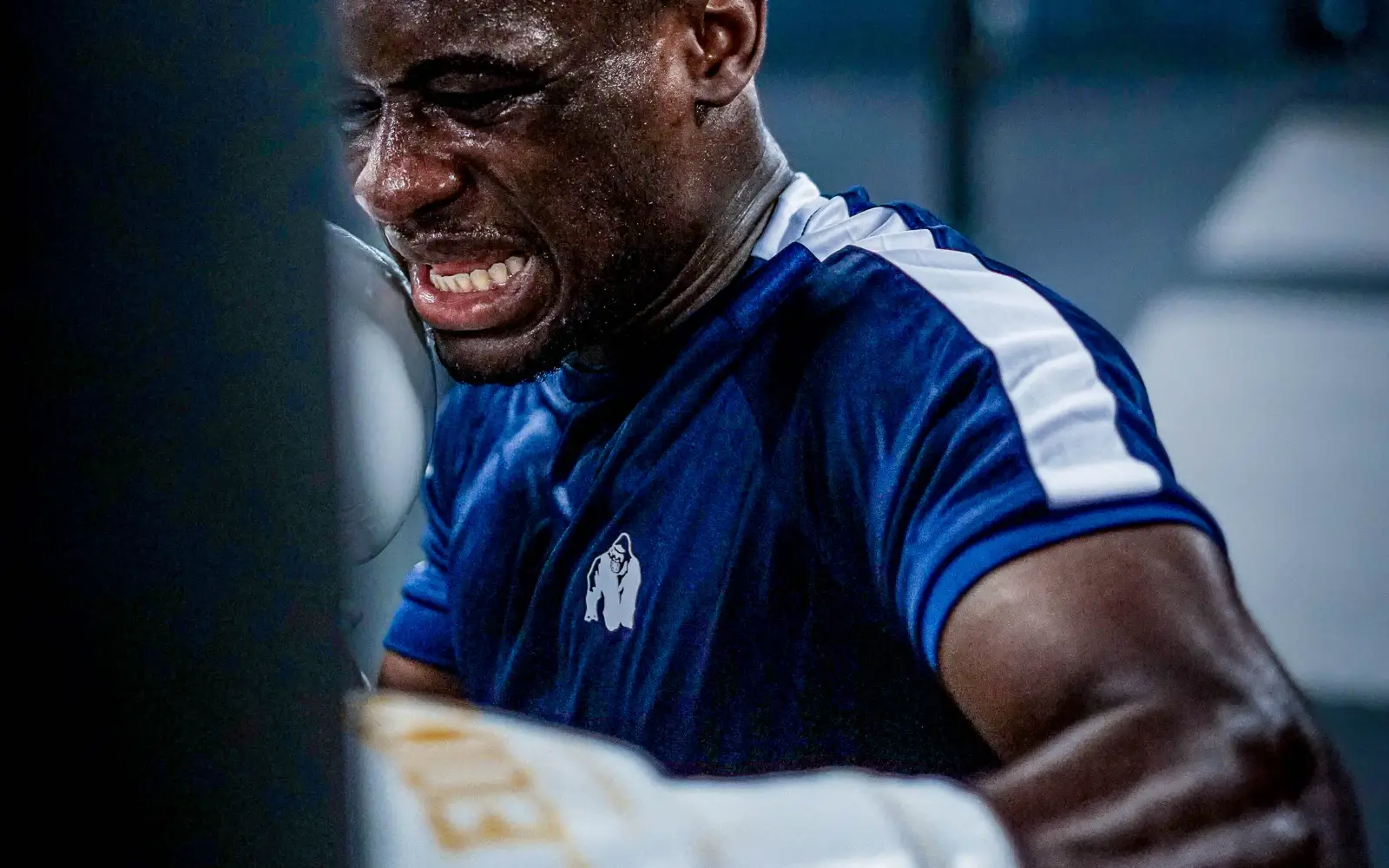
On the bag, touch it and bring the hand back. Loud is not the goal. The bag should move a little, and you should still be in your stance when it swings back. If you have to reset your feet after every shot, the shot was too big.
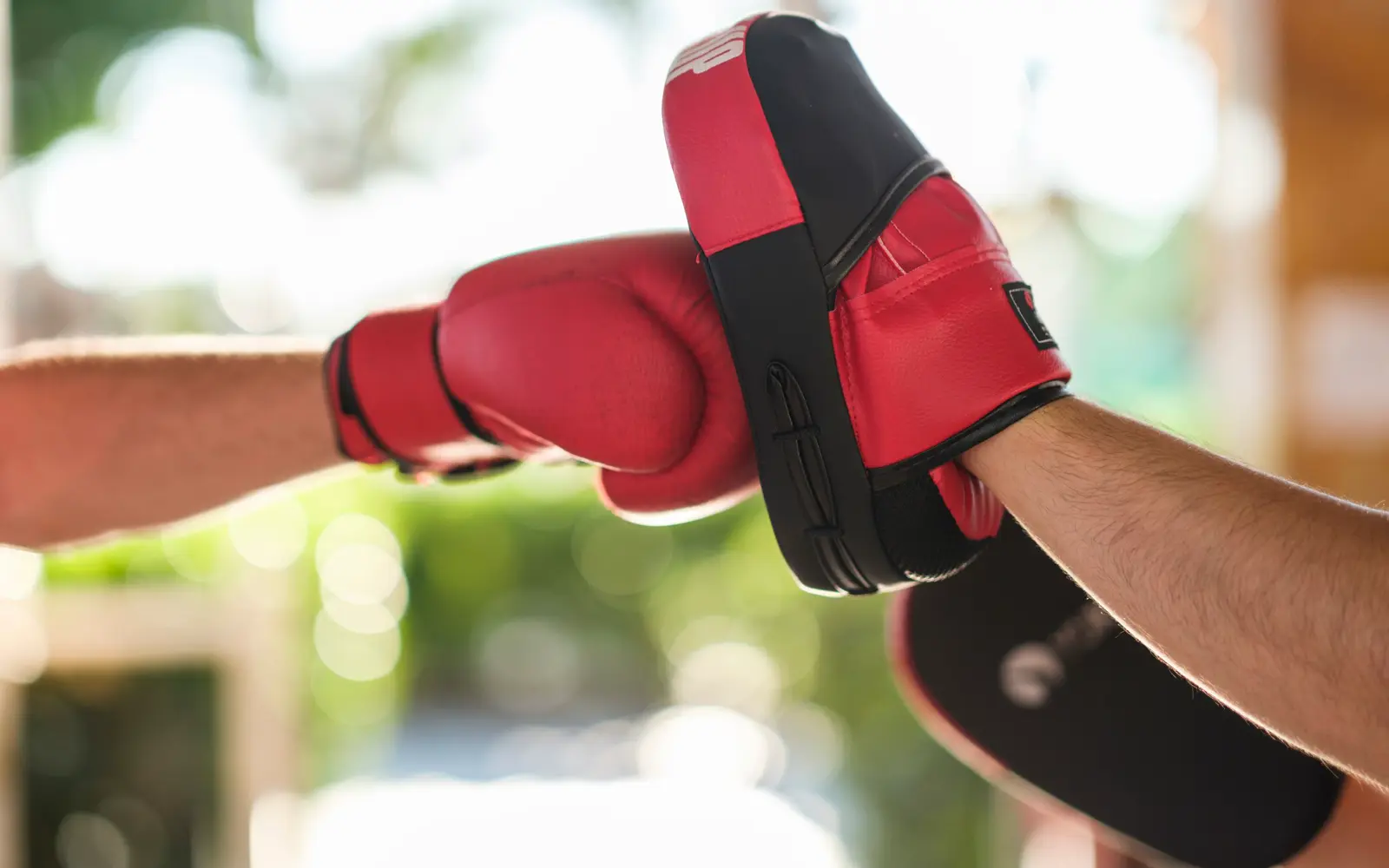
Pads are the same punches with a person on the other end. The holder calls one thing, you answer, both of you reset. A holder who stands still and lets you unload is a bag with arms. If you are holding, keep the mitts at the height you asked for, and do not eat a shot you did not call. Most adults use 14 or 16 ounce gloves for bag and pad rounds so the padding is there. Ask a coach before you buy lighter ones.
| Block | Time | What you do |
|---|---|---|
| Open | 3 minutes | Easy skip, or an easy march if you have no rope. You should still be able to talk |
| Round 1 | 3 minutes | Shadow boxing. Jab only, feet moving. Beginners do 2 minutes. The full shadow plan is the shadow boxing guide |
| Round 2 | 3 minutes | Bag or pads. Jab, then jab-cross. The hand is home before the next one leaves |
| Round 3 | 3 minutes | Same punches, then one step off the line after the cross. Skip this round if the hands are already low |
| Round 4 | 3 minutes | Add one short hook, or a slip and a jab. Not both. Beginners stay on the jab and the cross |
| Finisher | 3 rounds of 1 minute | Rope, or burpees you can stand up from cleanly. Rest 1 minute between. Skip it if the skill rounds broke the shape |
Rest 45 to 60 seconds between the skill rounds. Take the longer rest if the hands are still low.
No equipment
A Boxing Workout at Home
Boxing at home is the same clock. The bag is gone. The jobs stay.
You need enough floor for two short steps in every direction, and nothing in the punch line: no people, pets, lamps or a low ceiling. Shoes or bare feet both work if the floor is not slippery. You do not need gloves, because you are not hitting anything. You do not need a bag. A bag that swings from a doorway, or a bag you hold with one hand, is a bad target.
Run rounds 1 to 4 from the table above as shadow rounds, with the same jobs. Between rounds, pick one of these, not all of them: 8 push-ups, 10 squats, or a 20-second plank. The rest is still a rest. If you are breathing so hard you cannot keep the hands up on the next round, you did too many.
How to scale boxing at home
New to this: two-minute rounds, jab only for the first two weeks, and no push-ups in the rest. You are learning the shape. The strength can wait for its own day.
Already comfortable: three-minute rounds, and the finisher of three one-minute sets. Use the rope if you have one. If you do not, the burpees stand in. Step back to a squat if a burpee makes your back round. The jump squat is the harder version of that squat, and it waits until the plain squat is easy.

After the skill
Conditioning That Still Looks Like Boxing
The rope raises your breathing. It does not replace the jab, and it does not replace the lift.
Most of the engine in a boxing workout comes from the rounds, if you keep moving. Extra conditioning is a small dose. Three minutes easy at the start wakes you up. Three hard minutes at the end are plenty. A second fight on the rope, after a hard bag session, is how the next day goes flat.
Put the heavy lifting on its own day. A squat or a trap-bar deadlift, a push-up, a pull-up, and a farmer's carry. Three sets of 4 to 8, with reps left. The strength and conditioning guide is how that day stays short enough that the next boxing workout is still sharp. Adults need both muscle-strengthening work and aerobic work across the week. The rounds can raise your breathing. They do not get heavier the way a barbell does. World Health Organization, physical activity recommendations.
Combat sports
Boxing Workouts for Fighters
If you already train Muay Thai, kickboxing or MMA, a boxing workout is the hands. It does not replace the rest of the sport.
Use it to clean the jab that sets the kick up, and the cross that comes home before you turn for the low kick. The Muay Thai kicks guide is the leg. In MMA the stance sits lower, because a tall stance is easy to shoot under. That week is the MMA training guide. Once the range is gone, the hold is the grappling guide.
- One job per round. The jab that returns, or the exit after the 1-2. Not a new combo every minute.
- One hard skill day. A boxing workout and a hard kick spar are two hard days. Put a rest or an easy day between them.
- Pads beat a tired bag. If the hands are the problem, a holder who calls one punch teaches more than another six rounds of swinging.
- The lift stays short. Leave reps in the tank so the jab is still sharp tomorrow.
- In camp, cut the finisher. Same jobs, fewer rounds, in the week of a fight. The extra rope can go.
- One job
- Per round
Flagship program · Combat Performance
Strength and conditioning for the weeks around your boxing, striking and grappling. Power, conditioning, and legs that still have a step in the last round.
The week
A Boxing Workout Routine
Four training days. Two of them are boxing. The strength day is there because the rounds will not build it for you.
| Day | Session | Effort | What you do |
|---|---|---|---|
| Monday | Bag or class | 2 of 3 | The rounds above, on a bag or with a coach. No finisher. Beginners use 2-minute rounds and stop after round 3 |
| Tuesday | Rest | 0 of 3 | Walk if you want. No bag, no rounds, no lift |
| Wednesday | Pads or home | 2 of 3 | Pads if a holder is there. Otherwise the at-home rounds. Add the finisher only if Monday left you fresh |
| Thursday | Strength | 2 of 3 | Squat or trap-bar deadlift, push-up, pull-up, farmer's carry. 3 sets of 4 to 8, with reps left |
| Friday | Defence | 2 of 3 | 3 rounds of 2 minutes: slip, then a jab, on the bag or in the air. 60 seconds between rounds. No finisher |
| Saturday | Optional | 1 of 3 | 20 minutes you can talk through: a walk or an easy skip. Skip it if Friday left you cooked |
| Sunday | Rest | 0 of 3 | Full rest. This is the day the week sticks |
Effort shows how hard the day is, from 1 to 3.
Run this boxing workout routine for four weeks before you change it. Week 1 is the jab and the cross. Week 2 adds the step off. Week 3 adds the hook or the slip, not both. Week 4 is the same week, a little calmer. That is progressive overload for a skill: one cleaner piece, not a new trick.
Four rules make the plan work:
- 01
Get a coach to see one round.
The mistakes you cannot feel are the ones that stick. Film one round only so you can show them. Do not coach yourself from the replay.
- 02
Feet before fists.
If you cannot step and stay in your stance, you are not ready to speed the punches up. The position is the boxing stance guide.
- 03
One hard day, then an easier one.
A long bag session, a heavy lift and a hard finisher are three hard days. Pick one.
- 04
Leave the spar for a coach.
Sparring is a test. It is a poor way to learn a round. Stay on the bag, the pads and the air until a coach changes that.
What to avoid
Common Mistakes in a Boxing Workout
These five are the ones I have to unwind most often once people start timing rounds.
- 01
Swinging until you are tired
A round that ends with the hands on your hips taught you to get tired. End it when the shape breaks, and rest the full minute.
- 02
A new combo every round
Five punches you cannot repeat are not a boxing workout. One job, four weeks, then the next job.
- 03
Conditioning first
Burpees and a hard rope before the bag make the jab sloppy. Skill rounds first. The finisher is optional.
- 04
Weights in the hands
Dumbbells while you punch load the shoulder in a bad line. Shadow the shape. Lift on the strength day.
- 05
Skipping the rest day
Two hard boxing workouts back to back feel productive. The third day is when the hands drop and the wrist complains.
Questions
Common Questions About Boxing Workouts
What is a good boxing workout?
A good boxing workout is a short opener, then three or four timed rounds with one job each, then an optional finisher. Shadow boxing warms the shape. The bag or the pads are the work. Easy rope or a march opens the session. Hard conditioning waits until the hands are still up, and you skip it when they are not. Rest 45 to 60 seconds between skill rounds.
What boxing exercises should a workout include?
Start with the jab, the cross, a short hook, and a slip followed by the jab. Add easy rope or a march, and a separate strength day with a squat or trap-bar deadlift, a push-up, a pull-up and a carry. Uppercuts and long combinations wait until the straight punches come home on balance. Beginners can stay on the jab and the cross for the first weeks.
Can I do a boxing workout at home with no equipment?
Yes. Use the same rounds as shadow boxing: jab, jab-cross, a step off, then one hook or one slip. You need floor space and a clear punch line, not a bag. Between rounds, do a few push-ups, squats or a short plank, and only one of those. Do not hold dumbbells while you punch, and do not spar or hold hard pads at home.
How many days a week should I do boxing workouts?
Two or three boxing days, plus one short strength day, is enough. Put a rest day after the harder session. An optional easy walk or an easy skip can sit on another day if you recover. If you already train Muay Thai, kickboxing or MMA most days, one boxing workout replaces a skill day. It does not sit on top of a hard spar.
Do I need a heavy bag for a boxing workout?
No. The bag tells you whether the punch and your balance agree, and it is useful once it is mounted and your hands are wrapped. Pads need a holder. Neither is required to train. The at-home rounds in this guide use no equipment. A hanging bag in a doorway is not a substitute for a mounted one.
How is a boxing workout different from shadow boxing?
Shadow boxing is one block: punches and feet in the air, with nobody answering. A boxing workout is the whole session around that block. It adds the bag or the pads, an optional conditioning finisher, and a week that also includes strength and rest. Use shadow boxing to open the workout, and as the whole workout on days you are at home.
Final thoughts
Give the round one job. Then come back later in the week.
A boxing workout is simple to start and easy to waste. Hands home. Chin down. One job until the timer ends. The bag, the pads and the floor at home are the same session at three volumes. The rope and the burpees are the extra, and they wait their turn.
Put the week on the calendar and give it four weeks. The last round should look calmer than it did on day one, not just harder.
If you want the rounds built around the way you actually train, I coach one on one. You can train with me online from anywhere, or in person in Bali for Muay Thai, MMA and kickboxing. Private boxing in Bali is on the way. The rounds on this page are the same ones I use when the job is the hands.
More on the week around it: shadow boxing, how to start boxing, boxing stance, MMA training, and strength and conditioning.
1:1 coaching with Tarzan