Training guide
Muay Thai Moves
The core weapons by name, and the order a beginner actually learns them.
Muay Thai moves and their names, from a Muay Thai coach: punches, elbows, knees, kicks, the teep, the clinch, and the defence that keeps you in the round.
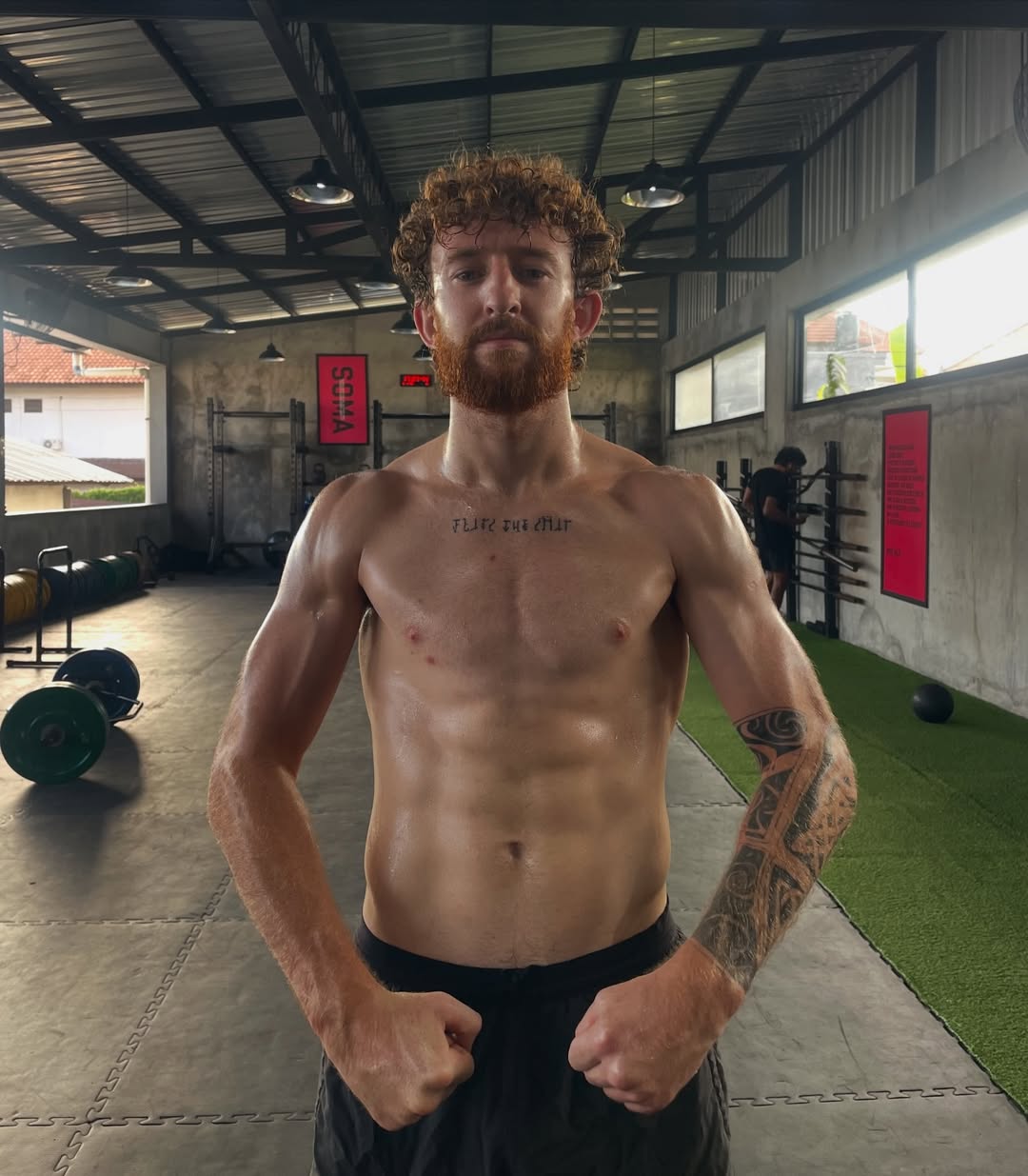
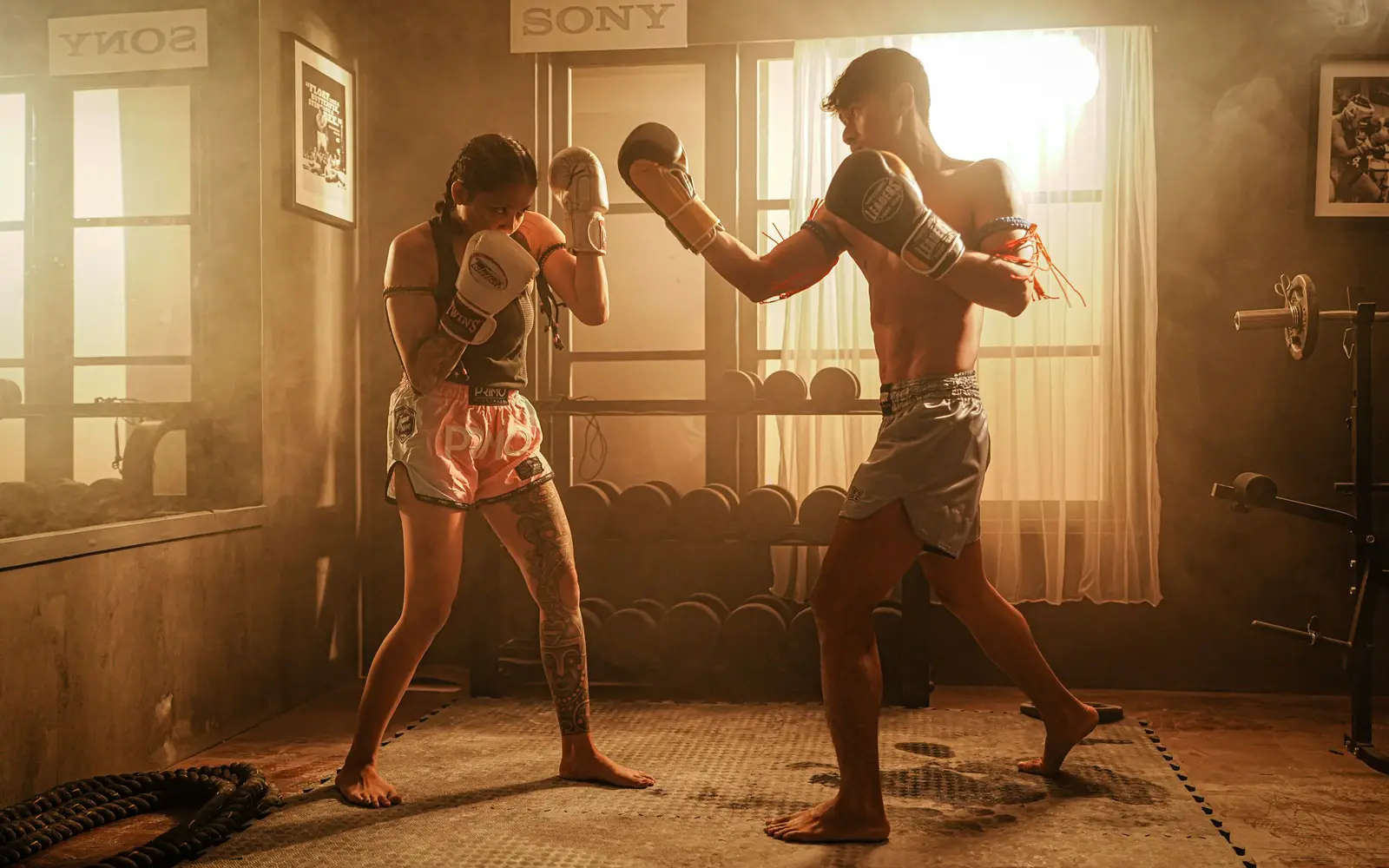
Muay Thai moves are a short list with long names. Learn the name, the job, and the way back to your stance. Balance and timing beat a new technique you cannot put down.
I coach private Muay Thai in Bali, for people on a first session and for strikers who already have rounds behind them. The habit that breaks a move is usually small. A hand that stays out. A hip that leans off the knee. A shin that never meets the kick you meant to check.
This page is the map of the core moves, with the Thai names coaches actually use, how each one is used, and the basic moves to learn first. The sport around them, the history and the rules, is what Muay Thai is. The ranges, the styles and the gear sit in the complete Muay Thai guide. Kick mechanics have their own page, and this one will not rewrite it.
Key takeaways
- The families are punches (mat), elbows (sok), knees (khao), kicks (te), the teep (thip), and the clinch (plam).
- Basic Muay Thai moves are the jab, the cross, the teep, a low roundhouse, a straight knee, a check, and a tall guard. Elbows and dumps wait for a coach.
- Every move has a job. The jab finds range. The teep makes space. The knee scores up close. The clinch is where you steer.
- A combo is two or three shots you can return from. Hands come home before the next weapon leaves.
- Practise the shape in shadow, the impact on a bag, and the timing on pads. Partner elbows, knees to the head, and sweeps belong in a coached session.
Muay Thai moves names
Muay Thai Move Names
English gyms say jab, teep and clinch. A Thai gym hangs the same moves under shorter words. Learn both, and you can follow a round anywhere.
- Mat: punches
- Sok: elbows
- Khao: knees
- Te: kicks
- Thip: the teep
- Plam: the clinch
| Move | Thai name | What it is for |
|---|---|---|
| Jab and cross | Mat trong | Straight punches. They find the range and hide the kick |
| Hook and uppercut | Mat wiang, mat soi | Close punches, once the straight shots return to the cheek |
| Horizontal elbow | Sok tat | A short cut with the point of the elbow, in the pocket |
| Upward elbow | Sok ngad | An elbow that rises through the centre, still a short weapon |
| Straight knee | Khao trong | A knee driven up the middle to the body |
| Flying knee | Khao loi | A jump into the knee. It comes after the standing knee is honest |
| Roundhouse | Te, te tat | A turning kick with the shin. Te tat is the low, cutting version |
| Teep | Thip | A straight push kick with the ball of the foot |
| Clinch | Plam | The standing hold: posture, knees, off-balances, sweeps and dumps |
| Check | Shin block | You lift the shin to meet their kick, then put the foot down |
Spellings vary by gym. Mat trong, sok tat and khao trong are the names I use with students. If your coach says a different word for the same shape, use theirs in the room.
Muay Thai techniques are these weapons used with a purpose. A name without a job is a list you forget. A jab that does not come home is not a jab yet. A teep that stays out is a leg they can catch. The name is how you and a coach talk about the same thing. The job is why you threw it.
The art is often called eight limbs: two fists, two elbows, two knees, two shins. The teep and the clinch are the skills that sit beside that count. What Muay Thai is explains that frame. This page stays on the moves themselves.
Muay Thai basic moves
Basic Moves to Learn First
Start with the shots you can put back down. The fancy ones are still Muay Thai. They are not the first month.
- 01
Stance and guard.
Feet under you, chin down, hands on the cheeks, elbows in. The feet and the weight are the boxing stance. Muay Thai stands a little taller and a little more square so the legs can kick and check. The hands do not change job.
- 02
Jab and cross.
Mat trong, both hands. The rear hand stays on the cheek while the jab goes. Both hands are home before you admire the punch. If the fists are new, how to start boxing is the month for them.
- 03
Teep, then a low roundhouse.
The teep makes space. The low kick is the first turning kick, on a bag, with the shin and the hands up. The steps, the pivot and the targets are the Muay Thai kicks guide.
- 04
Straight knee and a check.
Knee the bag up the middle, hips under you. Then lift a shin to meet an imaginary kick and put the foot straight back down. Elbows, the clinch and any dump wait until a coach is watching.
Mat
Punches
Punches set the range for everything else. They are not the whole art, and they are not optional.
The jab is the lead straight punch. It touches, it measures, and it hides the rear hand or the kick behind it. The cross is the rear straight punch, mat trong with the back hip turning. I want a long line from the rear foot through the shoulder, the chin still down, and the hand back on the cheek before the lead hip has settled.
The hook is mat wiang, a short turn of the body, elbow bent, fist travelling level. The uppercut is mat soi, a short rise through the centre. Both live close. If you are far enough away that the arm has to straighten to reach, you wanted a jab or a cross. A long hook is a hand that is late coming home, and a kick fits in that gap.
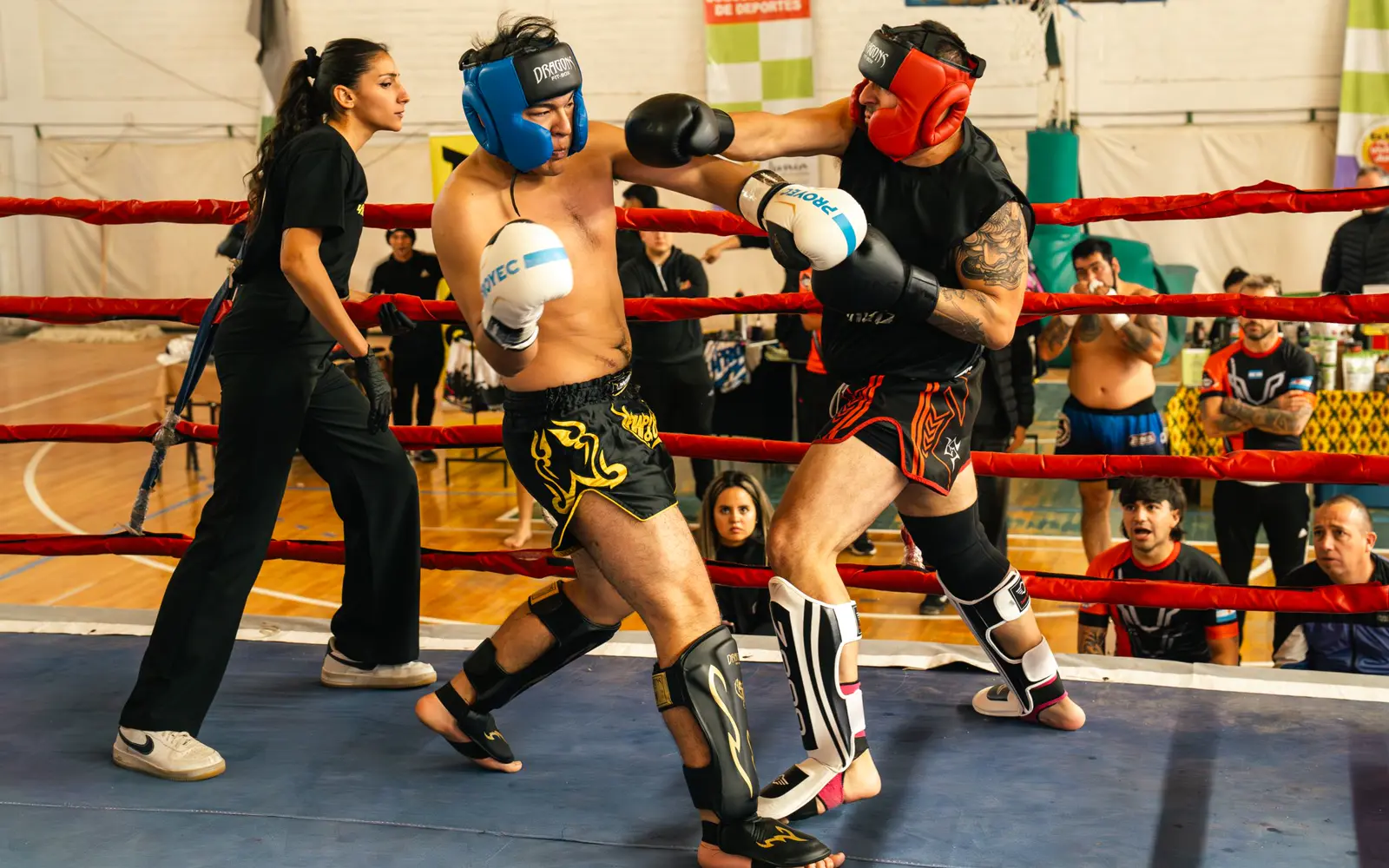
In Muay Thai the guard is a little higher and the stance a little taller than a pure boxing crouch, because a kick is always allowed. The cue does not change: elbows cover the ribs, hands cover the cheeks, and the chin stays behind the lead shoulder on the cross. The timed rounds for the hands, on a bag or at home, are the boxing workout. The cloth on the wrist before that bag is how to wrap hands for boxing.
Sok
Elbows
An elbow is a short weapon. If you can see a long swing, you are too far away to throw it.
Sok tat is the horizontal elbow. The arm stays bent, the forearm is tight, and the point of the elbow cuts across. The shoulder turns. The hand of the elbow stays close to your own head on the way through, so you are not offering a straight arm for someone to tie. Sok ngad is the upward elbow, rising through the centre the way an uppercut does, still with a bent arm. A downward elbow and a spinning elbow, sok klab, use the same short bone. They ask for more balance. I do not teach the spin until the horizontal elbow returns to guard on the pad.
Elbows cut because the striking surface is small and hard. That is also why they are a coached weapon. On a Thai pad, with someone who knows how to hold it, you learn the line. On a partner's face, you wait until that coach has both of you in the gear they want and has said the target is open. A heavy bag will take a careful elbow. A friend's head will not take a guess.
The mistake is to throw the elbow like a wide hook from kicking range. You travel, the elbow arrives late, and the other hand has left your cheek. Step in until the range is honest, or do not throw it. One clean sok tat that returns is the whole lesson.
Khao
Knees
A knee scores when the hip comes through and you are still standing on the other foot.
Khao trong is the straight knee. The thigh lifts, the hip drives forward, and the point of the knee aims at the body. The standing foot stays flat enough that you are not hopping off it. Hands stay up. If you lean back to "get the hip in", the knee pops up and the balance stays behind you. That knee is easy to catch, and you are easy to walk into.
From a step, the same knee meets someone who came in on your teep. In the clinch it meets someone whose posture you have already broken. You do not need a jump for either. Khao loi, the flying knee, leaves the floor. It is a real weapon, and it is a later one. Jumping before the standing knee returns to stance teaches a knee you cannot steer.
On the bag, aim at the middle of the bag, not at the air beside it. Touch, drive, and put the foot down where your stance was. A knee that lands and then dangles is a leg they can hold. Partner knees stay on the body, at a pace you agreed, with a coach in the room. The head is not a knee target until that coach has said so.
Te and thip
Kicks and the Teep
Two ideas, then the kicks page. A roundhouse turns. A teep pushes. They are not the same leg.
The roundhouse, te, turns the hip and lands with the shin. Low, at the thigh, it is often called te tat, the cutting kick. At the body it meets the ribs or the arm. At the head it is the same path, higher, and it waits until the low kick pivots cleanly. The standing heel turns toward the target. The hands stay on the cheeks. The foot comes home. Whether a low kick is even legal depends on the rule set. That question is kickboxing.
The teep, thip, is a straight push. The knee lifts, the hip extends, and the ball of the foot meets them. Toes pulled back, not pointed, and not a heel stamp you learned from somewhere else. Use it to stop a step, to make a measure, or to off-balance someone before you kick. Then the leg retracts. A teep you leave out is a teep they can catch.
That is the whole kick section on purpose. The step, the switch, the low kick, the body kick, the head kick, the drills and the shin work are written out in the Muay Thai kicks guide. If the kick is the thing you came to fix, go there. Come back here for the weapons around it.
Plam
The Clinch, Sweeps and Dumps
The clinch is a move you stand in. It is also where knees, elbows and off-balances share one position.
Plam is the hold. I want the posture tall, hips under you, and the inside position: forearms on the collarbones, hands on the crown rather than cranking the neck, elbows tight. From there you can steer the head and throw khao trong to the body. If the elbows flare, they swim an arm inside. If you bend in half to hang on, you gave the posture away.
I do not lace the fingers. It is slow to let go. One hand over the other is enough. Knees in the clinch stay on the body until a coach has both of you agreed on anything else.
Sweeps and dumps
A sweep or a dump takes the balance you already broke and puts them on the canvas. You off-balance with the head and the hips, then you move a leg or you turn them. It is not a shot from wrestling, and it is not a throw you invent from a clip. The fall is the part that hurts people who practise it alone. Learn the posture and the inside arm first. Add a dump only when a coach can see the angle and can catch the landing.
The clinch is standing grappling inside a striking art. How it sits next to wrestling and jiu-jitsu is the grappling guide. In the Muay Thai room, the job is still the strike and the off-balance, then a clean break back to stance.
Answers
Defence: Checks, Blocks and the Guard
A move you only know how to throw is half a move. The answer is part of the name.
The long guard is one arm framing at range, the other hand at the cheek. It occupies their chest and their eyes. It is not a straight arm you lock out and forget. The rear hand still lives at home.
A block is the glove, the forearm or the shin meeting the shot. For punches, the hands stay high and the elbows stay on the ribs, so a hook hits the glove and a body shot hits the arm, not the open side. A parry is smaller: you touch their jab off the line and you do not chase it across your face.
The check is the Muay Thai answer to the roundhouse. You lift the leg, turn the shin out a little, and meet their shin with yours. The thigh is a poor shield. The foot comes straight back down into stance. A check you hold in the air is a leg they can catch, same as a lazy teep. Catching a kick, pinning it under an arm, is a later skill. Until a coach shows the catch, check or step off.
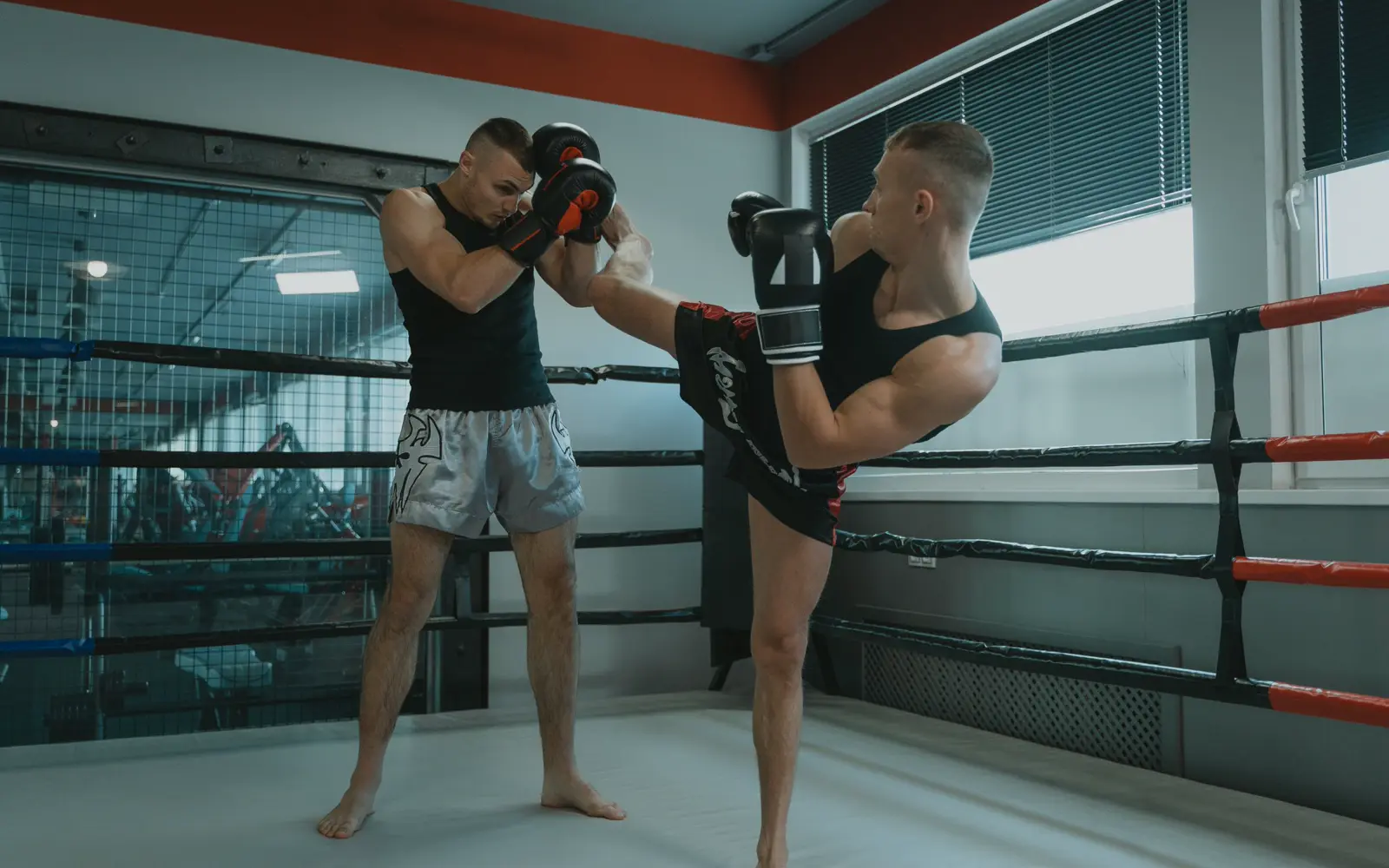
For a head kick, the first honest defence is the guard and a small lean, with the chin down, until the check is reliable at body height. Do not reach. Reaching opens the side the second kick was for.
Simple combos
Three Combos Worth Your First Month
Two or three beats. If you cannot say it out loud and return to stance, it is too long.
- 01
Jab, cross
Mat trong, mat trong. The jab touches. The cross turns the hip. Both hands are on the cheeks before you step.
- 02
Jab, cross, low kick
The same two punches, then te tat with the shin. The hands are home before the hip turns for the kick. Build the kick itself on the kicks page.
- 03
Teep, then a step
Thip to the body or the hip, the leg back, then you are gone or you are in stance for the jab. The teep is not the end of the sentence if you are still on one foot.
When they step in, the fourth idea is a jab and a straight knee, khao trong, to the body. It is still two beats. The knee replaces the kick because the range got short. You do not add an elbow on the end until the knee returns and a coach has put the elbow on a pad.
Shadow these at a speed you can stop. The round for that shape, with footwork and a picture of a partner, is shadow boxing. If the hands drop in the air, they will drop on the bag.
The week
How to Practise Muay Thai Moves
Three places. Shadow for the shape, the bag for the impact, pads for the timing. A partner is a fourth place, and it needs a coach.
| Day | Session | What you repeat |
|---|---|---|
| Monday | Technique | Stance, jab, cross, teep, one low kick on the bag. Hands home after every shot. No hard spar |
| Tuesday | Rest or a walk | Nothing technical. The last session is still settling in |
| Wednesday | Pads or class | The same basic moves with a coach calling them. One straight knee. One check. Elbows only if they hold the pad |
| Thursday | Strength | A short lift, the way the strength and conditioning guide lays out. Skill stays fresh for Friday |
| Friday | Bag or shadow | Three rounds of the combos above. Wrap the hands for the bag. Shadow if you have no bag |
| Saturday | Optional | Fifteen easy minutes of shadow boxing, or a class if the week has been light. Skip it if Friday was hard |
| Sunday | Rest | Full rest. This is the day the moves stick |
Run the same week for a month. The progression is a cleaner return to stance, not a longer combo.
Shadow boxing shows you the shape and the feet. It will not tell you if the shin was the part that landed. The bag tells you that, once the hands are wrapped. Pads tell you whether you can do it when someone else sets the beat. Sparring tells you whether you still can when they hit back. Those are four different practices. Beginners need the first three. Hard sparring is a later conversation with the coach who can stop it.
If striking shares the week with grappling, keep the hard days apart. That plan is the MMA training guide. The moves on this page stay the striking vocabulary inside it.
Combat sports
Muay Thai Moves for Fighters
Once a fight is booked, you stop collecting moves. You repeat the ones you actually score with.
Camp is a bad time to add khao loi or sok klab because a clip looked sharp. Keep the jab that hides your kick, the teep that stops their step, the knee you land in the clinch, and the check you can put down. The complete guide is the sport around that camp. The kick details stay on the kicks page.
- One problem per round. The hand that comes home, the teep that retracts, or the shin on the check.
- Skill work comes first. Pads and the bag decide the day. The lift fits around them.
- Keep a round in the tank in fight week. Same moves, less time.
- Elbows and dumps stay with the coach who will be in the corner. New partner drills are for the month after.
- The guard is the last thing you simplify. Tired rounds still end with hands on the cheeks.
- Hands home
- Then the next shot
Flagship program · Combat Performance
Strength and conditioning for the weeks around your pads and your bag. Legs that still check in the last round, and a trunk that stays tall in the clinch.
What to avoid
Common Mistakes
These are the ones I correct every week. They are small, and they decide the move.
- 01
Leaving the hands out
The kick, the knee and the cross all end with both gloves on the cheeks. A hand that poses at the end of the shot is a hand that is late.
- 02
Flaring the elbow on the jab
The jab is a straight line. An elbow that wings out turns it into a slow hook, and the rear hand usually leaves with it.
- 03
Teeping with the toes, and staying there
The ball of the foot pushes. Pointed toes bend. A leg that hangs out after the push is a leg they can hold.
- 04
Leaning off the knee
Khao trong needs the hip under you. Leaning back to swing the knee up gives the balance away and makes the knee short.
- 05
Swinging the elbow from too far
Sok tat is a short cut. A long loop from kicking range arrives late, with the other hand off the cheek.
- 06
Hanging in the clinch
Fingers locked, back rounded, weight on their neck. You are not steering. You are easy to turn, and the neck does the work your legs should do.
- 07
Checking with the thigh
Lift the shin and meet shin with shin, then put the foot down. A thigh check, or a check you freeze in the air, gives them the leg.
- 08
Collecting finishes first
Flying knees, spinning elbows and dumps before the jab returns. The basic moves are the ones that win the boring rounds. Learn those until they are boring.
Questions
Common Questions About Muay Thai Moves
What are the basic Muay Thai moves?
The basic moves are a stance with the hands on the cheeks, the jab and the cross, the teep, a low roundhouse, a straight knee to the body, and a shin check you can put back down. Elbows, the clinch posture, and later the hook and uppercut sit on top of those. Spinning elbows, flying knees and dumps wait until a coach is in the room.
What are Muay Thai moves called in Thai?
Punches are mat. The straight punch is mat trong, the hook is mat wiang, and the uppercut is mat soi. Elbows are sok, and the horizontal elbow is sok tat. Knees are khao, and the straight knee is khao trong. Kicks are te, the teep is thip, and the clinch is plam. Gyms spell them in a few ways. The shape is the part that has to match.
What Muay Thai techniques should a beginner learn first?
Start with balance in the stance, then the jab and cross with the hands coming home, then the teep, then one low kick on the bag. Add a straight knee and a check in the same month. Pads with a coach come as soon as you can. Elbows to a partner, knees to the head, and sweeps are techniques for a later block, when someone can see you.
What is the difference between a Muay Thai kick and a teep?
A roundhouse turns the hip and lands with the shin. A teep, thip, pushes straight with the ball of the foot. One cuts, the other makes space. The step, the switch kick, and the low, body and head targets are in the Muay Thai kicks guide.
How do you practise Muay Thai moves at home?
Shadow the stance, the jab, the cross, the teep and the return to guard for a few short rounds. If you have a bag, wrap your hands and hit it at a speed you can stop. Keep elbows, clinch dumps and partner knees for a coach. Shadow boxing shows the shape. It does not replace someone watching the angle.
Are elbows and knees beginner Muay Thai moves?
A straight knee on the bag is a beginner move, once the standing foot stays under you and the hands stay up. A horizontal elbow on a pad, with a coach holding it, can come in the same season. Elbows and knees to a partner's head are not a first-month skill. The flying knee and the spinning elbow come after the standing versions return to stance.
Final thoughts
Name the move. Then bring it home.
Muay Thai moves are a clear set that people make muddy by collecting the highlights first. Mat, sok, khao, te, thip, plam. Straight punches, a teep, a low kick, a straight knee, a check, and a guard that is still there at the end. Elbows in the pocket. The clinch tall. Sweeps when someone qualified is watching the fall.
The small details are the coaching. A hand that actually returns. A hip that stays under the knee. A shin that meets the kick. Better balance and better timing show up there, long before a new combo does.
If you want those details coached one on one, I do that in Bali, for a first session or for work you have already started. The kicks, if that is the piece you are fixing, are on their own page. The names you just read are the rest of the round.
More on the pieces: Muay Thai kicks, what Muay Thai is, the complete guide, shadow boxing, and how to wrap hands for boxing.
Private Muay Thai with Aaron